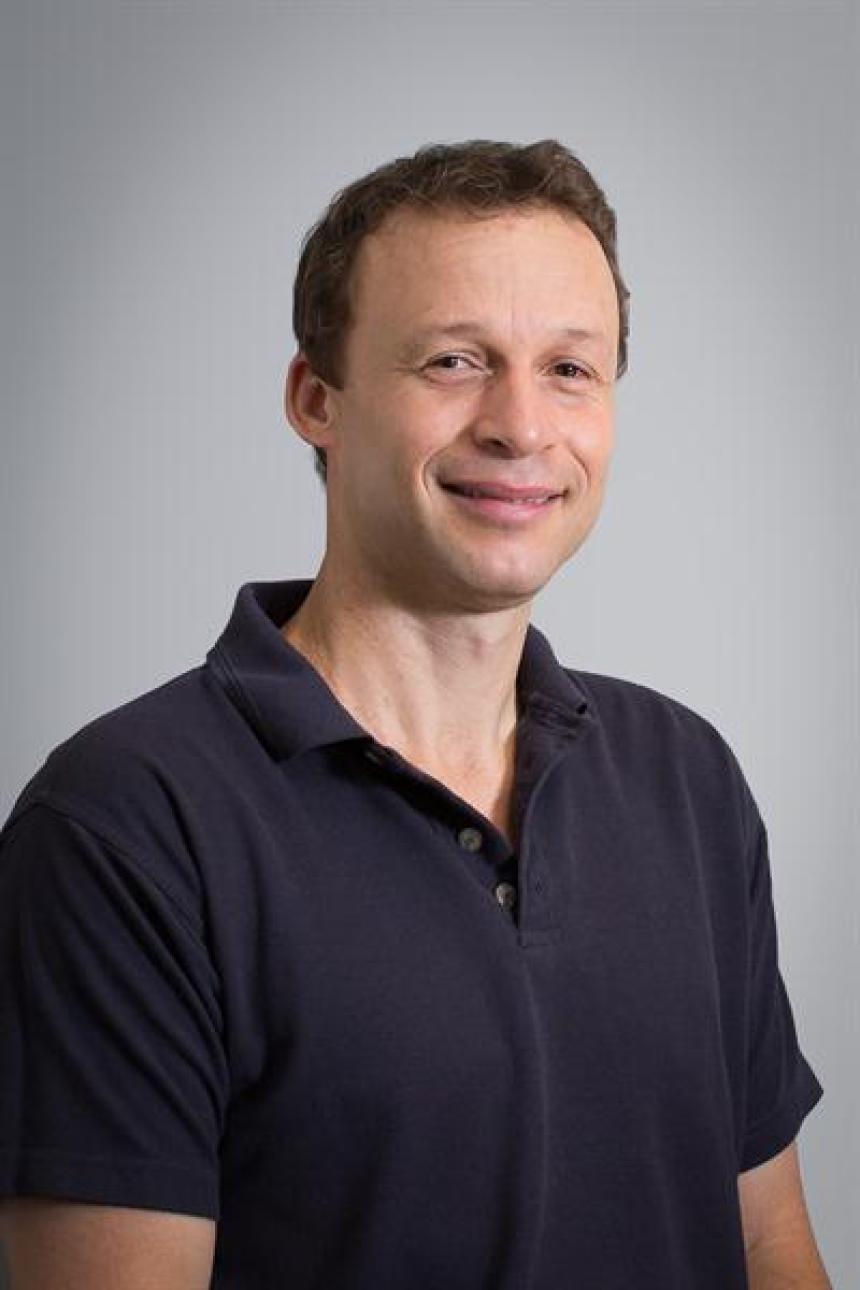
Ivan Nagelkerken

Prof Ivan Nagelkerken

Professor

School of Biological Sciences

College of Science

Eligible to supervise Masters and PhD - email supervisor to discuss availability.

Available For Media Comment.


I am a professor in marine ecology working in temperate, subtropical, and tropical coastal ecosystems, with a special focus on fishes. Over the past three decades, I have examined how ecosystem connectivity affects the functioning and resilience of tropical coastal ecosystems including coral reefs, seagrasses, and mangroves. I have done most of this work in the Caribbean, Eastern Africa, and Australia. I held a Future Fellowship awarded by the Australian Research Council to study the effects of climate change on fishes and marine ecosystems, and I have continued this field of research until present day. Most of my climate change research is performed in Australia, New Caledonia, Japan, and New Zealand, with a particular emphasis on climate change adaptation and ecosystem resilience. My work contributes directly to today's environmental issues by providing answers to contemporary scientific questions as well as management and conservation related problems.

Climate change

Climate change stressors such as warming and acidification of the oceans are predicted to have dramatic impacts on the diversity, abundance, and distribution of fish species worldwide. We are only beginning to understand how these two stressors interactively affect the physiology and behaviour of fishes during different stages of their life cycle. The degree to which fishes adapt to or tolerate changing conditions will determine their persistence in their original habitats as well as their ability to extend their ranges to novel habitats or higher latitudes. My current research focuses on providing an understanding of how climate change stressors will affect the behaviour and physiology of fishes, how this will alter their interactions with their environment and other species, how this then modifies population dynamics and species communities, and what the implications are for the fisheries, biodiversity, functioning, and resilience of marine ecosystems in the near future. My research includes approaches and techniques such as aquarium studies, large mesocosms, natural analogues of climate change (CO2 vents and warming hotspots in Australia, New Caledonia,  New Zealand, and Japan), quantitative modelling, meta-analyses, and stable isotope (foodweb) analyses. 

Connectivity

Ecological connectivity plays a key role in the functioning and resilience of coastal ecosystems. Habitats such as such as seagrass beds, mangroves, and coral reefs are a ubiquitous feature of many clear-water tropical coastlines. Their juxtaposition within the coastal seascape often leads to an enhancement of fish diversity and abundance along their boundaries. I am specifically interested in the way in which fish movements connect neighbouring ecosystems and affect the functioning of recipient systems. Studying the nursery function of vegetated habitats for juveniles of coral reef fishes has formed a core area of my research. I have used techniques such as tagging, telemetry, and stable isotope analysis of fish otoliths and tissues to track fish movement and dispersal. In my current studies, I use this knowledge to answer questions about the effects of ecosystem connectivity on marine reserve functioning, population dynamics of reef fishes, and resilience of reefs in (South) Australia and Cocos Islands.

Student projects

I have a wide range of projects available for Ph.D., Honours, and Master's students with an interest in marine ecology, with research locations in South Australia, interstate (New South Whales and Queensland), and internationally (New Caledonia, Japan and New Zealand). My main foci are on: 1) climate change effects on fishes and marine ecosystems, and 2) coastal ecosystem connectivity for fishes. I also study 3) the vulnerability of our iconic leafy seadragon to climate change, and 4) the effects of harmful algal blooms on marine ecosystems and fish populations. Other projects are also open for discussion. My research is largely experimental, based on field, mesocosm, as well as laboratory work, and focusing on processes that operate at the levels of cells, individuals, populations, communities, and ecosystems. I also have a keen interest in meta-analyses to answer contemporary macro-ecological questions. See some examples of potential student projects under 'Teaching'. I work together with a range of renowned experts in the field, providing students with a broad mentoring experience.

Scholarships

For international students interested in joining my lab in Australia see the postgraduate scholarships that are available at our University here and the entry requirements here. Projects featured are (https://adelaideuni.edu.au/research/research-degrees/research-projects/):

  • Effects of climate change on marine ecosystems and fishes
  • Fish nursery function of mangroves, seagrass and salt marsh
  • Save our leafy seadragons
  • Effects of harmful algal blooms on marine ecosystems and fisheries species


Selected recent news coverage

Comment on how ocean acidification may damage shark teeth: 7 news

Statement on South Australia's toxic algal bloom: Biodiversity Council and Scimex and ABC news 

Interview on the effects of harmful algal blooms on whales: The Advertiser

Paper in Journal of Animal Ecology on novel species interactions under climate change: The Conversation and 2SER Radio and press release and blog

TV interview on fur seal on highway: Channel 7

Radio interview on toxic algal blooms: The Wire

Media story on the effects of climate change on Australian fish species: 360info

Paper in Journal of Animal Ecology on ocean acidification effects on coral complexity and fish assemblages: Media release, EOSYahoo news

Paper in Journal of Animal Ecology on altered species interactions under climate change: Media release

Paper in Proc Roy Soc B on behavioural changes in coral reef fishes that are invading temperate ecosystems due to climate change: Media release, podcast The Defrag.

Paper in Global Change Biology on how shark teeth can resist ocean acidification: Sharks4Kids, Oceanbites, Miami Herald, Rapusia, and comment on a related study in CNN Science

Paper in Global Change Biology on how climate change can degrade shoaling behaviour in fishes: Media release

Paper in Evolutionary Applications showing the potential of fish to genetically adapt to ocean acidification: Media release

Nature Climate Change paper on how ocean acidification may slow tropicalisation of temperate Australian ecosystems: Cosmos magazine, Nature Ecology & Evolution blog

Paper in Small on how snails can build stronger shells under ocean acidification: Advances in Engineering

PLoS Biology paper on how ocean acidification can boost reproduction in fishes: Cosmos magazine, InDaily, FastCompany

Radio interview on effects of climate change on ocean foods webs: Radio Adelaide

Science paper on how marine food webs are altered under climate change: The Guardian, Science perspective, MEA, Press release UoA

Nature Ecology & Evolution paper on positive effects of ocean acidification on farming damselfish: Phys.Org

Nature Climate Change paper on buffering effect of complexity on climate change impacts: TheScientist, ArsTechnica

Radio interview on how ocean acidification attracts larval fishes to irrelevant and artificial sounds cues: ABC Radio, ABC news 

Radio interview on effects of climate change on marine foods webs: Radio Adelaide

PLoS Biology paper on climate change effects on marine food webs: Reuters, Cosmos magazine, PLoS Research news, Deutschlandfunk (in German), Technology Networks

VIDEO abstract (by Animate your Science) of our Curr Biol study on fish biodiversity loss under ocean acidification (http://www.sciencedirect.com/science/article/pii/S096098221730725X): 

Remote video URL

Current Biology paper on fish biodiversity loss under ocean acidification: The Lead, der Spiegel, de Volkskrant, The Advertiser, Mongabay

Article on food web collapse under climate change in: The Conversation and the Daily Beast

Global Change Biology paper on food web collapse under climate change: Radio Adelaide, The Lead, The New York Times

Research on ocean soundscapes featured in the children's science show SCOPE (start at 16 min.)

Article on the silencing of the oceans: The Conversation

Radio interviews - nutrient pollution and ocean acidification affect marine soundscapes: ABCEastside 89.7 FM2SER 107.3 FM, SBS Radio (in Dutch)

Landscape Ecology article on degradation of marine soundscapes: The Lead, 7 News

Channel 9 prime time news story: climate change effects on shark hunting

Proc Roy Soc B article on ocean acidification effects on fish - jellyfish symbiosis: Discover magazineIFL Science, Azula

VIDEO abstract by my PhD students (Jennifer Pistevos / Tullio Rossi) on effects of climate change on sharks 

Proc Roy Soc B article on ocean acidification effects on shrimp sound production: New Scientist magazine, Popular Mechanics magazineCosmos magazine, IFL Science 

Radio Adelaide (the Wire): interview on effects of ocean acidification on coral reefs and fishes

Biology Letters article on ocean acidification and altered hearing in fish: ABC Science

Radio Adelaide: interview on effects of ocean acidification on larval fish behaviour

Proc Roy Soc B article on ocean acidification effects on larval fish audition and behaviour: Sciencedaily

Radio Adelaide: interview on effects of ocean acidification on shark hunting

Nature Scientific Reports article on effects of ocean acidification/climate change on shark hunting and growth: Daily mail, International business times, ABC News 

Proc Natl. Acad. Sci USA article on global alteration of ocean ecosystem functioning due to increasing CO2: CNN, The Lead Australia

Article on acidifying and warming oceans in: The Conversation

Radio interview on ocean acidification with: Voice of America

Channel 7 news: news coverage of ocean acidification study on marine ecosystems

Radio Adelaide: interview on ocean acidification research (English)

SBS Radio: interview on ocean acidification research (Dutch)

Wired magazine: story on climate change and ocean acidification effects on marine and terrestrial ecosystems

Nature Climate Change article on ocean acidification effects on fishes and ecosystems: IFL ScienceThe LeadMIC

NRM Research & Innovation Network: article introducing the new concept of 'seascape nurseries'

VIDEOs by one of my PhD students (Tullio Rossi): Ocean acidification effects on larval fish behaviour and Lost at sea


Date Position Institution name
2017 - ongoing Professor University of Adelaide (Australia)
2012 - 2016 Associate Professor University of Adelaide (Australia)
2005 - 2011 Adjunct Professor Free University of Brussels (Belgium)
2000 - 2011 Assistant Professor Radboud University Nijmegen (the Netherlands)
1997 - 2000 PhD student Radboud University Nijmegen (the Netherlands)
1996 - 1997 Research associate University of Amsterdam (the Netherlands)
1994 - 1996 Marine ecologist & Assistant marine park manager Caribbean Research and Management of Biodiversity Foundation - CARMABI (Curacao)

Date Type Title Institution Name Country Amount
2013 Fellowship Future Fellowship (Australian Research Council) - Australia 714,528 A$
2005 Fellowship Vidi research fellowship (Netherlands Organization for Scientific Research) - Netherlands 600,000 euro

Date Institution name Country Title
2000 Radboud University Nijmegen Netherlands PhD
1994 University of Groningen Netherlands MSc

Year Citation
2025 Hayes, C., Oshima Açıkbaş, A. H., Mitchell, A., Booth, D. J., Ravasi, T., & Nagelkerken, I. (2025). Combining eDNA and Visual Surveys Improves Detection of Reef Fishes Across Their Biogeographic Ranges. Diversity and Distributions: A journal of biological invasions and biodiversity, 31(9), e70089-1-e70089-13.
DOI
2025 Leung, J. Y. S., Nagelkerken, I., Pichler, E. L., Chen, Y., Jones, C. F., Xie, Z., & Connell, S. D. (2025). Morphological adjustments enable sea urchins to sustain calcified structure function under ocean acidification.. Proceedings. Biological sciences, 292(2059), 20251893.
DOI
2025 Hayes, C., Mitchell, A., Huerlimann, R., Jolly, J., Li, C., Booth, D. J., . . . Nagelkerken, I. (2025). Stomach Microbiome Simplification of a Coral Reef Fish at Its Novel Cold-Range Edge Under Climate Change. Molecular Ecology, 34(7), e17704-1-e17704-12.
DOI Scopus2 WoS2 Europe PMC1
2025 Rigg, A. L., Fowler, A. M., Nagelkerken, I., & Booth, D. J. (2025). Faster larval growth and shorter pelagic duration enhance the post-settlement persistence of a common range-extending coral-reef fish in a temperate ecosystem. CORAL REEFS, 44(2), 7 pages.
DOI
2025 zu Ermgassen, P. S. E., Worthington, T. A., Gair, J. R., Garnett, E. E., Mukherjee, N., Longley-Wood, K., . . . Spalding, M. D. (2025). Mangroves support an estimated annual abundance of over 700 billion juvenile fish and invertebrates. Communications Earth & Environment, 6(1), 13 pages.
DOI Scopus7 WoS8
2025 Darras, K. F. A., Rountree, R. A., Van Wilgenburg, S. L., Cord, A. F., Pitz, F., Chen, Y., . . . Freitas, B. (2025). Worldwide Soundscapes: A Synthesis of Passive Acoustic Monitoring Across Realms. Global Ecology and Biogeography, 34(5), e70021-1-e70021-20.
DOI Scopus14 WoS11
2025 Mitchell, A., Hayes, C., Coni, E. O. C., Booth, D. J., & Nagelkerken, I. (2025). Tropical fishes can benefit more from novel than familiar species interactions at their cold‐range edges. Journal of Animal Ecology, 94(10), 1997-2010.
DOI Scopus1 WoS1 Europe PMC1
2025 Dawson, B. R., Mantzioris, E., Connell, S. D., Nagelkerken, I., Hall, T., & Mellin, C. (2025). Fish by-products as reliable proxies to evaluate nutritional fatty acid contents in commercial fish fillets. Food Chemistry, 466(142223), 142223-1-142223-10.
DOI
2024 Ferreira, C. M., Connell, S. D., Goldenberg, S. U., Leung, J. Y. S., & Nagelkerken, I. (2024). Resource homogenisation drives niche convergence between generalists and specialists in a future ocean. Science of the Total Environment, 958, 177862-1-177862-10.
DOI Scopus3 Europe PMC1
2024 Priest, J., Ferreira, C. M., Munday, P. L., Roberts, A., Rodolfo-Metalpa, R., Rummer, J. L., . . . Nagelkerken, I. (2024). Out of shape: Ocean acidification simplifies coral reef architecture and reshuffles fish assemblages. J Anim Ecol, 93(8), 1097-1107.
DOI Scopus5 WoS5 Europe PMC3
2024 Cipriani, V., Goldenberg, S. U., Connell, S. D., Ravasi, T., & Nagelkerken, I. (2024). Can niche plasticity mediate species persistence under ocean acidification?. The Journal of Animal Ecology, 93(9), 1380-1391.
DOI Scopus3 WoS2 Europe PMC2
2024 Sasaki, M., Monaco, C. J., Booth, D. J., & Nagelkerken, I. (2024). Ocean warming and novel species interactions boost growth and persistence of range‐extending tropical fishes but challenge that of sympatric temperate species in temperate waters. Journal of Biogeography, 51(11), 2243-2258.
DOI Scopus2 WoS1
2024 Mitchell, A., Hayes, C., Booth, D. J., & Nagelkerken, I. (2024). Correction to: Projected ocean acidification and seasonal temperature alter the behaviour and growth of a range extending tropical fish. Coral Reefs, 43(1), 67.
DOI
2024 Sasaki, M., Michell, A., Booth, D. J., & Nagelkerken, I. (2024). Novel ecological interactions alter physiological responses of range-extending tropical and local temperate fishes under ocean warming. Science of the Total Environment, 913, 169413-1-169413-10.
DOI Scopus6 WoS6 Europe PMC4
2024 Hayes, C., Mitchell, A., Mellin, C., Booth, D. J., Ravasi, T., & Nagelkerken, I. (2024). Ecological generalism and physiology mediate fish biogeographic ranges under ocean warming. Proceedings of the Royal Society B: Biological Sciences, 291(2015), 20232206-1-20232206-10.
DOI Scopus7 WoS7 Europe PMC5
2024 Bradley, M., Dubuc, A., Piggott, C. V. H., Sambrook, K., Hoey, A. S., Depczynski, M., . . . Sheaves, M. (2024). The fish–mangrove link is context dependent: Tidal regime and reef proximity determine the ecological role of tropical mangroves. Fish and Fisheries, 25(3), 523-541.
DOI Scopus12 WoS7
2024 Sasaki, M., Kingsbury, K. M., Booth, D. J., & Nagelkerken, I. (2024). Body size mediates trophic interaction strength of novel fish assemblages under climate change. Journal of Animal Ecology, 93(6), 705-714.
DOI Scopus4 WoS4
2024 Ullah, H., Fordham, D. A., Goldenberg, S. U., & Nagelkerken, I. (2024). Combining mesocosms with models reveals effects of global warming and ocean acidification on a temperate marine ecosystem. Ecological Applications, 34(4), e2977-1-e2977-19.
DOI Scopus8 WoS8 Europe PMC3
2023 Nagelkerken, I., Allan, B. J. M., Booth, D. J., Donelson, J. M., Edgar, G. J., Ravasi, T., . . . Mellin, C. (2023). The effects of climate change on the ecology of fishes. PLOS Climate, 2(8), e0000258-1-e0000258-28.
DOI Scopus50 WoS47
2023 Borland, H. P., Gilby, B. L., Henderson, C. J., Connolly, R. M., Gorissen, B., Ortodossi, N. L., . . . Olds, A. D. (2023). Seafloor Terrain Shapes the Three-dimensional Nursery Value of Mangrove and Seagrass Habitats. Ecosystems, 26(2), 442-456.
DOI Scopus8 WoS10
2023 Mitchell, A., Hayes, C., Booth, D. J., & Nagelkerken, I. (2023). Future shock: Ocean acidification and seasonal water temperatures alter the physiology of competing temperate and coral reef fishes. Science of The Total Environment, 883, 163684.
DOI Scopus12 WoS12 Europe PMC5
2023 Wanjiru, C., Nagelkerken, I., Rueckert, S., Harcourt, W., & Huxham, M. (2023). Where to fish in the forest? Tree characteristics and contiguous seagrass features predict mangrove forest quality for fishes and crustaceans. Journal of Applied Ecology, 60(7), 1340-1351.
DOI Scopus8 WoS5
2023 Mitchell, A., Hayes, C., Booth, D. J., & Nagelkerken, I. (2023). Projected ocean acidification and seasonal temperature alter the behaviour and growth of a range extending tropical fish. Coral Reefs, 42(4), 919-929.
DOI Scopus8 WoS10
2023 Saavedra-Hortua, D., Nagelkerken, I., Estupinan-Suarez, L. M., & Gillis, L. G. (2023). Effects of connectivity on carbon and nitrogen stocks in mangrove and seagrass ecosystems. Science of The Total Environment, 896, 1-12.
DOI Scopus19 WoS16 Europe PMC6
2023 Du, J., Chen, B., Nagelkerken, I., Chen, S., & Hu, W. (2023). Protect seagrass meadows in China's waters.. Science, 379(6631), 447.
DOI Scopus21 WoS82 Europe PMC8
2022 Mitchell, A., Booth, D. J., & Nagelkerken, I. (2022). Ocean warming and acidification degrade shoaling performance and lateralization of novel tropical–temperate fish shoals. Global Change Biology, 28(4), 1388-1401.
DOI Scopus21 WoS20 Europe PMC12
2022 Leung, J. Y. S., Nagelkerken, I., Pistevos, J. C. A., Xie, Z., Zhang, S., & Connell, S. D. (2022). Shark teeth can resist ocean acidification. Global Change Biology, 28(7), 2286-2295.
DOI Scopus6 WoS5 Europe PMC2
2022 Kang, J., Nagelkerken, I., Rummer, J. L., Rodolfo-Metalpa, R., Munday, P. L., Ravasi, T., & Schunter, C. (2022). Rapid evolution fuels transcriptional plasticity to ocean acidification. Global Change Biology, 28(9), 3007-3022.
DOI Scopus22 WoS21 Europe PMC18
2022 Coni, E. O. C., Booth, D. J., & Nagelkerken, I. (2022). Coral-reef fishes can become more risk-averse at their poleward range limits. Proceedings of the Royal Society B: Biological Sciences, 289(1971), 1-8.
DOI Scopus9 WoS9 Europe PMC5
2022 Rodriguez-Dominguez, A., Connell, S. D., Coni, E. O. C., Sasaki, M., Booth, D. J., & Nagelkerken, I. (2022). Phenotypic responses in fish behaviour narrow as climate ramps up. Climatic Change, 171(1-2), 19-1-19-18.
DOI Scopus6 WoS3
2022 Mcafee, D., Reis-Santos, P., Jones, A. R., Gillanders, B. M., Mellin, C., Nagelkerken, I., . . . Connell, S. D. (2022). Multi-habitat seascape restoration: optimising marine restoration for coastal repair and social benefit. Frontiers in Marine Science, 9, 1-10.
DOI Scopus28 WoS26
2022 Nagelkerken, I., & Connell, S. D. (2022). Ocean acidification drives global reshuffling of ecological communities. Global Change Biology, 28(23), 7038-7048.
DOI Scopus26 WoS27 Europe PMC14
2022 Coni, E. O. C., Booth, D. J., Ferreira, C. M., & Nagelkerken, I. (2022). Behavioural generalism could facilitate co-existence of tropical and temperate fishes under climate change. Journal of Animal Ecology, 91(1), 86-100.
DOI Scopus23 WoS21 Europe PMC11
2021 Chilton, D., Hamilton, D. P., Nagelkerken, I., Cook, P., Hipsey, M. R., Reid, R., . . . Brookes, J. (2021). Environmental Flow Requirements of Estuaries: Providing Resilience to Current and Future Climate and Direct Anthropogenic Changes. Frontiers in Environmental Science, 9, 1-21.
DOI Scopus88 WoS79
2021 Monaco, C. J., Nagelkerken, I., Booth, D. J., Figueira, W. F., Gillanders, B. M., Schoeman, D. S., & Bradshaw, C. J. A. (2021). Opposing life stage‐specific effects of ocean warming at source and sink populations of range‐shifting coral‐reef fishes. Journal of Animal Ecology, 90(3), 615-627.
DOI Scopus4 WoS4 Europe PMC3
2021 Nagelkerken, I., Alemany, T., Anquetin, J. M., Ferreira, C. M., Ludwig, K. E., Sasaki, M., & Connell, S. D. (2021). Ocean acidification boosts reproduction in fish via indirect effects. PLoS Biology, 19(1), 1-21.
DOI Scopus22 WoS19 Europe PMC10
2021 Coni, E. O. C., Nagelkerken, I., Ferreira, C. M., Connell, S. D., & Booth, D. J. (2021). Ocean acidification may slow the pace of tropicalization of temperate fish communities. Nature Climate Change, 11(3), 249-256.
DOI Scopus22 WoS22
2021 Monaco, C. J., Booth, D. J., Figueira, W. F., Gillanders, B. M., Schoeman, D. S., Bradshaw, C. J. A., & Nagelkerken, I. (2021). Natural and anthropogenic climate variability shape assemblages of range‐extending coral‐reef fishes. Journal of Biogeography, 48(5), 1063-1075.
DOI Scopus8 WoS8
2021 Petit‐Marty, N., Nagelkerken, I., Connell, S. D., & Schunter, C. (2021). Natural CO₂ seeps reveal adaptive potential to ocean acidification in fish. Evolutionary Applications, 14(7), 1794-1806.
DOI Scopus13 WoS12 Europe PMC9
2021 Pittman, S. J., Yates, K. L., Bouchet, P. J., Alvarez-Berastegui, D., Andrefouet, S., Bell, S. S., . . . Young, M. (2021). Seascape ecology: identifying research priorities for an emerging ocean sustainability science. MARINE ECOLOGY PROGRESS SERIES, 663, 1-29.
DOI Scopus92 WoS87
2021 Bradley, M., Nagelkerken, I., Baker, R., Travers, M., & Sheaves, M. (2021). Local Environmental Context Structures Animal-Habitat Associations Across Biogeographic Regions. Ecosystems, 25(2), 15 pages.
DOI Scopus12 WoS12
2021 Ferreira, C. M., Connell, S. D., Goldenberg, S. U., & Nagelkerken, I. (2021). Positive species interactions strengthen in a high-CO₂ ocean. Proceedings of the Royal Society B: Biological Sciences, 288(1954), 1-6.
DOI Scopus4 WoS3 Europe PMC2
2021 Coni, E. O. C., Booth, D. J., & Nagelkerken, I. (2021). Novel species interactions and environmental conditions reduce foraging competency at the temperate range edge of a range-extending coral reef fish. Coral Reefs, 40(5), 1525-1536.
DOI Scopus19 WoS18
2021 Ullah, M. H., Fordham, D. A., & Nagelkerken, I. (2021). Climate change negates positive CO₂ effects on marine species biomass and productivity by altering the strength and direction of trophic interactions. Science of the Total Environment, 801, 1-8.
DOI Scopus7 WoS6 Europe PMC2
2021 Sheaves, M., Mattone, C., Connolly, R. M., Hernandez, S., Nagelkerken, I., Murray, N., . . . Bradley, M. (2021). Ecological Constraint Mapping: Understanding Outcome-Limiting Bottlenecks for Improved Environmental Decision-Making in Marine and Coastal Environments. Frontiers in Marine Science, 8, 12 pages.
DOI Scopus13 WoS13
2020 Raoult, V., Trueman, C. N., Kingsbury, K. M., Gillanders, B. M., Broadhurst, M. K., Williamson, J. E., . . . Gaston, T. F. (2020). Predicting geographic ranges of marine animal populations using stable isotopes: a case study of great hammerhead sharks in eastern Australia. Frontiers in Marine Science, 7, 594636-1-594636-12.
DOI Scopus16 WoS16
2020 Bradley, M., Nagelkerken, I., Baker, R., & Sheaves, M. (2020). Context Dependence: A Conceptual Approach for Understanding the Habitat Relationships of Coastal Marine Fauna. BioScience, 70(11), 986-1004.
DOI Scopus54 WoS54
2020 Nagelkerken, I., Goldenberg, U. S., Ferreira, C. M., Ullah, M. H., & Connell, S. D. (2020). Trophic pyramids reorganize when food web architecture fails to adjust to ocean change. Science, 369(6505), 829-832.
DOI Scopus90 WoS81 Europe PMC40
2020 Du, J., Hu, W., Nagelkerken, I., Sangsawang, L., Loh, K. H., Ooi, J. L. S., . . . Chen, B. (2020). Seagrass meadows provide multiple benefits to adjacent coral reefs through various microhabitat functions. Ecosystem Health and Sustainability, 6(1), 8 pages.
DOI Scopus24 WoS18
2020 Kingsbury, K. M., Gillanders, B. M., Booth, D. J., & Nagelkerken, I. (2020). Trophic niche segregation allows range-extending coral reef fishes to co-exist with temperate species under climate change. Global Change Biology, 26(12), 721-733.
DOI Scopus55 WoS52 Europe PMC30
2020 Waltham, N. J., Elliott, M., Lee, S. Y., Lovelock, C., Duarte, C. M., Buelow, C., . . . Sheaves, M. (2020). UN Decade on Ecosystem Restoration 2021-2030 - what chance for success in restoring coastal ecosystems?. Frontiers in Marine Science, 7, 1-5.
DOI Scopus297 WoS275
2020 Marangon, E., Goldenberg, U., & Nagelkerken, I. (2020). Ocean warming increases availability of crustacean prey via riskier behavior. Behavioral Ecology, 31(2), 287-291.
DOI Scopus13 WoS13
2020 Monaco, C. J., Bradshaw, C. J. A., Booth, D. J., Gillanders, B. M., Schoeman, D. S., & Nagelkerken, I. (2020). Dietary generalism accelerates arrival and persistence of coral-reef fishes in their novel ranges under climate change. Global Change Biology, 26(10), 5564-5573.
DOI Scopus40 WoS40 Europe PMC21
2020 Leung, J. Y. S., Chen, Y., Nagelkerken, I., Zhang, S., Xie, Z., & Connell, S. D. (2020). Calcifiers can adjust shell building at the nanoscale to resist ocean acidification. Small, 16(37), 2003186-1-2003186-8.
DOI Scopus35 WoS35 Europe PMC16
2020 Lauchlan, S. S., & Nagelkerken, I. (2020). Species range shifts along multistressor mosaics in estuarine environments under future climate. Fish and Fisheries, 21(1), 32-46.
DOI Scopus58 WoS47
2019 Kingsbury, K. M., Gillanders, B. M., Booth, D. J., Oliveira Cavalcanti Coni, E., & Nagelkerken, I. (2019). Range-extending coral reef fishes trade-off growth for maintenance of body condition in cooler waters. Science of the Total Environment, 703, 134598.
DOI Scopus25 WoS24 Europe PMC15
2019 Doubleday, Z., Nagelkerken, I., Coutts, M., Goldenberg, S., & Connell, S. (2019). A triple trophic boost: How carbon emissions indirectly change a marine food chain. Global Change Biology, 25(3), 978-984.
DOI Scopus20 WoS19 Europe PMC11
2019 Bradley, M., Baker, R., Nagelkerken, I., & Sheaves, M. (2019). Context is more important than habitat type in determining use by juvenile fish. Landscape Ecology, 34(2), 427-442.
DOI Scopus73 WoS67
2019 Leung, J. Y. S., Doubleday, Z. A., Nagelkerken, I., Chen, Y., Xie, Z., & Connell, S. D. (2019). How calorie-rich food could help marine calcifiers in a CO₂-rich future. Proceedings of the Royal Society B: Biological Sciences, 286(1906), 20190757-1-20190757-5.
DOI Scopus33 WoS31 Europe PMC17
2019 Walden, G., Noirot, C., & Nagelkerken, I. (2019). A future 1.2 ºC increase in ocean temperature alters the quality of mangrove habitats for marine plants and animals. Science of the Total Environment, 690, 596-603.
DOI Scopus16 WoS14 Europe PMC4
2019 Brustolin, M. C., Nagelkerken, I., Ferreira, C. M., Goldenberg, S. U., Ullah, M. D. H., & Fonseca, G. (2019). Future ocean climate homogenizes communities across habitats through diversity loss and rise of generalist species. Global Change Biology, 25(10), 3539.
DOI Scopus40 WoS35 Europe PMC17
2019 Rodriguez Dominguez, A., Connell, S. D., Leung, J. Y. S., & Nagelkerken, I. (2019). Adaptive responses of fishes to climate change: feedback between physiology and behaviour. Science of the Total Environment, 692, 1242-1249.
DOI Scopus36 WoS33 Europe PMC17
2019 Ferreira, C. M., Nagelkerken, I., Goldenberg, U., Walden, G., Leung, J. Y. S., & Connell, S. D. (2019). Functional loss in herbivores drives runaway expansion of weedy algae in a near-future ocean. Science of the Total Environment, 695, 133829-1-133829-8.
DOI Scopus12 WoS12 Europe PMC6
2019 Lauchlan, S. S., Burckard, G., Cassey, P., & Nagelkerken, I. (2019). Climate change erodes competitive hierarchies among native, alien and range-extending crabs. Marine Environmental Research, 151, 104777-1-104777-7.
DOI Scopus10 WoS8 Europe PMC3
2018 Ullah, H., Nagelkerken, I., Goldenberg, S., & Fordham, D. (2018). Climate change could drive marine food web collapse through altered trophic flows and cyanobacterial proliferation. PLoS Biology, 16(1), e2003446-1-e2003446-21.
DOI Scopus210 WoS190 Europe PMC97
2018 Goldenberg, S., Nagelkerken, I., Marangon, E., Bonnet, A., Ferreira, C., & Connell, S. (2018). Ecological complexity buffers the impacts of future climate on marine consumers. Nature Climate Change, 8(3), 229-233.
DOI Scopus95 WoS94
2018 Litvin, S. Y., Weinstein, M. P., Sheaves, M., & Nagelkerken, I. (2018). What Makes Nearshore Habitats Nurseries for Nekton? An Emerging View of the Nursery Role Hypothesis. Estuaries and Coasts, 41(6), 1539-1550.
DOI Scopus81 WoS75
2018 Rossi, T., Pistevos, J., Connell, S., & Nagelkerken, I. (2018). On the wrong track: ocean acidification attracts larval fish to irrelevant environmental cues. Scientific Reports, 8(1), 5840-1-5840-6.
DOI Scopus21 WoS17 Europe PMC7
2018 Brustolin, M., Nagelkerken, I., & Fonseca, G. (2018). Large-scale distribution patterns of mangrove nematodes: A global meta-analysis. Ecology and Evolution, 8(10), 4734-4742.
DOI Scopus19 WoS18 Europe PMC4
2018 Connell, S., Doubleday, Z., Foster, N., Hamlyn, S., Harley, C., Helmuth, B., . . . Russell, B. (2018). The duality of ocean acidification as a resource and a stressor. Ecology, 99(5), 1005-1010.
DOI Scopus60 WoS58 Europe PMC31
2018 Leung, J., Nagelkerken, I., Russell, B., Ferreira, C., & Connell, S. (2018). Boosted nutritional quality of food by CO₂ enrichment fails to offset energy demand of herbivores under ocean warming, causing energy depletion and mortality. Science of the Total Environment, 639, 360-366.
DOI Scopus36 WoS31 Europe PMC15
2018 Rodriguez-Dominguez, A., Connell, S., Baziret, C., & Nagelkerken, I. (2018). Irreversible behavioural impairment of fish starts early: Embryonic exposure to ocean acidification. Marine Pollution Bulletin, 133, 562-567.
DOI Scopus13 WoS10 Europe PMC4
2018 Ferreira, C. M., Nagelkerken, I., Goldenberg, S. U., & Connell, S. D. (2018). CO₂ emissions boost the benefits of crop production by farming damselfish. Nature Ecology and Evolution, 2(8), 1223-1226.
DOI Scopus13 WoS12 Europe PMC6
2018 Nagelkerken, I., Goldenberg, S. U., Coni, E. O. C., & Connell, S. D. (2018). Microhabitat change alters abundances of competing species and decreases species richness under ocean acidification. Science of the Total Environment, 645, 615-622.
DOI Scopus16 WoS15 Europe PMC7
2017 Pistevos, J., Nagelkerken, I., Rossi, T., & Connell, S. (2017). Antagonistic effects of ocean acidification and warming on hunting sharks. Oikos, 126(2), 241-247.
DOI Scopus32 WoS32
2017 Rossi, T., Connell, S., & Nagelkerken, I. (2017). The sounds of silence: regime shifts impoverish marine soundscapes. Landscape Ecology, 32(2), 239-248.
DOI Scopus34 WoS34
2017 Pichler, H., Gray, C., Broadhurst, M., Spach, H., & Nagelkerken, I. (2017). Seasonal and environmental influences on recruitment patterns and habitat usage among resident and transient fishes in a World Heritage Site subtropical estuary. Journal of Fish Biology, 90(1), 396-416.
DOI Scopus16 WoS13 Europe PMC2
2017 Pistevos, J., Nagelkerken, I., Rossi, T., & Connell, S. (2017). Ocean acidification alters temperature and salinity preferences in larval fish. Oecologia, 183(2), 545-553.
DOI Scopus22 WoS18 Europe PMC11
2017 Connell, S., Doubleday, Z., Hamlyn, S., Foster, N., Harley, C., Helmuth, B., . . . Russell, B. (2017). How ocean acidification can benefit calcifiers. Current Biology, 27(3), 95-96.
DOI Scopus73 WoS65 Europe PMC37
2017 Goldenberg, S., Nagelkerken, I., Ferreira, C., Ullah, H., & Connell, S. (2017). Boosted food web productivity through ocean acidification collapses under warming. Global Change Biology, 23(10), 4177-4184.
DOI Scopus57 WoS54 Europe PMC23
2017 Nagelkerken, I., Huebert, K., Serafy, J., Grol, M., Dorenbosch, M., & Bradshaw, C. (2017). Highly localized replenishment of coral reef fish populations near nursery habitats. Marine Ecology Progress Series, 568, 137-150.
DOI Scopus32 WoS31
2017 Nagelkerken, I., Goldenberg, S., Ferreira, C., Russell, B., & Connell, S. (2017). Species interactions drive fish biodiversity loss in a high-CO₂ world. Current Biology, 27(14), 2177-2184.e4.
DOI Scopus62 WoS60 Europe PMC28
2017 Leung, J., Connell, S., Nagelkerken, I., & Russell, B. (2017). Impacts of near-future ocean acidification and warming on the shell mechanical and geochemical properties of gastropods from intertidal to subtidal zones. Environmental Science and Technology, 51(21), 12097-12103.
DOI Scopus44 WoS44 Europe PMC24
2017 Doubleday, Z., Nagelkerken, I., & Connell, S. (2017). Ocean life breaking rules by building shells in acidic extremes. Current Biology, 27(20), R1104-R1106.
DOI Scopus12 WoS12 Europe PMC4
2016 Nagelkerken, I., Russell, B., Gillanders, B., & Connell, S. (2016). Ocean acidification alters fish populations indirectly through habitat modification. Nature Climate Change, 6(1), 89-93.
DOI Scopus126 WoS112
2016 Nagelkerken, I., & Munday, P. (2016). Animal behaviour shapes the ecological effects of ocean acidification and warming: moving from individual to community-level responses. Global Change Biology, 22(3), 974-989.
DOI Scopus311 WoS292 Europe PMC157
2016 Rossi, T., Nagelkerken, I., Pistevos, J., & Connell, S. (2016). Lost at sea: ocean acidification undermines larval fish orientation via altered hearing and marine soundscape modification. Biology Letters, 12(1), 1-4.
DOI Scopus60 WoS49 Europe PMC26
2016 Rossi, T., Connell, S., & Nagelkerken, I. (2016). Silent oceans: ocean acidification impoverishes natural soundscapes by altering sound production of the world’s noisiest marine invertebrate. Proceedings of the Royal Society B, 283(1826), 20153046-1-20153046-7.
DOI Scopus43 WoS37 Europe PMC15
2016 Nagelkerken, I., Pitt, K., Rutte, M., & Geertsma, R. (2016). Ocean acidification alters fish-jellyfish symbiosis. Proceedings of the Royal Society B: Biological Sciences, 283(1833), 20161146-1-20161146-7.
DOI Scopus9 WoS7 Europe PMC3
2016 Harborne, A., Nagelkerken, I., Wolff, N., Bozec, Y., Dorenbosch, M., Grol, M., & Mumby, P. (2016). Direct and indirect effects of nursery habitats on coral-reef fish assemblages, grazing pressure and benthic dynamics. Oikos, 125(7), 957-967.
DOI Scopus25 WoS25
2015 Rossi, T., Nagelkerken, I., Simpson, S., Pistevos, J., Watson, S., Merillet, L., . . . Connell, S. (2015). Ocean acidification boosts larval fish development but reduces the window of opportunity for successful settlement. Proceedings of the Royal Society B, 282(1821), 1-9.
DOI Scopus53 WoS49 Europe PMC23
2015 Nagelkerken, I., & Connell, S. (2015). Global alteration of ocean ecosystem functioning due to increasing human CO₂ emissions. Proceedings of the National Academy of Sciences of the United States of America, 112(43), 13272-13277.
DOI Scopus253 WoS229 Europe PMC118
2015 Pistevos, J., Nagelkerken, I., Rossi, T., Olmos, M., & Connell, S. (2015). Ocean acidification and global warming impair shark hunting behaviour and growth. Scientific Reports, 5(1), 16293-1-16293-10.
DOI Scopus133 WoS124 Europe PMC52
2015 Serafy, J., Shideler, G., Araújo, R., & Nagelkerken, I. (2015). Mangroves enhance reef fish abundance at the Caribbean regional scale. PLoS One, 10(11), e0142022-1-e0142022-15.
DOI Scopus62 WoS54 Europe PMC14
2015 Kimirei, I., Nagelkerken, I., Slooter, N., Gonzalez, E., Huijbers, C., Mgaya, Y., & Rypel, A. (2015). Demography of fish populations reveals new challenges in appraising juvenile habitat values. Marine Ecology Progress Series, 518, 225-237.
DOI Scopus20 WoS22
2015 Hylkema, A., Vogelaar, W., Meesters, H., Nagelkerken, I., & Debrot, A. (2015). Fish Species Utilization of Contrasting sub-Habitats Distributed Along an Ocean-to-Land Environmental Gradient in a Tropical Mangrove and Seagrass Lagoon. Estuaries and Coasts, 38(5), 1448-1465.
DOI Scopus16 WoS12
2015 Nagelkerken, I., Sheaves, M., Baker, R., & Connolly, R. (2015). The seascape nursery: a novel spatial approach to identify and manage nurseries for coastal marine fauna. Fish and Fisheries, 16(2), 362-371.
DOI Scopus424 WoS397
2015 Huijbers, C., Nagelkerken, I., & Layman, C. (2015). Fish movement from nursery bays to coral reefs: a matter of size?. Hydrobiologia, 750(1), 89-101.
DOI Scopus35 WoS33
2015 Davis, J., O'Grady, A. P., Dale, A., Arthington, A. H., Gell, P. A., Driver, P. D., . . . Specht, A. (2015). When trends intersect: the challenge of protecting freshwater ecosystems under multiple land use and hydrological intensification scenarios. Science of the Total Environment, 534, 65-78.
DOI Scopus119 WoS110 Europe PMC28
2015 Crook, D., Lowe, W., Allendorf, F., Eros, T., Finn, D., Gillanders, B., . . . Hughes, J. (2015). Human effects on ecological connectivity in aquatic ecosystems: integrating scientific approaches to support management and mitigation. Science of the Total Environment, 534, 52-64.
DOI Scopus173 WoS161 Europe PMC44
2015 Sheaves, M., Baker, R., Nagelkerken, I., & Connolly, R. (2015). True Value of Estuarine and Coastal Nurseries for Fish: Incorporating Complexity and Dynamics. Estuaries and Coasts, 38(2), 401-414.
DOI Scopus376 WoS359
2014 Igulu, M., Nagelkerken, I., Dorenbosch, M., Grol, M., Harborne, A., Kimirei, I., . . . Mgaya, Y. (2014). Mangrove habitat use by juvenile reef fish: meta-analysis reveals that tidal regime matters more than biogeographic region. PLoS One, 9(12), e114715-1-e114715-20.
DOI Scopus130 WoS117 Europe PMC25
2014 Gillis, L., Bouma, T., Jones, C., Van Katwijk, M., Nagelkerken, I., Jeuken, C., . . . Ziegler, A. (2014). Potential for landscape-scale positive interactions among tropical marine ecosystems. Marine Ecology Progress Series, 503, 289-303.
DOI Scopus98 WoS87
2014 Grol, M., Rypel, A., & Nagelkerken, I. (2014). Growth potential and predation risk drive ontogenetic shifts among nursery habitats in a coral reef fish. Marine Ecology Progress Series, 502, 229-244.
DOI Scopus65 WoS60
2014 Hyndes, G., Nagelkerken, I., Mcleod, R., Connolly, R., Lavery, P., & Vanderklift, M. (2014). Mechanisms and ecological role of carbon transfer within coastal seascapes. Biological Reviews, 89(1), 232-254.
DOI Scopus194 WoS184 Europe PMC45
2013 Igulu, M., Nagelkerken, I., van der Beek, M., Schippers, M., van Eck, R., & Mgaya, Y. (2013). Orientation from open water to settlement habitats by coral reef fish: Behavioral flexibility in the use of multiple reliable cues. Marine Ecology-Progress Series, 493, 243-257.
DOI Scopus23 WoS23
2013 Igulu, M., Nagelkerken, I., van der Velde, G., & Mgaya, Y. (2013). Mangrove fish production is largely fuelled by external food sources: a stable isotope analysis of fishes at the individual, species, and community levels from across the globe. Ecosystems, 16(7), 1336-1352.
DOI Scopus58 WoS54 Europe PMC5
2013 Huijbers, C., Nagelkerken, I., Debrot, A., & Jongejans, E. (2013). Geographic coupling of juvenile and adult habitat shapes spatial population dynamics of a coral reef fish. Ecology, 94(8), 1859-1870.
DOI Scopus47 WoS46 Europe PMC11
2013 Kimirei, I., Nagelkerken, I., Trommelen, M., Blankers, P., van Hoytema, N., Hoeijmakers, D., . . . Rypel, A. (2013). What drives ontogenetic niche shifts of fishes in coral reef ecosystems?. Ecosystems, 16(5), 783-796.
DOI Scopus106 WoS98 Europe PMC21
2013 Kimirei, I., Nagelkerken, I., Mgaya, Y., & Huijbers, C. (2013). The mangrove nursery paradigm revisited: otolith stable isotopes support nursery-to-reef movements by Indo-Pacific fishes. PLoS One, 8(6), 1-8.
DOI Scopus80 WoS75 Europe PMC13
2013 Nagelkerken, I., & Simpson, S. (2013). Who's hot and who's not: ocean warming alters species dominance through competitive displacement. Journal of Animal Ecology, 82(2), 287-289.
DOI Scopus10 WoS10 Europe PMC5
2012 Nagelkerken, I., Grol, M., & Mumby, P. (2012). Effects of marine reserves versus nursery habitat availability on structure of reef fish communities. PLoS One, 7(6), e36906:1-e36906:7.
DOI Scopus84 WoS79 Europe PMC22
2012 Huijbers, C., Nagelkerken, I., Lossbroek, P., Schulten, I., Siegenthaler, A., Holderied, M., & Simpson, S. (2012). A test of the senses: fish select novel habitats by responding to multiple cues. Ecology, 93(1), 46-55.
DOI Scopus112 WoS109 Europe PMC37
2011 Huijbers, C., Nagelkerken, I., Govers, L., van de Kerk, M., Oldenburger, J., & de Brouwer, J. (2011). Habitat type and schooling interactively determine refuge-seeking behavior in a coral reef fish throughout ontogeny. Marine Ecology-Progress Series, 437, 241-251.
DOI Scopus17 WoS15
2011 Grol, M., Nagelkerken, I., Rypel, A., & Layman, C. (2011). Simple ecological trade-offs give rise to emergent cross-ecosystem distributions of a coral reef fish. Oecologia, 165(1), 79-88.
DOI Scopus88 WoS86 Europe PMC20
2011 Kimirei, I., Nagelkerken, I., Griffioen, B., Wagner, C., & Mgaya, Y. (2011). Ontogenetic habitat use by mangrove/seagrass-associated coral reef fishes shows flexibility in time and space. Estuarine Coastal and Shelf Science, 92(1), 47-58.
DOI Scopus90 WoS85
2011 Igulu, M., Nagelkerken, I., Fraaije, R., Van Hintum, R., Ligtenberg, H., & Mgaya, Y. (2011). The potential role of visual cues for microhabitat selection during the early life phase of a coral reef fish (Lutjanus fulviflamma). Journal of Experimental Marine Biology and Ecology, 401(1-2), 118-125.
DOI Scopus43 WoS44
2011 Grol, M., Nagelkerken, I., Bosch, N., & Meesters, E. (2011). Preference by early juveniles of a coral reef fish for distinct lagoonal microhabitats is not related to common measures of structural complexity. Marine Ecology-Progress Series, 432, 221-233.
DOI Scopus15 WoS15
2010 Vermeij, M., Marhaver, K., Huijbers, C., Nagelkerken, I., & Simpson, S. (2010). Coral larvae move toward reef sounds. PLoS One, 5(5), e10660:1-e10660:4.
DOI Scopus196 WoS169 Europe PMC75
2010 Kruitwagen, G., Nagelkerken, I., Lugendo, B., Mgaya, Y., & Wendelaar Bonga, S. (2010). Importance of different carbon sources for macroinvertebrates and fishes of an interlinked mangrove-mudflat ecosystem (Tanzania). Estuarine Coastal and Shelf Science, 88(4), 464-472.
DOI Scopus50 WoS48
2010 Nagelkerken, I., De Schryver, A., Verweij, M., Dahdouh-Guebas, F., van der Velde, G., & Koedam, N. (2010). Differences in root architecture influence attraction of fishes to mangroves: a field experiment mimicking roots of different length, orientation, and complexity. Journal of Experimental Marine Biology and Ecology, 396(1), 27-34.
DOI Scopus56 WoS53
2009 Dorenbosch, M., Grol, M., de Groene, A., van der Velde, G., & Nagelkerken, I. (2009). Piscivore assemblages and predation pressure affect relative safety of some back-reef habitats for juvenile fish in a Caribbean bay. Marine Ecology-Progress Series, 379, 181-196.
DOI Scopus48 WoS48
2009 Nagelkerken, I. (2009). Recent region-wide declines in Caribbean reef fish abundance. Current Biology, 19(7), 590-595.
DOI Scopus232 WoS222 Europe PMC93
2009 Nagelkerken, I., van der Velde, G., Wartenbergh, S., Nugues, M., & Pratchett, M. (2009). Cryptic dietary components reduce dietary overlap among sympatric butterflyfishes (Chaetodontidae). Journal of Fish Biology, 75(6), 1123-1143.
DOI Scopus50 WoS46 Europe PMC20
2008 Huijbers, C., Mollee, E., & Nagelkerken, I. (2008). Post-larval French grunts (Haemulon flavolineatum) distinguish between seagrass, mangrove and coral reef water: implications for recognition of potential nursery habitats. Journal of Experimental Marine Biology and Ecology, 357(2), 134-139.
DOI Scopus41 WoS37
2008 Nagelkerken, I., Blaber, S., Bouillon, S., Green, P., Haywood, M., Kirton, L., . . . Somerfield, P. (2008). The habitat function of mangroves for terrestrial and marine fauna: a review. Aquatic Botany, 89(2), 155-185.
DOI Scopus1221 WoS1031
2008 Huijbers, C., Grol, M., & Nagelkerken, I. (2008). Shallow patch reefs as alternative habitats for early juveniles of some mangrove/seagrass-associated fish species in Bermuda. Revista de Biologia Tropical, 56(Suppl. 1), 161-169.
Scopus16 WoS13
2008 Verweij, M., Nagelkerken, I., Hans, I., Ruseler, S., & Mason, P. (2008). Seagrass nurseries contribute to coral reef fish populations. Limnology and Oceanography, 53(4), 1540-1547.
DOI Scopus100 WoS96
2008 Nagelkerken, I., & Faunce, C. (2008). What makes mangroves attractive to fish? Use of artificial units to test the influence of water depth, cross-shelf location, and presence of root structure. Estuarine Coastal and Shelf Science, 79(3), 559-565.
DOI Scopus48 WoS46
2008 Grol, M., Dorenbosch, M., Kokkelmans, E., & Nagelkerken, I. (2008). Mangroves and seagrass beds do not enhance growth of early juveniles of a coral reef fish. Marine Ecology-Progress Series, 366, 137-146.
DOI Scopus39 WoS39
2008 Nagelkerken, I., Bothwell, J., Nemeth, R., Pitt, J., & van der Velde, G. (2008). Interlinkage between Caribbean coral reefs and seagrass beds through feeding migrations by grunts (Haemulidae) depends on habitat accessibility. Marine Ecology-Progress Series, 368, 155-164.
DOI Scopus55 WoS51
2007 Williams, E., Kruitwagen, G., & Nagelkerken, I. (2007). A new host and locality record: Gnathia sp. (Isopoda: Gnathiidae) on the Barred Mudskipper, Periophthalmus argentilineatus Valenciennes, 1837 (Perciformes: Gobiidae), from Tanzania. Egyptian Society of Parasitology. Journal, 37(3), 851-852.
2007 Pollux, B., Verberk, W., Dorenbosch, M., de la Moriniere, E., Nagelkerken, I., & van der Velde, G. (2007). Habitat selection during settlement of three Caribbean coral reef fishes: indications for directed settlement to seagrass beds and mangroves. Limnology and Oceanography, 52(2), 903-907.
DOI Scopus39 WoS38
2007 Dorenbosch, M., Verberk, W., Nagelkerken, I., & van der Velde, G. (2007). Influence of habitat configuration on connectivity between fish assemblages of Caribbean seagrass beds, mangroves and coral reefs. Marine Ecology-Progress Series, 334, 103-116.
DOI Scopus119 WoS113
2007 Lugendo, B., de Groene, A., Cornelissen, I., Pronker, A., Nagelkerken, I., van der Velde, G., & Mgaya, Y. (2007). Spatial and temporal variation in fish community structure of a marine embayment in Zanzibar, Tanzania. Hydrobiologia, 586(1), 1-16.
DOI Scopus36 WoS34
2007 Kruitwagen, G., Nagelkerken, I., Lugendo, B., Pratap, H., & Wendelaar Bonga, S. (2007). Influence of morphology and amphibious life-style on the feeding ecology of the mudskipper Periophthalmus argentilineatus. Journal of Fish Biology, 71(1), 39-52.
DOI Scopus28 WoS20
2007 Lugendo, B., Nagelkerken, I., Kruitwagen, G., van der Velde, G., & Mgaya, Y. (2007). Relative importance of mangroves as feeding habitat for fish: a comparison between mangrove habitats with different settings. Bulletin of Marine Science Vol 80, No 3 (Proceedings of the First International Symposium on Mangroves as Fish Habitat), 80(3), 497-512.
Scopus90 WoS81
2007 Nagelkerken, I. (2007). Are non-estuarine mangroves connected to coral reefs through fish migration?. Bulletin of Marine Science Vol 80,No 3 (Proceedings of the First International Symposium on Mangroves as Fish Habitat), 80(3), 595-607.
Scopus81 WoS79
2007 Verweij, M., & Nagelkerken, I. (2007). Short and long-term movement and site fidelity of juvenile Haemulidae in back-reef habitats of a Caribbean embayment. Hydrobiologia, 592(1), 257-270.
DOI Scopus61 WoS61
2007 Verweij, M., Nagelkerken, I., Hol, K., van den Beld, A., & van der Velde, G. (2007). Space use of Lutjanus apodus including movement between a putative nursery and a coral reef. Bulletin of Marine Science, 81(1), 127-138.
Scopus35 WoS36
2007 Nagelkerken, I., & Faunce, C. (2007). Colonisation of artificial mangroves by reef fishes in a marine seascape. Estuarine Coastal and Shelf Science, 75(3), 417-422.
DOI Scopus29 WoS27
2007 Lugendo, B., Nagelkerken, I., Jiddawi, N., Mgaya, Y., & van der Velde, G. (2007). Fish community composition of a tropical non-estuarine embayment in Zanzibar, Tanzania. Fisheries Science, 73(6), 1213-1223.
DOI Scopus19 WoS19 Europe PMC1
2007 Lugendo, B. R., de Groene, A., Cornelissen, I., Pronker, A., Nagelkerken, I., van der Velde, G., & Mgaya, Y. D. (2007). Spatial and temporal variation in fish community structure of a marine embayment in Zanzibar, Tanzania. BULLETIN OF MARINE SCIENCE, 80(3), 925.
WoS1
2007 Verweij, M. C., Nagelkerken, I., Wartenbergh, S. L. J., Pen, I. R., & van der Velde, G. (2007). Mangroves and seagrass beds as diurnal feeding habitats for juvenile <i>Haemulon flavolineatum</i>. BULLETIN OF MARINE SCIENCE, 80(3), 934.
2006 Nagelkerken, I., Van Der Velde, G., Verberk, W. C. E. P., & Dorenbosch, M. (2006). Segregation along multiple resource axes in a tropical seagrass fish community. Marine Ecology Progress Series, 308, 79-89.
DOI Scopus37 WoS33
2006 Nugues, M. M., & Nagelkerken, I. (2006). Status of aspergillosis and sea fan populations in Curaçao ten years after the 1995 Caribbean epizootic. Revista De Biologia Tropical, 54(SUPPL. 3), 153-160.
Scopus4
2006 Debrot, A. O., & Nagelkerken, I. (2006). Recovery of the long-spined sea urchin Diadema antillarum in Curaçao (Netherlands Antilles) linked to lagoonal and wave sheltered shallow rocky habitats. Bulletin of Marine Science, 79(2), 415-424.
Scopus37 WoS36
2006 Dorenbosch, M., Grol, M. G. G., Nagelkerken, I., & Van Der Velde, G. (2006). Different surrounding landscapes may result in different fish assemblages in East African seagrass beds. Hydrobiologia, 563(1), 45-60.
DOI Scopus52 WoS48
2006 Lugendo, B. R., Nagelkerken, I., Van Der Velde, G., & Mgaya, Y. D. (2006). The importance of mangroves, mud and sand flats, and seagrass beds as feeding areas for juvenile fishes in Chwaka Bay, Zanzibar: Gut content and stable isotope analyses. Journal of Fish Biology, 69(6), 1639-1661.
DOI Scopus106 WoS95
2006 Nagelkerken, I. (2006). Relationship between anthropogenic impacts and bleaching-associated tissue mortality of corals in Curaçao (Netherlands Antilles). Revista De Biologia Tropical, 54(SUPPL. 3), 31-43.
Scopus11
2006 Layman, C., Dahlgren, C., Kellison, G., Adams, A., Gillanders, B., Kendall, M., . . . Serafy, J. (2006). Marine nurseries and effective juvenile habitats. Marine Ecology-Progress Series, 318, 307-308.
DOI Scopus18 WoS19
2006 Dahlgren, C., Kellison, G., Adams, A., Gillanders, B., Kendall, M., Layman, C., . . . Serafy, J. (2006). Marine nurseries and effective juvenile habitats: concepts and applications. Marine Ecology-Progress Series, 312, 291-295.
DOI Scopus355 WoS337
2006 Verweij, M. C., Nagelkerken, I., Wartenbergh, S. L. J., Pen, I. R., & Van Der Velde, G. (2006). Caribbean mangroves and seagrass beds as daytime feeding habitats for juvenile French grunts, Haemulon flavolineatum. Marine Biology, 149(6), 1291-1299.
DOI Scopus74 WoS68
2006 Dorenbosch, M., Grol, M. G. G., Nagelkerken, I., & Van Der Velde, G. (2006). Seagrass beds and mangroves as potential nurseries for the threatened Indo-Pacific humphead wrasse, Cheilinus undulatus and Caribbean rainbow parrotfish, Scarus guacamaia. Biological Conservation, 129(2), 277-282.
DOI Scopus76 WoS74
2006 Dorenbosch, M., Pollux, B. J. A., Pustjens, A. Z., Rajagopal, S., Nagelkerken, I., Van Der Velde, G., & Moon-van Der Staay, S. Y. (2006). Population structure of the Dory snapper, Lutjanus fulviflamma, in the western Indian Ocean revealed by means of AFLP fingerprinting. Hydrobiologia, 568(1), 43-53.
DOI Scopus22 WoS21
2006 Adams, A. J., Dahlgren, C. P., Kellison, G. T., Kendall, M. S., Layman, C. A., Ley, J. A., . . . Serafy, J. E. (2006). Nursery function of tropical back-reef systems. Marine Ecology Progress Series, 318, 287-301.
DOI Scopus194 WoS181
2006 Verweij, M. C., Nagelkerken, I., De Graaff, D., Peeters, M., Bakker, E. J., & Van Der Velde, G. (2006). Structure, food and shade attract juvenile coral reef fish to mangrove and seagrass habitats: A field experiment. Marine Ecology Progress Series, 306, 257-268.
DOI Scopus161 WoS150
2005 Dorenbosch, M., Grol, M. G. G., Nagelkerken, I., & Van Der Velde, G. (2005). Distribution of coral reef fishes along a coral reef-seagrass gradient: Edge effects and habitat segregation. Marine Ecology Progress Series, 299, 277-288.
DOI Scopus82 WoS79
2005 Dorenbosch, M., Grol, M. G. G., Christianen, M. J. A., Nagelkerken, I., & Van Der Velde, G. (2005). Indo-Pacific seagrass beds and mangroves contribute to fish density and diversity on adjacent coral reefs. Marine Ecology Progress Series, 302, 63-76.
DOI Scopus190 WoS184
2005 Lugendo, B. R., Pronker, A., Cornelissen, I., De Groene, A., Nagelkerken, I., Dorenbosch, M., . . . Mgaya, Y. D. (2005). Habitat utilisation by juveniles of commercially important fish species in a marine embayment in Zanzibar, Tanzania. Aquatic Living Resources, 18(2), 149-158.
DOI Scopus71 WoS69
2005 Nagelkerken, I., Vermonden, K., Moraes, O. C. C., Debrot, A. O., & Nagelkerken, W. P. (2005). Changes in coral reef communities and an associated reef fish species, Cephalopholis cruentata (Lacépède), after 30 years on Curaçao (Netherlands Antilles). Hydrobiologia, 549(1), 145-154.
DOI Scopus24 WoS21
2004 Nagelkerken, I., & Van Der Velde, G. (2004). Are Caribbean mangroves important feeding grounds for juvenile reef fish from adjacent seagrass beds?. Marine Ecology Progress Series, 274, 143-151.
DOI Scopus92 WoS94
2004 Dorenbosch, M., Verweij, M. C., Nagelkerken, I., Jiddawi, N., & Van Der Velde, G. (2004). Homing and daytime tidal movements of juvenile snappers (Lutjanidae) between shallow-water nursery habitats in Zanzibar, western Indian Ocean. Environmental Biology of Fishes, 70(3), 203-209.
DOI Scopus64 WoS65
2004 Nagelkerken, I., & Nagelkerken, W. P. (2004). Loss of coral cover and biodiversity on shallow Acropora and Millepora reefs after 31 years on Curaçao, Netherlands Antilles. Bulletin of Marine Science, 74(1), 213-223.
Scopus20 WoS20
2004 Dorenbosch, M., Van Riel, M. C., Nagelkerken, I., & Van Der Velde, G. (2004). The relationship of reef fish densities to the proximity of mangrove and seagrass nurseries. Estuarine Coastal and Shelf Science, 60(1), 37-48.
DOI Scopus147 WoS142
2004 Nagelkerken, I., & Van Der Velde, G. (2004). A comparison of fish communities of subtidal seagrass beds and sandy seabeds in 13 marine embayments of a Caribbean island, based on species, families, size distribution and functional groups. Journal of Sea Research, 52(2), 127-147.
DOI Scopus49 WoS43
2004 Cocheret De La Morinière, E., Nagelkerken, I., Van Der Meij, H., & Van Der Velde, G. (2004). What attracts juvenile coral reef fish to mangroves: Habitat complexity or shade?. Marine Biology, 144(1), 139-145.
DOI Scopus118 WoS104
2004 Nagelkerken, I., & Van Der Velde, G. (2004). Relative importance of interlinked mangroves and seagrass beds as feeding habitats for juvenile reef fish on a Caribbean island. Marine Ecology Progress Series, 274, 153-159.
DOI Scopus115 WoS113
2004 Daroszewski, E. B., Kinser, A. G., & Lloyd, S. L. (2004). Online, Directed Journaling in Community Health Advanced Practice Nursing Clinical Education. Journal of Nursing Education, 43(4), 175-180.
DOI
2003 Cocheret De La Morinière, E., Pollux, B. J. A., Nagelkerken, I., & Van Der Velde, G. (2003). Diet shifts of Caribbean grunts (Haemulidae) and snappers (Lutjanidae) and the relation with nursery-to-coral reef migrations. Estuarine Coastal and Shelf Science, 57(5-6), 1079-1089.
DOI Scopus123 WoS119
2003 Cocheret de la Morinière, E., Pollux, B. J. A., Nagelkerken, I., Hemminga, M. A., Huiskes, A. H. L., & Van der Velde, G. (2003). Ontogenetic dietary changes of coral reef fishes in the mangrove-seagrass-reef continuum: Stable isotopes and gut-content analysis. Marine Ecology Progress Series, 246, 279-289.
DOI Scopus251 WoS228
2003 Nagelkerken, I., Pors, L. P. J. J., & Hoetjes, P. (2003). Swimming behaviour and dispersal patterns of headstarted loggerhead turtles Caretta caretta. Aquatic Ecology, 37(2), 183-190.
DOI Scopus16 WoS10
2003 Nagelkerken, I. A., & van der Velde, G. (2003). Connectivity between coastal habitats of two oceanic Caribbean islands as inferred from ontogenetic shifts by coral reef fishes.. Gulf and Caribbean Research, 14(2), 43-59.
2002 Cocheret De La Morinière, E., Pollux, B. J. A., Nagelkerken, I., & Van Der Velde, G. (2002). Post-settlement life cycle migration patterns and habitat preference of coral reef fish that use seagrass and mangrove habitats as nurseries. Estuarine Coastal and Shelf Science, 55(2), 309-321.
DOI Scopus200 WoS195
2002 Nagelkerken, I., Roberts, C. M., Van der Velde, G., Dorenbosch, M., Van Riel, M. C., Cocheret de la Morinière, E., & Nienhuis, P. H. (2002). How important are mangroves and seagrass beds for coral-reef fish? The nursery hypothesis tested on an island scale. Marine Ecology Progress Series, 244, 299-305.
DOI Scopus345 WoS321
2002 Nagelkerken, I., & Van Der Velde, G. (2002). Do non-estuarine mangroves harbour higher densities of juvenile fish than adjacent shallow-water and coral reef habitats in Curaçao (Netherlands Antilles)?. Marine Ecology Progress Series, 245, 191-204.
DOI Scopus159 WoS148
2001 Nagelkerken, I., Kleijnen, S., Klop, T., Van Den Brand, R. A. C. J., Cocheret De La Morinière, E., & Van Der Velde, G. (2001). Dependence of Caribbean reef fishes on mangroves and seagrass beds as nursery habitats: A comparison of fish faunas between bays with and without mangroves/seagrass beds. Marine Ecology Progress Series, 214, 225-235.
DOI Scopus250 WoS232
2001 Nagelkerken, I., Wiltjer, G. A. M. T., Debrot, A. O., & Pors, L. P. J. J. (2001). Baseline study of submerged marine debris at beaches in Curaçao, West Indies. Marine Pollution Bulletin, 42(9), 786-789.
DOI Scopus48 WoS42 Europe PMC25
2001 Nagelkerken, I., Van Der Velde, G., & Cocheret De La Moriniere, E. (2001). Fish feeding guilds along a gradient of bay biotopes and coral reef depth zones. Aquatic Ecology, 35(1), 73-86.
DOI Scopus22
2001 Cervino, J., Goreau, T. J., Nagelkerken, I., Smith, G. W., & Hayes, R. (2001). Yellow band and dark spot syndromes in Caribbean corals: Distribution, rate of spread, cytology, and effects on abundance and division rate of zooxanthellae. Hydrobiologia, 460(1-3), 53-63.
DOI Scopus91 WoS82
2001 NAGELKERKEN, I. (2001). Dependence of Caribbean reef fishes on mangroves and seagrass beds as nursery habitats : a comparison of fish faunas between bays with and without mangroves/seagrass beds. Mar. Ecol. Prog. Ser., 214, 25-35.
2000 Nagelkerken, I., Dorenbosch, M., Verberk, W. C. E. P., Cocheret De La Morinière, E., & Van Der Velde, G. (2000). Day-night shifts of fishes between shallow-water biotopes of a Caribbean bay, with emphasis on the nocturnal feeding of Haemulidae and Lutjanidae. Marine Ecology Progress Series, 194, 55-64.
DOI Scopus233 WoS223
2000 Ritchie, K. B., Nagelkerken, I., James, S., & Smith, G. W. (2000). A tetrodotoxin-producing marine pathogen. Nature, 404(6776), 354.
DOI Scopus44 WoS42 Europe PMC30
2000 Nagelkerken, I., Bouma, S., Van den Akker, S., & Bak, R. P. M. (2000). Growth and survival of unattached Madracis mirabilis fragments transplanted to different reef sites, and the implication for reef rehabilitation. Bulletin of Marine Science, 66(2), 497-505.
Scopus30 WoS29
2000 Nagelkerken, I. A., Aerts, L., & Pors, L. (2000). Barrel sponge bows out. Reef Encounter, 28, 14-15.
2000 Nagelkerken, I., Van Der Velde, G., Gorissen, M. W., Meijer, G. J., Van't Hof, T., & Den Hartog, C. (2000). Importance of mangroves, seagrass beds and the shallow coral reef as a nursery for important coral reef fishes, using a visual census technique. Estuarine Coastal and Shelf Science, 51(1), 31-44.
DOI Scopus507 WoS462
2000 Debrot, A. O., & Nagelkerken, I. (2000). User perceptions on coastal resource state and management options in Curaçao. Revista De Biologia Tropical, 48(1 SUPPL. 1), 95-106.
Scopus18 WoS16 Europe PMC1
2000 Nagelkerken, I., Dorenbosch, M., Verberk, W. C. E. P., Cocheret de la Moriniere, E., & Van der Velde, G. (2000). Importance of shallow-water biotopes of a Caribbean bay for juvenile coral reef fishes: Patterns in biotope association, community structure and spatial distribution. Marine Ecology Progress Series, 202, 175-192.
DOI Scopus290 WoS280
2000 NAGELKERKEN, I. (2000). Importance of mangroves, seagrass beds and the shallow coral reef as a nursery for important coral reef fishes, using a visual census technique. Estuar Coast Shelf Sci, 51, 31-44.
2000 NAGELKERKEN, I. (2000). Importance of Mangroves, seagrass beds and the shallow coral reef as a nursery for important coral reef fishes, using visual census technique. Estuar Coast Shelf Sci, 51, 31-44.
1999 Nagelkerken, I., Smith, G. W., Snelders, E., Karel, M., & James, S. (1999). Sea urchin Meoma ventricosa die-off in Curacao (Netherlands Antilles) associated with a pathogenic bacterium. Diseases of Aquatic Organisms, 38(1), 71-74.
DOI Scopus22 WoS19
1999 Nagelkerken, I., Meesters, E. H., & Bak, R. P. M. (1999). Depth-related variation in regeneration of artificial lesions in the Caribbean corals Porites astreoides and Stephanocoenia michelinii. Journal of Experimental Marine Biology and Ecology, 234(1), 29-39.
DOI Scopus28 WoS27
1998 Nagelkerken, I., & Bak, R. P. M. (1998). Differential regeneration of artificial lesions among sympatric morphs of the Caribbean corals Porites astreoides and Stephanocoenia michelinii. Marine Ecology Progress Series, 163, 279-283.
DOI Scopus24 WoS23
1998 Goreau, T. J., Cervino, J., Goreau, M., Hayes, R., Hayes, M., Richardson, L., . . . Porter, K. (1998). Rapid spread of diseases in Caribbean coral reefs. REVISTA DE BIOLOGIA TROPICAL, 46, 157-171.
WoS141
1998 Cervino, J. M., Goreau, T. J., Hayes, R. L., Kaufman, L., Nagelkerken, I., Patterson, K., . . . Quirolo, C. (1998). Coral disease. SCIENCE, 280(5363), 499-+.
WoS7
1998 Cervino, J. M., Goreau, T. J., Hayes, R. L., Kaufman, L., Nagelkerken, I., Patterson, K., . . . Quirolo, C. (1998). Coral Disease. Science, 280(5363), 499.
DOI
1997 Nagelkerken, I., Van Der Velde, G., & Van Avesaath, P. H. (1997). A description of the skeletal development pattern of the temperate coral Caryophyllia smithi based on internal growth lines. Journal of the Marine Biological Association of the United Kingdom, 77(2), 375-387.
DOI Scopus7 WoS7
1997 Debrot, A., & Nagelkerken, I. (1997). A rare mass recruitment of the balloonfish (Diodon holocanthus L.) in the Leeward Dutch Antilles, 1994. Caribbean Journal of Science, 33(3-4), 284-286.
Scopus2
1997 Hodgson, G. (1997). Assessing Coral Reef Health. Science, 277(5323), 165-168.
DOI
1997 Cervino, J., Goreau, T., Smith, G., DeMeyer, K., Nagelkerken, I. A., & Hayes, R. (1997). Fast spreading new Caribbean coral disease. Reef Encounter, 22, 16-18.
1997 Nagelkerken, I., Buchan, K., Smith, G. W., Bonair, K., Bush, P., Garzón-Ferreira, J., . . . Yoshioka, P. (1997). Widespread disease in Caribbean sea fans: II. Patterns of infection and tissue loss. Marine Ecology Progress Series, 160, 255-263.
DOI Scopus138 WoS125
1996 Smith, G. W., Ives, L. D., Nagelkerken, I. A., & Ritchie, K. B. (1996). Caribbean sea-fan mortalities [1]. Nature, 383(6600), 487.
DOI Scopus210 WoS209
1995 Nagelkerken, I. A., & Debrot, A. O. (1995). Mollusc communities of tropical rubble shores of Curaçao: Long-term (7+ years) impacts of oil pollution. Marine Pollution Bulletin, 30(9), 592-598.
DOI Scopus11 WoS9
- Huijbers, C. M., Grol, M. G. G., & Nagelkerken, I. (2007). Shallow patch reefs as alternative habitats for early juveniles of some mangrove/seagrass-associated fish species in Bermuda. Revista de Biología Tropical, 56(0).
DOI

Year Citation
2009 Nagelkerken, I. (Ed.) (2009). Ecological connectivity among tropical coastal ecosystems. Netherlands: Springer.
DOI Scopus113
2009 Nagelkerken, I. (Ed.) (2009). Ecological connectivity among tropical coastal ecosystems. Netherlands: Springer.
DOI Scopus113
2009 Nagelkerken, I. (2009). Preface.
DOI Scopus23
1999 Bourke, M., Glatz, P., Dinning, I. A., & Lunam, C. (1999). Final Report (Vol. 12). ACT: Rural Industries Research and Development Corp.
DOI

Year Citation
2019 Nagelkerken, I., Doney, S. C., & Munday, P. L. (2019). Consequences of anthropogenic changes in the sensory landscape of marine animals. In S. J. Hawkins, A. L. Allcock, A. E. Bates, L. B. Firth, I. P. Smith, S. E. Swearer, & P. A. Todd (Eds.), Oceanography and Marine Biology (Vol. 57, pp. 229-263). Boca Raton, FL: CRC Press.
DOI Scopus26 WoS26
2019 Munday, P. L., Jarrold, M. D., & Nagelkerken, I. (2019). Ecological effects of elevated CO2 on marine and freshwater fishes: From individual to community effects. In A. P. Farrell, C. J. Brauner, & P. L. Munday (Eds.), Carbon Dioxide (Vol. 37, pp. 323-368). Cambridge, MA; USA: Academic Press.
DOI Scopus46
2019 Connell, S. D., Vergés, A., Nagelkerken, I., Russell, B. D., Shears, N., Wernberg, T., & Coleman, M. A. (2019). The Past and Future Ecologies of Australasian Kelp Forests. In S. Hawkins, K. Bohn, L. B. Firth, & G. A. Williams (Eds.), Interactions in the Marine Benthos: Global Patterns and Processes (pp. 414-430). United Kingdom: Cambridge University Press.
DOI
2018 Olds, A., Nagelkerken, I., Huijbers, C., Gilby, B., Pittman, S., & Schlacher, T. (2018). Connectivity in coastal seascapes. In S. Pittman (Ed.), Seascape ecology (pp. 261-292). United Kingdom: Wiley-Blackwell.
2017 Huxham, M., Dencer-Brown, A., Diele, K., Kathiresan, K., Nagelkerken, I., & Wanjiru, C. (2017). Mangroves and People: Local Ecosystem Services in a Changing Climate. In V. Rivera-Monroy, S. Lee, E. Kristensen, & R. Twilley (Eds.), Mangrove Ecosystems: A Global Biogeographic Perspective (pp. 245-274). United States: Springer.
DOI Scopus52
2015 Ogden, J., Nagelkerken, I., & McIvor, C. (2015). Connectivity in the tropical coastal seascape: Implications for marine spatial planning and resource management. In S. Bortone (Ed.), Interrelationships between corals and fisheries (1st edition ed., pp. 253-273). Boca Raton, FL: Taylor & Francis.
DOI Scopus9 WoS8
2013 Smith, S., de Putron, S., Murdoch, T., Pitt, J., & Nagelkerken, I. (2013). Biology and ecology of corals and fishes on the Bermuda platform. In C. Sheppard (Ed.), Coral Reefs of the United Kingdom Overseas Territories (Vol. 4, pp. 135-151). Netherlands: Springer Netherlands.
DOI Scopus9
2009 Nagelkerken, I. (2009). Introduction. In Ivan Nagelkerken (Ed.), Ecological connectivity among tropical costal ecosystems (pp. 1-6). The Netherlands: Springer.
DOI Scopus5
2009 Nagelkerken, I. (2009). Evaluation of nursery function of mangroves and seagrass beds for tropical decapods and reef fishes: patterns and underlying mechanisms. In Ivan Nagelkerken (Ed.), Ecological connectivity among tropical costal ecosystems (pp. 357-399). Netherlands: Springer.
DOI Scopus150
2004 van der Velde, G., Leuven, R. S. E. W., & Nagelkerken, I. (2004). Types of riverine ecosystems. In J. C. I. Dooge (Ed.), Fresh surface water. Encyclopedia of life support systems (EOLSS) (pp. 357-389). UNESCO.
2002 Leppäkoski, E., Gollasch, S., & Olenin, S. (Eds.) (2002). Invasive Aquatic Species of Europe. Distribution, Impacts and Management. In . Springer Netherlands.
DOI
2002 van der Velde, G., Nagelkerken, I., Rajagopal, S., & de Vaate, A. B. (2002). Invasions by Alien Species in Inland Freshwater Bodies in Western Europe: The Rhine Delta. In Invasive Aquatic Species of Europe. Distribution, Impacts and Management (pp. 360-372). Springer Netherlands.
DOI

Year Citation
2020 Ermgassen, P. S. E. Z., Grove, T., & Nagelkerken, I. (2020). Global affiliation of juvenile fishes and invertebrates with mangrove habitats. In Bulletin of Marine Science Vol. 96 (pp. 403-414). USA: University of Miami, Rosenstiel School of Marine and Atmospheric Science.
DOI Scopus14 WoS12
1997 Nagelkerken, I. A., Buchan, K., Smith, G. W., Bonair, K., Bush, P., Garzón-Ferreira, J., . . . Yoshioka, P. (1997). Widespread disease in Caribbean sea fans: I. Spreading and general characteristics. In Proceedings of the 8th International Coral Reef Symposium Vol. 1 (pp. 679-682). Panama.
1997 CARICOMP., Woodley JD, Bone D, Buchan K, Bush P, De Meyer K, Garzón-Ferreira J, Gayle P, Gerace DT, Grober L, Klein E, Koltes K, Losada F, McField MD, McGrath T, Mendes JM., Nagelkerken, I. A., & Ostrander G, Pors LPJJ, Rodríguez A, Rodríguez R, Ruiz-Renteria F, Smith G, Tschirky J, Alcolado P, Bonair K, Garcia JR, Geraldes FX, Guzman H, Parker C, Smith SR. (1997). Studies on Caribbean coral bleaching, 1995-96. In Proceedings of the 8th International Coral Reef Symposium Vol. 1 (pp. 673-678). Panama.
1997 1. CARICOMP., Wiebe WJ, Gerace DT, Flowers L, Johnson L, Ward C, Oxenford H, Parker C, Tschirky J, Smith SR, Ellison J, De Meyer K, Bush P, Garzón-Ferreira J, Nivia J, Pors LPJJ., Nagelkerken, I. A., & Geraldes FX, Ramirez J, Herrera-Silveira J, Sanchez-Arguelles RD, Garcia JR, Alleng G, Bonair K, Laydoo R, Varela R, Klein E, Bone D, Perez D, Linton D. (1997). Structure and productivity of mangrove forests in the greater Caribbean region. In Proceedings of the 8th International Coral Reef Symposium. Panama.
1997 1. CARICOMP., Zieman J, Penchaszadeh P, Ramirez JR, Perez D, Bone D, Herrera-Silveira J, Sanchez-Arguelles RD, Zuniza D, Martinez B, Bonair K, Alcolado P, Laydoo R, Garcia JR, Garzón-Ferreira J, Diaz G, Gayle P, Gerace DT, Smith G, Oxenford H, Parker C, Pors LPJJ., Nagelkerken, I. A., & van Tussenbroek B, Smith SR, Varela R, Koltes K, Tschirky J. (1997). Variation in ecological parameters of Thalassia testudinum across the CARICOMP network. In Proceedings of the 8th International Coral Reef Symposium Vol. 1 (pp. 663-668). Panama.

Year Citation
2020 Nagelkerken, I. (2020). CONNECTING THE HEMISPHERES: GLOBAL PATTERNS OF MANGROVES AS FISH HABITAT. Poster session presented at the meeting of BULLETIN OF MARINE SCIENCE. ROSENSTIEL SCH MAR ATMOS SCI.
2007 Dorenbosch, M., Grol, M. G. G., Nagelkerken, I., Lugendo, B. R., & van der Velde, G. (2007). Different fish composition in seagrass beds adjacent to extensive mangrove areas as opposed to coral reefs. Poster session presented at the meeting of BULLETIN OF MARINE SCIENCE. ROSENSTIEL SCH MAR ATMOS SCI.
WoS1

Year Citation
2014 van Bochove, J. -W., Sullivan, E., Nakamura, T., Duke, N., Nagelkerken, I. A., Agardy, T., . . . van Lavieren, H. (2014). The importance of mangroves to people: a call to action. Cambridge: World Conservation Monitoring Centre.
2013 Jeremy BC Jackson, Mary K Donovan, Katie L Cramer, Vivian Lam, Rolf PM Bak, Iliana Chollett, Sean R Connolly, Jorge Cortés, Phil Dustan, Mark C Eakin, Alan M Friedlander, Terry Hughes, Benjamin J Greenstein, Scott F Heron, Jeff Miller, Peter Mumby, John M Pandolfi, Caroline S Rogers, Robert Steneck, Ernesto Weil, Pedro M Alcolado, Jahson B Alemu I, William S Alevizon, Jesús Ernesto Arias-González, Andrea Atkinson, David L Ballantine, Carolina Bastidas, Claude Bouchon, Yolande Bouchon-Navaro, Steve Box, Angelique Brathwaite, John F Bruno, Chris Caldow, Robert C Carpenter, Bernadette H Charpentier, Mark Chiappone, Rodolfo Claro, Aldo Cróquer, Adolphe O Debrot, Peter Edmunds, Douglas Fenner, Ana Fonseca, Marcia C Ford, Kirah Forman, Graham E Forrester, Joaquín R Garza-Pérez, Peter MH Gayle, Gabriel D Grimsditch, Hector M Guzmán, Alastair R Harborne, Marah J Hardt, Mark Hixon, Joshua Idjadi, Walter Jaap, Christopher FG Jeffrey, Ayana Elizabeth Johnson, Eric Jordán-Dahlgren, Karen Koltes, Judith C Lang, Yossi Loya, Isaias Majil, Carrie Manfrino, Jean-Philippe Maréchal, Croy MR McCoy, Melanie D McField, Steven Miller, Thaddeus Murdoch., Nagelkerken, I. A., & Richard Nemeth, Maggy M Nugues, Hazel A Oxenford, Gustavo Paredes, Joanna M Pitt, Nicholas VC Polunin, Pedro Portillo, Héctor Bonilla Reyes, Rosa E Rodríguez-Martínez, Alberto Rodriguez-Ramirez, Benjamin I Ruttenberg, Rob Ruzicka, Stuart Sandin, Myra J Shulman, Struan R Smith, Tyler B Smith, Brigitte Sommer, Chris Stallings, Rubén E Torres, John W Tunnell, Jr., Mark JA Vermeij, Ivor D Williams, Jon D Witman. (2013). Status and trends of Caribbean coral reefs: 1970–2012 (9). Gland.

Year Citation
- Mitchell, A., Nagelkerken, I., & Booth, D. J. (n.d.). Ocean warming and acidification degrade shoaling performance and lateralisation of novel tropical–temperate fish shoals.
DOI
- Mitchell, A., Hayes, C., Booth, D. J., & Nagelkerken, I. (n.d.). Ocean acidification and seasonal temperature alter the behaviour and fitness of range-extending coral reef fish under future climate.
DOI
- Mitchell, A., Hayes, C., Booth, D. J., & Nagelkerken, I. (n.d.). Tropical fishes can benefit more from novel than familiar species interactions at their cold-range edges.
DOI
- Pichler, E., Nagelkerken, I., Leung, J. Y. S., Russell, B. D., & Connell, S. (n.d.). <b>Duality of ocean acidification on sea urchins: population reduction vs boosted reproduction</b>.
DOI
- Hayes, C., Mitchell, A., Nagelkerken, I., Ravasi, T., Booth, D. J., & Mellin, C. (n.d.). Ecological generalism and physiology mediate species biogeographic ranges under ocean warming.
DOI
- Mitchell, A., Nagelkerken, I., Connell, S., Coni, E. O. C., Harvey, B. P., Agostini, S., . . . Ravasi, T. (n.d.). <b>Range-extending fish become competitive dominants under ocean warming but not heatwaves or acidification</b>.
DOI
- Mitchell, A., Nagelkerken, I., Booth, D., Ravasi, T., & Açıkbaş, A. H. O. (n.d.). Combining eDNA and visual surveys improves detection of reef fishes across their biogeographic ranges.
DOI

Year Citation
2024 Ermgassen, P. Z., Worthington, T. A., Gair, J. R., Garnett, E. E., Mukherjee, N., Longley-Wood, K., . . . Spalding, M. D. (2024). The global fish and invertebrate abundance value of mangroves.
DOI

Course teaching

Foundations in Research I
Ecology II
Marine Ecology III
Marine Biology III
Freshwater Ecology III


Potential student projects (Honours, Masters, PhD)

Climate Change

Multiple projects are available to study climate change effects (e.g. ocean warming, ocean acidification, marine heatwaves, extreme weather events) on marine animals and ecosystems. While the focus is largely on fishes, research includes the ecological interactions with other vertebrate and invertebrate species as well as interactions with their aquatic habitats. Advanced field as well as lab experiments are done on a variety of ecologically or economically important species. Projects focus on the physiology (e.g. growth, metabolism, otoliths, oxidative stress), behaviour (e.g. predator-prey interactions, feeding behaviour) and the ecology (e.g. habitat use, competition, invasive species, trophic cascades) of marine organisms. Complex experiments on community structuring and ecosystem functioning are done in our state-of-the-art mesocosms and natural laboratories (ocean warming hotspots and volcanic CO2 vents). The overall focus of my research is to understand and better predict the long-term impacts of global change on marine species and functioning of coastal ecosystems. This research theme has received much international and local media attention, has a multi-disciplinary approach, and includes field-work components.

Sensory ecology and fish behaviour

The majority of marine species have a two-phase life cycle, one of which is an oceanic larval phase. Larvae possess excellent navigational capabilities and can have a large influence on where they end up after settlement. Several projects are available that investigate the attraction of larval fish species towards olfactory and sound cues from coastal habitats (e.g. rocky reefs, mangroves, seagrass beds, kelp). Projects also focus on how human deterioration of coastal habitats may affect settlement behaviour of marine larvae, including the effect of anthropogenic sound on hearing and the effect of coastal water quality on olfaction by fish and invertebrate larvae.

Nursery function of coastal ecosystems

Mangrove and seagrass ecosystems have long been recognised for their nursery role for a variety of coastal fish and crustacean species. Many of these species are of commercial importance or perform important ecological roles. Projects are available to study the underlying mechanisms of nursery habitat use (i.e. based on experiments), or understand how coastal ecosystems and estuaries locally enhance juvenile abundances/diversity of fisheries species (i.e. based on patterns revealed from field work) and how this depends on different levels of protection (e.g. sanctuary type) systems.

Save our leafy seadragons

Leafy seadragons (Phycodurus eques) are a species of seahorse that are endemic to the temperate southern waters of Australia. This species of seadragon is the marine emblem of South Australia! Its majestic shape and colours attract large numbers of scuba divers from all over the world. The largest number of sightings are from a single region, i.e. the Gulf St. Vincent (South Australia). Although the leafy seadragon is widely known by the public, we hardly know anything about their behaviour and ecology. Unfortunately their populations are declining, possibly due to climate-driven loss of their preferred kelp habitat. Research projects to study the behaviour and ecology of the leafy seadragon are available, as well as assessing the impacts of the recent Harmful Algal Bloom in South Australia on their populations.

Effects of mass seagrass loss on marine communities in the Cocos (Keeling) Islands)

Australia’s Cocos Keeling Islands comprise an oceanic coral atoll that supports a unique marine biodiversity due to their remote location and low human impact. The 120-acre lagoon is the main habitat for many coastal marine species, as the Islands are surrounded by deep oceanic waters. The lagoon is a key nursery and foraging area for many species, supporting local fisheries, marine biodiversity, and various endangered and threatened species. The lagoon has recently lost > 95% of its seagrass beds due to human impacts, sea turtle overgrazing, and climate change. Projects are available to study the effects of the seagrass and coral loss in the lagoon on fisheries species and marine biodiversity, and investigate potential solutions to restore habitats. This project is done in collaboration with the local Marine Park.


Student supervision (see under 'Supervision' for overview of PhD students)

Previous Honours students

  1. Lee Ying Leow (2024)
  2. Amy Rice (2023)
  3. Callum Axford (2022)
  4. Chloe Hayes (2020)
  5. Shannon Coppersmith (2020)
  6. Louise Hosking (2020)
  7. Angus Mitchell (2019)
  8. Judd Elmawey (2017)
  9. Georgina Kenning (2016)
  10. Georgia Macaulay (2016)
  11. Georgia Walden (2015)
  12. Nicholas Innes (2015)
  13. James Jacob (2015)
  14. Tim Lynch (2015)
  15. Jordan Jones (2014)
  16. Ellie Neindorf (2014)
  17. Alicia Strous (2014)

Previous Master of Science students

  1. Julie Anquetin (2019)
  2. Tiphaine Alemany (2019)
  3. Clement Baziret (2017)
  4. Renske Jongen (2017)
  5. Anne Regtien (2016)
  6. Christelle Noirot (2016)
  7. Gauthier Burckard (2016)
  8. Jasper Bunschoten (2016)
  9. Marta Sternang (2016)
  10. Emma Marangon (2015)
  11. Philip Cremer (2015)
  12. Jules Kleitz (2015)
  13. Thomas Hue (2015)
  14. Angelique Bonnet (2015)
  15. Robbert-Jan Geertsma (2015)
  16. Laurene Merillet (2015)
  17. Melchior Rutte (2014)
  18. Maxime Olmos (2014)
  19. Lieke Egbers (2012)
  20. Micah Herriot (2011)
  21. Caroline Dubé (2011)
  22. Valerie Chamberland (2011)
  23. Roel van der Heijden (2010)
  24. Sanne van Delft (2010)
  25. Rob Fraaije (2009)
  26. Martijntje Schippers (2009)
  27. Niek Bosch (2009)
  28. Roel van Eck (2009)
  29. Estrella Gonzalez Tapias (2009)
  30. Ines Schulten (2009)
  31. Pauline Lossbroek (2009)
  32. Andjin Siegentaler (2009)
  33. Dieuwke Hoeijmakers (2009)
  34. Arend van Dijk (2009)
  35. Niels Rijneveld (2009)
  36. Nanne van Hoytema (2008)
  37. Piet Blankers (2008)
  38. Jan de Brouwer (2008)
  39. Laura Govers (2008)
  40. Jeffrey Oldenburger (2008)
  41. Madelon van de Kerk (2008)
  42. Nick Rossen (2008)
  43. Eva van Engelen (2008)
  44. Sarah Smith (2008)
  45. Susanne van Herwijnen (2008)
  46. Peter Smittenaar (2008)
  47. Niek Slooter (2008)
  48. Rob Fraaije (2008)
  49. Ruud van Hintum (2008)
  50. Laura Govers (2007)
  51. Michel Trommelen (2007)
  52. Coen Wagner (2007)
  53. Ben Grifioen (2007)
  54. Maarten van der Beek (2007)
  55. Hanneke Ligtenberg (2007)
  56. Renate Labberton (2007)
  57. Ben Backx (2007)
  58. Wouter Pardijs (2007)
  59. Bas Budel (2006)
  60. Astrid Hoogstraten (2006)
  61. Eefke Mollee (2006)
  62. Jasper de Bie (2006)
  63. Rik van der Kant (2006)
  64. Jeroen Meijer (2006)
  65. Ingmar Hans (2006)
  66. Eva Kokkelmans (2006)
  67. Susanne Ruseler (2006)
  68. Twan van den Beld (2006)
  69. Karianne Hol (2006)
  70. Peter Voskamp (2005)
  71. Natascha Leenstra (2005)
  72. Guido Atsma (2005)
  73. Jeroen Bosveld (2005)
  74. Maaike Smelter (2004)
  75. Mieke Cuppens (2004)
  76. Jeroen Vogels (2004)
  77. Eveline de Wit (2004)
  78. Tjerk van Rooij (2004)
  79. An De Schrijver (2004)
  80. Daphne de Graaff (2004)
  81. Mischa Peeters (2004)
  82. Annelies Pustjens (2003)
  83. Marjolijn Christianen (2003)
  84. Monique Grol (2003)
  85. Vincent de Jong (2003)
  86. Tim Kolbrink (2003)
  87. Otavio Cafundó de Moraes (2003)
  88. Kim Vermonden (2003)
  89. Daphne de Graaff (2003)
  90. Mischa Peeters (2003)
  91. Jeroen Bosman (2003)
  92. Emma Versteegh (2003)
  93. Marieke Verweij (2003)
  94. Arjan de Groene (2002)
  95. Ilse Cornelissen (2002)
  96. Max van de Ven (2002)
  97. Annelies Pronker (2002)
  98. Nils van Kessel (2001)
  99. Horst Wolter (2001)
  100. Robert Thijssen (2001)
  101. Leon Westerd (2001)
  102. Kevin Linnane (2001)

Previous Summer research undergraduate students

  1. Jamie Priest (2020)
  2. Amelia Roberts (2019)
  3. Mariel Everson (2015)
  4. Mei Lyn Herbertt (2013)
  5. Jordan Jones (2012)


Date Role Research Topic Program Degree Type Student Load Student Name
2025 Principal Supervisor How do changing environments alter the diversity and community composition of benthic marine invertebrates and algae? Master of Philosophy Master Full Time Miss Amelia Ellen Duval
2025 Principal Supervisor Ecophysiological plasticity of reef fish communities in response to climate change-induced stressors Doctor of Philosophy Doctorate Full Time Mr Md. Ayenuddin Haque
2025 Principal Supervisor Using natural analogues of climate change to investigate pre-adaptation in fishes Doctor of Philosophy Doctorate Full Time Miss Hayley Kay Kennedy
2025 Principal Supervisor Assessing the vulnerability of the iconic and endemic Leafy Seadragon to climate change, toxic blooms and human impacts Doctor of Philosophy Doctorate Full Time Ms Rubab Nazar
2025 Principal Supervisor Herbivore-Driven Phase Shifts: Implications for Fish, Algal Communities, and Marine
Ecosystem Function
Doctor of Philosophy Doctorate Full Time Miss Annie Charlotte Marek
2025 Principal Supervisor How do changing environments alter the diversity and community composition of benthic marine invertebrates and algae? Master of Philosophy Master Full Time Miss Amelia Ellen Duval
2025 Principal Supervisor Herbivore-Driven Phase Shifts: Implications for Fish, Algal Communities, and Marine
Ecosystem Function
Doctor of Philosophy Doctorate Full Time Miss Annie Charlotte Marek
2025 Principal Supervisor Assessing the vulnerability of the iconic and endemic Leafy Seadragon to climate change, toxic blooms and human impacts Doctor of Philosophy Doctorate Full Time Ms Rubab Nazar
2025 Principal Supervisor Using natural analogues of climate change to investigate pre-adaptation in fishes Doctor of Philosophy Doctorate Full Time Miss Hayley Kay Kennedy
2025 Principal Supervisor Ecophysiological plasticity of reef fish communities in response to climate change-induced stressors Doctor of Philosophy Doctorate Full Time Mr Md. Ayenuddin Haque
2024 Principal Supervisor Developing exploratory scenarios to assess the future of mangrove ecosystem services and role of aquatic fauna in climate change adaptation Doctor of Philosophy Doctorate Full Time Ms Jayshree Shukla
2024 Principal Supervisor The restructuring of marine trophic pyramids under climate change Doctor of Philosophy Doctorate Full Time Miss Mary Ellen Brownridge
2024 Principal Supervisor Developing exploratory scenarios to assess the future of mangrove ecosystem services and role of aquatic fauna in climate change adaptation Doctor of Philosophy Doctorate Full Time Ms Jayshree Shukla
2024 Principal Supervisor The restructuring of marine trophic pyramids under climate change Doctor of Philosophy Doctorate Full Time Miss Mary Ellen Brownridge
2023 Co-Supervisor Establishing and mitigating climate impacts on Australia's freshwater granite rock-hole ecosystems. Doctor of Philosophy Doctorate Full Time Miss Chih-Yun Liu
2022 Co-Supervisor To Investigate the Influence of Climate Change on Reef Fish Nutritional Content. Doctor of Philosophy Doctorate Full Time Ms Beth Rose Dawson
2021 Principal Supervisor My research investigates how multiple climate change stressors—warming, acidification, and altered estuarine conditions—affect species interactions, community structure, and resilience in estuarine ecosystems. Master of Philosophy Master Full Time Miss Shannon Lauchlan

Date Role Research Topic Program Degree Type Student Load Student Name
2022 - 2024 Principal Supervisor Bottom’s Up – Focusing on Habitat Shifts as Mediators of Anthropogenic Impacts on Marine Ecosystems Master of Philosophy Master Full Time Ms Jamie Leigh Priest
2022 - 2025 Principal Supervisor Understanding Litter Decomposition in Mangroves and Intertidal Habitats and Their Associations to Abiotic Factors, Carbon, and Nitrogen Elemental Compositions Master of Philosophy Master Full Time Mr Shashindu Keshawa Dodampahala
2021 - 2025 Principal Supervisor Persist or perish: Ecological responses of range-shifting tropical and temperate fishes under climate change Doctor of Philosophy Doctorate Full Time Miss Chloe Hayes
2021 - 2025 Co-Supervisor Exploring the social, economic, and ecological dimensions of managing marine ecosystems Doctor of Philosophy Doctorate Full Time Miss Erin Laura Pichler
2020 - 2023 Principal Supervisor Ocean Acidification and Seasonal Temperatures Counter Positive Novel Species Interaction and Warming Effects on Tropicalising Temperate Fish Communities Doctor of Philosophy Doctorate Full Time Mr Angus Mitchell
2019 - 2019 Principal Supervisor Understanding the Effects of Ocean Warming and Acidification on Mangrove Communities Master of Philosophy Master Full Time Miss Georgia Ann Claire Walden
2019 - 2024 Principal Supervisor Exploring the Ecological Implications of Climate Change on Fish Communities Doctor of Philosophy Doctorate Full Time Ms Vittoria Cipriani
2018 - 2024 Principal Supervisor The effect of climate change and novel interactions on co-occurring range-shifting tropical fish species and resident temperate fish species. Doctor of Philosophy Doctorate Full Time Mrs Minami Sasaki
2017 - 2020 Principal Supervisor Behavioural Plasticity and Species Interactions as Key Drivers of Tropical Fish Range-Extensions on Temperate Reefs Doctor of Philosophy Doctorate Full Time Mrs Ericka Coni
2017 - 2019 Principal Supervisor The effects of tropical fish range-extensions on temperate communities Master of Philosophy Master Full Time Ms Kelsey Margaret Kingsbury
2015 - 2020 Principal Supervisor How marine organisms cope with changing climate Doctor of Philosophy Doctorate Full Time Miss Almendra Rodriguez Dominguez
2015 - 2018 Principal Supervisor Response of Temperate Marine Food Webs to Climate Change and Ocean Acidification: Bridging the Gap between Experimental Manipulation and Complex Foodwebs Doctor of Philosophy Doctorate Full Time Mr Md. Hadayet Ullah
2014 - 2018 Principal Supervisor Ecological Responses to Ocean Acidification and Warming: Scaling up from Individuals to Communities Doctor of Philosophy Doctorate Full Time Mr Silvan Goldenberg
2014 - 2019 Principal Supervisor The Role of Herbivores in a Near Future Ocean: Positive and Negative Effects of Climate Change on Herbivore Ecological Function Doctor of Philosophy Doctorate Full Time Mr Camilo Moitinho Ferreira
2012 - 2016 Principal Supervisor The Effects of Ocean Acidification on Sound Production and Reception in Marine Animals Doctor of Philosophy Doctorate Full Time Mr Tullio Rossi
2012 - 2016 Principal Supervisor Early life behaviour & sensory ecology of predatory fish under climate change and ocean acidification Doctor of Philosophy Doctorate Full Time Ms Jennifer Chryseis Alcestis Pistevos

Date Role Research Topic Location Program Supervision Type Student Load Student Name
2022 - ongoing Co-Supervisor Latitudinal performance of vagrant tropical fish: ontogenetic shifts in habitat use, growth and trophic space. University of Technology Sydney - Doctorate Full Time Alex Rigg
2015 - 2020 Co-Supervisor Determinants of habitat use by fish in mangroves: using habitat characteristics to predict fish communities Edinburgh Napier University - Doctorate Full Time Caroline Wanjiru
2015 - 2019 Co-Supervisor Context dependence in fauna-habitat relationships James Cook University Doctor of Philosophy Doctorate Full Time Michael Bradley
2015 - 2018 External Supervisor Relationship between the spatial variation of meiobenthic communities and landscape attributes Universidade Federal Do Paraná Doctor of Philosophy Doctorate Full Time Marco Brustolin
2006 - 2012 Principal Supervisor Importance of mangroves and seagrass beds as nurseries for coral reef fishes in Tanzania Radboud University Nijmegen / University of Dar es Salaam Doctor of Philosophy Doctorate Full Time Dr. Ismael Kimirei
2006 - 2010 Principal Supervisor Sensory mechanisms, habitat selection and habitat use in tropical juvenile coral reef fish Radboud University Nijmegen / University of Dar es Salaam Doctor of Philosophy Doctorate Full Time Dr. Mathias Igulu
2006 - 2010 Principal Supervisor Fishes on the move - sensory modalities and movement behavior in a tropical seascape Radboud University Nijmegen Doctor of Philosophy Doctorate Full Time Dr. Chantal Huijbers
2005 - 2009 Principal Supervisor Crossing habitat boundaries – mechanisms underlying cross-habitat utilization by reef fishes Radboud University Nijmegen Doctor of Philosophy Doctorate Full Time Dr. Monique Grol
2004 - 2007 External Supervisor Ecology and toxicology of mangrove fauna in Tanzania with particular reference to the mudskipper Radboud University Nijmegen / University of Dar es Salaam Doctor of Philosophy Doctorate Full Time Dr. Guus Kruitwagen
2003 - 2009 External Supervisor Use of tidal flats by fish populations in two sections of the estuary of Paranaguá, Southern Brazil Universidade Federal do Paraná Doctor of Philosophy Doctorate Full Time Dr. Helen Pichler
2003 - 2008 Principal Supervisor Habitat linkages in a tropical seascape – the use of mangrove and seagrass habitats by juvenile reef fishes and their migration to the coral reef Radboud University Nijmegen Doctor of Philosophy Doctorate Full Time Dr. Marieke Verweij
2002 - 2006 Principal Supervisor Connectivity between fish assemblages of seagrasses beds, mangroves and coral reefs – evidence from the Caribbean and the western Indian Ocean Radboud University Nijmegen Doctor of Philosophy Doctorate Full Time Dr. Martijn Dorenbosch
2001 - 2007 Principal Supervisor Utilisation by fishes of shallow-water habitats including mangroves and seagrass beds along the Tanzanian coast Radboud University Nijmegen / University of Dar es Salaam Doctor of Philosophy Doctorate Full Time Dr. Blandina Lugendo

Date Role Committee Institution Country
2021 - ongoing Chair Mid-year Honours coordinator The University of Adelaide Australia
2018 - 2018 Board Member Academic Promotions Committee - Faculty of Sciences The University of Adelaide Australia
2017 - ongoing Board Member HSW Committee - School of Biological Sciences University of Adelaide Australia
2017 - ongoing Board Member Research Committee - School of Biological Sciences University of Adelaide Australia
2014 - ongoing Member IUCN Mangrove Specialist Group / Species Survival Commission International Union for Conservation of Nature -

Date Role Membership Country
2013 - ongoing Member Environment Institute Australia

Date Role Editorial Board Name Institution Country
2022 - ongoing Associate Editor Frontiers in Ecology and the Environment Ecological Society of America United States
2018 - ongoing Consulting Editor Marine Ecology Progress Series - -
2017 - 2018 Associate Editor Scientific Reports Springer Nature United Kingdom
2014 - 2016 Associate Editor Estuarine Coastal & Shelf Science - -
2009 - 2017 Associate Editor Marine Ecology Progress Series - -
2007 - ongoing Associate Editor Hydrobiologia Springer Germany