
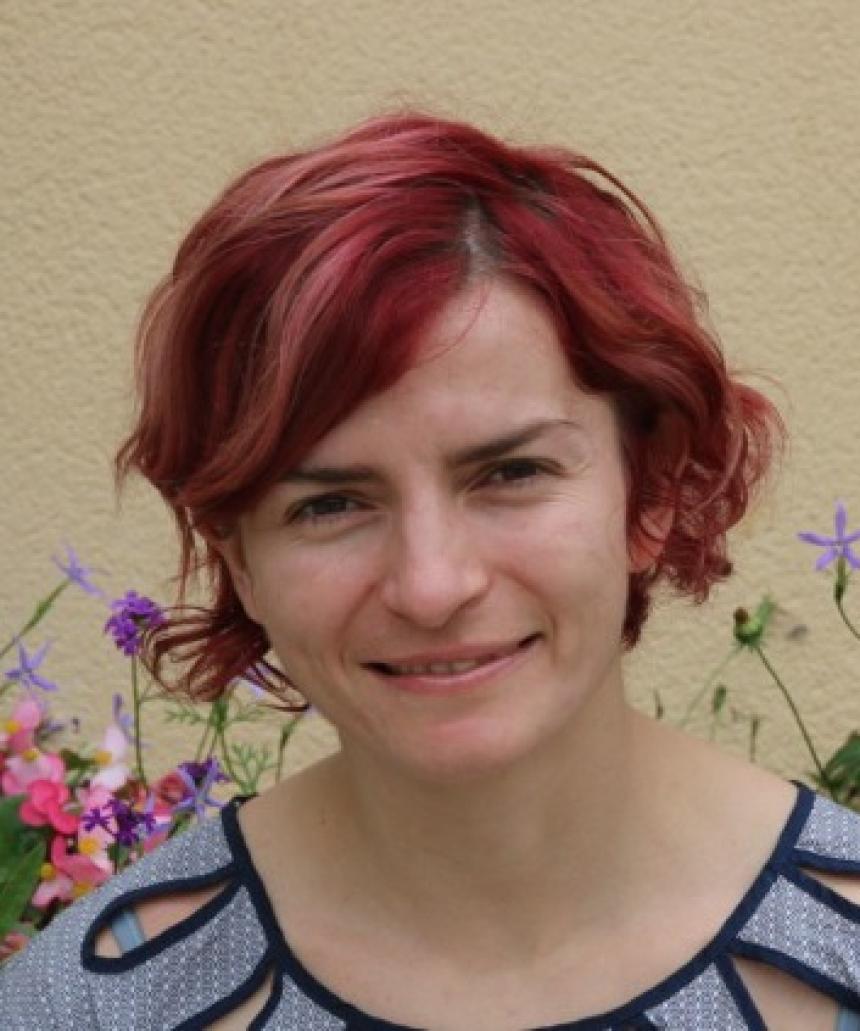
Prof Claudia Szabo
Dean, School of Computer Science and Information Technology
School of Computer Science and Information Technology
College of Engineering and Information Technology
Eligible to supervise Masters and PhD - email supervisor to discuss availability.
My main research interests lie in the area of complex systems and their practical applications to domains such as biology, social networks, and Defence. I lead the Complex Systems program within the Centre for Distributed and Intelligent Technologies. My education research interests lie in the areas of curriculum design, cognitive load theories, and software engineering best practices.Interested in a PhD or master? Read more detailed descriptions of topics in my profile.
Autonomous decision making, in particular as it happens in complex adaptive sytems that operate in contested and dyanmic environments, is a very challenging problem. Three critical questions remain when thinking about applying complex systems theories to specific application domains:
- How can we engineer decision making in complex systems?
- How do we engineer and/or define and measure emergent properties in a complex systems of systems?
- How do we design systems that reap the benefits of self-organisation? Once these systems are designed and prototyped, how do we measure the impact and benefit of self-organisation? Beyond self-organisation, another interesting property is adaptability and the same questions above apply to it as well.
Interested in a PhD or Master in this topic? Please send me an email with your CV, transcripts, and a 2-page proposal. I cannot stress enough the need to send a proposal that is relevant to this field - I will not respond otherwise.
| Date | Position | Institution name |
|---|---|---|
| 2019 - ongoing | Director, Digital Technologies | Faculty of Engineering, Computer and Mathematical Sciences |
| 2019 - ongoing | Associate Professor | The University of Adelaide |
| 2017 - 2018 | Senior Lecturer | The University of Adelaide |
| 2014 - 2019 | Associate Dean (Diversity and Inclusion) | The University of Adelaide |
| 2013 - 2016 | Lecturer | The University of Adelaide |
| 2011 - 2012 | Associate Lecturer | The University of Adelaide |
| Date | Institution name | Country | Title |
|---|---|---|---|
| 2011 | National University of Singapore | Singapore | PhD |
| 'Politehnica' Institute of Bucharest | Romania | Bachelor of Science (Computer Science) |
| Year | Citation |
|---|---|
| 2026 | Chopra, S., Ahmad, H., Goel, D., & Szabo, C. (2026). ChatNVD: Advancing Cybersecurity Vulnerability Assessment with Large Language Models. IEEE Access, 14, 1. Scopus4 WoS2 |
| 2025 | Standen, M., Kim, J., & Szabo, C. (2025). Adversarial Machine Learning Attacks and Defences in Multi-Agent Reinforcement Learning. ACM Computing Surveys, 57(5), 35 pages. Scopus40 WoS29 |
| 2025 | Konduru, L., Dahia, S. S., Szabo, C., & Barreto, S. G. (2025). Evolving Dynamics of Colorectal Cancer in High Socio-Demographic Regions.. Cancer Control, 32, 1-13. Scopus6 WoS6 Europe PMC4 |
| 2025 | Ahmad, H., Treude, C., Wagner, M., & Szabo, C. (2025). Towards resource-efficient reactive and proactive auto-scaling for microservice architectures. Journal of Systems and Software, 225, 112390. Scopus25 WoS17 |
| 2025 | Szabo, C., Baker, R., Pearce, G., Teffera, E., & Perry, A. (2025). Overview and Challenges of Distributed Decision Making in Resource Contested and Dynamic Environments. ACM Computing Surveys, 57(9), 1-34. Scopus2 |
| 2025 | Namal Rajapakse, R., & Szabo, C. (2025). Towards Multi‐Class Socio‐Technical Congruence: Assessing Coordination in Collaborative Software Development Settings. Journal of Software: Evolution and Process, 37(9), e70040-1-e70040-20. Scopus1 |
| 2025 | Hynds, J., Lohmeyer, D., Coburn, K., & Szabo, C. (2025). Towards the integration of sleep-caused fatigue in discrete event combat simulations. Journal of Simulation, 1-24. Scopus1 WoS2 |
| 2025 | Zhang, Y., Goel, D., Ahmad, H., & Szabo, C. (2025). RegimeFolio: A Regime Aware ML System for Sectoral Portfolio Optimization in Dynamic Markets. IEEE Access, 13, 184722-184744. Scopus5 WoS4 |
| 2024 | Honhaga, I., & Szabo, C. (2024). A simulation and experimentation architecture for resilient cooperative multiagent reinforcement learning models operating in contested and dynamic environments. SIMULATION-TRANSACTIONS OF THE SOCIETY FOR MODELING AND SIMULATION INTERNATIONAL, 100(6), 563-579. Scopus3 WoS1 |
| 2024 | Iqbal, A., Honhaga, I., Teffera, E., Perry, A., Baker, R., Pearce, G., & Szabo, C. (2024). Vulnerability and Defence: A Case for Stackelberg Game Dynamics. Games, 15(5), 32-1-32-13. Scopus2 WoS2 |
| 2024 | Uhrmacher, A. M., Frazier, P., Hähnle, R., Klügl, F., Lorig, F., Ludäscher, B., . . . Wilsdorf, P. (2024). Context, Composition, Automation, and Communication: The C<sup>2</sup>AC Roadmap for Modeling and Simulation. ACM Transactions on Modeling and Computer Simulation, 34(4), 1-51. Scopus19 WoS10 |
| 2023 | Standen, M., Kim, J., & Szabo, C. (2023). SoK: Adversarial Machine Learning Attacks and Defences in Multi-Agent Reinforcement Learning. |
| 2023 | Ko, A. J., Draper, S., Maguire, J., Pajunen, J., Tedre, M., Sinclair, J., & Szabo, C. (2023). A Dialog About the Special Issues on Theory. ACM TRANSACTIONS ON COMPUTING EDUCATION, 23(1), 5 pages. |
| 2023 | Szabo, C., & Sheard, J. (2023). Learning Theories Use and Relationships in Computing Education Research. ACM TRANSACTIONS ON COMPUTING EDUCATION, 23(1), 1-34. Scopus25 WoS14 |
| 2023 | Dahia, S. S., & Szabo, C. (2023). Implementing Machine Learning to Predict the 10-Year Risk of Cardiovascular Disease. |
| 2023 | Ronca, S., Ford, C. S., Allanguillame, J., Szabo, C., Kipling, R., & Wilkinson, M. J. (2023). The value of twinned pollinator-pollen metabarcoding: bumblebee pollination service is weakly partitioned within a UK grassland community.. Sci Rep, 13(1), 18016. Scopus2 WoS3 Europe PMC1 |
| 2023 | Ronca, S., Ford, C. S., Allanguillaume, J., Szabo, C., Kipling, R., & Wilkinson, M. J. (2023). Author Correction: The value of twinned pollinator-pollen metabarcoding: bumblebee pollination service is weakly partitioned within a UK grassland community.. Scientific reports, 13(1), 20702. |
| 2023 | Iqbal, A., Chappell, J. M., Szabo, C., & Abbott, D. (2023). Resolving game theoretical dilemmas with quantum states. Quantum Information Processing, 23(1), 5-1-5-25. Scopus4 WoS3 |
| 2022 | Scott, J., Oxlad, M., Dodd, J., Szabo, C., Deussen, A., & Turnbull, D. (2022). Promoting health behaviour change in the preconception period: A combined approach to intervention planning. JMIR Formative Research, 6(4), 1-10. Scopus6 WoS5 Europe PMC5 |
| 2021 | Szabo, C., Sims, B., McAtee, T., Lodge, R., & Hunjet, R. (2021). Self-Adaptive Software Systems in Contested and Resource-Constrained Environments: Overview and Challenges. IEEE Access, 9, 10711-10728. Scopus17 WoS10 |
| 2021 | Scott, J., Oxlad, M., Dodd, J., Szabo, C., Deussen, A., & Turnbull, D. (2021). Promoting Health Behavior Change in the Preconception Period: Combined Approach to Intervention Planning (Preprint). |
| 2020 | Alvarez Cid-Fuentes, J., Szabo, C., & Falkner, K. (2020). Adaptive performance anomaly detection in distributed systems using online SVMs. IEEE Transactions on Dependable and Secure Computing, 17(5), 9281-941. Scopus31 WoS23 |
| 2020 | Fraser, B., Coyle, A., Hunjet, R., & Szabo, C. (2020). An Analytic Latency Model for a Next-Hop Data-Ferrying Swarm on Random Geometric Graphs. IEEE Access, 8, 1-14. Scopus4 WoS4 |
| 2020 | Scott, J., Oxlad, M., Dodd, J., Szabo, C., Deussen, A., & Turnbull, D. (2020). Creating healthy change in the preconception period for women with overweight or obesity: a qualitative study using the information-motivation-behavioural skills model. J Clin Med, 9(10), 1-20. Scopus22 WoS17 Europe PMC17 |
| 2019 | Bourne, S., Szabo, C., & Sheng, Q. Z. (2019). Transactional behavior verification in business process as a service configuration. IEEE Transactions on Services Computing, 12(2), 290-303. Scopus5 WoS3 |
| 2018 | Falkner, K., Szabo, C., Chiprianov, V., Puddy, G., Rieckmann, M., Fraser, D., & Aston, C. (2018). Model-driven performance prediction of systems of systems. Software and Systems Modeling, 17(2), 415-441. Scopus14 WoS11 |
| 2018 | Zhang, Y., Szabo, C., Sheng, Q., & Fang, X. (2018). SNAF: Observation filtering and location inference for event monitoring on twitter. World Wide Web, 21(2), 311-343. Scopus15 WoS12 |
| 2018 | Michell, D., Szabo, C., Falkner, K., & Szorenyi, A. (2018). Towards a Socio-Ecological Framework to address gender inequity in computer science. Computers and Education, 126, 324-333. Scopus44 WoS36 |
| 2018 | Álvarez Cid-Fuentes, J., Szabo, C., & Falkner, K. (2018). An adaptive framework for the detection of novel botnets. Computers and Security, 79, 148-161. Scopus23 WoS18 |
| 2017 | Wilkinson, M. J., Szabo, C., Ford, C. S., Yarom, Y., Croxford, A. E., Camp, A., & Gooding, P. (2017). Replacing Sanger with Next Generation Sequencing to improve coverage and quality of reference DNA barcodes for plants. Scientific Reports, 7(1), 11 pages. Scopus54 WoS48 Europe PMC30 |
| 2017 | Michell, D., Szorenyi, A., Falkner, K., & Szabo, C. (2017). Broadening participation not border protection: how universities can support women in computer science. Journal of Higher Education Policy and Management, 39(4), 406-422. Scopus43 WoS32 |
| 2016 | Zhang, Y., Szabo, C., & Sheng, Q. (2016). Reduce or remove: individual sensor reliability profiling and data cleaning. Intelligent Data Analysis, 20(5), 979-995. Scopus4 WoS3 |
| 2015 | Szabo, C., & Teo, Y. (2015). Formalization of weak emergence in multiagent systems. ACM Transactions on Modeling and Computer Simulation, 26(1), 6-1-6-25. Scopus28 WoS18 |
| 2014 | Szabo, C., Sheng, Q., Kroeger, T., Zhang, Y., & Yu, J. (2014). Science in the cloud: Allocation and execution of data-intensive scientific workflows. Journal of Grid Computing, 12(2), 245-264. Scopus74 WoS52 |
| 2014 | Sheng, Q., Maamar, Z., Yao, L., Szabo, C., & Bourne, S. (2014). Behavior modeling and automated verification of Web services. Information Sciences, 258, 416-433. Scopus25 WoS19 |
| 2014 | Sheng, Q., Qiao, X., Vasilakos, A., Szabo, C., Bourne, S., & Xu, X. (2014). Web services composition: a decade's overview. Information Sciences, 280, 218-238. Scopus370 WoS293 |
| 2012 | Szabo, C., & Teo, Y. (2012). An analysis of the cost of validating semantic composability. Journal of Simulation, 6(3), 152-163. Scopus11 WoS8 |
| 2011 | Szabo, C., & Diallo, S. Y. (2011). Defining and Validating Semantic Machine to Machine Interoperability. Intelligent Systems Reference Library, 10, 49-74. Scopus3 WoS1 |
| Year | Citation |
|---|---|
| 2023 | Simon., Sheard, J., Luxton-Reilly, A., & Szabo, C. (2023). Computing education research in Australasia. In M. Apiola, S. Lopez-Pernaz, & M. Saqr (Eds.), Past, Present and Future of Computing Education Research: A Global Perspective (pp. 373-394). Springer International Publishing. DOI Scopus1 |
| 2018 | Szabo, C., & Birdsey, L. (2018). Toward the automated detection of emergent behavior. In S. Mittal, S. Diallo, & A. Tolk (Eds.), Emergent Behavior in Complex Systems Engineering: A Modeling and Simulation Approach (pp. 229-261). Hoboken, NJ; USA: John Wiley & Sons. DOI Scopus2 |
| 2014 | Falkner, K., Chiprianov, V., Falkner, N., Szabo, C., & Puddy, G. (2014). A model-driven engineering method for DRE defence systems performance analysis and prediction. In A. Bagnato, L. Indrusiak, I. Quadri, & M. Rossi (Eds.), Handbook of research on embedded systems design (1 ed., pp. 301-326). United States: IGI Global. DOI Scopus3 |
| 2014 | Chiprianov, V., Falkner, K., Szabo, C., & Puddy, G. (2014). Architectural Support for Model-Driven Performance Prediction of Distributed Real-Time Embedded Systems of Systems. In Lecture Notes in Computer Science (pp. 357-364). Springer International Publishing. DOI |
| 2013 | Szabo, C., & Teo, Y. (2013). Semantic validation of emergent properties in component-based simulation models. In A. Tolk (Ed.), Ontology, Epistemology, and Teleology for Modeling and Simulation: Philosophical Foundations for Intelligent M&S Applications (Vol. 44, 1 ed., pp. 319-333). Germany: Springer. DOI Scopus12 |
| Year | Citation |
|---|---|
| 2026 | Do, A. V., Galhenage, E., Neumann, A., Neumann, F., Uzunov, A. V., & Szabo, C. (2026). A Hybrid Multi-Agent Reinforcement Learning Framework for Decentralised Search-And-Interact Tasks Under Partial Observability. In M. Liu, X. Yu, C. Xu, & Y. Song (Eds.), Lecture Notes in Computer Science Vol. 16371 LNAI (pp. 387-401). AUSTRALIA, Canberra: SPRINGER-VERLAG SINGAPORE PTE LTD. DOI |
| 2026 | Douglas, G., Franklin, S., Szabo, C., & Guo, M. (2026). Building Large-Scale Drone Defenses from Small-Team Strategies. In Aamas 2026 Proceedings of the 25th International Conference on Autonomous Agents and Multiagent Systems (pp. 1655-1663). International Foundation for Autonomous Agents and Multiagent Systems. DOI |
| 2026 | Standen, M., Kim, J., & Szabo, C. (2026). Finding the Weakest Link: Adversarial Attack against Multi-Agent Communications. In Aamas 2026 Proceedings of the 25th International Conference on Autonomous Agents and Multiagent Systems (pp. 3474-3476). International Foundation for Autonomous Agents and Multiagent Systems. DOI |
| 2026 | Banham, A., Szabo, C., & Beruldsen, R. (2026). On the Modelling of Aggregated Behaviour for Simulation: An Event-Based Architecture. In Sigsim PADS 2026 Proceedings of the 40th ACM Sigsim International Conference on Principles of Advanced Discrete Simulation (pp. 9-21). ACM. DOI Scopus1 |
| 2026 | Cardell-Oliver, R., Szabo, C., Maennel, K., & Russell, H. (2026). LLM-led Socratic Dialogues on Ethics in Computing. In Iticse 2026 Proceedings of the 31st ACM Conference on Innovation and Technology in Computer Science Education V 1 (pp. 121-127). ACM. DOI |
| 2025 | Szabo, C. (2025). Complex Systems Modeling and Analysis. In 2024 Winter Simulation Conference (WSC) (pp. 1-14). Orlando, FL, USA: IEEE. DOI Scopus2 |
| 2025 | Szabo, C., Parker, M. C., Friend, M., Jeuring, J., Kohn, T., Malmi, L., & Sheard, J. (2025). Models of Mastery Learning for Computing Education. In Proceedings of the 56th ACM Technical Symposium on Computer Science Education V. 1 Vol. 1 (pp. 1092-1098). Pittsburgh, Pennsylvania: ACM. DOI Scopus6 WoS4 |
| 2025 | Colby, M., & Szabo, C. (2025). Simulation Framework Architecture for Assessing Dynamic Distributed Network Task Coordination Implementations. In ACM Sigsim PADS 2025 Proceedings of the 39th ACM Sigsim International Conference on Principles of Advanced Discrete Simulation (pp. 127-131). NM, Santa Fe: ASSOC COMPUTING MACHINERY. DOI |
| 2025 | Szabo, C., Sheard, J., Dake, D. K., Falkner, N. J. G., Enock, M., Ogunyemi, O., . . . Wadhwa, B. (2025). Ethical and Societal Impacts of Generative AI in Higher Computing Education: An ACM Task Force Working Group to Develop a Landscape Analysis – Perspectives from the Global Souths and Guidelines for CS1/CS2/CS3. In Comped 2025 Proceedings of the ACM Global Computing Education Conference 2025 Vol. 2 (pp. 371-372). NETHERLANDS, Nijmegen: ASSOC COMPUTING MACHINERY. DOI |
| 2025 | Thilakaratne, M., Chen, W. T., Brennan, M., Falkner, N., & Szabo, C. (2025). Building a Strong Base: The Impact of Mastery Learning on Foundation of Computer Science Courses. In ACM (Ed.), Proceedings of 25th International Conference on Computing Education Research Koli Calling 2025 (pp. 7 pages). FINLAND: ASSOC COMPUTING MACHINERY. DOI |
| 2025 | Sheard, J., Malmi, L., Szabo, C., & Kinnunen, P. (2025). Pair Programming as a Pedagogical Practice: Connections to Computing Education Theories. In Comped 2025 Proceedings of the ACM Global Computing Education Conference 2025 Vol. 1 (pp. 57-63). BOTSWANA, Gaborone: ASSOC COMPUTING MACHINERY. DOI |
| 2025 | Szabo, C., Sheard, J., Malmi, L., & Kinnunen, P. (2025). Parsons problems and computing education learning theories. In ACM (Ed.), Proceedings of 25th International Conference on Computing Education Research Koli Calling 2025 (pp. 10 pages). FINLAND: ASSOC COMPUTING MACHINERY. DOI Scopus1 |
| 2025 | Abbas, F., Ahmad, H., & Szabo, C. (2025). SCALAR: Self-Calibrating Adaptive Latent Attention Representation Learning. In Proceedings International Conference on Tools with Artificial Intelligence Ictai (pp. 762-769). GREECE, Athens: IEEE COMPUTER SOC. DOI |
| 2025 | Ahmad, H., Treude, C., Wagner, M., & Szabo, C. (2025). Resilient Auto-Scaling of Microservice Architectures with Efficient Resource Management. In T. Zhang, X. Luo, J. Keung, & E. Choi (Eds.), Proceedings Asia Pacific Software Engineering Conference APSEC (pp. 852-856). PEOPLES R CHINA, Macau: IEEE COMPUTER SOC. DOI |
| 2024 | Szabo, C., Castro, R., Denil, J., & Sanchez, S. M. (2024). Resilience and Complexity in Socio-Cyber-Physical Systems. In Proceedings - Winter Simulation Conference (pp. 660-670). Online: IEEE. DOI Scopus4 |
| 2024 | McGill, M. M., Heckman, S., Liut, M., Sanusi, I. T., & Szabo, C. (2024). Unlocking Excellence in Educational Research: Guidelines for High-Quality Research that Promotes Learning for All. In SIGCSE 2024 - Proceedings of the 55th ACM Technical Symposium on Computer Science Education Vol. 2 (pp. 1871-1872). ACM. DOI |
| 2024 | Pretila, H., Campbell, B., & Szabo, C. (2024). Contested Communication in C2 Multi-agent Simulations. In Proceedings of the 38th ACM SIGSIM Conference on Principles of Advanced Discrete Simulation (ACM SIGSIM , 2024) (pp. 25-29). Atlanta, Georgia, USA: ACM. DOI |
| 2024 | Dahia, S. S., & Szabo, C. (2024). Detecting Emergent Behavior in Complex Systems: A Machine Learning Approach. In Proceedings of the 38th ACM SIGSIM Conference on Principles of Advanced Discrete Simulation (ACM SIGSIM, 2024) (pp. 81-87). Online: ACM. DOI Scopus4 WoS5 |
| 2024 | Rajapakse, R., & Szabo, C. (2024). Code Refactoring Strategies of Third Year Software Engineering Students. In Proceedings of the Annual Conference on Innovation and Technology in Computer Science Education (ITiCSE 2024) Vol. 1 (pp. 562-568). New York, NY, USA: Association for Computing Machinery (ACM). DOI Scopus2 WoS2 |
| 2024 | Ahmad, H., Treude, C., Wagner, M., & Szabo, C. (2024). Smart HPA: A Resource-Efficient Horizontal Pod Auto-Scaler for Microservice Architectures. In Proceedings - IEEE 21st International Conference on Software Architecture, ICSA 2024 (pp. 46-57). Online: IEEE. DOI Scopus27 WoS17 |
| 2023 | Craggs, D., Lee, K. L., Radenovic, V., Campbell, B., & Szabo, C. (2023). Use Of Reinforcement Learning for Prioritizing Communications in Contested and Dynamic Environments. In Proceedings - Winter Simulation Conference Vol. 2022-December (pp. 2699-2711). Online: IEEE. DOI |
| 2023 | Tran, J., Fule, P., & Szabo, C. (2023). Effects of Information Sharing on Swarm Based Communication in Dynamic Environments. In Proceedings - Winter Simulation Conference Vol. 2022-December (pp. 461-472). Online: IEEE. DOI Scopus1 |
| 2023 | Pearce, G., Pflaum, A., Balasoiu, D. A., & Szabo, C. (2023). Jeopardy Assessment for Dynamic Configuration of Collaborative Microservice Architectures. In Proceedings - Winter Simulation Conference Vol. 2022-December (pp. 2070-2081). Online: IEEE. DOI |
| 2023 | Gopalan, R., Shovon, M. H. I., Campbell, B., Radenovic, V., McLeod, K., Campbell, L., . . . Szabo, C. (2023). Message Prioritization in Contested And Dynamic Tactical Networks Using Regression Methods and Mission Context. In Proceedings - Winter Simulation Conference Vol. 2022-December (pp. 2046-2057). Online: IEEE. DOI |
| 2023 | Szabo, C., Craggs, D., Balasoiu, D. A., Radenovic, V., & Campbell, B. (2023). Robustness of Middleware Communication in Contested and Dynamic Environments. In Proceedings - Winter Simulation Conference Vol. 2022-December (pp. 2058-2069). Online: IEEE. DOI Scopus1 WoS1 |
| 2023 | McGill, M. M., Heckman, S., Chytas, C., Diaz, L., Liut, M., Kazakova, V., . . . Szabo, C. (2023). Building Recommendations for Conducting Equity-Focused, High Quality K-12 Computer Science Education Research. In Annual Conference on Innovation and Technology in Computer Science Education, ITiCSE Vol. 2 (pp. 565-566). Univ Turku, Turku, FINLAND: ACM. DOI Scopus1 |
| 2023 | McGill, M. M., Heckman, S., Chytas, C., Liut, M., Kazakova, V., Sanusi, I. T., . . . Szabo, C. (2023). Conducting Sound, Equity-Enabling Computing Education Research. In ITiCSE-WGR 2023 - Proceedings of the 2023 Working Group Reports on Innovation and Technology in Computer Science Education (pp. 30-56). New York, NY, USA: ACM. DOI Scopus9 WoS2 |
| 2022 | Boyapati, S. R., & Szabo, C. (2022). Self-adaptation in Microservice Architectures: A Case Study. In Proceedings of the IEEE International Conference on Engineering of Complex Computer Systems, ICECCS Vol. 2022-March (pp. 42-51). Online: IEEE. DOI Scopus11 WoS9 |
| 2022 | Craggs, D., Radenovic, V., Lee, K. L., Campbell, B., & Szabo, C. (2022). Use Of Reinforcement Learning for Prioritizing Communications in Contested and Dynamic Environments. In https://ieeexplore.ieee.org/xpl/conhome/10015196/proceeding. Washington DC. |
| 2021 | Graham, M., Falkner, K., Szabo, C., & Yarom, Y. (2021). Security Architecture Framework for Enterprises. In Proceedings of the 22nd International Conference on Enterprise Information Systems, as published in Enterprise Information Systems Vol. 417 (pp. 883-904). Switzerland: Springer International Publishing. DOI Scopus1 WoS1 |
| 2020 | McClintock, M., Falkner, K., Szabo, C., & Yarom, Y. (2020). Enterprise security architecture: Mythology or methodology?. In ICEIS 2020 - Proceedings of the 22nd International Conference on Enterprise Information Systems Vol. 2 (pp. 679-689). online: ICEIS. DOI Scopus6 WoS4 |
| 2020 | Szabo, C. (2020). Perspectives of Final Year Students on Modeling and Analysis of Complex Systems and Their Properties. In IEEE Symposium on Artificial Life (ALIFE) (pp. 86-93). online: IEEE. DOI Scopus1 WoS1 |
| 2020 | Fraser, B., Szabo, C., Coyle, A., & Hunjet, R. (2020). Leveraging Emergent Specialization in a Heterogeneous Multi-Role Swarm Control Architecture for Positional-based UAS Missions. In IEEE Symposium on Artificial Life (ALIFE) (pp. 2584-2591). online: IEEE. DOI Scopus2 WoS1 |
| 2020 | Szabo, C., Radenovic, V., Judd, G., Craggs, D., Lee, K. L., Chen, X., & Chan, K. (2020). Optimizing Communication Strategies in Contested and Dynamic Environments. In Proceedings of the 2020 25th IEEE International Conference on Engineering of Complex Computer Systems, ICECCS Vol. 2020-October (pp. 197-205). online: IEEE. DOI Scopus3 WoS3 |
| 2019 | Le, K., Tarmazdi, H., Vivian, R., Falkner, K., Szabo, C., & Falkner, N. (2019). Directing Teacher Focus in Computer Science Online Learning Environments. In Proceedings of Latice 2017 (pp. 119-125). Hong Kong: IEEE. DOI Scopus2 WoS2 |
| 2019 | Szabo, C., Craggs, D., Johnson, W., Judd, G., & French, K. (2019). A simulation testbed for the analysis of desired emergent properties in systems running in dynamic and contested environments. In Proceedings - Winter Simulation Conference Vol. 2018-December (pp. 1049-1060). online: IEEE. DOI Scopus2 WoS2 |
| 2019 | Szabo, C., & Pointon, M. S. (2019). Final year students’ approaches to implementing complex distributed systems. In Annual Conference on Innovation and Technology in Computer Science Education, ITiCSE (pp. 217-223). online: ACM. DOI Scopus1 |
| 2019 | Szabo, C., Falkner, N., Petersen, A., Bort, H., Connolly, C., Cunningham, K., . . . Sheard, J. (2019). A periodic table of computing education learning theories. In Annual Conference on Innovation and Technology in Computer Science Education, ITiCSE (pp. 269-270). online: ACM. DOI Scopus39 WoS27 |
| 2019 | Fraser, B., Coyle, A., Szabo, C., & Hunjet, R. (2019). Adaptive swarm control for mobile resource placement in wireless ad-hoc networks. In 20th IEEE International Symposium on A World of Wireless, Mobile and Multimedia Networks, WoWMoM 2019 (pp. 1-6). online: IEEE. DOI Scopus5 WoS3 |
| 2019 | Judd, G. B., Szabo, C. M., Chan, K. S., Radenovic, V., Boyd, P., Marcus, K., & Ward, D. (2019). Representing and reasoning over military context information in complex multi domain battlespaces using artificial intelligence and machine learning. In Proceedings of SPIE - The International Society for Optical Engineering Vol. 11006 (pp. 1-16). online: SPIE. DOI Scopus3 WoS2 |
| 2019 | McAtee, T., & Szabo, C. (2019). Complex Systems and Artificial Life: A Decade's Overview. In H. Fellermann, J. Bacardit, A. GoniMoreno, & R. Fuchslin (Eds.), ALIFE 2019: THE 2019 CONFERENCE ON ARTIFICIAL LIFE (pp. 263-270). online: MIT PRESS. Scopus1 WoS1 |
| 2019 | Szabo, C., Sheard, J., Luxton-Reilly, A., Simon., Becker, B. A., & Ott, L. (2019). Fifteen years of introductory programming in schools: A global overview of K-12 initiatives. In ACM International Conference Proceeding Series (pp. 1-9). online: ACM. DOI Scopus31 WoS35 |
| 2019 | Szabo, C., & Pyromallis, C. (2019). Modelling and Analysis of Adaptability and Emergent Behavior in a Cryptocurrency Market. In 2019 IEEE Symposium Series on Computational Intelligence (SSCI) (pp. 284-292). online: IEEE. DOI Scopus2 |
| 2019 | Szabo, C., McAtee, T., Groot, J., & Pyromallis, C. (2019). Who Did This: Identifying Causes of Emergent Behavior in Complex Systems. In 2019 IEEE Symposium Series on Computational Intelligence (SSCI) (pp. 262-270). online: IEEE. DOI Scopus9 WoS4 |
| 2019 | Pflaum, A., Szabo, C., & Coyle, A. (2019). Communication Collective: An Adaptive Multiagent Communication Platform. In Proceedings - Winter Simulation Conference Vol. 2019-December (pp. 690-701). online: IEEE. DOI Scopus1 WoS1 |
| 2019 | Szabo, C. (2019). Complex Systems Modeling and Analysis. In Proceedings of the Winter Simulation Conference Vol. 2019-December (pp. 1495-1503). online: IEEE. DOI Scopus6 WoS5 |
| 2018 | Fraser, B., Hunjet, R., & Szabo, C. (2018). Simulating the effect of degraded wireless communications on emergent behavior. In V. Chan, A. DAmbrogio, G. Zacharewicz, & N. Mustafee (Eds.), Proceedings - Winter Simulation Conference (pp. 4081-4092). Las Vegas, NV: IEEE. DOI Scopus16 WoS7 |
| 2018 | Szabo, C., Falkner, N., Knutas, A., & Dorodchi, M. (2018). Understanding the effects of lecturer intervention on computer science student behaviour. In ITiCSE-WGR 2017 - Proceedings of the 2017 ITiCSE Conference on Working Group Reports Vol. 2018-January (pp. 105-124). Bologna, ITALY: ASSOC COMPUTING MACHINERY. DOI Scopus19 WoS13 |
| 2018 | Luxton-Reilly, A., Simon., Albluwi, I., Becker, B. A., Giannakos, M., Kumar, A. N., . . . Szabo, C. (2018). Introductory programming: A systematic literature review. In G. Rossling, & B. Scharlau (Eds.), Annual Conference on Innovation and Technology in Computer Science Education, ITiCSE (pp. 55-106). online: ASSOC COMPUTING MACHINERY. DOI Scopus445 WoS341 |
| 2018 | Szabo, C., Barnes, J., & Munguia, P. (2018). Multi-objective Strategies for Exploring Form and Function in Crustaceans. In T. Ikegami, N. Virgo, O. Witkowski, M. Oka, R. Suzuki, & H. Iizuka (Eds.), 2018 CONFERENCE ON ARTIFICIAL LIFE (ALIFE 2018) (pp. 311-318). online: MIT PRESS. |
| 2017 | Birdsey, L., Szabo, C., & Falkner, K. (2017). Casl: A declarative domain specific language for modeling complex adaptive systems. In Proceedings - Winter Simulation Conference Vol. 0 (pp. 1241-1252). Arlington, VA: IEEE. DOI Scopus13 WoS9 |
| 2017 | Falkner, N., Szabo, C., & Falkner, K. (2017). Formal forum triage: Towards the strategic selection of responses to student discussion forums. In L@S 2017 - Proceedings of the 4th (2017) ACM Conference on Learning at Scale (pp. 173-176). online: ACM. DOI |
| 2017 | Zhang, Y., Szabo, C., Sheng, Q., Zhang, W., & Qin, Y. (2017). Identifying domains and concepts in short texts via partial taxonomy and unlabeled data. In E. Dubois, & K. Pohl (Eds.), Lecture Notes in Computer Science (including subseries Lecture Notes in Artificial Intelligence and Lecture Notes in Bioinformatics) Vol. 10253 LNCS (pp. 127-143). Essen, GERMANY: SPRINGER INTERNATIONAL PUBLISHING AG. DOI Scopus3 WoS4 |
| 2017 | Haidry, S., Falkner, K., & Szabo, C. (2017). Identifying Domain-Specific Cognitive Strategies for Software Engineering. In Annual Conference on Innovation and Technology in Computer Science Education, ITiCSE Vol. Part F128680 (pp. 206-211). online: ACM. DOI Scopus3 WoS2 |
| 2017 | Szabo, C., & Falkner, N. (2017). Silence, Words, or Grades: The Effects of Lecturer Feedback in Multi-Revision Assignments. In Annual Conference on Innovation and Technology in Computer Science Education, ITiCSE Vol. Part F128680 (pp. 293-298). online: ACM. DOI Scopus8 WoS8 |
| 2017 | La Vista, D., Falkner, N., & Szabo, C. (2017). Understanding the effects of intervention on computer science student behaviour in on-line forums. In Annual Conference on Innovation and Technology in Computer Science Education, ITiCSE Vol. Part F128680 (pp. 200-205). online: ACM. DOI Scopus6 WoS6 |
| 2017 | Birdsey, L., Szabo, C., & Falkner, K. (2017). Identifying Self-Organization and Adaptability in Complex Adaptive Systems. In Proceedings - 11th IEEE International Conference on Self-Adaptive and Self-Organizing Systems, SASO 2017 (pp. 131-140). Univ Arizona, Tucson, AZ: IEEE. DOI Scopus18 WoS16 |
| 2017 | Falkner, N., Szabo, C., & Knutas, A. (2017). Classifying the nature of lecturer intervention on computer science student behaviour. In ACM International Conference Proceeding Series (pp. 128-132). Koli, FINLAND: ASSOC COMPUTING MACHINERY. DOI Scopus1 |
| 2017 | Birdsey, L., Szabo, C., & Falkner, K. (2017). Large-scale complex adaptive systems using multi-agent modeling and simulation. In Proceedings of the International Joint Conference on Autonomous Agents and Multiagent Systems, AAMAS Vol. 3 (pp. 1478-1480). online: IFAAMS. Scopus5 WoS3 |
| 2017 | Szabo, C., Falkner, N., Dorodchi, M., Knutas, A., & Maiorana, F. (2017). Understanding the Effects of Lecturer Intervention on Computer Science Student Behaviour. In ITICSE'17: PROCEEDINGS OF THE 2017 ACM CONFERENCE ON INNOVATION AND TECHNOLOGY IN COMPUTER SCIENCE EDUCATION (pp. 391). New York, NY, United States: ASSOC COMPUTING MACHINERY. DOI WoS2 |
| 2016 | Birdsey, L., Szabo, C., & Teo, Y. (2016). Twitter knows: understanding the emergence of topics in social networks. In L. Yilmaz, W. Chan, I. Moon, T. Roeder, C. Macal, & M. Rosetti (Eds.), Proceedings of the 2015 Winter Simulation Conference Vol. 2016-February (pp. 4009-4020). Huntington Beach, CA: IEEE. DOI Scopus12 WoS12 |
| 2016 | Zhang, Y., Szabo, C., & Sheng, Q. (2016). An estimation maximization based approach for finding reliable sensors in environmental sensing. In Proceedings of the International Conference on Parallel and Distributed Systems Vol. 2016-January (pp. 190-197). Melbourne, Vic.: IEEE. DOI Scopus4 WoS5 |
| 2016 | Falkner, K., Falkner, N., Szabo, C., & Vivian, R. (2016). Applying validated pedagogy to MOOCs: an introductory programming course with media computation. In Proceedings of the 2016 ACM Conference on Innovation and Technology in Computer Science Education Vol. 11-13-July-2016 (pp. 326-331). Arequipa, Peru: ACM New York. DOI Scopus7 |
| 2016 | Zhang, Y., Szabo, C., & Sheng, Q. (2016). Improving object and event monitoring on twitter through lexical analysis and user profiling. In W. Cellary, M. Mokbel, J. Wang, H. Wang, R. Zhou, & Y. Zhang (Eds.), Proceedings of the 17th International Conference on Web Information Systems Engineering Vol. Part II (pp. 19-34). Shanghai, China: Springer. DOI Scopus8 WoS4 |
| 2016 | Chang, C., Zhang, Y., Szabo, C., & Sheng, Q. (2016). Extreme user and political rumor detection on Twitter. In J. Li, X. Li, S. Wang, J. Li, & Q. Sheng (Eds.), Proceedings International Conference on Advanced Data Mining and Applications Vol. 10086 LNAI (pp. 751-763). Gold Coast, Qld.: Springer. DOI Scopus39 |
| 2016 | Falkner, K. E., Szabo, C., & Chiprianov, V. (2016). Model-driven performance predication of systems of systems. In Proceedings of Models 2016 (pp. 44). Saint-Malo, France: ACM Digital Library. DOI WoS5 |
| 2015 | Tarmazdi, H., Vivian, R., Szabo, C., Falkner, K., & Falkner, N. (2015). Using learning analytics to visualise computer science teamwork. In V. Dagiene, C. Schulte, & T. Jevsikova (Eds.), Proceedings of the 2015 ACM Conference on Innovation and Technology in Computer Science Education Vol. 2015-June (pp. 165-170). Vilnius, Lithuania: ACM. DOI Scopus40 WoS31 |
| 2015 | Vivian, R., Tarmazdi, H., Falkner, K., Falkner, N., & Szabo, C. (2015). The development of a dashboard tool for visualising online teamwork discussions. In Proceedings of the 37th International Conference on Software Engineering Vol. 2 (pp. 380-388). Florence, Italy: IEEE. DOI Scopus29 WoS20 |
| 2015 | Falkner, K., Szabo, C., Vivian, R., & Falkner, N. (2015). Evolution of software development strategies. In Proceedings of the 2015 IEEE/ACM 37th IEEE International Conference on Software Engineering Vol. 2 (pp. 243-252). online: IEEE. DOI Scopus29 WoS23 |
| 2015 | Falkner, K., Szabo, C., Michell, D., Szorenyi, A., & Thyer, S. (2015). Gender gap in academia: perceptions of female computer science academics. In Proceedings of the 2015 ACM Conference on Innovation and Technology in Computer Science Education Vol. 2015-June (pp. 111-116). Vilnius, Lithuania: ACM. DOI Scopus54 WoS37 |
| 2015 | Szabo, C., Teo, Y., & Chengleput, G. (2015). Understanding complex systems: using interaction as a measure of emergence. In A. Tolk, S. Diallo, I. Ryzhov, L. Yilmaz, S. Buckley, & J. Miller (Eds.), Proceedings of the Winter Simulation Conference Vol. 2015-January (pp. 207-218). online: IEEE. DOI Scopus20 WoS17 |
| 2015 | Álvarez Cid-Fuentes, J., Szabo, C., & Falkner, K. (2015). Online behavior identification in distributed systems. In Proceedings of the 34th Symposium on Reliable Distributed Systems Vol. 2016-January (pp. 202-211). Montreal, Canada: IEEE. DOI Scopus5 WoS5 |
| 2015 | Zhang, Y., Szabo, C., & Sheng, Q. (2015). Sense and focus: towards effective location inference and event detection on Twitter. In Proceedings of the 16th International Conference Web Information Systems Engineering Vol. Part I (pp. 463-477). Miami, FL: Springer. DOI Scopus14 |
| 2015 | Zhang, Y., Szabo, C., Sheng, Q., & Fang, X. (2015). Classifying perspectives on Twitter: immediate observation, affection, and speculation. In J. Wang, W. Cellary, D. Wang, H. Wang, S. Chen, T. Li, & Y. Zhang (Eds.), Proceedings of the 16th International Conference on Web Information Systems Engineering (Part I) Vol. 9418 (pp. 493-507). Miami, FL: Springer. DOI Scopus7 |
| 2015 | Bourne, S., Szabo, C., & Sheng, Q. (2015). TL-VIEWS: a tool for temporal logic verification of transactional behavior of web service compositions. In F. Toumani, B. Pernici, D. Grigori, D. Benslimane, J. Mendling, N. HadjAlouane, . . . S. Bhiri (Eds.), Proceedings of the 12th International Conference on Service-Oriented Computing Vol. 8954 (pp. 418-422). Paris, France: Springer. DOI Scopus3 WoS2 |
| 2015 | Bourne, S., Szabo, C., & Sheng, Q. (2015). Managing configurable business process as a service to satisfy client transactional requirements. In P. Maglio, I. Paik, & W. Chou (Eds.), Proceedings of the IEEE International Conference on Services Computing (pp. 154-161). New York City, NY: IEEE. DOI Scopus4 WoS2 |
| 2015 | Szabo, C. (2015). Novice code understanding strategies during a software maintenance assignment. In Proceedings of the 37th International Conference on Software Engineering Vol. 2 (pp. 276-284). Florence, Italy: IEEE. DOI Scopus6 WoS2 |
| 2015 | Ihantola, P., Vihavainen, A., Ahadi, A., Butler, M., Börstler, J., Edwards, S., . . . Toll, D. (2015). Educational data mining and learning analytics in programming: literature review and case studies. In Proceedings of the 2015 ITiCSE Conference on Working Group Reports (pp. 41-63). Vilnius, Lithuania: ACM. DOI Scopus294 WoS213 |
| 2014 | Szabo, C. (2014). Evaluating GameDevTycoon for teaching software engineering. In Proceedings of the 45th ACM Technical Symposium on Computer Science Education (pp. 403-408). Atlanta, Georgia: ACM. DOI Scopus7 WoS4 |
| 2014 | Szabo, C., & Falkner, K. (2014). Neo-Piagetian theory as a guide to curriculum analysis. In Proceedings of the 45th ACM Technical Symposium on Computer Science Education (pp. 115-120). Atlanta, GA: ACM. DOI Scopus11 WoS9 |
| 2014 | Szabo, C. (2014). Student projects are not throwaways: teaching practical software maintenance in a software engineering course. In Proceedings of the 45th ACM Technical Symposium on Computer Science Education (pp. 55-60). Atlanta, Georgia: ACM. DOI Scopus21 WoS17 |
| 2014 | Chiprianov, V., Falkner, K., Szabo, C., & Puddy, G. (2014). Architectural support for model-driven performance prediction of distributed real-time embedded systems of systems. In P. Avgeriou, & U. Zdun (Eds.), Software architecture: 8th European Conference, ECSA 2014 Vienna, Austria, August 25-29, 2014: proceedings Vol. 8627 LNCS (pp. 357-364). Vienna, Austria: Springer International Publishing. DOI Scopus7 WoS2 |
| 2014 | Rieckmann, M., Fraser, D., Chiprianov, V., Szabo, C., & Falkner, K. (2014). Demonstration of model-driven performance prediction of distributed real-time embedded systems of systems. In Proceedings of the 2014 European Conference on Software Architecture Workshops (pp. 34-1-34-4). Vienna, Austria: Association for Computing Machinery. DOI Scopus1 |
| 2014 | Birdsey, L., & Szabo, C. (2014). An architecture for identifying emergent behavior in multi-agent systems. In A. Lomuscio, P. Scerri, A. Bazzan, & M. Huhns (Eds.), Proceedings of the 13th International Conference on Autonomous Agents and Multiagent Systems Vol. 2 (pp. 1455-1456). Paris, France: IFAAMAS. Scopus20 WoS13 |
| 2014 | Zhang, Y., Szabo, C., & Sheng, Q. (2014). Cleaning environmental sensing data streams based on individual sensor reliability. In B. Benatallah, A. Bestavros, Y. Manolopoulos, A. Vakali, & Y. Zhang (Eds.), Proceedings of the 15th International Conference on Web Information Systems Engineering, Part II Vol. 8787 (pp. 405-414). Thessaloniki, Greece: Springer. DOI Scopus5 WoS8 |
| 2014 | Vivian, R., Falkner, K., & Szabo, C. (2014). Can everybody learn to code?: computer science community perceptions about learning the fundamentals of programming. In Proceedings of the 14th Koli Calling International Conference on Computing Education Research Vol. 2014-November (pp. 41-50). online: ACM. DOI Scopus10 |
| 2014 | Szabo, C., Falkner, K., & Falkner, N. (2014). Experiences in course design using neo-piagetian theory. In Proceedings of the 14th Koli Calling International Conference on Computing Education Research Vol. 2014-November (pp. 81-90). online: ACM. DOI Scopus3 |
| 2013 | Tolk, A., Heath, B., Ihrig, M., Padilla, J., Page, E., Suarez, E., . . . Yilmaz, L. (2013). Epistemology of modeling and simulation. In Proceedings of the 2013 Winter Simulation Conference, WSC 2013 (pp. 1152-1166). online: IEEE. DOI Scopus20 WoS14 |
| 2013 | Falkner, K., Chiprianov, V., Falkner, N., Szabo, C., & Puddy, G. (2013). Modeling scenarios for the performance prediction of distributed real-time embedded systems. In 2013 Military Communications and Information Systems Conference (MilCIS) (pp. 1-6). United States: IEEE. DOI Scopus5 |
| 2013 | Bourne, S., Szabo, C., & Sheng, Q. (2013). Verifying transactional requirements of web service compositions using temporal logic templates. In Proceedings of Web Information Systems Engineering, WISE 2013 Vol. 8180 LNCS (pp. 243-256). Germany: Springer. DOI Scopus7 WoS5 |
| 2013 | Szabo, C., & Chen, Y. (2013). A model-driven approach for ensuring change traceability and multi-model consistency. In Proceedings of the 2013 IEEE 22nd Australasian Conference on Software Engineering, ASWEC 2013 (pp. 127-136). USA: IEEE. DOI Scopus5 WoS4 |
| 2013 | Falkner, K., Chiprianov, V., Falkner, N., Szabo, C., Hill, J., Puddy, G., . . . Wallis, A. (2013). Model-driven performance prediction of distributed real-time embedded defence systems. In Proceedings of the IEEE International Conference on Engineering of Complex Computer Systems, ICECCS (pp. 155-158). USA: IEEE. DOI Scopus9 WoS3 |
| 2013 | Teo, Y., Luong, B., & Szabo, C. (2013). Formalization of emergence in multi-agent systems. In Proceedings of the 2013 ACM SIGSIM Conference on Principles of Advanced Discrete Simulation, SIGSIM-PADS 2013 (pp. 231-240). online: ACM. DOI Scopus23 |
| 2013 | Szabo, C., & Teo, Y. (2013). Post-mortem analysis of emergent behavior in complex simulation models. In Proceedings of 2013 ACM SIGSIM Conference on Principles of Advanced Discrete Simulation, SIGSIM-PADS 2013 (pp. 241-251). online: ACM. DOI Scopus17 |
| 2012 | Szabo, C., & Teo, Y. (2012). An integrated approach for the validation of emergence in component-based simulation models. In Proceedings of the IEEE 2012 Winter Simulation Conference, WSC 2012 (pp. 1-12). USA: IEEE. DOI Scopus18 WoS9 |
| 2012 | Szabo, C., & Teo, Y. (2012). An objective-based approach for semantic validation of emergence in component-based simulation models. In Proceedings of the 2012 ACM/IEEE/SCS 26th Workshop on Principles of Advanced and Distributed Simulation, PADS 2012 (pp. 155-162). USA: IEEE. DOI Scopus6 WoS1 |
| 2012 | Bourne, S., Szabo, C., & Sheng, Q. (2012). Ensuring well-formed conversations between control and operational behaviors of web services. In Proceedings of the10th International Conference on Service-Oriented Computing, ICSOC 2012 Vol. 7636 LNCS (pp. 507-515). Germany: Springer-Verlag. DOI Scopus8 |
| 2012 | Szabo, C., & Kroeger, T. (2012). Evolving multi-objective strategies for task allocation of scientific workflows on public clouds. In Proceedings of the 2012 IEEE Congress on Evolutionary Computation, CEC 2012 (pp. 1-8). USA: IEEE. DOI Scopus37 WoS5 |
| 2011 | Szabo, C., & Teo, Y. (2011). An approach to semantic-based model discovery and selection. In Proceedings of the 2011 Winter Simulation Conference (pp. 3059-3071). USA: IEEE. DOI Scopus5 WoS3 |
| 2011 | Szabo, C., & Teo, Y. M. (2011). An analysis of the cost of validating semantic composability. In Proceedings Workshop on Principles of Advanced and Distributed Simulation PADS (pp. 8 pages). FRANCE, Nice: IEEE. DOI |
| 2010 | Szabo, C., & Teo, Y. M. (2010). On validation of semantic composability in data-driven simulation. In Proceedings Workshop on Principles of Advanced and Distributed Simulation PADS (pp. 73-80). IEEE. DOI Scopus6 |
| 2009 | Szabo, C., Teo, Y. M., & See, S. (2009). A time-based formalism for the validation of semantic composability. In Proceedings Winter Simulation Conference (pp. 1411-1422). IEEE. DOI Scopus17 |
| 2009 | Szabo, C., & Teo, Y. M. (2009). An approach for validation of semantic composability in simulation models. In Proceedings Workshop on Principles of Advanced and Distributed Simulation PADS (pp. 3-10). NY, Lake Placid: IEEE COMPUTER SOC. DOI Scopus26 WoS14 |
| 2009 | Szabo, C., Teo, Y. M., & See, S. (2009). A TIME-BASED FORMALISM FOR THE VALIDATION OF SEMANTIC COMPOSABILITY. In PROCEEDINGS OF THE 2009 WINTER SIMULATION CONFERENCE (WSC 2009 ), VOL 1-4 (pp. 1391-+). TX, Austin: IEEE. WoS6 |
| 2008 | Teo, Y. M., & Szabo, C. (2008). CODES: An integrated approach to composable modeling and simulation. In Proceedings Simulation Symposium (pp. 103-110). CANADA, Ottawa: IEEE COMPUTER SOC. DOI Scopus45 WoS26 |
| 2007 | Szabo, C., & Teo, Y. M. (2007). On Syntactic Composability and Model Reuse. In D. ALDabass, R. Zobel, A. Abraham, & S. Turner (Eds.), Proceedings 1st Asia International Conference on Modelling and Simulation Asia Modelling Symposium 2007 Ams 2007 (pp. 230-237). THAILAND, Prince Songkia Univ, Phuket: IEEE COMPUTER SOC. DOI Scopus31 WoS15 |
| Year | Citation |
|---|---|
| 2021 | Scott, J., Oxlad, M., Dodd, J., Szabo, C., Deussen, A., & Turnbull, D. (2021). Intervention mapping of the "Begin Better" program for preconception weight management. Poster session presented at the meeting of INTERNATIONAL JOURNAL OF BEHAVIORAL MEDICINE. SPRINGER. |
| 2018 | Luxton-Reilly, A., Becker, B. A., Ott, L., Simon., Giannakos, M., Paterson, J., . . . Szabo, C. (2018). A review of introductory programming research 2003–2017. Poster session presented at the meeting of Annual Conference on Innovation and Technology in Computer Science Education Iticse. Larnaca, CYPRUS: ASSOC COMPUTING MACHINERY. DOI Scopus16 WoS13 |
| 2017 | Vivian, R., Falkner, K., & Szabo, C. (2017). Broadening participation in computer science: key strategies from international findings. Poster session presented at the meeting of SIGCSE '17 Proceedings of the 2017 ACM SIGCSE Technical Symposium on Computer Science Education. New York, NY, USA: ACM. DOI Scopus2 WoS1 |
| Year | Citation |
|---|---|
| 2025 | Ahmad, H. (2025). Towards AI-Driven, Self-Adaptive, and Cyber-Resilient Software Engineering. (PhD Thesis, The University of Adelaide). |
| Year | Citation |
|---|---|
| 2025 | Ahmad, H., Treude, C., Wagner, M., & Szabo, C. (2025). Resilient Auto-Scaling of Microservice Architectures with Efficient Resource Management. |
| 2024 | Ahmad, H., Treude, C., Wagner, M., & Szabo, C. (2024). Smart HPA: A Resource-Efficient Horizontal Pod Auto-scaler for Microservice Architectures. |
| 2024 | Ahmad, H., Treude, C., Wagner, M., & Szabo, C. (2024). Towards Resource-Efficient Reactive and Proactive Auto-Scaling for Microservice Architectures. DOI |
| 2024 | Chopra, S., Ahmad, H., Goel, D., & Szabo, C. (2024). ChatNVD: Advancing Cybersecurity Vulnerability Assessment with Large Language Models. |
| 2024 | Rajapakse, R., & Szabo, C. (2024). Towards Multi-Class Socio-Technical Congruence: Assessing Coordination in Collaborative Software Development Settings. DOI |
| 2024 | Konduru, L., Dahia, S. S., Szabo, C., & Barreto, S. G. (2024). Evolving Dynamics of Colorectal Cancer in High Socio-Demographic Regions: A Machine Learning-Based Forecasting Study. DOI |
| 2023 | Rajapakse, R., & Szabo, C. (2023). Towards Multi-Class Socio-Technical Congruence: An Exploratory Case Study for Devsecops. DOI |
I am passionate about developing AI driven decision making research and development capability within industry. Extensive collaborations with my group's industry partners have resulted in focused research programs advancing research in state-of-the-art decision making techniques, the modeling and simulation of complex adaptive systems, and their application to various domains. In total, since 2020, I have helped secure over $28M in grants and research funding, of which $18.5M as CI. Below is a high level overview of some.
2025 - 2027, Human-machine partnership with AI agents to enhance decision-making, C. Szabo, T. McKay, Defence Trailblazer, $1,752,640.
2025 - 2027, Praetorian VENATOR UAS System, C. Szabo, B. Hill, Defence Trailblazer, $7,312,815
2025 - 2027, Developing Aggregated Simulated Combat Actions, C. Szabo, DST Group, $1,679,506
2025 - 2026, Hadrian Wall: Robust Mission Planning, C. Szabo, B. Hill, Trailblazer, $5,853,396
2025 - 2026, Multi-agent reinforcement learning for Contested and Dynamic Environments, C. Szabo, DST Group, $230,000
2024 - 2025, Evaluation of Decision Techniques for Context Aware Collaborative Active Protection Systems, C. Szabo, I. Honhaga, A Iqbal, DST Group $282,508
2024 - 2024, Defence Innovation Partnership - Collaborative Research Grant: Warm Starts and Goal-based Heuristics to Improve MARL Performance in Advanced Distributed Defence, C. Szabo, M. Guo, F. Neumann, E. Galanhage, J. Cuo, Defence Innovation Partnership, $150,000
2024 - 2024, Research Project: Optimized Hybrid MARL Techniques for Complex, Dynamic Environments, C. Szabo, M. Guo, DST Group, $175,533
2023 - 2024, Evaluation of Decision Techniques for Context Aware Collaborative Active Protection Systems - Competitive Environments, C. Szabo, I Honhaga, DST Group, $280,000
2023 - 2024, Evaluation of Decision Techniques for Context Aware Collaborative Active Protection Systems, C. Szabo, C. Szabo, I Honhaga, DST Group, $142,500
2023 - 2024, SMARTNet Research and Development, C. Szabo, D. Craggs, D. Balasoiu, DST Group, $393,180
2022 - 2022, Approaches to Partial Knowledge Sharing for Cooperative Decision-Making in Complex Adaptive Systems, C. Szabo, DST Group, $64,340
2021 - WSC Foundation, for the sponsorship of Simulation Around the World, US$150,000 (managed by the WSC Board)
2021 - 2023 - SMARTNet Version 5 Research and Development, C. Szabo, D. Craggs, D. Balasoiu, DST Group, $255,059
2022 - CADR-RAS - Technical Services, M. Webb, C. Szabo, C-C. Lim, DST Group, $10,674,512
2022 - 2023, Distributed Orchestration and Decision Making, C. Szabo, DST Group, $116,497
2020 - 2022, SMARTNet Version 4 Research & Development: Mission Context Aspects, C. Szabo, D. Craggs, D. Balasoiu, DST Group, $161,598
2020 - 2021, Distributed micro-service orchestration in resource constrained environments, C. Szabo, DST Group, $67,322
2019 - 2019, SMARTNet Version 4 Research & Development: Operational Mission Context Aspects, C. Szabo, D. Craggs, D. Balasoiu, DST Group, $174,667
2018 - 2020, SMARTNet Research & Development: Operational Mission Aspect, C. Szabo, D. Craggs, D. Balasoiu, DST Group, $276,000
2018 - 2018 - Measuring value in self-managing adaptive systems for military land vehicles, C. Szabo,DST Group, $18,607
2017 - 2019 - SEM Environment: Deployment Platform and Instrumentation Research, K. Falkner, C. Szabo, D. Raymond, $569,914
2017 - 2017 - SEM Environment: Deployment Platform and Instrumentation Research, K. Falkner, C. Szabo, D. Fraser, $150,000
2016 - 2020 - Expanded Rollout and Support of University of Adelaide Digital Technology MOOCs – Closing the Digital Divide for Disadvantaged Students, K. Falkner, R. Vivian, N. Falkner, C. Szabo, ($7,200,000)
2017 – 2020 Women Leaders in STEM Careers, C. Szabo, L. O’Reilly, Department of Industry, Innovation, and Science, ($231,726)
2017 - 2018 Resilient and Contextually Integrated ISR Information Dissemination, C. Szabo, DST Group ($96,718)
2017 Understanding Australia’s Teaching Culture with Respect to Gender Diversity, C. Szabo, K. Falkner, A. Szorenyi, D. Michell, Google ($26,764)
2016-2019 SEM Environment: Deployment Platform and Instrumentation Research, K. Falkner, C. Szabo, D. Fraser et al. , DST Group ($642,000)
2016-2017 SEM Environment: Deployment Platform and Instrumentation Research, K. Falkner, C. Szabo, D. Fraser et al. , DST Group ($150,000)
2017 – 2020 Expanded Rollout and Support of University of Adelaide Digital Technology MOOCs – Closing the Digital Divide for Disadvantaged Students - K. Falkner, R. Vivian, N. Falkner, C. Szabo, Department of Education, Science and Training ($7,206,000)
My innovative approaches, drive, and passion have been recognized at a faculty, university, national and international level throughout my career and recently through the:
- 2024 AAUT Teaching Excellence Award
- 2025 Appointment on the ACS Accreditation Committee
- 2021 Faculty of Engineering Computer and Mathematical Sciences Learning and Teaching Award
- 2018 University of Adelaide Stephen Cole the Elder Award
- 2017 SA Science Excellence Awards STEM Educator of the Year
I have also been recognised by the University in being supported to apply for the 2025 Australian Awards for University Teaching – Australian Teacher of the Year Award. My focus on learning and teaching quality has led to my inclusion on Australian Computing Society review panels and being invited to participate in Program Reviews at other Australian Universities.
I implement my drive for learning and teaching excellence through my industry-focused program and stream design with excellent student outcomes. My leadership as Associate Head for Learning and Teaching for the School of Computer and Mathematical Sciences allows me to develop a culture of excellent student experience which is possible through a learning and teaching culture focused on excellence, nurture, and support.
| Date | Role | Research Topic | Program | Degree Type | Student Load | Student Name |
|---|---|---|---|---|---|---|
| 2026 | Principal Supervisor | Continual autonomic workload coordination optimisation of independent self-adaptive collaborative agents performing decentralised real-time network discovery in unpredictable dynamic distributed networks | Doctor of Philosophy | Doctorate | Full Time | Marika Colby |
| 2026 | Principal Supervisor | CUAS reinforcement learning solutions operating in contested and dynamic environments | Doctor of Philosophy | Doctorate | Full Time | Mr Ethan Michael Johnson |
| 2025 | Principal Supervisor | Quantum reinforcement learning | Doctor of Philosophy | Doctorate | Full Time | Mr Simranjeet Singh Dahia |
| 2025 | Co-Supervisor | Defence Trailblazer project - Modelling malicious drone swarm behaviours | Doctor of Philosophy | Doctorate | Full Time | Mr Grant Cameron Douglas |
| 2024 | Co-Supervisor | Foundation models for goal-oriented reinforcement learning and intrinsic exploration | Master of Philosophy | Master | Full Time | Mr Dustin Wyly Craggs |
| 2024 | Principal Supervisor | Large Language Models for Adaptive Microservice Composition and Orchestration | Master of Philosophy | Master | Full Time | Mr Jeffrey Chan |
| 2024 | Principal Supervisor | Leveraging Machine Learning Agents for Military Application | Doctor of Philosophy | Doctorate | Full Time | Mr Josh Dylan Francis |
| 2023 | Principal Supervisor | Warm-Starting Reinforcement Learning in Complex Environments | Doctor of Philosophy | Doctorate | Part Time | Miss Lauren Yvette Taylor |
| 2022 | Principal Supervisor | A framework of risk analysis in contested and dynamic environments | Doctor of Philosophy | Doctorate | Part Time | Mr Eyoel Worku Teffera |
| 2022 | Principal Supervisor | A framework of risk analysis in contested and dynamic environments | Doctor of Philosophy | Doctorate | Part Time | Mr Eyoel Worku Teffera |
| 2021 | Principal Supervisor | Developing a robust distributed multi-agent system for cyber defence | Doctor of Philosophy | Doctorate | Part Time | Mr Maxwell James Standen |
| Date | Role | Research Topic | Program | Degree Type | Student Load | Student Name |
|---|---|---|---|---|---|---|
| 2022 - 2025 | Principal Supervisor | Towards AI-Driven, Self-Adaptive, and Cyber-Resilient Software Engineering | Doctor of Philosophy | Doctorate | Full Time | Hussain Ahmad |
| 2022 - 2024 | Principal Supervisor | Socio-Technical Frameworks for Secure Software Delivery in the DevOps Paradigm | Doctor of Philosophy | Doctorate | Full Time | Mr Roshan Namal Rajapakse |
| 2022 - 2024 | Co-Supervisor | Towards Supporting Developers for Securing Containerized Software | Doctor of Philosophy | Doctorate | Full Time | Mr Mubin Ul Haque |
| 2019 - 2022 | Co-Supervisor | Promoting Lifestyle Change in the Preconception Period: Development of the Begin Better eHealth Intervention | Doctor of Philosophy | Doctorate | Full Time | Mrs Jodie Michelle Scott |
| 2016 - 2022 | Principal Supervisor | Swarm Control for Mass UAS Deployments in Disconnected Environments | Doctor of Philosophy | Doctorate | Part Time | Mr Bradley Robert Fraser |
| 2015 - 2019 | Co-Supervisor | Detecting Students At-Risk Using Learning Analytics | Doctor of Philosophy | Doctorate | Full Time | Mr Ayman Saleh S Albassam |
| 2015 - 2021 | Co-Supervisor | Enterprise Security Architecture - Mythology or Methodology? | Doctor of Philosophy | Doctorate | Part Time | Ms Michelle Rey Graham |
| 2014 - 2017 | Principal Supervisor | Adaptive Anomalous Behavior Identification in Large-Scale Distributed Systems | Doctor of Philosophy | Doctorate | Full Time | Javier Alvarez |
| 2013 - 2016 | Co-Supervisor | Source Profiling for Smart City Sensing | Doctor of Philosophy | Doctorate | Full Time | Mr Yihong Zhang |
| 2012 - 2018 | Co-Supervisor | Semantic Component Selection Based on Non-Functional Requirements | Master of Science in Mathematical and Computer Sciences | Master | Part Time | Mr Amir Kanan Kashefi |
| 2012 - 2016 | Co-Supervisor | Formal Verification of Transactional and Configurable Service-Oriented Processes | Doctor of Philosophy | Doctorate | Full Time | Mr Scott Stanier Bourne |
| 2011 - 2022 | Co-Supervisor | Deployment Optimisation Insights for Evolving Software Systems within a Constrained Computing Environment | Doctor of Philosophy | Doctorate | Part Time | Mr Gavin Stanley Puddy |
Connect With Me


External Profiles


