
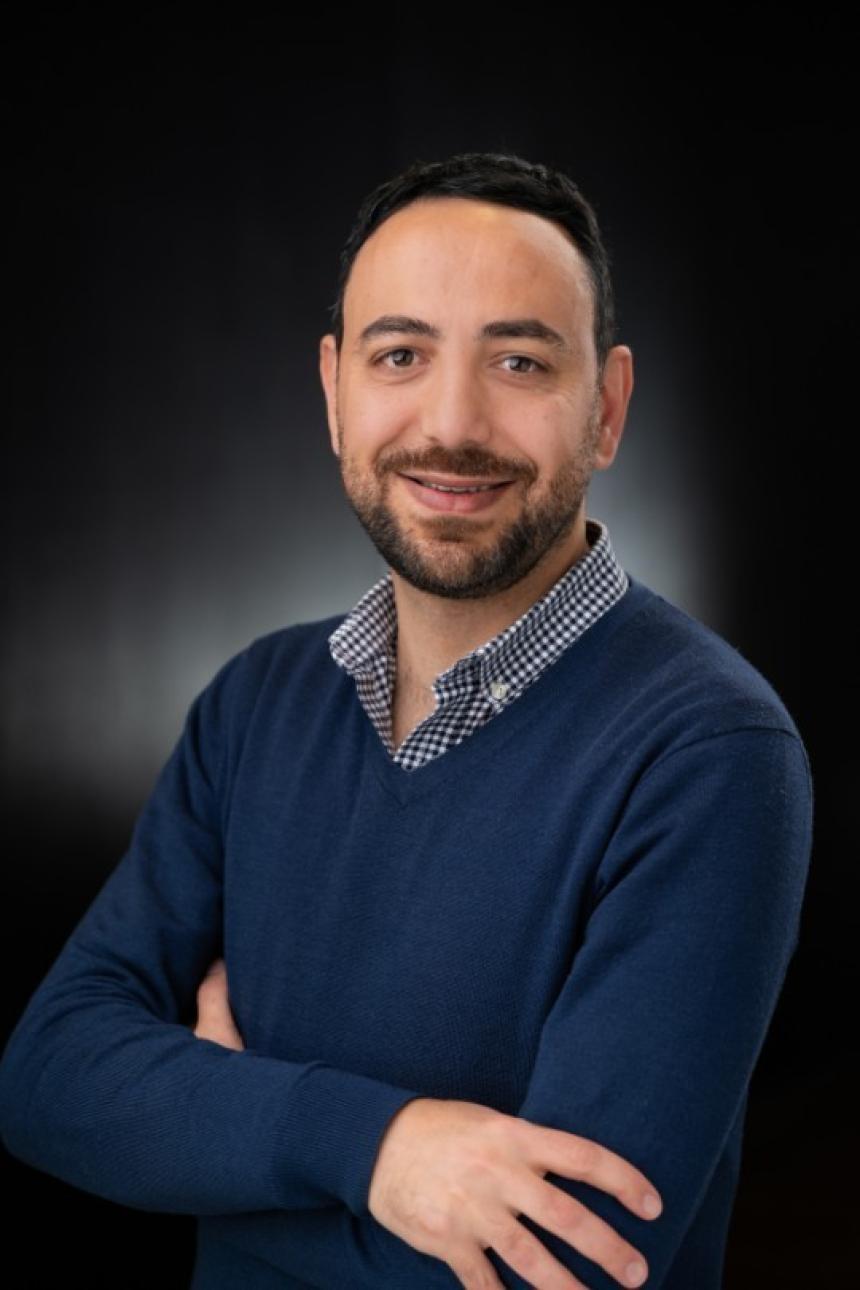
Dr Zeyad Nassar
Ext-Funded Research Fellow (C)
SAIGENCI
College of Health
Eligible to supervise Masters and PhD - email supervisor to discuss availability.
Dr Zeyad Nassar is a Group Leader of the Precision Oncology Group within the Resistance Prevention Core Programme at the South Australian immunoGENomics Cancer Institute (SAiGENCI), Adelaide University. His laboratory is based at the South Australian Health and Medical Research Institute (SAHMRI), and he is a Cancer Council SA Research Fellow (2026–2028). Dr Nassar completed his PhD at the University of Queensland in 2015 and joined Adelaide University in 2016 as a postdoctoral researcher. In 2018, he was awarded an NHMRC Early Career Fellowship, which enabled him to establish an independent research programme focused on how metabolic pathways drive prostate cancer aggressiveness and how these vulnerabilities can be therapeutically targeted.
With over a decade of experience in prostate cancer, lipid metabolism and drug discovery, his research aims to uncover the biological drivers of aggressive, treatment-resistant disease. His group develops novel tools for synthetic lethality screening and employs whole-genome CRISPR screening to investigate ferroptosis vulnerability and fatty acid oxidation pathways, with the goal of identifying precision therapeutic strategies for patients with treatment-resistant prostate cancer.
A key focus of his work has been fatty acid oxidation as a therapeutic target. His landmark eLife study identifying DECR1 as an anti-ferroptosis factor in prostate cancer (cited more than 200 times), provided the first clinically relevant evidence for this approach and led to more than $1.5 million in US Department of Defense funding, through which he leads an international team of chemists, computational modellers and biologists developing first-in-class DECR1 inhibitors.
Dr Nassar has published more than 50 peer-reviewed papers and holds one patent, with over 2,500 citations and an H-index of 33. He has secured more than $2.8 million in competitive funding as lead investigator from national bodies including the NHMRC, Cancer Australia and Cure Cancer, as well as the US Department of Defense. He serves on the editorial boards of four journals, contributes regularly to peer review for high-impact outlets including Nature Communications, and reviews applications for national and international funding agencies. Promoted to Academic Level C (Senior Lecturer) in 2022, he remains committed to advancing cancer biology and developing precision treatments through strong national and international collaborations.
Current research projects:
Precision medicine aims to customise treatments based on the unique characteristics of each patient's disease. Unlike the traditional "one-size-fits-all" approach, precision medicine improves our ability to predict which treatments will be safe and effective for individual patients based on their genetic makeup. Adopting precision medicine could reduce both financial and time costs, improve patients' quality of life, and potentially extend their lifespan. Despite advances in other cancer types, precision medicine for prostate cancer remains underdeveloped. My program aims to advance precision medicine in prostate cancer through the innovative use of synthetic lethality to identify and validate new therapeutic targets

1. Identifying Vulnerabilities in Prostate Cancer Using Synthetic Lethality Approaches for Precision Medicine
Prostate cancer (PCa) presents a significant clinical challenge due to its heterogeneity and the presence of mutations that drive tumor progression and therapy resistance. One promising strategy for targeting these cancers is synthetic lethality, a concept where two genetic alterations together lead to cell death, but individually, they do not. This project aims to utilize synthetic lethality approaches to uncover novel vulnerabilities in prostate cancer cells harboring specific mutations, with the goal of advancing precision medicine. We will focus on mutations commonly found in prostate cancer, such as those in the PTEN, BRCA2, and AR genes. By integrating clinical data with large-scale CRISPR-Cas9 genetic screens, we will systematically identify genes whose loss, in combination with specific mutations, leads to cancer cell death. This approach will allow us to pinpoint potential therapeutic targets that are uniquely vulnerable in mutant prostate cancer cells, offering insights into new drug development opportunities. The project will employ CRISPR-based libraries to perturb genes in prostate cancer cell lines derived from patient samples, enabling us to analyze gene interactions in a clinically relevant context. By correlating synthetic lethality interactions with patient-specific genetic profiles, we aim to develop a framework for personalized therapeutic strategies that can more effectively target the underlying mutations in prostate cancer, improving patient outcomes and enabling more precise, mutation-driven treatments.

2. Investigating a Diet Intervention to Target Prostate Cancer Cells with Different Mutations
-
Prostate cancer (PCa) is a leading cause of cancer-related deaths, and its progression is influenced by genetic mutations and variations in tumor biology. Recent studies suggest that diet may play a pivotal role in modulating cancer cell behavior and influencing therapeutic outcomes. This project aims to investigate the impact of a specialized diet intervention on prostate cancer cells harboring different genetic mutations, focusing on their growth, survival, and response to treatment.
The study will examine how specific dietary components interact with prostate cancer cells that carry various mutations commonly associated with PCa, including mutations in the PTEN, BRCA2, and AR genes. By employing both in vitro (cell culture) and in vivo (mouse model) approaches, we will evaluate how these dietary factors influence tumor proliferation, metastasis, and gene expression in mutated versus wild-type cancer cells.
The goal of this project is to identify dietary strategies that could enhance the effectiveness of existing cancer therapies, potentially offering a non-invasive complement to traditional treatments. By tailoring diet-based interventions to the specific genetic profiles of prostate cancer, this research could lead to personalized, mutation-targeted nutrition strategies that improve patient outcomes and quality of life.
3. Exploiting Prostate Cancer Metabolic Dependencies to Develop New Therapeutics Coupled with Circulating Prognostic and Predictive Biomarkers
My published research has contributed substantially to a body of work indicating that PCa cells activate a process called fatty acid oxidation to generate the energy to support cancer cell proliferation and drug resistance. In addition to energy production, fatty acid oxidation products modulate cancer cell gene expression, which might enable cancer cells to progress to a more aggressive form. In this project, we will study the impact of fatty acid oxidation on PCa biology to understand how this process supports cancer progression. In addition, this proposal aims to discover new, clinically safe fatty acid oxidation targets and evaluate the efficacy of inhibition of these targets to suppress tumor growth and progression. We will employ in vitro studies that include cell lines representative of all PCa stages, in vivo patient-derived xenograft models and human prostate tumors that mimic the disease biology and better predict drug efficacy in the in the human body
| Date | Position | Institution name |
|---|---|---|
| 2022 - 2022 | Postdoctoral research fellow | SAiGENCI – South Australian immunoGENomics Cancer Institute |
| 2018 - 2021 | NHMRC Early Career Fellow | University of Adelaide, Adelaide |
| 2016 - 2017 | Postdoctoral research scientist | University of Adelaide |
| 2015 - 2015 | Postdoctoral research fellow | University of Queensland |
| Date | Institution name | Country | Title |
|---|---|---|---|
| 2012 - 2015 | University of Queensland | Australia | PhD |
| 2009 - 2011 | Universiti Sains Malaysia | Malaysia | MSc |
| 2003 - 2007 | Applied Science Private University | Jordan | BSc Pharmacy |
| Year | Citation |
|---|---|
| 2016 | Nassar, Z., & Parat, M. (2016). Cavin Family: New Players in the Biology of Caveolae. In Kwang Jeon (Ed.), International Review of Cell and Molecular Biology (Vol. 320, pp. 235-305). United Kingdom: Elsevier. DOI Scopus40 WoS43 Europe PMC37 |
| Year | Citation |
|---|---|
| 2023 | Mah, C. Y., Nguyen, A. D., Niijima, T., Helm, M., Dehairs, J., Ryan, F. J., . . . Butler, L. M. (2023). Uncovering a novel role of peroxisomal β-oxidation in advanced, treatment-resistant prostate cancer. In CANCER RESEARCH Vol. 83 (pp. 2 pages). FL, Orlando: AMER ASSOC CANCER RESEARCH. DOI |
| 2023 | Scott, J. S., Young, R., Irani, S., Dehairs, J., Blanksby, S., Swinnen, J. V., . . . Butler, L. M. (2023). A fat lot of good: A novel monounsaturated fatty acid promotes prostate cancer growth and survival. In CANCER RESEARCH Vol. 83 (pp. 2 pages). CO, Denver: AMER ASSOC CANCER RESEARCH. DOI |
| 2017 | Nassar, Z. D., Centenera, M. M., Machiels, J., Polacek, S. J., Bloch, K., Tilley, W. D., . . . Butler, L. (2017). Lipid elongation: an unexplored therapeutic target in prostate cancer. In CANCER RESEARCH Vol. 77 (pp. 2 pages). Washington, DC: AMER ASSOC CANCER RESEARCH. DOI |
| Year | Citation |
|---|---|
| 2020 | Shrestha, R. K., Townley, S., Hanson, A., Pickering, M., Nassar, Z. D., Mah, C. Y., . . . Selth, L. A. (2020). ACSM1 and ACSM3 regulate fatty acid oxidation in prostate cancer to promote growth and protect against oxidative stress.. Poster session presented at the meeting of CANCER RESEARCH. ELECTR NETWORK: AMER ASSOC CANCER RESEARCH. WoS3 |
| 2020 | Butler, L. M., Mah, C. Y., Dehairs, J., Vincent, A., Mutuku, S., Spotbeen, X., . . . Swinnen, J. (2020). Phospholipid profiling of clinical prostate tissues reveals targetable alterations in membrane lipid composition accompanying tumorigenesis. Poster session presented at the meeting of CANCER RESEARCH. ELECTR NETWORK: AMER ASSOC CANCER RESEARCH. DOI WoS1 |
| 2020 | Mah, C. Y., Nassar, Z. D., Burvenich, I. J., Irani, S., Centenera, M. M., Moldovan, M., . . . Butler, L. M. (2020). DECR1: The rate limiting enzyme of polyunsaturated fatty acid metabolism and a novel therapeutic target in prostate cancer. Poster session presented at the meeting of CANCER RESEARCH. ELECTR NETWORK: AMER ASSOC CANCER RESEARCH. DOI |
| 2018 | Nassar, Z. D., Centenera, M. M., Machiels, J., Zinonos, I., Hanson, A., Bloch, K., . . . Swinnen, J. V. (2018). Lipid elongation in prostate cancer is androgen regulated and a potential therapeutic target. Poster session presented at the meeting of BJU International. Brisbane, Australia: Wiley. |
| 2016 | Nassar, Z. D., Centenera, M. M., Machiels, J., Polacek, S. J., Bloch, K., Tilley, W. D., . . . Swinnen, J. V. (2016). Androgenic regulation of lipid elongation in prostate cancer. Poster session presented at the meeting of BJU International. Melbourne: Wiley. |
| Year | Citation |
|---|---|
| 2013 | Nassar, Z., ABDUL MAJID, Amin Malik Shah., ABU-SALAH, Khalid M., ISMAIL, Zhari., AHAMED, Mohamed Khadeer., AISHA, Abdalrahim F.A., . . . ABDUL MAJID, Aman Shah. (2013). WO2013028051, Composition comprising Sandoricum koetjape extracts and uses thereof. PCT. |
|
Exploiting Prostate Cancer Metabolic Dependencies to Develop New Therapeutics and Circulating Prognostic and Predictive Biomarkers |
United States Department of Defense |
2023-2026 |
Sole Investigator |
$1,557,000 |
|
Targeting Fatty Acid Oxidation, a Novel Approach for Prostate Cancer Treatment |
Cure Cancer Australia (Ideas Grant) |
2022-2024 |
Sole Investigator |
$70,000 |
|
Treatment of prostate cancer by targeting MAPK-interacting Kinases. |
SAHMRI early/mid-career seed funding research grant |
2019 |
CIB |
$30,000 |
|
Targeting fatty acid oxidation for treatment of high risk localised prostate cancer |
Hospital Research Foundation |
2020-2022 |
CIA |
$150,000 |
|
Targeting polyunsaturated fatty acid metabolism to overcome prostate cancer treatment resistance |
Cure Cancer Australia (Project Grant) |
2019-2021 |
Sole Investigator |
$96,000 |
|
Fatty acid elongation: a novel target for prostate cancer treatment |
NHMRC (Early Career Fellowship) |
2018-2022 |
Sole Investigator |
$318,768 |
|
Targeting DECR1 for prostate cancer treatment |
University of Adelaide (Emerging Leadership Development Program) |
2018 |
Sole Investigator
|
$38,500 |
|
Targeting polyunsaturated fatty acid metabolism for prostate cancer treatment |
Prostate Cancer Foundation of Australia |
2018 |
Sole Investigator |
$30,000 |
Other grants/awards:
- Faculty of Health and Medical Sciences Research Infrastructure Funding Awards (2018)
- Freemasons Foundation Centre for Men's Health Postdoctoral Fellowship.
- Beat Project Travel Grant (2016).
- European Society for Medical Oncology (ESMO) Preceptorship Meeting Travel grant (2015).
- European Society for Medical Oncology (ESMO) translational research unit visit fellowship (2015).
- Cancer Council Queensland Travel Grant (2014).
| Date | Role | Research Topic | Program | Degree Type | Student Load | Student Name |
|---|---|---|---|---|---|---|
| 2026 | Co-Supervisor | Design, synthesis and evaluation of small molecule DECR1 inhibitors to treat castration-resistant prostate cancer | Doctor of Philosophy | Doctorate | Full Time | Mr Hayden Matthew Wittwer |
| 2026 | Principal Supervisor | Synthetic Lethality: A New Frontier in Personalised Treatment for Prostate Cancer | Doctor of Philosophy | Doctorate | Full Time | Mr Yousef Abdallah Yousef Ijjeh |
| 2023 | Co-Supervisor | Peroxisome Biology in IDH1 Mutated Cancer Cells and Its potential for Target Therapy | Doctor of Philosophy | Doctorate | Full Time | Ms Mahta Moraghebi |
| 2023 | Principal Supervisor | Synthetic lethality-based identification of metabolic targets for prostate cancer treatment | Doctor of Philosophy | Doctorate | Full Time | Mr Mohammad Asaad Ibrahim Ismail |
| 2023 | Principal Supervisor | Examining the Influence of Fatty Acid Oxidation on Prostate Cancer Progression: An Epigenetic Exploration. | Doctor of Philosophy | Doctorate | Full Time | Mr Ez Aldeen Ismael Esawi |
| Date | Role | Research Topic | Program | Degree Type | Student Load | Student Name |
|---|---|---|---|---|---|---|
| 2019 - 2023 | Co-Supervisor | Lipid elongation and its role in prostate cancer | Doctor of Philosophy | Doctorate | Full Time | Miss Julia Steele Scott |
| 2019 - 2025 | Co-Supervisor | A geospatial science framework for modelling local-scale groundwater potential zones (GPZs) in arid to semi-arid, data-scarce, fractured rock environments | Doctor of Philosophy | Doctorate | Part Time | Mr Stephen Fildes |
| 2018 - 2021 | Co-Supervisor | Targeting fatty acid metabolism in prostate cancer | Doctor of Philosophy | Doctorate | Full Time | Miss Chui Yan Mah |
| 2017 - 2021 | Principal Supervisor | Mapping tropical peatlands combustion from satellite remote sensing data | Doctor of Philosophy | Doctorate | Full Time | Ms Parwati Sofan |
| 2016 - 2024 | Principal Supervisor | Assessing the geospatial literacy of senior secondary geography and earth & environmental science students | Doctor of Philosophy | Doctorate | Part Time | Mrs Genine Meredith |
| 2016 - 2020 | Principal Supervisor | Public open space policy, supply and population health: a study of metropolitan Adelaide | Doctor of Philosophy | Doctorate | Full Time | Mr Mark Daker |
| 2013 - 2018 | Co-Supervisor | Dust storms over Western Asia – predictions and impacts using satellite imagery | Doctor of Philosophy | Doctorate | Full Time | Mr Humaid Al Badi |
| 2011 - 2016 | Principal Supervisor | Mapping perennial arid vegetation using high-spatial resolution satellite imagery: a case study in Morocco | Doctor of Philosophy | Doctorate | Full Time | Mr Saad Alsharrah |
| 2011 - 2016 | Principal Supervisor | Mapping coral reef density using high spatial resolution satellite imagery: a case study in the State of Kuwait | Doctor of Philosophy | Doctorate | Full Time | Mr Mahdi Gholoum |
| 2010 - 2015 | Co-Supervisor | Reflectance spectroscopy and spatial distribution modelling of soil lead concentrations and implications for human heath | Doctor of Philosophy | Doctorate | Full Time | Mr Ali Al Maliki |
| 2007 - 2012 | Principal Supervisor | Electricity ecology with particular reference to Australia | Doctor of Philosophy | Doctorate | Full Time | Mr Alexander Townsend |
| 2007 - 2015 | Principal Supervisor | Benchmarking spatial information endeavours within organisations that have involvement in the management of Aboriginal lands and waters within South Australia | Doctor of Philosophy | Doctorate | Part Time | Mr Paul Corcoran |
| 2004 - 2009 | Principal Supervisor | Modelling dietary exposure of arsenic and associated human health risk in Bangladesh: a geospatial approach at the landscape level | Doctor of Philosophy | Doctorate | Full Time | Mrs Nasreen Khan |
| 2001 - 2005 | Principal Supervisor | Fuzzy logic and GIS in the spatial definition of protection zones on aesthetic grounds: a case study of Adelaide Hills face zone | Doctor of Philosophy | Doctorate | Full Time | Mr Hari Thotapalli |
| Date | Role | Research Topic | Location | Program | Supervision Type | Student Load | Student Name |
|---|---|---|---|---|---|---|---|
| 2021 - ongoing | External Supervisor | DECR1 inhibition; a novel prostate cancer therapeutic target | The University of South Australia | - | Doctorate | Full Time | James Paul Chakiris |
Connect With Me


External Profiles


