
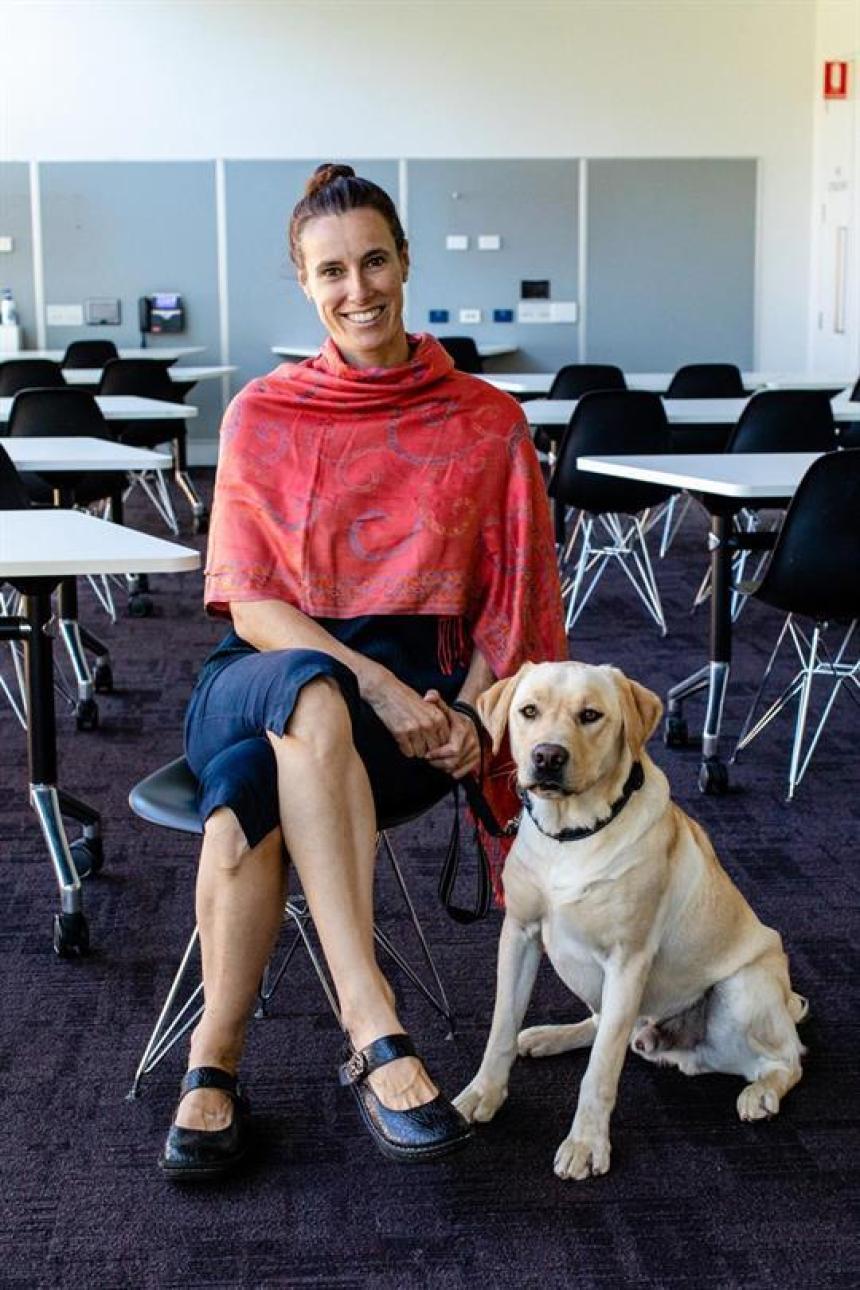
Dr Anne-Lise Chaber
Senior Lecturer
School of Animal and Veterinary Sciences
College of Science
Dr. Anne-Lise Chaber is a highly accomplished One Health expert with a joint appointment at the School of Public Health and the School of Animal and Veterinary Sciences. Her research focuses on a cross-disciplinary approach to Human, Animal, and Ecosystem Health. After obtaining her veterinary degree from the University of Liège (ULg) in Belgium, Anne-Lise earned a Master of Science in Wild Animal Health from the Royal Veterinary College and the Zoological Society of London (UK). She then pursued her graduate training with a PhD in Epidemiology at ULg, where she investigated disease detection and management at the wildlife-livestock-human interface.With over fifteen years of practical experience as a field epidemiologist in England, Botswana, the United Arab Emirates and Australasia, Anne-Lise has conducted groundbreaking research on the transmission of diseases such as Foot and Mouth Disease, Q Fever, Brucella melitensis, and MERS-Coronavirus at the wildlife-livestock-human interface. Her expertise also extends to the illegal wildlife trade, including the international bushmeat trade and the live exotic pet trade.Overall, Dr. Chaber's work has made significant contributions to our understanding of One Health, and her findings have important implications for the health and well-being of humans, animals, and ecosystems worldwide.
The ecosystem is like a living body, where each population, like organs, interact with each other and the disruption of this balance makes the entire system dysfunctional.
Understanding and protecting this system relies on collaborative and trans-disciplinary work. My approach to One Health is not focusing only on zoonotic diseases or emerging infectious diseases but also encompasses habitat destruction, climate warming, biodiversity loss, land use change, pollution, human demographic explosion, societal change and other dynamics that are threatening Human, Animal and Environmental Health.
My interests lie in wildlife conservation, anthropogenically driven diseases and the link between ecosystem, human and animal health (One Health). These key themes are generally interconnected in my work. My research projects focus on:
- Human-Induced diseases: both infectious and non-infectious diseases caused by human activities and their environmental impact.
- International wildlife trade, including bushmeat and live exotic pet trade: a threat to both biodiversity and public health. Our projects aim at collecting factual data and at bridging the knowledge-to-action gap.
- Disease detection and management at the wildlife-livestock-human interface where collaborative work among different sectors is mandatory in order to understand complex ecological systems and to gather the necessary sound scientific data on disease ecology, vaccine efficacy, epidemiological situation, species sensitivity, host specificity, transmission patterns, vectors or climatic conditions affecting pathogens survival and vector competence.
- Emerging infectious and zoonotic diseases
- Wildlife conservation
My aim is to develop projects that are impactful in health and conservation terms.
I will be happy to engage in collaborative One health projects with researchers from a different background such as public health doctors, computer scientists, environmental lawyers, economists, botanists, GIS specialists…
| Date | Position | Institution name |
|---|---|---|
| 2022 - ongoing | One health Senior Lecturer | University of Adelaide |
| 2021 - ongoing | One Health Specialist Consultant | Food and Agriculture Organization of the United Nations |
| 2021 - ongoing | Director | Global One Health Alliance |
| 2017 - 2022 | One health Lecturer | University of Adelaide, Adelaide |
| 2012 - 2017 | Founder and Managing Director | Wildlife and Livestock Veterinary Consultant L.L.C |
| 2010 - 2012 | Lead Supervisor/Curator | Al Ain Wildlife Park |
| 2009 - 2009 | Wildlife veterinarian | Botswana Predator Conservation Trust/Wildlife Conservation Research Unit |
| Language | Competency |
|---|---|
| English | Can read, write, speak, understand spoken and peer review |
| French | Can read, write, speak, understand spoken and peer review |
| Spanish - Latin American | Can read, write and understand spoken |
| Date | Institution name | Country | Title |
|---|---|---|---|
| 2013 - 2017 | University of Liège, Liège | Belgium | Philosophical Doctor in Veterinary Epidemiology |
| 2007 - 2008 | Royal Veterinary College, London | United Kingdom | Master of Science in Wild Animal Health |
| 2001 - 2007 | University of Liège, Liège | Belgium | Doctor in Veterinary Medicine |
| Year | Citation |
|---|---|
| 2026 | Moloney, G. K., Heighton, S. P., Parthuisot, N., Missoup, A. D., Momboua, B. R., Djagoun, C. A. M. S., . . . Gaubert, P. (2026). Improving DNA detection sensitivity for the white-bellied pangolin (Phataginus tricuspis) via digital PCR.. Forensic science international. Genetics, 81, 103366. Scopus1 WoS1 |
| 2026 | Moloney, G. K., Shute, N. M., Brien, G. G., Moloney, J., & Chaber, A. -L. (2026). Combining detection dogs with air extraction methodology to expose wildlife trafficking in containerized cargo.. Conservation biology : the journal of the Society for Conservation Biology, 40(4), e70225. |
| 2026 | Souter, R., Lettoof, D., Kemper, C., Woolford, L., Chaber, A. -L., Möller, L., . . . Kumar, A. (2026). Tracking Contaminant Trends: PFAS, Metals and Metalloids in Indo-Pacific Bottlenose (Tursiops aduncus) and Common Dolphins (Delphinus delphis) from South Australia.. Arch Environ Contam Toxicol, 90(3), 19 pages. |
| 2026 | Milazzo, A., Liu, J., Multani, P., Steele, S., Hoon, E., & Chaber, A. L. (2026). Corrigendum to One Health implementation: A systematic scoping review using the quadripartite one health joint plan of action [One Health 20 (2025) 101008] (One Health (2025) 20, (S2352771425000448), (10.1016/j.onehlt.2025.101008)). One Health, 22, 101423. |
| 2026 | Moloney, G. K., Chaber, A. L., & Hall, T. (2026). Application of headspace solid-phase microextraction gas chromatography mass spectrometry (HS-SPME GC-MS) analysis to support illicit timber trafficking investigations. Wood Science and Technology, 60(3), 17 pages. |
| 2026 | Heighton, S. P., Murienne, J., Thakur, M., Missoup, A. D., Wirdateti, W., Djagoun, C. S., . . . Gaubert, P. (2026). Targeted sequencing enhances detection of pangolin trafficking hotspots and dynamics of both domestic and global trade markets. Plos Biology, 24(5), e3003762. Scopus2 Europe PMC1 |
| 2025 | Souter, R., Chaber, A. L., Möller, L., & Woolford, L. (2025). Understanding causes of morbidity and mortality in Southern Hemisphere small Odontoceti: a scoping review. Mammal Review, 55(2), 29 pages. Scopus5 WoS6 |
| 2025 | Milazzo, A., Liu, J., Multani, P., Steele, S., Hoon, E., & Chaber, A. L. (2025). One Health implementation: A systematic scoping review using the Quadripartite One Health Joint Plan of Action. One Health, 20, 14 pages. Scopus46 WoS43 Europe PMC27 |
| 2025 | Gillett, M., Moloney, G., & Chaber, A. -L. (2025). Proving Ecocide: The Plight of Pangolins as a Case Study for Fusing Ecological Science with International Law. International Criminal Law Review, 25(1), 1-50. Scopus3 WoS2 |
| 2025 | Tolpinrud, A., Chaber, A. L., Wiethoelter, A. K., Devlin, J. M., Stenos, J., Firestone, S. M., & Stevenson, M. A. (2025). Q Fever in humans, domestic animals and wildlife. Microbiology Australia, 46(1), 7-12. |
| 2025 | Warne, R. K., Cleaveland, S., & Chaber, A. L. (2025). From barnyard to boarding pass: Exploring livestock's world tour. JSFA reports, 5(4), 149-186. Scopus1 WoS1 |
| 2025 | Souter, R., Chaber, A. -L., Moller, L., Tomo, I., & Woolford, L. (2025). Skin and Mucosal Lesions of Indo-Pacific Bottlenose (Tursiops aduncus) and Common Dolphins (Delphinus delphis) of South Australia, With a Focus on Pathology. MARINE MAMMAL SCIENCE, 42(1), 18 pages. Scopus1 WoS1 |
| 2025 | Hansen, A., Chaber, A. L., Reid, S., & Milazzo, A. (2025). Connecting the Dots: Systems Thinking Highlights the Role of the Environment Sector in One Health Operationalization. Global Challenges, 9(12), 6 pages. |
| 2025 | Moloney, G. K., Brien, G. G., Shute, N. M., Khabiri, A., Moloney, J., Delcheva, I., . . . Chaber, A. -L. (2025). Assessing the viability of airborne environmental DNA detection for identifying trafficked lion pelts (Panthera leo) in a containerised environment. Frontiers in Conservation Science, 6, 1671488-1-1671488-10. Scopus1 WoS1 |
| 2025 | Moloney, G. K., Isafiade, A., Douay, G., Schoppe, S., Meagher, P., Chaber, A. -L., & Hall, T. (2025). Scaling up pangolin detection: Profiling pangolin volatilomes for wildlife forensic investigations.. Forensic Sci Int, 379, 112737. Scopus2 WoS2 |
| 2025 | Geraerts, M., Gombeer, S., Nebesse, C., Akaibe, D., Akaibe, D., Baelo, P., . . . Gryseels, S. (2025). A wide diversity of viruses detected in African mammals involved in the wild meat supply chain. Plos Pathogens, 21(12), e1013643. Europe PMC1 |
| 2024 | Moloney, G. K., Warne, R., & Chaber, A. L. (2024). Navigating the complexities of wildlife trade data: Counter-response to Kolby and Reaser Addendum 19 December 2023. One Health, 18, 100705. |
| 2024 | Chaber, A. L., Warne, R., & Moloney, G. K. (2024). Navigating discrepancies in macaque trade reporting: A response to Kolby et al. (2024) and a call for enhanced transparency. One Health, 18, 100687-1-100687-3. Scopus1 WoS1 |
| 2024 | Moloney, G. K., & Chaber, A. L. (2024). Where are you hiding the pangolins? screening tools to detect illicit contraband at international borders and their adaptability for illegal wildlife trafficking. Plos One, 19(4 April), 25 pages. Scopus8 WoS7 Europe PMC5 |
| 2024 | Tolpinrud, A., Tadepalli, M., Stenos, J., Lignereux, L., Chaber, A. L., Devlin, J. M., . . . Stevenson, M. A. (2024). Tissue distribution of Coxiella burnetii and antibody responses in macropods co-grazing with livestock in Queensland, Australia. PLoS ONE, 19(5 May 2024), e0303877. Scopus4 WoS4 Europe PMC3 |
| 2024 | Din Dipita, A., Missoup, A. D., Aguillon, S., Lecompte, E., Momboua, B. R., Chaber, A. L., . . . Gaubert, P. (2024). Genetic tracing of the illegal trade of the white-bellied pangolin (Phataginus tricuspis) in western Central Africa. Scientific Reports, 14(1), 13131. Scopus6 WoS7 Europe PMC3 |
| 2024 | Tolpinrud, A., Dobson, E., Herbert, C. A., Gray, R., Stenos, J., Chaber, A. -L., . . . Stevenson, M. A. (2024). Characterising Eastern Grey Kangaroos (<i>Macropus giganteus</i>) as Hosts of <i>Coxiella burnetii</i>.. Microorganisms, 12(7), 1477. Scopus2 WoS2 Europe PMC2 |
| 2024 | Tolpinrud, A., Romeo, O., & Chaber, A. -L. (2024). Absence of Coxiella burnetii in kangaroo ticks (Amblyomma triguttatum) from a high seroprevalence population of eastern grey kangaroos. Ticks and Tick-borne Diseases, 15(6), 102406. |
| 2024 | Bury, C., Caraguel, C., Chaber, A. L., & O'Handley, R. (2024). Risk factors associated with increased Toxoplasma gondii seroprevalence in South Australian Sheep. Veterinary Parasitology, 332, 7 pages. Scopus1 WoS1 Europe PMC1 |
| 2023 | Malik, S., Javid, A., Hamidullah., Iqbal, M. A., Hussain, A., Bukhari, S. M., . . . Ali, W. (2023). Phylogeography of cliff racer (Platyceps rhodorachis Jan, 1865) from Punjab, Pakistan. Brazilian Journal of Biology, 83, 1-7. Scopus2 |
| 2023 | Moloney, G. K., Gossé, K. J., Bi, S. G., Gaubert, P., & Chaber, A. -L. (2023). Is Social Media the New Wet Market? Social Media Platforms Facilitate the Online Sale of Bushmeat in West Africa. One Health, 16, 9 pages. Scopus11 WoS9 Europe PMC3 |
| 2023 | Dipita, A. D., Missoup, A. D., Aguillon, S., Lecompte, E., Momboua, B. R., Chaber, A. -L., . . . Gaubert, P. (2023). Genetic tracing of the white-bellied pangolin’s trade in western central Africa. Europe PMC1 |
| 2023 | Warne, R., Moloney, G. K., & Chaber, A. -L. C. (2023). Is Biomedical Research Demand Driving a Monkey Business?. |
| 2023 | Grandjean, D., Hache, F., Gallet, C., Bacqué, H., Blondot, M., Desquilbet, L., . . . de La Rocque, S. (2023). Acceptation par le public de la détection olfactive canine de la CoViD-19 : à propos d’une enquête internationale avant redéploiement. Bulletin de l'Academie Veterinaire de France, 176(1), 336-349. Scopus1 |
| 2023 | Warne, R. K., Moloney, G. K., & Chaber, A. -L. (2023). Is biomedical research demand driving a monkey business?. One Health, 16, 10 pages. Scopus16 WoS15 Europe PMC15 |
| 2023 | Meller, S., Caraguel, C., Twele, F., Charalambous, M., Schoneberg, C., Chaber, A. -L., . . . Volk, H. A. (2023). Canine Olfactory Detection of SARS-CoV-2-Infected Humans - a Systematic Review.. Ann Epidemiol, 85, 68-85. Scopus8 WoS8 Europe PMC6 |
| 2023 | Moloney, G. K., Chaber, A. -L. C., Renault, V., Morrison-Lanjouw, S., Garigliany, M. -M., Flandroy, L., . . . Gaubert, P. (2023). Examining the International Bushmeat Traffic in Belgium: A Threat to Conservation and Public Health. One Health, 17, 8 pages. Scopus10 WoS9 Europe PMC8 |
| 2023 | Morrison-Lanjouw, S., Spijker, R., Mughini-Gras, L., Coutinho, R. A., Chaber, A. L., & Leeflang, M. (2023). A systematic review of the intercontinental movement of unregulated African meat imports into and through European border checkpoints. One Health, 17, 12 pages. Scopus8 WoS8 Europe PMC6 |
| 2023 | Moloney, G. K., Gaubert, P., Gryseels, S., Verheyen, E., & Chaber, A. L. (2023). Investigating Infectious Organisms of Public Health Concern Associated with Wild Meat. Transboundary and Emerging Diseases, 2023, 15 pages. Scopus7 WoS7 Europe PMC5 |
| 2023 | Volk, H. A., Alvergnat, G., Chaber, A. L., Grandjean, D., & Mardones, F. O. (2023). Editorial: State of the art, opportunities and challenges in the use of medical detection dogs in the laboratory and in the field. Frontiers in Medicine, 10, 1283474. Scopus1 WoS1 |
| 2023 | Warne, R. K., & Chaber, A. -L. (2023). Assessing Disease Risks in Wildlife Translocation Projects: A Comprehensive Review of Disease Incidents. Animals, 13(21), 3379. Scopus16 WoS13 Europe PMC6 |
| 2022 | Hornok, S., Kontschán, J., Takács, N., Chaber, A. -L., Halajian, A., Szekeres, S., . . . Plantard, O. (2022). Rickettsiaceae in two reptile-associated tick species, Amblyomma exornatum and Africaniella transversale: First evidence of Occidentia massiliensis in hard ticks (Acari: Ixodidae). Ticks and Tick-borne Diseases, 13(1), 101830-1-101830-6. Scopus9 WoS7 Europe PMC9 |
| 2022 | Rahaman, M. R., Hodgetts, K., Milazzo, A., Marshall, H., Chaber, A. -L., Crabb, D., & Bi, P. (2022). Q fever prevention in Australia: general practitioner and stakeholder perspectives on preparedness and the potential of a One Health approach.. Aust N Z J Public Health, 46(2), 96-202. Scopus6 WoS4 Europe PMC4 |
| 2022 | Rahaman, M. R., Burgess, T., Marshall, H., Milazzo, A., Chaber, A. -L., Crabb, D., & Bi, P. (2022). Q fever prevention: perspectives from university animal science and veterinary students and livestock farmers. Australian Journal of Rural Health, 30(3), 385-392. Scopus2 WoS2 Europe PMC3 |
| 2022 | Lignereux, L., Chaber, A. -L., Fretin, D., Godfroid, J., & Saegerman, C. (2022). Brucella melitensis biovar 1 isolation in a captive wildlife population in the United Arab Emirates. First isolation in the scimitar-horned Oryx (Oryx dammah).. Vet Microbiol, 266, 109360. Scopus7 WoS5 Europe PMC5 |
| 2022 | Choo, S. W., Chong, J. L., Gaubert, P., Hughes, A. C., O'Brien, S., Chaber, A. L., . . . Aziz, M. A. (2022). A collective statement in support of saving pangolins. Science of the Total Environment, 824, 8 pages. Scopus8 WoS7 Europe PMC3 |
| 2022 | Chaber, A. -L., Hazel, S., Matthews, B., Withers, A., Alvergnat, G., Grandjean, D., & Caraguel, C. (2022). Evaluation of canine detection of covid‐19 infected individuals under controlled settings. Transboundary and Emerging Diseases, 69(5), 1-8. Scopus12 WoS13 Europe PMC12 |
| 2022 | Tolpinrud, A., Stenos, J., Chaber, A. -L., Devlin, J. M., Herbert, C., Pas, A., . . . Firestone, S. M. (2022). Validation of an Indirect Immunofluorescence Assay and Commercial Q Fever Enzyme-Linked Immunosorbent Assay for Use in Macropods.. Journal of clinical microbiology, 60(7), e0023622. Scopus8 WoS8 Europe PMC7 |
| 2022 | Martinelle, L., Haegeman, A., Lignereux, L., Chaber, A. -L., Dal Pozzo, F., De Leeuw, I., . . . Saegerman, C. (2022). Orbivirus Screening from Imported Captive Oryx in the United Arab Emirates Stresses the Importance of Pre-Import and Transit Measures. Pathogens, 11(6), 697. Scopus2 WoS2 Europe PMC2 |
| 2022 | Neilly, H., McKenzie, T., Ward, M., Chaber, A., & Cale, P. (2022). Potential drivers of common brusntail possum (Trichosurus vulpecula) decline on a Murray River floodplain. AUSTRALIAN MAMMALOGY, 45(1), 9 pages. Scopus3 WoS2 |
| 2022 | Chaber, A. -L., Easther, R., Cumming, B., Irving, R., Al, K., Smart, C., . . . Lignereux, L. (2022). Ehrlichia canis rapid spread and possible enzooty in northern South Australia and distribution of its vector Rhipicephalus linnaei. AUSTRALIAN VETERINARY JOURNAL, 100(11), 533-538. Scopus15 WoS14 Europe PMC13 |
| 2022 | Lignereux, L., Chaber, A. -L., Nemery, Q., Godfroid, J., & Saegerman, C. (2022). Brucellosis seroprevalence in captive scimitar-horned oryx (Oryx dammah) in the United Arab Emirates and associated risk factors. Emerging Animal Species, 5, 100016-1-100016-7. |
| 2022 | Gossé, K. J., Gonedelé-Bi, S., Justy, F., Chaber, A. L., Kramoko, B., & Gaubert, P. (2022). DNA-typing surveillance of the bushmeat in Côte d'Ivoire: a multi-faceted tool for wildlife trade management in West Africa. Conservation Genetics, 23(6), 1073-1088. Scopus14 WoS15 |
| 2022 | Meller, S., Al Khatri, M. S. A., Alhammadi, H. K., Álvarez, G., Alvergnat, G., Alves, L. C., . . . Volk, H. A. (2022). Expert considerations and consensus for using dogs to detect human SARS-CoV-2-infections.. Front Med (Lausanne), 9, 1-28. Scopus20 WoS17 Europe PMC15 |
| 2021 | Rahaman, M., Milazzo, A., Marshall, H., Chaber, A. -L., & Bi, P. (2021). Q fever vaccination: Australian animal science and veterinary students’ One Health perspectives on Q fever prevention. Human Vaccines and Immunotherapeutics, 17(5), 1374-1381. Scopus8 WoS4 Europe PMC4 |
| 2021 | Moloney, G. K., Tuke, J., Dal Grande, E., Nielsen, T., & Chaber, A. -L. (2021). Is YouTube promoting the exotic pet trade? Analysis of the global public perception of popular YouTube videos featuring threatened exotic animals.. PloS one, 16(4), e0235451. Scopus36 WoS31 Europe PMC12 |
| 2021 | Chaber, A., Armstrong, K. N., Wiantoro, S., Xerri, V., Caraguel, C., Boardman, W. S. J., & Nielsen, T. D. (2021). Bat E-Commerce: Insights Into the Extent and Potential Implications of This Dark Trade. Frontiers in Veterinary Science, 8, 1-10. Scopus20 WoS18 Europe PMC9 |
| 2021 | Chaber, A. -L., Hazel, S., Matthews, B., Withers, A., Alvergnat, G., Grandjean, D., & Caraguel, C. (2021). EVALUATION OF CANINE DETECTION OF COVID-19 INFECTED INDIVIDUALS UNDER CONTROLLED SETTINGS. |
| 2021 | Chaber, A. L., Jelocnik, M., & Woolford, L. (2021). Undiagnosed cases of human pneumonia following exposure to chlamydia psittaci from an infected rosella parrot. Pathogens, 10(8), 9 pages. Scopus16 WoS14 Europe PMC15 |
| 2021 | Anstey, S. I., Kasimov, V., Jenkins, C., Legione, A., Devlin, J., Amery-Gale, J., . . . Jelocnik, M. (2021). Chlamydia psittaci st24: clonal strains of one health importance dominate in Australian horse, bird and human infections. Pathogens, 10(8), 1-12. Scopus20 WoS19 Europe PMC16 |
| 2021 | Souter, R., Chaber, A. -L., Lee, K., Machado, A., Lam, J., & Woolford, L. (2021). Fatal Streptococcus iniae Infection in a Juvenile Free-Ranging Short-Beaked Common Dolphin (Delphinus delphis). Animals, 11(11), 3123. Scopus8 WoS7 Europe PMC4 |
| 2020 | Lignereux, L., Chaber, A. -L., Saegerman, C., Heath, L., Knowles, N. J., Wadsworth, J., . . . King, D. P. (2020). Foot-and-mouth disease outbreaks in captive scimitar-horned oryx (Oryx dammah).. Transboundary and emerging diseases, 67(4), 1716-1724. Scopus12 WoS12 Europe PMC11 |
| 2020 | Ali, W., Javid, A., Hussain, A., Hafeez-ur-Rehman, M., Chaber, A. L., & Hemmatzadeh, F. (2020). First record of Euphlyctis kalasgramensis (Anura: Dicroglossidae) from Punjab, Pakistan. Mitochondrial DNA Part B: Resources, 5(2), 1227-1231. Scopus15 WoS12 Europe PMC3 |
| 2020 | Clark, N. J., Tozer, S., Wood, C., Firestone, S. M., Stevenson, M., Caraguel, C., . . . Soares Magalhães, R. J. (2020). Unravelling animal exposure profiles of human Q fever cases in Queensland, Australia using natural language processing. Transboundary and Emerging Diseases, 67(5), 2133-2145. Scopus10 WoS8 Europe PMC8 |
| 2020 | Hornok, S., Kontschán, J., Takács, N., Chaber, A. L., Halajian, A., Abichu, G., . . . Plantard, O. (2020). Molecular phylogeny of Amblyomma exornatum and Amblyomma transversale, with reinstatement of the genus Africaniella (Acari: Ixodidae) for the latter. Ticks and Tick-borne Diseases, 11(6), 9 pages. Scopus25 WoS25 Europe PMC20 |
| 2020 | Kasimov, V., Stephenson, T., Speight, N., Chaber, A. L., Boardman, W., Easther, R., & Hemmatzadeh, F. (2020). Identification and Prevalence of Phascolarctid Gammaherpesvirus Types 1 and 2 in South Australian Koala Populations. Viruses, 12(9), 12 pages. Scopus7 WoS7 Europe PMC7 |
| 2020 | Caraguel, C., Bassett, S., González-Barrio, D., Elsworth, P., & Chaber, A. L. (2020). Comparison of three serological tests for the detection of Coxiella burnetii specific antibodies in European wild rabbits. BMC veterinary research, 16(1), 5 pages. Scopus9 WoS8 Europe PMC8 |
| 2020 | Moloney, G., Tuke, J., Dal Grande, E., Nielsen, T., & Chaber, A. -L. (2020). Is YouTube <sup>®</sup> promoting the exotic pet trade? Analysis of the global public perception of popular YouTube <sup>®</sup> videos featuring threatened exotic animals. |
| 2019 | Spee, L. B., Hazel, S. J., Dal Grande, E., Boardman, W. S. J., & Chaber, A. L. (2019). Endangered exotic pets on social media in the middle east: Presence and impact. Animals, 9(8), 15 pages. Scopus43 WoS35 Europe PMC19 |
| 2018 | Chaber, A. L. (2018). The Era of Human-Induced Diseases. EcoHealth, 15(1), 8-11. Scopus5 WoS6 Europe PMC4 |
| 2018 | Lignereux, L., Chaber, A. L., Saegerman, C., Manso-Silván, L., Peyraud, A., Apolloni, A., & Thiaucourt, F. (2018). Unexpected field observations and transmission dynamics of contagious caprine pleuropneumonia in a sand gazelle herd. Preventive Veterinary Medicine, 157, 70-77. Scopus16 WoS12 Europe PMC13 |
| 2017 | Chaber, A., & Saegerman, C. (2017). Biosecurity measures applied in the United Arab Emirates - a comparative study between livestock and wildlife sectors. Transboundary and Emerging Diseases, 64(4), 1184-1190. Scopus7 WoS7 Europe PMC5 |
| 2017 | Chaber, A., Cozzi, G., Broekhuis, F., Hartley, R., & McNutt, J. (2017). Serosurvey for selected viral pathogens among sympatric species of the african large predator guild in northern Botswana. Journal of Wildlife Diseases, 53(1), 170-175. Scopus9 WoS9 Europe PMC5 |
| 2017 | Temmam, S., Davoust, B., Chaber, A., Lignereux, Y., Michelle, C., Monteil-Bouchard, S., . . . Desnues, C. (2017). Screening for Viral Pathogens in African Simian Bushmeat Seized at A French Airport. Transboundary and Emerging Diseases, 64(4), 1159-1167. Scopus24 WoS20 Europe PMC21 |
| 2016 | Melville, H., & Chaber, A. (2016). Altitudinal variation in the diversity and structure of the desert rodent community from Jebel Al Jais, United Arab Emirates. Zoology in the Middle East, 62(3), 200-205. Scopus3 WoS1 |
| 2016 | Chaber, A. L., Lignereux, L., Cardenas, E., Melville, H., & Beaucournu, J. C. (2016). Note sur les Siphonaptères de l’Émirat de Ras Al Khaimah: description de Nosopsyllus (Gerbillophilus) jabeljaisensis n. sp. (Siphonaptera, Ceratophyllidae, Ceratophyllinae). Annales de la Societe Entomologique de France, 52(2), 102-106. |
| 2016 | Chaber, A., & Cunningham, A. (2016). Public health risks from illegally imported African bushmeat and smoked fish: Public health risks from African bushmeat and smoked fish. EcoHealth, 13(1), 135-138. Scopus24 WoS25 Europe PMC19 |
| 2016 | Chaber, A., Combreau, O., Perkins, M., Saegerman, C., & Cunningham, A. (2016). Preliminary surveys fail to detect batrachochytrium dendrobatidis infection in the United Arab Emirates and Oman. Herpetological Review, 47(3), 403-404. |
| 2014 | Chaber, A., Lignereux, L., Qassimi, M., Saegerman, C., Manso-Silván, L., Dupuy, V., & Thiaucourt, F. (2014). Fatal transmission of contagious caprine pleuropneumonia to an Arabian oryx (Oryx leucoryx). Veterinary Microbiology, 173(1-2), 156-159. Scopus22 WoS21 Europe PMC15 |
| 2012 | Chaber, A., Lloyd, C., O'Donovan, D., McKeown, S., Wernery, U., & Bailey, T. (2012). A serologic survey for Coxiella burnetii in semi-wild ungulates in the emirate of Dubai, United Arab Emirates. Journal of Wildlife Diseases, 48(1), 220-222. Scopus9 WoS8 Europe PMC6 |
| 2010 | Chaber, A. L., Allebone-Webb, S., Lignereux, Y., Cunningham, A. A., & Marcus Rowcliffe, J. (2010). The scale of illegal meat importation from Africa to Europe via Paris. Conservation Letters, 3(5), 317-321. Scopus136 WoS124 |
| - | Moloney, G. K., Moloney, J., Lignereux, L., & Chaber, A. -L. (2026). An Adaptable Air Extraction Approach for Detecting Illicit and Hazardous Materials Concealed in Shipping Cargo Containers. World Customs Journal, 20(1). |
| Year | Citation |
|---|---|
| 2021 | Rahaman, R., Burgess, T., Milazzo, A., Marshall, H., Chaber, A. -L., Crabb, D., & Bi, P. (2021). Do Australian livestock farmers perceive Q fever prevention differently from animal science and veterinary students?. In INTERNATIONAL JOURNAL OF EPIDEMIOLOGY Vol. 50 (pp. 2 pages). OXFORD UNIV PRESS. |
| Year | Citation |
|---|---|
| 2017 | Chaber, A. (2017). Disease detection and management at the wildlife-livestock-human interface. (University of Liège). |
| Year | Citation |
|---|---|
| 2026 | Moloney, G., & Chaber, A. -L. (2026). Dogs can detect trafficked wildlife hidden in shipping containers from tiny air samples. DOI |
| Year | Citation |
|---|---|
| 2024 | Geraerts, M., Gombeer, S., Nebesse, C., Akaibe, D., Akaibe, D., Baelo, P., . . . Gryseels, S. (2024). A wide diversity of viruses detected in African mammals involved in the wild meat supply chain. DOI |
RAK wildlife project, biodiversity survey and predators tracking (2013-2017) - $ 345 000 from RAK Bank (Corporate Social Responsibility program) - UAE
Illegal Bushmeat Trade in Belgium (2017/2018) - $ 50 000 from the Federal Public Health Service - Belgium
Mangrove ecosystem health (2017) - $ 50 000 from the Waste Water Authority of Ras Al Khaimah - UAE
- One Health / EcoHealth
- Wildlife management
- Conservation medicine
One Health senior lecturer in DVM II and DVM III and wildlife management course coordinator in BSc Animal Science.
| Date | Role | Research Topic | Program | Degree Type | Student Load | Student Name |
|---|---|---|---|---|---|---|
| 2025 | Principal Supervisor | Antibiotic use in Animals and Antimicrobial Resistance in Humans: One Health Policy Analysis in Cambodia | Doctor of Philosophy | Doctorate | Full Time | Mr Saiyann Thong |
| 2022 | Co-Supervisor | Investigating threats to dolphin health in South Australia | Doctor of Philosophy | Doctorate | Full Time | Miss Rebecca Lee Souter |
| 2022 | Co-Supervisor | Investigating threats to dolphin health in South Australia | Doctor of Philosophy | Doctorate | Full Time | Miss Rebecca Lee Souter |
| 2022 | Principal Supervisor | Development of innovative tools to detect the illegal wildlife trade through high-risk international trade routes. | Doctor of Philosophy | Doctorate | Full Time | Miss Georgia Kate Moloney |
| 2021 | Principal Supervisor | Brushtail possum health and demography in response to changing resource conditions | Doctor of Philosophy | Doctorate | Part Time | Miss Tara Jane McKenzie |
| Date | Topic | Location | Name |
|---|---|---|---|
| 2017 - 2018 | Investigation into the illegal importation of bushmeat from Africa to Belgium | Royal Veterinary College | Harriet Green |


