
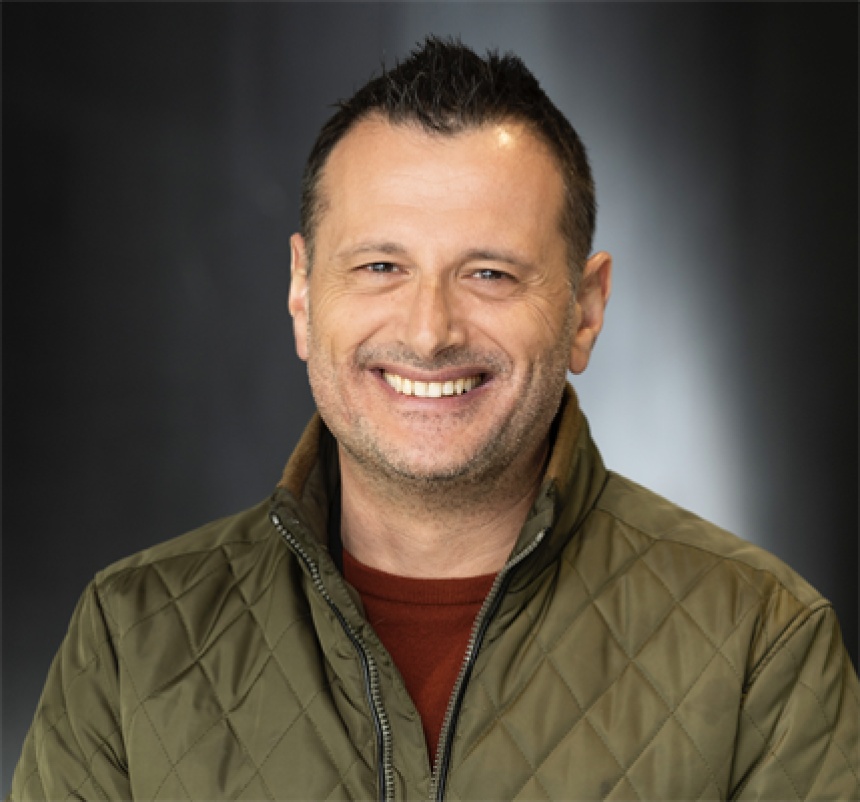
Dr Dimitrios Cakouros
Lecturer
School of Pharmacy and Biomedical Sciences
College of Health
Eligible to supervise Masters and PhD - email supervisor to discuss availability.
The greatest risk factor for all chronic diseases today is aging with stem cell ageing being paramount to tissue degeneration affecting our overall health and life-span . Our epigenome, is defined by enzyme induced chemical modifications of our DNA and histones that alters the function of our genome. All aging organisms studied to date exhibit ‘Epigenetic Drift’, with increasing evidence that diet and lifestyle causes epigenetic changes, which impacts the structure and function of our genome therefore influencing our lifespan. Research within my group has been heavily focused on bone aging and related diseases such as osteoporosis. We use bone marrow derived mesenchymal stem cells (MSC) to understand how Epigenetic changes occur to drive aging and how diet and life style communicates with our genome via our epigenome. This includes examining all aspects of adult stem cell aging ie senescence, differentiation, metabolomics, gene expression and oxidative stress with the ultimate aim of reversing stem cell aging. In addition we explore other human conditions related with MSC deregulation including craniosynostosis in young children.Over the years we have discovered epigenetic enzymes that are key regulators of stem cell function and lifespan and our current projects involve both human and mouse work including generating conditional knockout strains, in vivo analysis including Skeletal analysis throughout development, bone fracture, ectopic bone formation, osteoporotic models, isolating and purifying different stem cell populations for in vitro characterisation. This includes RNA-seq, ChIP-seq, Me-DIP/5hMe-DIP to discover epigenetic signatures, novel epigenetic enzymes and chemical inhibitors to modify the behaviour of stem cells with the aim of rejuvinating MSC's and enhance their ability for self renewal. Currently, we are also endeavouring in unraveling the epigenetic changes that drive aging of other stem cells with the hope of discovering common deregulated epigenetic enzymes which are central to stem cell aging. These projects also include the supervision of junior staff, Honours and postgraduate students.
Molecular regulation of Stem Cell Aging Group.
The greatest risk factor for all chronic diseases today is aging with stem cell ageing being paramount to tissue degeneration affecting our overall health and life-span . Our epigenome, is defined by enzyme induced chemical modifications of our DNA and histones that alters the function of our genome. All aging organisms studied to date exhibit ‘Epigenetic Drift’, with increasing evidence that diet and lifestyle causes epigenetic changes, which impacts the structure and function of our genome therefore influencing our lifespan. Research within my group has been heavily focused on bone aging and related diseases such as osteoporosis. We use bone marrow derived mesenchymal stem cells (MSC) to understand how Epigenetic changes occur to drive aging and how diet and life style communicates with our genome via our epigenome. This includes examining all aspects of adult stem cell aging ie senescence, differentiation, metabolomics, gene expression and oxidative stress with the ultimate aim of reversing stem cell aging. In addition we explore other human conditions related with MSC deregulation including craniosynostosis in young children.
Over the years we have discovered epigenetic enzymes that are key regulators of stem cell function and lifespan and our current projects involve both human and mouse work including generating conditional knockout strains, in vivo analysis including Skeletal analysis throughout development, bone fracture, ectopic bone formation, osteoporotic models, isolating and purifying different stem cell populations for in vitro characterisation. This includes RNA-seq, ChIP-seq, Me-DIP/5hMe-DIP to discover epigenetic signatures, novel epigenetic enzymes and chemical inhibitors to modify the behaviour of stem cells with the aim of rejuvinating MSC's and enhance their ability for self renewal. Currently, we are also endeavouring in unraveling the epigenetic changes that drive aging of other stem cells, including cardiac progenitor cells, neural stem cells and pancreatic stem cells with the hope of discovering common deregulated epigenetic enzymes which are central to stem cell aging. These projects also include the supervision of junior staff, Honours and postgraduate students.
Current Projects available:
1. Deciphering the mechanism of a novel histone demethylase in driving Mesenchymal Stem cell lineage determination, aging and Osteoporosis.
2. Identifying Novel gene targets driving hypergylcaemia induced bone loss and Mesenchymal Stem Cell aging.
3. Rejuvinating adult mesenchymal stem cells by metabolite supplementation
3. Identifying epigenetic regulators of cardiac progenitor cell aging and their role in heart failure.
| Date | Position | Institution name |
|---|---|---|
| 2022 - ongoing | Lecturer | University of Adelaide |
| 2022 - ongoing | Post Doctoral Researcher | University of Adelaide |
| Date | Institution name | Country | Title |
|---|---|---|---|
| 1997 - 2002 | Australian National University | Australia | PhD |
| 1992 - 1995 | University of Adelaide | Australia | BSC |
| Year | Citation |
|---|---|
| 2017 | Hemming, S., & Cakouros, D. (2017). Epigenetic regulation of mesenchymal stem/stromal cell growth and multipotentiality. In K. Atkinson (Ed.), The Biology and Therapeutic Application of Mesenchymal Cells (Vol. 1-2, pp. 41-57). Hoboken, New Jersey: John Wiley and Sons. DOI |
| 2003 | Kumar, S., & Cakouros, D. (2003). The role of caspases in apoptosis. In S. Grimm (Ed.), Genetics of apoptosis (pp. 31-45). 9 Newtec Place, Magdalen Road, Oxford OX4 1RE, UK: Bios Scientific Publishers Ltd. |
| Year | Citation |
|---|---|
| 2021 | Kutyna, M. M., Kok, C. H., Paton, S., Cakouros, D., Arthur, A., Hughes, T. P., . . . Hiwase, D. (2021). Distinct Senescent Bone Marrow Microenvironment in Therapy-Related Myeloid Neoplasms. In BLOOD Vol. 138 (pp. 4 pages). GA, Atlanta: AMER SOC HEMATOLOGY. DOI WoS1 |
| Year | Citation |
|---|---|
| 2019 | Kutyna, M. M., Wee, A., Paton, S., Cakouros, D., Arthur, A., Chhetri, R., . . . Hiwase, D. K. (2019). Aberrant Bone Marrow Microenvironment in Therapy Related Myeloid Neoplasm (t-MN). Poster session presented at the meeting of BLOOD. FL, Orlando: ELSEVIER. DOI WoS2 |
| 2018 | Cakouros, D., Hemming, S., Pribadi, C., Zannettino, A., & Gronthos, S. (2018). EPIGENETIC ENZYMES AND THEIR EMERGING ROLE IN MESENCHYMAL STEM CELL LINEAGE DETERMINATION. Poster session presented at the meeting of JOURNAL OF GENE MEDICINE. Univ Technol Sydney, Sydney, AUSTRALIA: WILEY. |
1. Transcriptional Control of Programmed Cell Death. (NHMRC) 2006-2008
2. Identifying an Epigenetic enzyme regulating programmed cell death. (Cancer Council Australia) 2009
3. Twist-1 Mediated Regulation of Multipotential Mesenchymal Stem Cell Self-Renewal and Cell Fate Determination. (NHMRC) 2013-2015
4. Histone Demethylase KDM6A is a novel target for treating craniosynostosis in children with Saethre Chotzen Syndrome. (NHMRC) 2018-2020.
5. Deregulation of DNA hydroxymethylases Tet1/Tet2 compromises skeletal Integrity during ageing and bone disease. (NHMRC) 2018-2021.
6. Epigenetic Regulation of Bone Regeneration. Osteology Foundation (Switzerland) Advanced Research Grant. 2021-2022
7. Epigenetic Regulation of Bone Regeneration. 2022-2023. Craniofacial Australia Foundation.
8. Investigating high fat/glucose diet on Mesenchymal Stem Cells. FHMS research Grant. 2024. Principal Investigator
1. Human Biology 1B
2. Human Anatomy and Physiology IA
3. Human Anatomy and Physiology IB
4. Dental Science and Practise
5. Foundations of Medicine
6. Integrated and Applied Systems Physiology
7. Medical Studies 1
8. Physiology IIA
9. Medical Studies 2B
| Date | Role | Research Topic | Program | Degree Type | Student Load | Student Name |
|---|---|---|---|---|---|---|
| 2022 | Co-Supervisor | Identification of epigenetic factors deregulated in skeletal stem cells during high glucose medicated inhibition of bone formation | Doctor of Philosophy | Doctorate | Part Time | Mrs Suzanna Shirazi |
| Date | Role | Research Topic | Program | Degree Type | Student Load | Student Name |
|---|---|---|---|---|---|---|
| 2020 - 2024 | Co-Supervisor | Deregulation of DNA Hydroxymethylases TET1 and TET2 Compromises Skeletal Integrity During Ageing | Doctor of Philosophy | Doctorate | Full Time | Mr Nicholas John Smith |
| 2018 - 2022 | Co-Supervisor | The Role of Epigenetic Modifiers, Kdm6a and Kdm6b, in Calvarial Suture Development and Craniosynostosis | Doctor of Philosophy | Doctorate | Full Time | Miss Clara Pribadi |
| 2012 - 2016 | External Supervisor | Epignetic Regulation of Histone Three Lysine Twenty Seven Tri Methylation Dictates Mesenchymal Stem Cell Lineage Commitment, Lifespan and Murine Skeletal Development | Doctor of Philosophy | Doctorate | Full Time | Miss Sarah Elizabeth Hemming |
| 2006 - 2009 | Co-Supervisor | Analysis of the Function and Regulation of the Centrosomal Protein NEDD1 During Cell Division and Development | Doctor of Philosophy | Doctorate | Full Time | Jantina Anna Manning |
| Date | Role | Committee | Institution | Country |
|---|---|---|---|---|
| 2021 - ongoing | Member | Australian Epigenetics Alliance | University of Adelaide | Australia |
| 2015 - ongoing | Co-Founder | Epigenetics Consortium of South Australia | University of Adelaide | Australia |
| 2013 - 2015 | Member | ASMR | University of Adelaide | Australia |
| Date | Role | Membership | Country |
|---|---|---|---|
| 2013 - ongoing | Member | Australian Asian Stem Cell Society | Australia |
| Date | Role | Editorial Board Name | Institution | Country |
|---|---|---|---|---|
| 2014 - ongoing | Editor | Journal of Stem Cells Research, Reviews and Reports | University of Adelaide | Australia |
Connect With Me

External Profiles

