
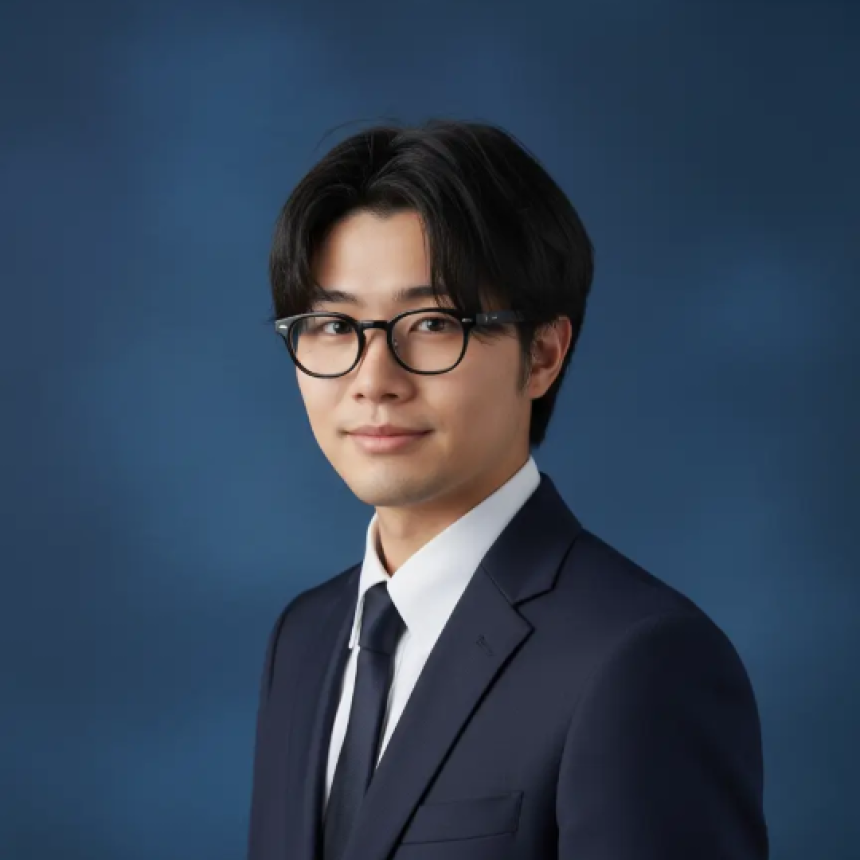
Dr Zhuo Huang
Grant-Funded Researcher (B)
School of Computer Science and Information Technology
College of Engineering and Information Technology
My research focuses on understanding and modeling the world through causal and meta perspectives, aiming to develop generalisable and resilient intelligent systems for practical applications. I obtained my PhD in Computer Science at the University of Sydney. I was a visiting scholar at Tsinghua University, MBZUAI, and RIKEN AIP. If you have any topics or questions to discuss with me, please feel free to reach out. :-)
Research Agenda
My research addresses a fundamental question in modern machine learning: how can AI systems remain reliable, adaptable, and causally grounded when deployed beyond their training conditions? This agenda is organised around three interconnected themes, including but not limited to: trustworthy AI, generalisable AI, and causal world model.
Theme 1: Trustworthy AI
Trustworthiness demands that models behave correctly not only under favorable conditions but also in the presence of noise, manipulation, and selective forgetting. My work in this space targets three failure modes.
Label noise is addressed in NoisyGPT (NeurIPS 2024), which detects and rectifies corrupted supervision through probability curvature, identifying mislabeled examples by the geometric behavior of the loss surface. A cluster of recent papers addresses machine unlearning: Exploring Criteria of Loss Reweighting to Enhance LLM Unlearning (ICML 2025) examines how reweighting strategies govern selective forgetting; Is Gradient Ascent Really Necessary? Memorize to Forget (arXiv 2026) challenges the conventional gradient-ascent paradigm, showing that memorisation-based mechanisms can achieve more stable forgetting; and MeGU (arXiv 2026) introduces machine-guided unlearning with explicit target feature disentanglement. Together, these contributions establish that trustworthiness is not only a property of training, but one that must be maintained and correctable across the model lifecycle.
Theme 2: Generalisable AI
Generalisation under distribution shift is the longest-running thread in my research. I approach it across three axes: supervision regime, input corruption, and modality.
On the supervision axis, Universal Semi-Supervised Learning (NeurIPS 2021) tackles open-world SSL where unlabeled data contains unknown categories, and Recycling Transferable Unlabeled Data (IEEE T-MM) recovers value from class-mismatched unlabeled pools rather than discarding them. FlatMatch (NeurIPS 2023) addresses the implicit distribution gap between labeled and unlabeled splits via cross-sharpness regularisation.
On the corruption axis, Robust Generalisation against Photon-Limited Corruptions (CVPR 2023) connects loss geometry to worst-case robustness, and Machine Vision Therapy (ICML 2024) shows that multimodal LLMs can serve as implicit denoisers to restore visual robustness through in-context learning.
On the modality axis, Towards Out-of-Modal Generalisation without Instance-level Modal Correspondence (ICLR 2025) formalises the problem of cross-modal generalisation without paired supervision, BrokenBind (arXiv 2026) extends this to universal modality exploration beyond dataset boundaries, and Towards Modality Generalisation (ACM MM 2024) provides benchmarking infrastructure for the community. My PhD thesis, Trustworthy Machine Learning under Distribution Shifts (USYD 2025), synthesises this body of work into a unified theoretical framework.
Theme 3: Causal World Model
The deepest failure mode of standard learning is its reliance on spurious statistical associations rather than stable causal structure. My work in this theme targets that root cause directly.
Harnessing OOD Examples via Augmenting Content and Style (ICLR 2023) disentangles content from style as a proxy for separating causal from non-causal factors, using OOD data as an augmentation signal rather than discarding it. Winning Prize Comes from Losing Tickets (IJCV 2024) approaches invariant learning through the lens of variant parameters, showing that explicitly modeling non-invariant components improves causal feature isolation. At the agentic level, Bifrost (arXiv 2026) introduces a training-free LLM agent self-improvement framework grounded in context-trajectory correlation and latent space steering, treating the agent's internal world model as a target for causal refinement without gradient updates. i-PhysGaussian (arXiv 2026) extends causal structure into 3D scene understanding, incorporating implicit physical simulation into Gaussian splatting to ground visual representations in physical law.
Prospective Vision
Across all three themes, the unifying question is whether AI systems can move beyond pattern matching toward representations that are robust to corruption, invariant to spurious shift, and grounded in causal structure. My research offers both principled theoretical contributions and systems that perform under real-world conditions where the i.i.d. assumption fails. In the future, I plan to shed light upon realistic and essential applications, including Agricultural Genomic Prediction, Brain&Psychology, and Health&Medicine. Across all three domains, my long-horizon ambition is to establish a unified scientific foundation, drawing on causal representation learning and robust generalisation theory, that allows AI systems to serve as dependable partners in some of the most consequential decision-making for humanity.
| Date | Position | Institution name |
|---|---|---|
| 2025 - 2026 | Visiting Scholar | RIKEN Center for Advanced Intelligence Project |
| 2025 - 2025 | Visiting Scholar | Mohamed bin Zayed University of Artificial Intelligence |
| 2023 - 2023 | Visiting Scholar | Tsinghua University |
| Date | Institution name | Country | Title |
|---|---|---|---|
| 2022 - 2026 | The University of Sydney | Australia | PhD |
| Year | Citation |
|---|---|
| 2025 | Huang, Z., Li, M., Shen, L., Yu, J., Gong, C., Han, B., & Liu, T. (2025). Winning Prize Comes from Losing Tickets: Improve Invariant Learning by Exploring Variant Parameters for Out-of-Distribution Generalization. International Journal of Computer Vision, 133(1), 456-474. Scopus8 WoS8 |
| 2023 | Huang, Z., Yang, J., & Gong, C. (2023). They are Not Completely Useless: Towards Recycling Transferable Unlabeled Data for Class-Mismatched Semi-Supervised Learning. IEEE Transactions on Multimedia, 25, 1844-1857. Scopus23 WoS20 |
| Year | Citation |
|---|---|
| 2025 | Liu, X., Xia, X., Huang, Z., Ng, S. K., & Chua, T. S. (2025). Towards Modality Generalization: A Benchmark and Prospective Analysis. In Mm 2025 Proceedings of the 33rd ACM International Conference on Multimedia Co Located with mm 2025 (pp. 12179-12188). IRELAND, Dublin: ASSOC COMPUTING MACHINERY. DOI Scopus1 |
| 2025 | Yang, P., Wang, Q., Huang, Z., Liu, T., Zhang, C., & Han, B. (2025). Exploring Criteria of Loss Reweighting to Enhance LLM Unlearning. In Proceedings of Machine Learning Research Vol. 267 (pp. 71318-71357). Scopus1 |
| 2024 | Huang, Z., Liu, C., Dong, Y., Su, H., Zheng, S., & Liu, T. (2024). Machine Vision Therapy: Multimodal Large Language Models Can Enhance Visual Robustness via Denoising In-Context Learning. In Proceedings of Machine Learning Research Vol. 235 (pp. 19973-20003). Scopus4 |
| 2024 | Wang, H., Huang, Z., Lin, Z., & Liu, T. (2024). NoiseGPT: Label Noise Detection and Rectification through Probability Curvature. In Advances in Neural Information Processing Systems Vol. 37. Scopus11 |
| 2024 | Hong, Z., Wang, Z., Shen, L., Yao, Y., Huang, Z., Chen, S., . . . Liu, T. (2024). IMPROVING NON-TRANSFERABLE REPRESENTATION LEARNING BY HARNESSING CONTENT AND STYLE. In 12th International Conference on Learning Representations Iclr 2024. Scopus33 |
| 2023 | Huang, Z., Xia, X., Shen, L., Han, B., Gong, M., Gong, C., & Liu, T. (2023). HARNESSING OUT-OF-DISTRIBUTION EXAMPLES VIA AUGMENTING CONTENT AND STYLE. In 11th International Conference on Learning Representations Iclr 2023. Scopus39 |
| 2023 | Huang, Z., Shen, L., Yu, J., Han, B., & Liu, T. (2023). FlatMatch: Bridging Labeled Data and Unlabeled Data with Cross-Sharpness for Semi-Supervised Learning. In A. Oh, T. Neumann, A. Globerson, K. Saenko, M. Hardt, & S. Levine (Eds.), Advances in Neural Information Processing Systems Vol. 36 (pp. 21 pages). LA, New Orleans: NEURAL INFORMATION PROCESSING SYSTEMS (NIPS). Scopus41 WoS8 |
| 2023 | Huang, Z., Zhu, M., Xia, X., Shen, L., Yu, J., Gong, C., . . . Liu, T. (2023). Robust Generalization Against Photon-Limited Corruptions via Worst-Case Sharpness Minimization. In Proceedings of the IEEE Computer Society Conference on Computer Vision and Pattern Recognition Vol. 2023-June (pp. 16175-16185). CANADA, Vancouver: IEEE COMPUTER SOC. DOI Scopus38 WoS19 |
| 2021 | Huang, Z., Xue, C., Han, B., Yang, J., & Gong, C. (2021). Universal Semi-Supervised Learning. In Advances in Neural Information Processing Systems Vol. 32 (pp. 26714-26725). Scopus53 |


Available For Media Comment.