
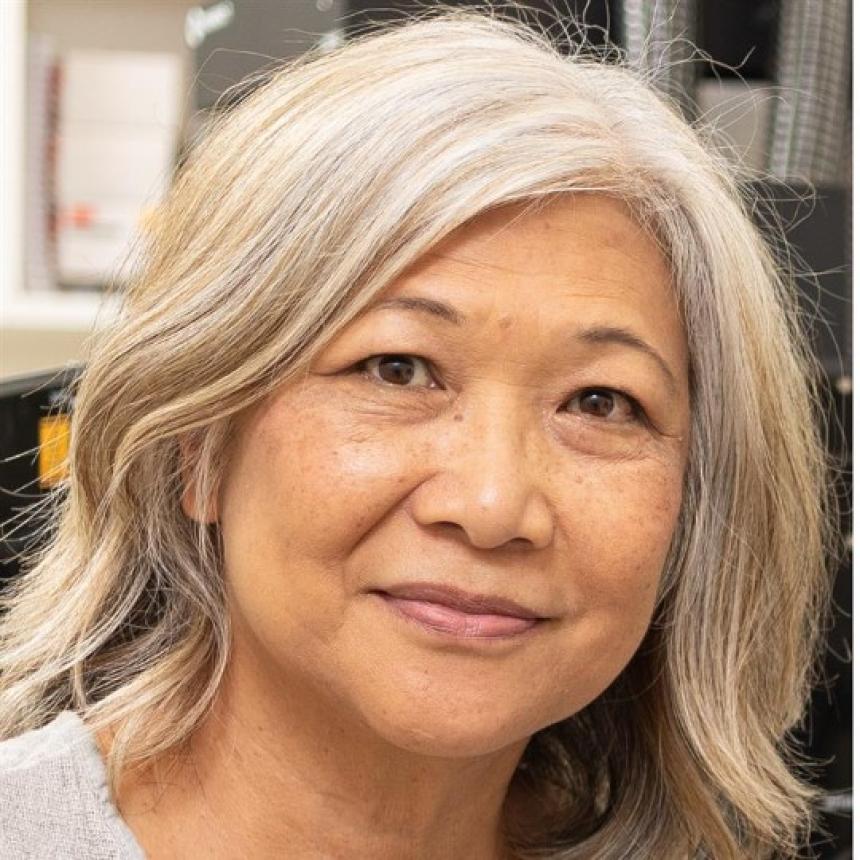
Prof Yeesim Khew-Goodall
Centre for Cancer Biology
College of Health
Eligible to supervise Masters and PhD as Principal Supervisor - email supervisor to discuss availability.
I lead the Cell Signalling Laboratory at the Centre for Cancer Biology, a joint initiative of SA Pathology and the University of South Australia. Our team collaborates nationally and internationally, integrating advanced technologies such as phosphoproteomics, spatial transcriptomics, and high-resolution imaging with patient-derived and iPSC-based models.
Lab Mission and Impact
Our mission is to decode the signalling networks that drive cancer progression and therapy resistance, translating these discoveries into new biomarkers and therapeutic strategies for aggressive cancers. Through innovation and collaboration, we aim to improve outcomes for patients with cancers that currently lack effective targeted treatments.
I pioneered studies on epithelial–mesenchymal transition (EMT), making foundational contributions to understanding cell plasticity through microRNA regulation and phosphorylation-mediated signalling. Today, my research focuses on dysregulated signalling networks driving tumour growth, metastasis, and therapy resistance, particularly in cancers lacking targeted therapies, such as triple-negative breast cancer (TNBC) and neuroblastoma. More recently, my work on neuroblastoma has brought me full circle to my early interest in neuronal differentiation—now exploring how developmental programs can give rise to cancers that originate in the womb.
My Journey. After completing a B.Sc. (Honours) at the University of Adelaide, I earned a Ph.D. in enzymology and protein chemistry. My postdoctoral training began at the Roche Institute of Molecular Biology (USA), where I applied emerging molecular biology techniques to identify marker genes involved in olfactory neuron regeneration and differentiation. A second postdoctoral fellowship at the Friedrich Miescher Institute (Switzerland) sparked my enduring interest in cancer signalling networks.
Returning to Adelaide with a young family, I joined the Hanson Centre for Cancer Research (later the Hanson Institute, now part of SA Pathology). In 2006, I was awarded a Cancer Council SA Senior Fellowship, which solidified my commitment to cancer research.
Research Vision and Impact
Our research aims to uncover the molecular and cellular mechanisms that drive cancer progression and therapy resistance, with a focus on translating these insights into improved treatment strategies. By integrating cutting-edge technologies and collaborative approaches, we strive to identify novel therapeutic targets and biomarkers that can ultimately improve patient outcomes in aggressive cancers such as triple-negative breast cancer and neuroblastoma that currrently lack effective targeted therapy.
Current Research Projects
Triple-Negative Breast Cancer
Our research focuses on understanding key signalling pathways that drive triple-negative breast cancer (TNBC) progression and treatment response. Current projects include:
Investigating how specific pathways influence TNBC response to existing therapies, including their role in determining cancer cell fate and shaping the tumour microenvironment.Identifying the molecular mechanisms underlying these pathways, such as kinase substrates and novel roles of post-translational modifications in regulating kinase function.Exploring how dysregulation of endosomal trafficking contributes to cancer progression.To address these questions, our laboratory employs cutting-edge approaches including phosphoproteomics, functional genomics, spatial transcriptomics, high/super-resolution confocal microscopy, genetically engineered and xenograft mouse models of TNBC, and analyses of patient-derived breast cancer specimens.
• Investigating pathways influencing treatment response and tumour microenvironment
• Identifying kinase substrates and novel roles of post-translational modifications
• Exploring how dysregulated endosomal trafficking drives cancer progression
Neuroblastoma
Our neuroblastoma research aims to uncover critical signalling pathways involved in neuroblast differentiation and maturation, and how their dysregulation leads to tumour development. Current projects include:
Using induced pluripotent stem cells (iPSCs) to study the differentiation of neuroblasts into sympathetic neurons and identify key signalling programs.Leveraging insights from neuroblast differentiation to understand how aberrant signalling drives neuroblastoma.Developing iPSC-based disease models to discover and validate potential therapeutic targets.These studies integrate advanced sequencing technologies for coding and non-coding RNAs, bioinformatics, and spatial transcriptomics, using both mouse embryos and patient samples. This work is part of a collaborative effort with Professor Quenten Schwarz and Professor Greg Goodall at the Centre for Cancer Biology.
• Using iPSC models to study neuroblast differentiation and maturation
• Identifying dysregulated signalling pathways that lead to neuroblastoma
• Developing disease models to discover new therapeutic targets
| Date | Position | Institution name |
|---|---|---|
| 2013 - ongoing | Adjunct Professor | University of South Australia |
| 2005 - ongoing | Affiliate Titleholder | University of Adelaide |
| 1990 - ongoing | Medical Scientist (Research) | SA Pathology |
| Date | Institution name | Country | Title |
|---|---|---|---|
| University of Adelaide | Australia | PhD | |
| University of Adelaide | Australia | B Sc (Hons) |
| Date | Title | Institution | Country |
|---|---|---|---|
| Postdoctoral Fellow | Roche Institute of Molecular Biology | United States | |
| Postdoctoral Fellow | Friedrich Miescher Institute | Switzerland |
| Year | Citation |
|---|---|
| 2018 | Bottini, A., Wu, D. J., Ai, R., LeRoux, M., Bartok, B., Bombardieri, M., . . . Bottini, N. (2018). Non-Receptor Protein Tyrosine Phosphatase 14 (PTPN14) Promotes YAP-Dependent Tgfbeta Signaling in RA FLS. In ARTHRITIS & RHEUMATOLOGY Vol. 70 (pp. 1 page). IL, Chicago: WILEY. |
| Year | Citation |
|---|---|
| 2015 | Hissaria, P., Bert, A., Proudman, S., Goodall, G., & Khew-Goodall, Y. (2015). DIFFERENTIAL PATTERN OF MICRORNA EXPRESSION IN LIMITED AND DIFFUSE CUTANEOUS VARIANTS OF SYSTEMIC SCLEROSIS - A POSSIBLE MECHANISM TO EXPLAIN THE UNIQUE CLINICAL PHENOTYPES. Poster session presented at the meeting of INTERNAL MEDICINE JOURNAL. WILEY-BLACKWELL. |
| 2015 | Hissaria, P., Bert, A., Proudman, S., Goodall, G., & Khew-Goodall, Y. (2015). MICRO RNAS (MIRNAS) INVOLVED IN TGF BETA SIGNALLING PATHWAYS ARE DIFFERENTIALLY EXPRESSED IN THE PAPILLARY DERMIS OF INVOLVED SKIN IN LIMITED AND DIFFUSE CUTANEOUS SCLERODERMA PATIENTS. Poster session presented at the meeting of INTERNAL MEDICINE JOURNAL. WILEY-BLACKWELL. |
| 2013 | Khew-Goodall, Y. (2013). A NOVEL REGULATOR OF THE SECRETOME MODULATES CANCER METASTASIS. Poster session presented at the meeting of CLINICAL AND EXPERIMENTAL PHARMACOLOGY AND PHYSIOLOGY. Hangzhou, PEOPLES R CHINA: WILEY-BLACKWELL. |
| 2010 | Crocker, L., Gregory, P., Goodall, G., & Khew-Goodall, Y. (2010). MICRORNAS REGULATING FIBROBLAST ACTIVATION AND EPITHELIAL MESENCHYMAL TRANSITION IN FIBROSIS. Poster session presented at the meeting of WOUND REPAIR AND REGENERATION. WILEY-BLACKWELL. |
| 2008 | Gregory, P. A., Bracken, C. P., Bert, A. G., Paterson, E. L., Kolesnikoff, N., Farshid, G., . . . Goodall, G. J. (2008). Role of the miR-200 family in mediating EMT in response to TGF-β. Poster session presented at the meeting of Abstracts and Reviews of 7th Joint Conference of the International Cytokine Society and the International Society for Interferon and Cytokine Research, as published in Cytokine. Montreal, Canada: Elsevier. DOI |
| Year | Citation |
|---|---|
| 2026 | Ortiz, M., Ffrench, C., Webb, S., Toubia, J., Nataren, N., Dorward, E., . . . Bonder, C. (2026). Tumor Protein D54 (TPD54) regulates intracellular protein trafficking, cellular function and disease progression in melanoma. DOI |
-
Trafficking mechanisms governing receptor availability for signalling, NHMRC - Project Grant, 01/01/2018 - 31/12/2021
-
Using miR-200 to find new therapeutic targets for neuroblastoma, NHMRC - Project Grant, 01/01/2017 - 31/12/2019
| Date | Role | Research Topic | Program | Degree Type | Student Load | Student Name |
|---|---|---|---|---|---|---|
| 2024 | Principal Supervisor | Determining the role of pY374PKCd mediated chemoresistance in triple negative breast cancer | Doctor of Philosophy | Doctorate | Full Time | Miss Emily Phipps |
| 2024 | Co-Supervisor | Identification of Molecular Drivers of Neuroblastoma | Doctor of Philosophy | Doctorate | Full Time | Ms Sepideh Mehrpour Layeghi |
| 2024 | Co-Supervisor | 110943 - Re-examining fundamental assumptions about microRNAs | Doctor of Philosophy | Doctorate | Full Time | Ms Fakhira Nazki |
| 2023 | Principal Supervisor | Understanding chemoresistance mechanisms in triple negative breast cancer | Doctor of Philosophy | Doctorate | Full Time | Vishnu Sunil Jaikumar |
| 2023 | Co-Supervisor | 110423 - Tackling Neuroblastoma using a multi-omics bioinformatics approach | Doctor of Philosophy | Doctorate | Full Time | Ms Aayushi Notra |
| 2020 | Principal Supervisor | Identifying pY374-PKC-delta substrates that control endosomal trafficking of receptor tyrosine kinases | Doctor of Philosophy | Doctorate | Full Time | Winona Faye Sivan |
| Date | Role | Research Topic | Program | Degree Type | Student Load | Student Name |
|---|---|---|---|---|---|---|
| 2021 - 2025 | Co-Supervisor | CD47 regulates cellular and metabolic plasticity in glioblastoma | Doctor of Philosophy | Doctorate | Full Time | Miss Ruhi Polara |
| 2010 - 2012 | Co-Supervisor | The miR 200 Family is Controlled by Epigenetic based Mechanisms and Mediates Transition Between Non Stem and Stem like Cell Phenotypes | Doctor of Philosophy | Doctorate | Full Time | Mr Yat Yuen Lim |
| 2006 - 2011 | Principal Supervisor | Tyrosine Phosphatase Pez: A Novel Regulator of TGFß Signalling, Epithelial-Mesenchymal Transition and Protein Secretion in Development and Cancer | Doctor of Philosophy | Doctorate | Full Time | Mrs Leila Belle |
| 2006 - 2010 | Co-Supervisor | Downregulation of the MicroRNA-200 Family Induces Epithelial to Mesenchymal Transition | Doctor of Philosophy | Doctorate | Full Time | Miss Emily Paterson |
| 2004 - 2009 | Principal Supervisor | A Novel Proinflammatory Role for Annexin A1 in Neutrophil Transendothelial Migration | Doctor of Philosophy | Doctorate | Full Time | Ms Samantha Louise Williams |
| 1998 - 2003 | Principal Supervisor | Protein Tyrosine Phosphatase Pez: Its role in the regulation of cell-cell adhesions | Doctor of Philosophy | Doctorate | Full Time | Ms Carol Wadham |
Connect With Me

External Profiles

