
Dr Witold Bloch
School of Physics, Chemistry and Earth Sciences
College of Science
Eligible to supervise Masters and PhD as Principal Supervisor - email supervisor to discuss availability.
Dr Witold Bloch is an ARC DECRA fellow at the University of Adelaide, School of Physical Sciences. Dr Bloch is the past recipient of an Alexander von Humboldt post-doctoral fellowship which he carried out in the University of Goettingen and TU Dortmund (Germany). One of his research interests involves the utilisation of metal-organic cages for the development of novel porous nanomaterials. The applications that this research aims to address include gas storage and separation as well as heterogeneous catalysis.
Research interests
Research in my group focuses on developing the synthesis and studying the properties of porous solids composed of molecular cages. Some of the ongoing projects are listed below:
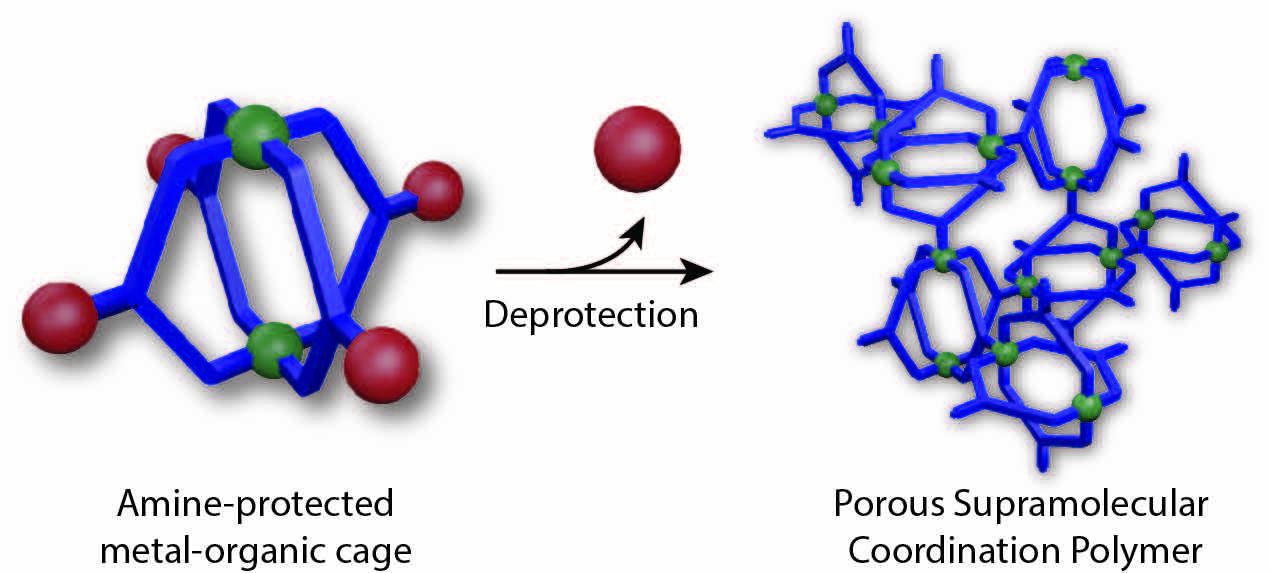
Novel porous materials formed by linking metal-organic cages. The development of new approaches to synthesise porous metal–organic materials is both academically attractive and industrially relevant. Recently, new approaches to prepare hybrid metal–organic materials have begun to emerge. These deviate from traditional one-pot syntheses involving simple metal ion and ligand mixtures; instead focusing on materials formed by linking complex, supramolecular structures. One of these approaches, which aims to generate porosity from the building blocks, rather than their relative arrangement, is based on polymerising porous metal–organic cages (MOCs).
- A covalent deprotection strategy for assembling supramolecular coordination polymers from metal–organic cages, M. L. Schneider, O. M. Linder-Patton and W. M. Bloch*, Chem. Commun., 2020, 56, 12969-12972
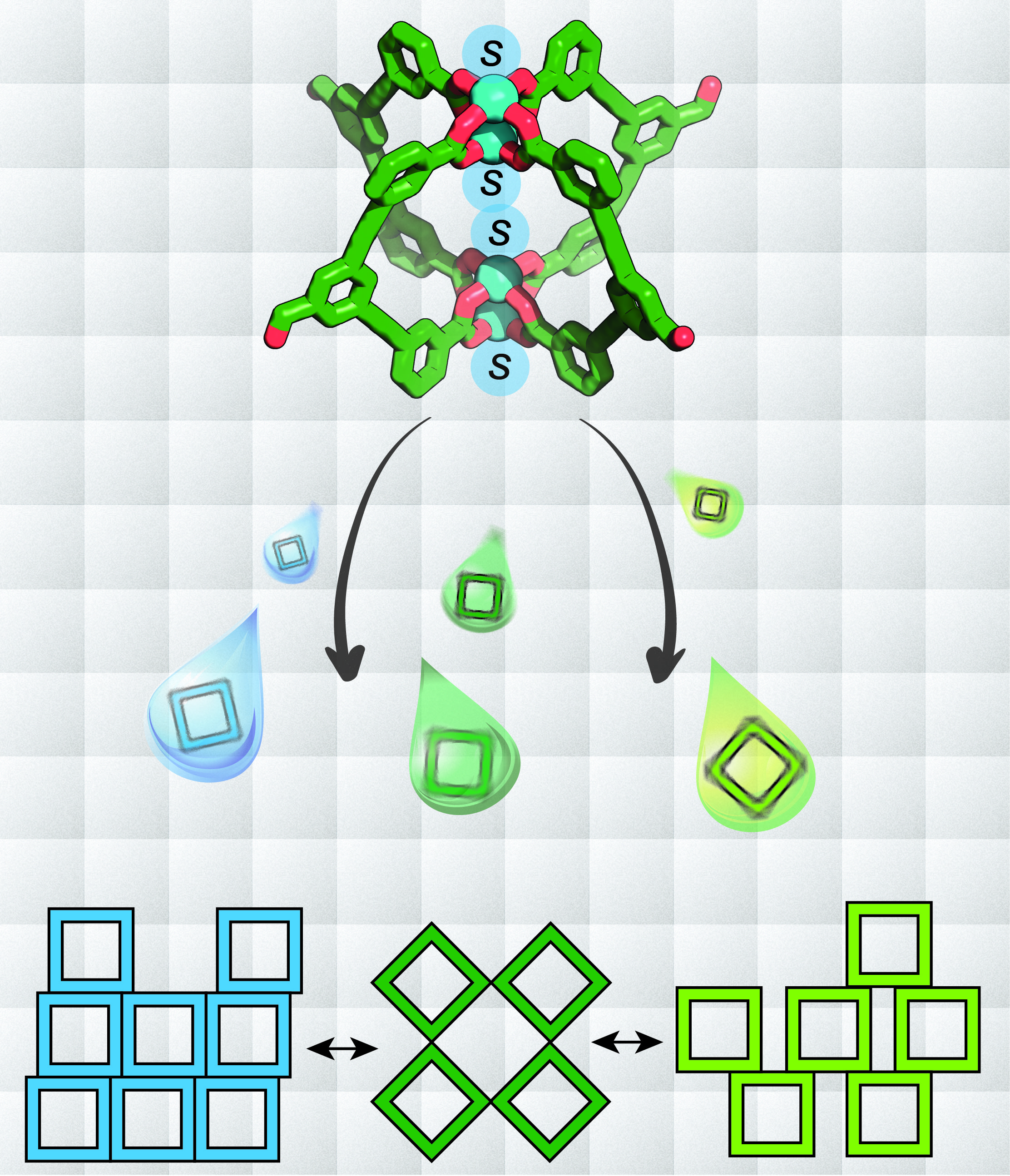
Crystal engineering and self-sorting of metal-organic cage solids. Molecular solids based on cage compounds have recently emerged as an attractive class of porous materials, owing to their solution processability, synthetic versatility and intrinsic porosity. Our recent work has examined the role that solvent plays in determining the crystal-packing and the overall porosity of several solvatomorphic metal-organic cage solids. We have found that these materials possess varying degrees of structural non-rigidity; some solvatomorphs are stable to solvent exchange while others undergo rapid transformations.
- On/off porosity switching and post-assembly modifications of Cu4L4 metal–organic polyhedra, W. M. Bloch,* R. Babarao and M. L. Schneider, Chem. Sci., 2020, 11, 3664–3671
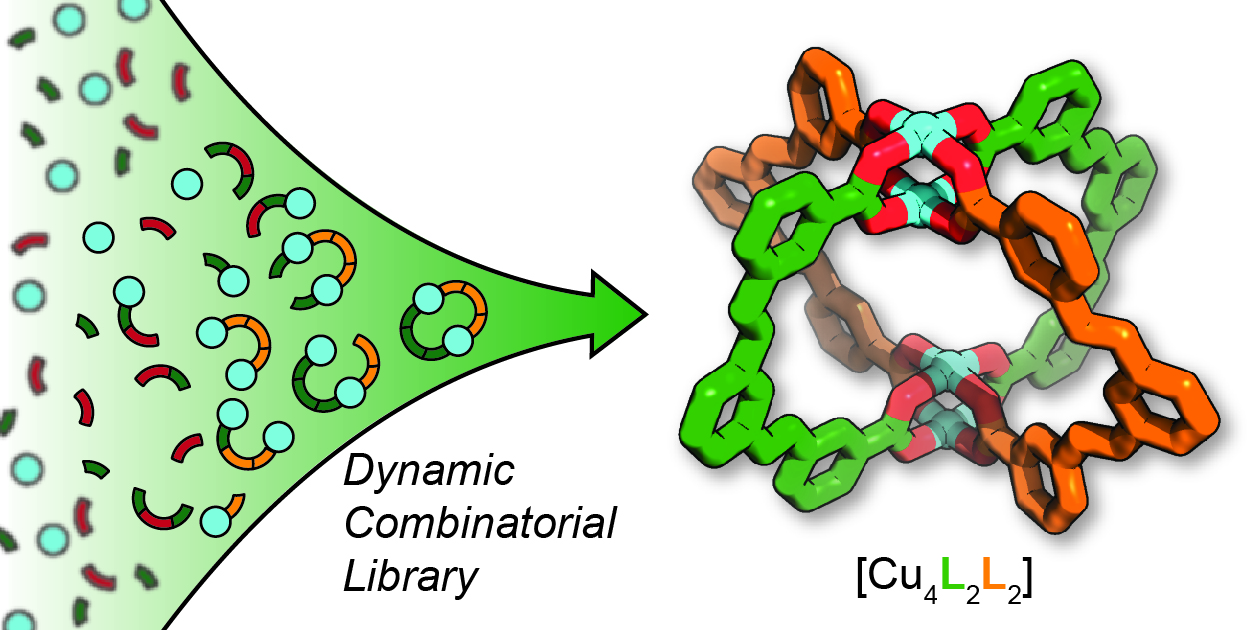
- Self-sorting of porous Cu4L2Lʹ2 metal-organic cages composed of isomerisable ligands, A. W. Markwell-Heys, M. L. Schneider, J. M. L. Madridejos, G.F. Metha and W. M. Bloch*, Chem. Commun., 2021, DOI: 10.1039/D0CC08076D
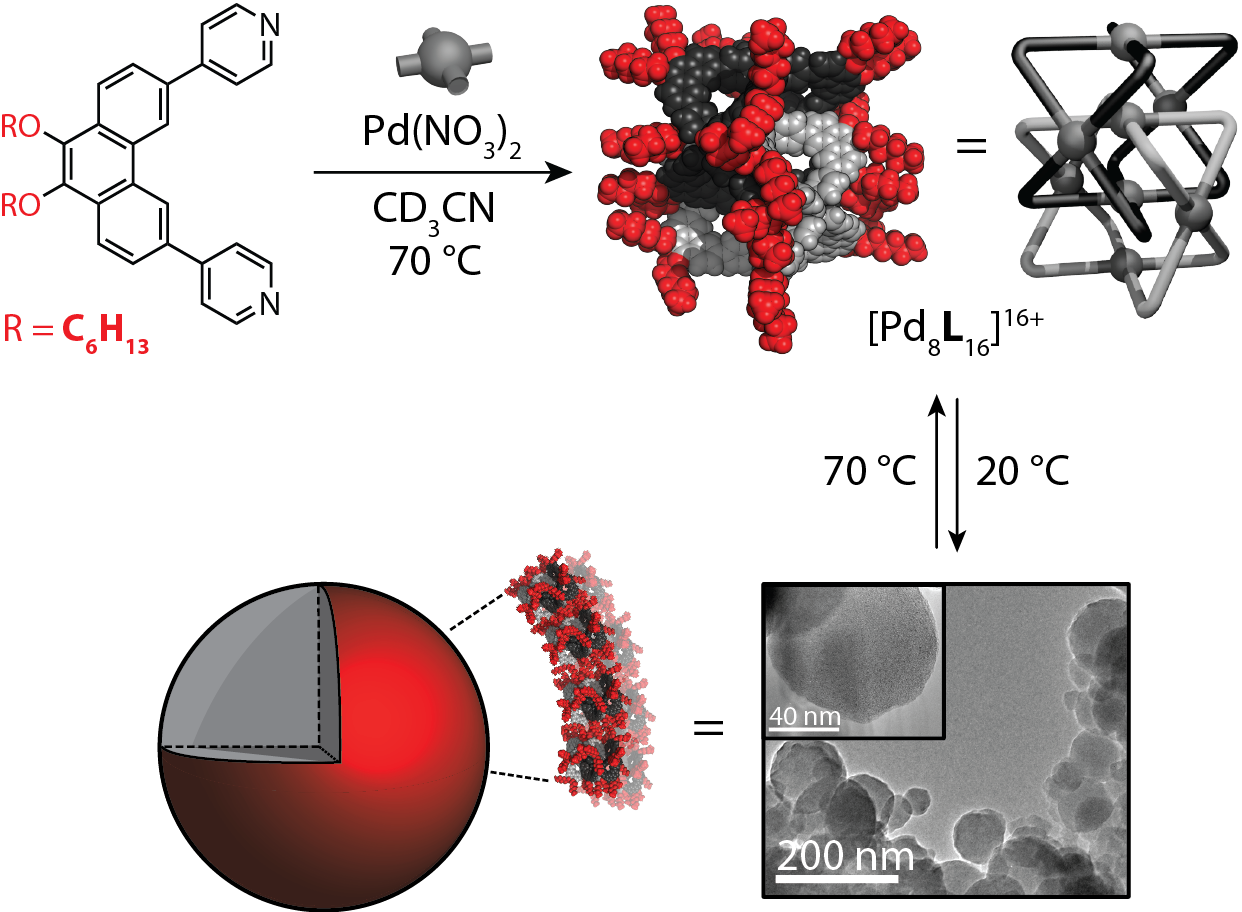
Aggregation and assembly of PdnL2n coordination cages. Supramoecular self-assembly is widely utilised in biological systems to assemble increasingly advanced multi-functional architectures from smaller subunits. This model is prevalent in multi-enzyme complexes, which are capable of highly-efficient sequential catalytic transformations. My research aims to channel this approach in artificial materials synthesis.
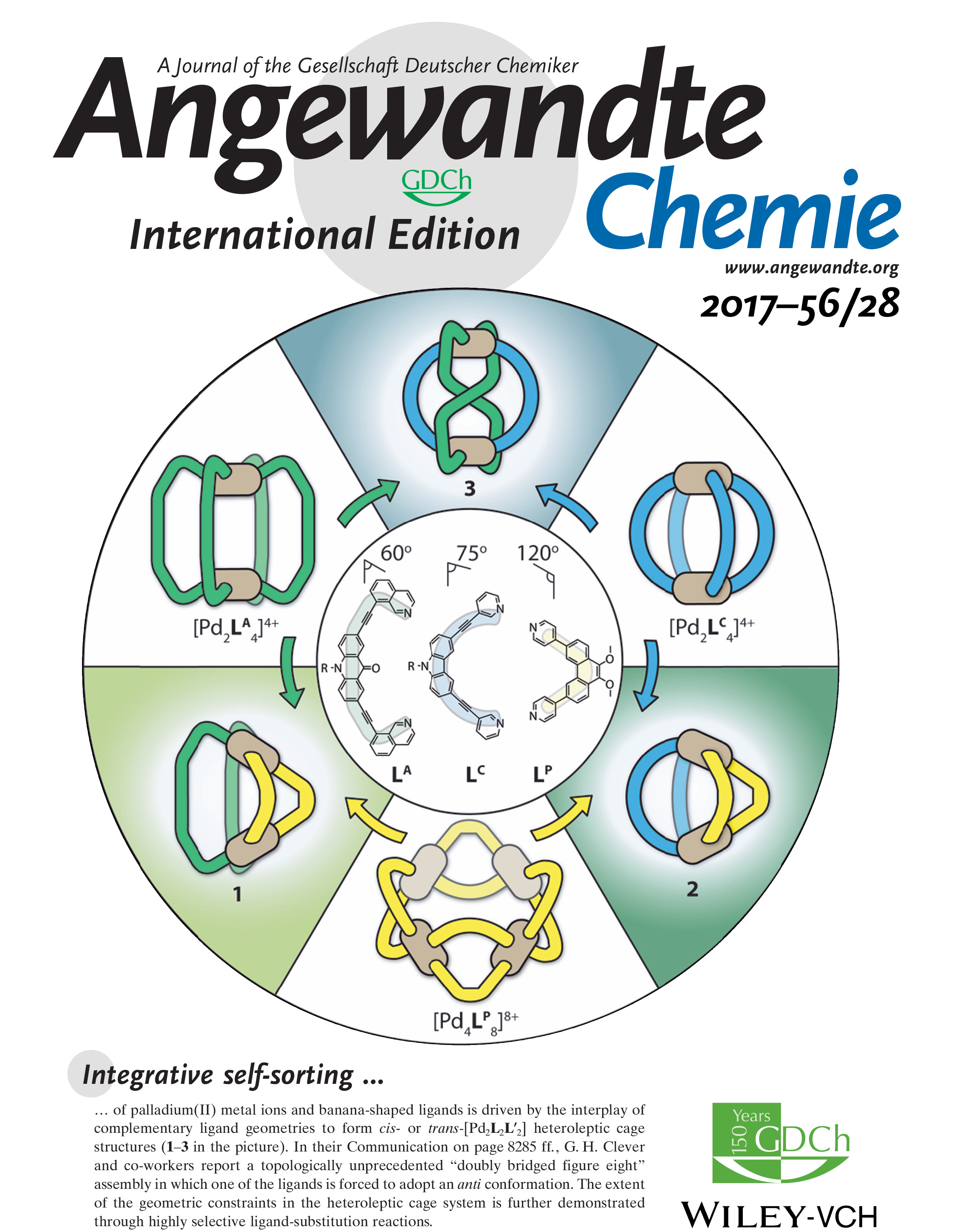
- Hierarchical Assembly of an Interlocked M8L16 Container, W. M. Bloch*, J. J. Holstein, B. Dittrich, W. Hiller and G. H. Clever*, Angew. Chem. Int. Ed., 2018, 57, 5534–5538.
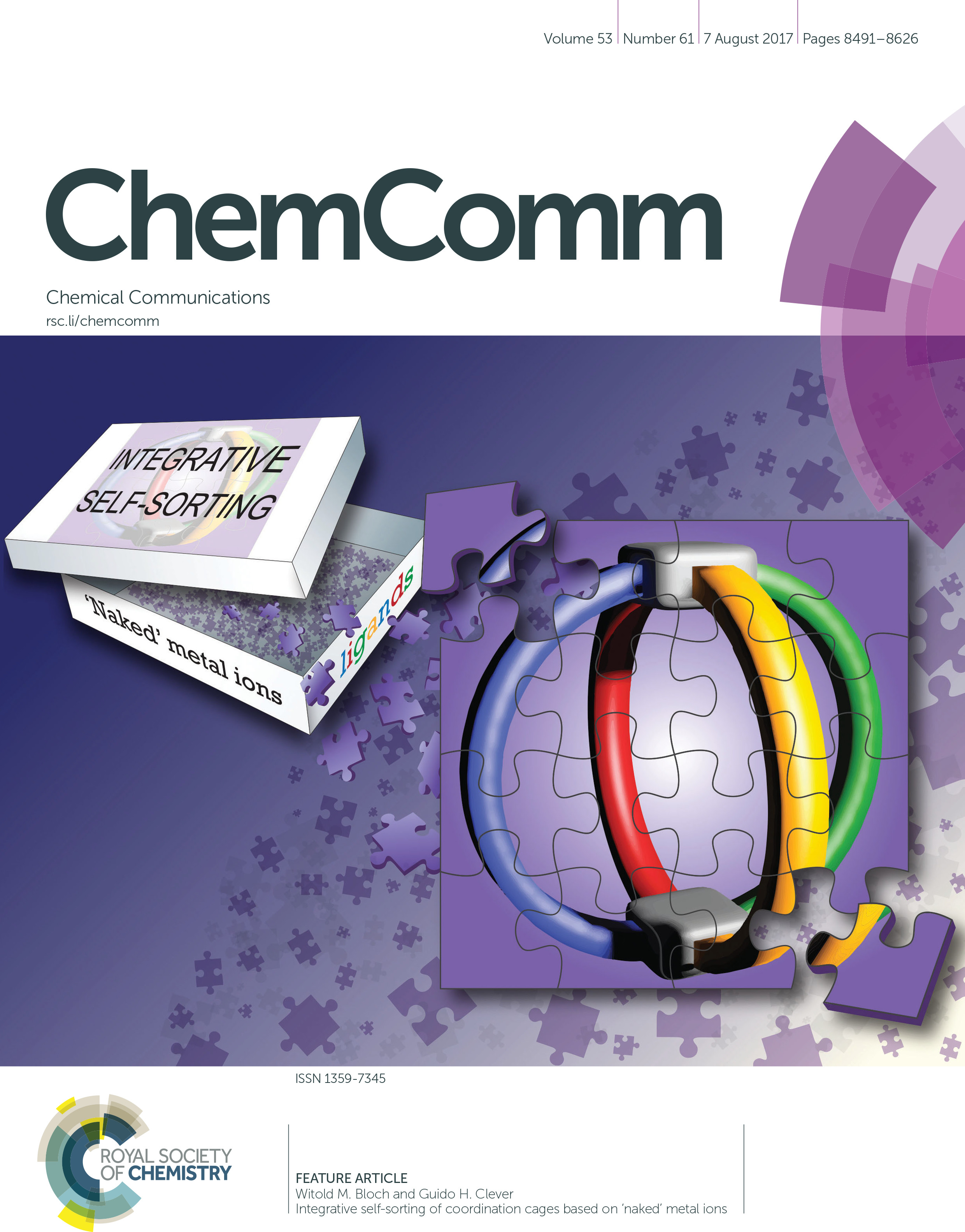
Cover art
| Date | Position | Institution name |
|---|---|---|
| 2019 - ongoing | ARC DECRA fellow | University of Adelaide |
| 2017 - 2019 | Ramsay Research Fellow in Applied Science | University of Adelaide |
| 2016 - 2017 | Humboldt Post-doctoral Research Fellow | Technical University of Dortmund |
| 2015 - 2015 | Humboldt Post-doctoral Research Fellow | University of Goettingen |
| 2014 - 2015 | Post-doctoral research associate | University of Adelaide |
| 2014 - 2014 | Lecturer Level A | University of Adelaide |
| 2013 - 2014 | Research associate | University of Adelaide |
| Date | Type | Title | Institution Name | Country | Amount |
|---|---|---|---|---|---|
| 2019 | Award | ARC Discovery Early Career Researcher Award 2019 | University of Adelaide | Australia | 405 K |
| 2018 | Award | 2018 Early Career Researcher award: Order Of Merit | University of Adelaide | Australia | - |
| 2017 | Fellowship | Ramsay Fellowship | University of Adelaide | Australia | - |
| 2015 | Fellowship | Alexander von Humboldt Post-doctoral Fellowship | Georg-August-Universität Göttingen and TU Dortmund | Germany | - |
| 2014 | Recognition | Prize for best paper (IPAS) | University of Adelaide | Australia | - |
| 2012 | Award | Disciplinary seminar award (IPAS) | University of Adelaide | Australia | - |
| 2012 | Award | Seminar award | University of Adelaide | Australia | - |
| 2010 | Award | Poster Prize | University of Adelaide | Australia | - |
| Language | Competency |
|---|---|
| English | Can read, write, speak, understand spoken and peer review |
| German | Can speak and understand spoken |
| Polish | Can read, speak and understand spoken |
| Date | Institution name | Country | Title |
|---|---|---|---|
| 2010 - 2014 | University of Adelaide | Australia | PhD (Chemistry) |
| 2009 | University of Adelaide | Australia | Honours (Chemistry) |
| 2008 | University of Adelaide | Australia | Bachelor of Science (Nanoscience and materials) |
| Year | Citation |
|---|---|
| 2025 | Andersson, C., Mudiyanselage, S., Peeks, M., Kruger, A., Virtue, J., Mann, M., . . . Bloch, W. (2025). Efficient removal of short-chain perfluoroalkyl substances by cavity-directed aggregation in a molecular cage host. DOI |
| 2025 | Andersson, C., Mudiyanselage, S., Peeks, M., Kroeger, A., Virtue, J., Mann, M., . . . Bloch, W. (2025). Efficient removal of short-chain perfluoroalkyl substances by cavity-directed aggregation in a molecular cage host. DOI |
| 2021 | Markwell-Heys, A., Roemelt, M., Slattery, A., Linder-Patton, O., & Bloch, W. (2021). Linking metal-organic cages pairwise as a design approach for assembling multivariate crystalline materials. DOI |
Research funding
2015 - 2017 Alexander von Humboldt Fellowship for post-doctoral researchers (University of Goettingen and TU Dortmund, Germany)
Project summary: Many functional macromolecules in nature (e.g. enzymes) are multi-component assemblies with an intricate and defined active site. This work focused on increasing the structural complexity of artificial nano-cage receptors, which are commonly simple and symmetrical structures with limited functionality. A new methodology was developed which facilitated the assembly of advanced nano-cage compounds composed of two different but complementary ligands. This approach made it possible, for the first time, to ‘stitch’ together two different functionalities in a single self-assembled cage, without the need of a guest template. This approach was utilised to prepare a variety of mixed-ligand cages including one example in which the cage’s uniquely-shaped cavity facilitated shape recognition of stereoisomeric guests. These findings provide significant insights into the synthesis and structure of discrete metal-organic cages and serve as a platform for the design of more complex and sophisticated artificial receptors.
2017 - 2021 Ramsay Research Fellowship (University of Adelaide)
Project summary: Many pharmaceutical compounds are currently synthesised through multi-step processes that use multiple homogeneous catalysts, resulting in a high level of waste production. This project aims to develop novel porous materials for heterogeneous tandem catalysis by linking nano-cage units into an ordered framework material. The ability of such a material to catalyse chemical reactions in tandem is expected to significantly reduce both the cost and waste associated with industrial chemical syntheses.
Discovery Early Career Researcher Award 2019: Linking Supramolecular Nanocages into Multi-functional Materials (University of Adelaide)
This project aims to advance the complexity of metal-organic materials by ordering discrete nano-cage structures called "metal-organic polyhedra" in a multi-functional porous solid. The project expects to generate critical knowledge in the synthesis of high-performance materials by combining the advantages of metal-organic and dynamic covalent chemistry. The expected outcomes of the project include the development of materials that are able to sequentially catalyse chemical reactions in a single-batch process. This project should deliver benefits for Australia’s emerging chemical manufacturing industry, such as a reduction in the cost, wastage and environmental impact of the chemical manufacturing industry.
Semester 1: Foundation of Chemistry IA (FoC): Module 3: Equilibrium
Semester 2: Synthesis of Materials III (SoM): Module 3: Supramolecular Chemistry
| Date | Role | Research Topic | Program | Degree Type | Student Load | Student Name |
|---|---|---|---|---|---|---|
| 2024 | Co-Supervisor | Synthesis and application of substituted bullvalenes | Doctor of Philosophy | Doctorate | Full Time | Mr Andre Pierson Birve |
| 2022 | Co-Supervisor | Crystal Engineering of Novel Pyrazole Functionalised Porous Crystalline Materials | Doctor of Philosophy | Doctorate | Full Time | Miss Mei Tieng Yong |
| Date | Role | Research Topic | Program | Degree Type | Student Load | Student Name |
|---|---|---|---|---|---|---|
| 2021 - 2023 | Co-Supervisor | METAL-ORGANIC FRAMEWORKS AS SUPPORTS FOR METAL COMPLEXES | Master of Philosophy | Master | Full Time | Miss Josephine Frances Smernik |
| 2019 - 2025 | Co-Supervisor | Synthesis and Polymerisation of Amine Functionalised Metal-organic Cages | Doctor of Philosophy | Doctorate | Full Time | Mr Matthew Luke Schneider |
| Date | Role | Research Topic | Location | Program | Supervision Type | Student Load | Student Name |
|---|---|---|---|---|---|---|---|
| 2018 - 2018 | Principal Supervisor | Towards the Sequential Self-assembly of Amine Functionalised Metal-organic Polyhedra | University of Adelaide | - | Honours | Full Time | Matthew Schneider |
| Date | Topic | Location | Name |
|---|---|---|---|
| 2018 - 2018 | Hierarchical assembly of coordination structures (PPR2) | University of Adelaide | Steven Tsoukatos |
| Date | Role | Membership | Country |
|---|---|---|---|
| 2018 - ongoing | Member | Society of Crystallographers in Australia and New Zealand (SCANZ) | Australia |
| 2018 - ongoing | Member | Australian Association of von Humboldt Fellows (AAVHF) | Australia |
| 2017 - ongoing | Member | MRACI CChem | Australia |
| 2017 - ongoing | Member | Royal Society of Chemistry | Australia |
| Date | Topic | Presented at | Institution | Country |
|---|---|---|---|---|
| 2018 - ongoing | Design and serendipity in the assembly of coordination cages | - | University of South Australia (Mawson Lakes campus) | Australia |
| 2018 - ongoing | Controlling the assembly of heteroleptic coordination cages and higher-order aggregates | - | Sendai International Centre | Japan |
| 2018 - ongoing | Controlling self-sorting phenomena in metallosupramolecular cage structures | - | The University of Queensland | - |
| 2018 - ongoing | Coordination cages based on Pd(II): controlling catenation, aggregation and heteroleptic self-assembly | - | The University of Melbourne | - |
| 2018 - ongoing | Self-sorting phenomena in heteroleptic coordination cages | - | Monash University | Australia |
Connect With Me


External Profiles


