
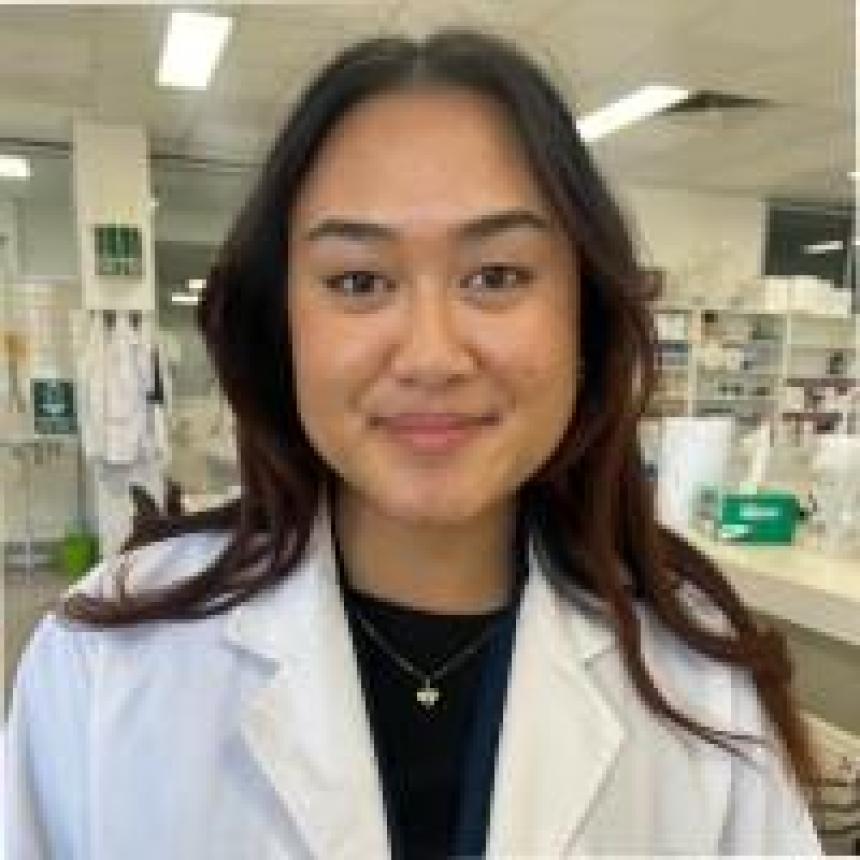
Miss Wishayanant Thirasantikamol
Higher Degree by Research Candidate
School of Pharmacy and Biomedical Sciences
College of Health
Wishy is currently a PhD candidate within the Translational Neuropathology Laboratory based at Helen Mayo South as part of The University of Adelaide. While ischaemic stroke has always been the main focus for her research, she has recently shifted from researching chronic post-stroke outcomes during her Honours, to focus on the more acute aspects in her PhD. Beyond her own research, she has also worked as a research assistant for The University of Adelaide's Translational Vascular Function Research Collaborative based at the Basil Hetzel Institute, Royal Adelaide Hospital and Queen Elizabeth Hospital. Within this role, she worked on the Personalising Acute Myocardial Infarction Care to improve Outcomes (PAMICO) and The Coronary Angiogram Database of South Australia (CADOSA) projects.
The development of post-stroke cerebral oedema (brain swelling) can occur regardless of current stroke reperfusion therapies, with associated consequence of elevated intracranial pressure (ICP) leading to life-threatening complications if left untreated. Current treatments for cerebral oedema are aimed at reducing ICP, but not cerebral oedema pathophysiology and can therefore sometimes provide inconsistent or oedema exacerbating results. By targeting neurogenic inflammation, a driving mechanism of post-stroke cerebral oedema, our lab has demonstrated promising results in preventing and reducing cerebral oedema and ICP in preclinical stroke models.
Post-stroke neurogenic inflammation has been implicated in the development of vasogenic oedema, the pathological accumulation of fluid within the brain from surrounding vasculature that occurs with increased blood-brain-barrier permeability following stroke. Indeed, neurogenic inflammation initiates the release of inflammatory neuropeptide Substance P which can drive this change in blood-brain-barrier permeability through binding with its complementary Neurokinin-1 receptors on brain endothelial cells. As such, our lab has characterised the use of Neurokinin-1 receptor antagonists (NK1RA) to reduce cerebral oedema and intracranial pressure by preventing Substance P and Neurokinin-1 receptor binding.
My PhD project extends from previous findings within our lab to look at the effects of multiple NK1RAs for the treatment of post-stroke cerebral oedema. This project will explore the functional effects of different NK1RAs and the mechanisms of administration to reduce post-stroke cerebral oedema using MRI, functional kinematics, composite neurological scoring and histological analyses. Through this project, I aim to provide better insight and validate the use of a NK1RAs as a potential therapeutic that targets cerebral oedema pathology and improves functional outcome to overall reduce stroke burden.
| Language | Competency |
|---|---|
| English | Can read, write, speak, understand spoken and peer review |
| Date | Institution name | Country | Title |
|---|---|---|---|
| 2025 | University of Adelaide | Australia | PhD in Medicine |
| 2024 - 2024 | University of Adelaide | Australia | Bachelor of Health and Medical Sciences (Honours) |
| 2020 - 2023 | University of Adelaide | Australia | Bachelor of Health and Medical Sciences |
| Date | Role | Board name | Institution name | Country |
|---|---|---|---|---|
| 2025 - ongoing | Director | Adelaide University Sport and Fitness | Adelaide University | Australia |
| Date | Role | Committee | Institution | Country |
|---|---|---|---|---|
| 2025 - ongoing | Secretary | Adelaide University Fencing Club | Adelaide University | Australia |
Connect With Me


External Profiles

