
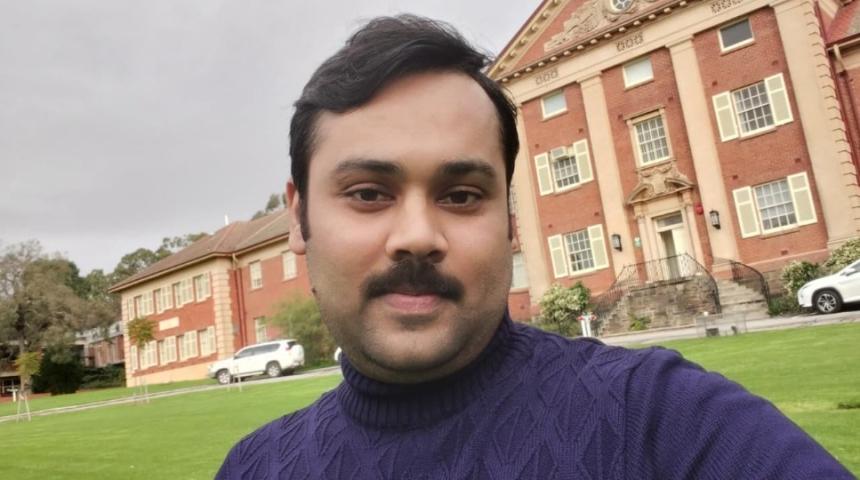
Mr Muhammad Waqas Choudry
Higher Degree by Research Candidate
School of Agriculture, Food and Wine
College of Science
I am a Plant Molecular Biologist specializing in plant transformation, genome editing, and crop improvement. My research has focused on developing and applying CRISPR/Cas-based technologies in major crop species, including soybean, tomato, rice, and almond. I have led projects involving targeted genome editing for herbicide tolerance in soybean, engineering virus-resistant tomato lines, and investigating molecular mechanisms underlying root adaptation to nutrient stress in rice. Currently, I am pursuing a PhD at the University of Adelaide, where I am developing genetic and DNA-free genome editing strategies to engineer self-fertility in almond. My research integrates Agrobacterium-mediated transformation, CRISPR technologies, protoplast systems, and plant regeneration approaches to advance precision breeding in woody crops. My long-term goal is to establish efficient DNA-free editing platforms, including single-cell-to-plant regeneration systems, that accelerate trait development and enable speed breeding in both annual and perennial crops.
I am a plant molecular biologist with a strong focus on genome editing and crop improvement. My research experience includes applying CRISPR/Cas9 in soybean to improve herbicide tolerance and developing virus-resistant tomato lines through targeted gene editing. I have also worked on understanding root responses to nutrient stress in rice, contributing to functional genomics studies.
Currently, I am pursuing a PhD at the University of Adelaide, where I am working on engineering self-fertility in almond using both transgenic and DNA-free gene editing approaches. My research integrates CRISPR technologies and protoplast systems to develop practical tools for crop improvement.
I am particularly interested in translating molecular research into real-world agricultural applications and contributing to the development of resilient, high-yielding crop varieties.
| Date | Position | Institution name |
|---|---|---|
| 2026 - 2026 | Casual Academic Staff | Adelaide University |
| Language | Competency |
|---|---|
| English | Can read, write, speak, understand spoken and peer review |
| Urdu | Can read, write, speak, understand spoken and peer review |
| Date | Institution name | Country | Title |
|---|---|---|---|
| 2026 | Adelaide University | Australia | PhD Candidate |
| Year | Citation |
|---|---|
| 2025 | Choudry, M. W., Riaz, R., Raza, M. H., Nawaz, P., Ahmad, B., Jahan, N., . . . Shahid, M. (2025). Development of non-viral targeted RNA delivery vehicles–a key factor in success of therapeutic RNA. Journal of Drug Targeting, 33(2), 171-184. Scopus9 WoS10 Europe PMC6 |
| 2024 | Choudry, M. W., Nawaz, P., Jahan, N., Riaz, R., Ahmed, B., Raza, M. H., . . . Afzal, S. (2024). RNA based gene silencing modalities to control insect and fungal plant pests – Challenges and future prospects. Physiological and Molecular Plant Pathology, 130, 15 pages. Scopus23 WoS16 |
| 2024 | Choudry, M. W., Riaz, R., Nawaz, P., Ashraf, M., Ijaz, B., & Bakhsh, A. (2024). CRISPR-Cas9 mediated understanding of plants’ abiotic stress-responsive genes to combat changing climatic patterns. Functional and Integrative Genomics, 24(4), 23 pages. Scopus30 WoS24 Europe PMC14 |
| Year | Citation |
|---|---|
| 2025 | Riaz, S., Choudry, M. W., Riaz, R., Farooq, A. M., & Bakhsh, A. (2025). Agrobacterium-Mediated Transformation of Soybean (Glycine max L.) Using Split-Cotyledonary Explant. In Methods in Molecular Biology (Vol. 2911, pp. 71-82). Springer US. DOI Scopus3 Europe PMC1 |
| 2024 | Bakhsh, A., Nazik, N., Riaz, R., Saeed, R., Choudry, M. W., Ali, S., . . . Rao, A. Q. (2024). CRISPR-Cas-mediated genome editing in tomatoes and potatoes. In Crisprized Horticulture Crops Genome Modified Plants and Microbes in Food and Agriculture (pp. 265-276). Elsevier. DOI |
| 2023 | Dervishi, A., Choudry, M. W., Riaz, R., & Bakhsh, A. (2023). Genetic improvement in leguminous crops through genome editing. In A Roadmap for Plant Genome Editing (pp. 259-269). Springer Nature Switzerland. DOI Scopus2 |
Connect With Me


External Profiles


