
Research Interests
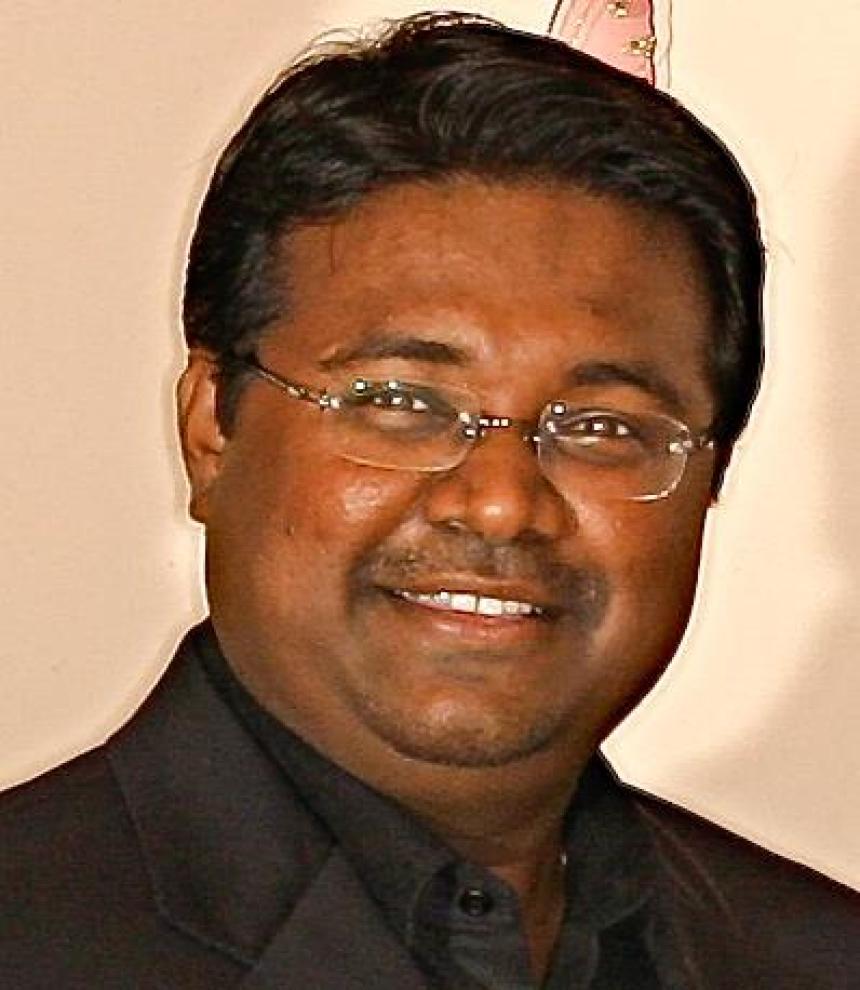
Innovative Therapeutics Translational Health Outcomes Cardiac, Respiratory and Vascular Health Regenerative medicine (incl. stem cells) Cardiovascular Medicine and Haematology Developmental Biology Cellular interactions (incl. adhesion, matrix, cell wall) Cell Biology Cell Development, Proliferation and Death Gene expression (incl. microarray and other genome-wide approaches) Proteomics and intermolecular interactions (excl. medical proteomics)Dr Vashe Chandrakanthan
Grant-Funded Senior Research Fellow
School of Medicine
College of Health
Eligible to supervise Masters and PhD - email supervisor to discuss availability.
Dr Vashe Chandrakanthan is a Developmental and Tissue Repair/Regeneration Biologist, with unique training experience at the Victor Chang Cardiac Research Institute and the Lowy Cancer Research Centre, Faculty of Medicine at the University of New South Wales. Vashe Chandrakanthan's aims are to develop new concepts in regenerative medicine by understanding how haematopoietic stem cell production is regulated in the developing embryos and how this could be translated into a microfluidic bioreactor-based patients specific blood production. Dr Chandrakanthan's laboratory core values are: (1) Creativity and Innovation by thinking outside the box, (2) Not afraid of trying something new to develop cutting edge technologies, (3) Education and Compassion towards patients and community and (4) most importantly Generosity by sharing new invented technologies with other researchers to find better outcome for the humanity.
Dr Vashe Chandrakanthan is currently leads the Stem Cell Bioengineering Laboratory at the Precision Medicine, South Australian Health & Medical Research Institute, The University of Adelaide. Dr Chandrakanthan’s primary research interest lies in the field of developmental and molecular biology of stem cells and their application towards regenerative medicine. His laboratory investigates fundamental questions, concerning how Aorta Gonad Mesonephros (AGM) stromal cells regulate Endothelium-to-Haematopoietic Transition (EHT) during embryonic blood development. This is of critical importance for advancing our understanding of 1) how normal haematopoietic stem cells (HSCs) development occurs; 2) postnatal tissue homeostasis and ageing; 3) the pathogenesis of a range of blood disorders mediated by stromal cells; and 4) pathways to generate patient–specific HSCs for tissue repair and regeneration.
Dr Chandrakanthan’s research projects are ambitious, comprehensive, and intentionally not confined to one tissue type or disease process. His ultimate vision is to identify and understand molecular/soluble factors that regulate endothelium-to-haematopoietic transition during embryonic blood development and translate that knowledge into patient specific haematopoietic stem cell production using microfluidic bioreactor. Development of microfluidic bioreactor to harvest HSCs from endothelium could be applied to treat a range of blood disorders.
Dr Chandrakanthan has had postdoctoral training at the Victor Change Cardiac Research Institute and followed by establishing his Stem Cell Development and Tissue Regeneration Laboratory at the Lowy Cancer Research Centre, University of New South Wales. Dr Chandrakanthan completed his PhD in 2008 with a major finding: "activation of Trp53 in cultured and IVF embryos leads to a loss of viability, restored in Trp53 mutant embryos". This has significant implications for assisted reproductive technology: in vitro selection for viable embryos may unwittingly select for genetic or epigenetic changes to Trp53: an insight leading to improved screening against cancer predisposition in IVF practice.
As a postdoctoral fellow, Prof Richard Harvey mentored him at the Victor Change Cardiac Research Institute. There Chandrakanthan work led to discover a novel endogenous stem-cell population in the adult mouse heart – published in Cell Stem Cell (2011) and attracting interest in national and international media and the subject of a Cell editorial commentary.
At the UNSW, where his work leading to a new method to convert somatic cells into tissue regenerative stem/progenitor cells (PNAS, 2016) won the University’s NewSouth Innovations Award in 2013 and has yielded patents (US: 4/652552; Australia: 2012905513). Now this technology is translated to reprogram human adipocytes into cells into tissue regenerative iMS cells (Science Advances 2021), which is more relevant to clinical applications. Recently Dr Chandrakanthan identified an embryonic stromal cell population that can convert adult endothelium into haemogenic endothelium that can give rise long-term transplantable HSCs, which has translational value (Nature Cell Biology 2022). These are a direct outcome of Dr Chandrakanthan’s decade of research in early embryo development and stem cell biology – strong track record of developing new concepts in regenerative medicine, in particularly of how HSC production is regulated in the embryo and how this could translate into a microfluidic bioreactor based human blood production. His work is underpinned by a strong foundation in developmental and tissue regeneration biology.
If you are passionate about thinking outside the square to develop new tissue regeneration protocols, please contact Dr Chandrakanthan about potential student internships.
| Date | Position | Institution name |
|---|---|---|
| 2024 - ongoing | Postgraduate Co-ordinator (PGC) | University of Adelaide |
| 2023 - ongoing | Head of the Stem Cell Bioengineering Laboratory | University of Adelaide |
| 2022 - ongoing | Honorary Visiting Fellow | University of Technology Sydney |
| 2022 - ongoing | Honorary Senior Lecturer | UNSW Sydney |
| 2017 - 2022 | Head of The Stem Cell Development and Tissue Regeneration Laboratory | UNSW Sydney |
| 2016 - 2022 | HDR-PGC Panel member | UNSW Sydney |
| 2015 - 2016 | Senior Research Fellow | UNSW Sydney |
| 2011 - 2022 | Advisory Board member Adult Cancer Program | UNSW Sydney |
| 2011 - 2022 | Scientific Advisory board member of Transgenic Animal Unit | UNSW Sydney |
| 2011 - 2022 | Lowy Cancer Research Centre Animal Facility Operations Committee member | UNSW Sydney |
| 2010 - 2015 | Research Fellow | UNSW Sydney |
| 2007 - 2010 | Postdoctoral Fellow | Victor Chang Cardiac Research Institute |
| Date | Type | Title | Institution Name | Country | Amount |
|---|---|---|---|---|---|
| 2023 | Fellowship | Maddie Riewoldt’s Vision Fellowship | Maddie Riewoldt’s Vision for Centre of Research Excellence in Bone Marrow Biology | Australia | - |
| 2018 | Award | The 2nd China (Shenzhen) Innovation and Entrepreneurship International competition | China Association for Science and Technology (CAST) | China | - |
| 2017 | Fellowship | School of Medical Sciences Travel Fellowship | University of New South Wales | Australia | - |
| 2016 | Fellowship | EMBL Advanced Training Centre Corporate Partnership Travel Fellowship | EMBL | Germany | - |
| 2015 | Award | ISEH Travel Award | International Society for Experimental Haematology | United States | - |
| 2015 | Award | Contributing to Australian Scholarship and Science foundation travel award | CASS foundation | Australia | - |
| 2014 | Award | National Stem Cell Foundation of Australia travel award | National Stem Cell Foundation of Australia | Australia | - |
| 2013 | Research Award | Winner of University of New South Wale Innovations - Early Stage Innovation Award | The University of New South Wales | Australia | - |
| 2013 | Award | National Stem Cell Foundation of Australia travel award | National Stem Cell Foundation of Australia | Australia | - |
| 2013 | Award | Translational Cancer Research Network travel award | TCRN, The University of New South Wales | Australia | - |
| 2011 | Award | Dean’s Rising Star Award | The University of New South Wales | Australia | - |
| 2010 | Award | International Society for Hematology and Stem Cells Travel Award | International Society for Experimental Haematology | United States | - |
| 2008 | Research Award | The Cancer Institute New South Wales Award for Excellence in Best Oral Presentation | The Cancer Institute New South Wales | Australia | - |
| Date | Institution name | Country | Title |
|---|---|---|---|
| University of Sydney | Australia | PhD |
| Year | Citation |
|---|---|
| 2021 | Srivastava, P., Romanazzo, S., Ireland, J., Nemec, S., Molley, T., Jayathilaka, P., . . . Kilian, K. (2021). Defined microenvironments trigger <i>in vitro</i> gastrulation in human pluripotent stem cells. DOI |
| 2020 | Tavassoli, H., Kang, Y. C., Rorimpandey, P., Pimanda, J., Chandrakanthan, V., & Chan, P. P. Y. (2020). Capturing Neonatal Cardiomyocyte – Endothelial interactions on-a-Chip. DOI |
| 2020 | Tavassoli, H., Rorimpandey, P., Kang, Y. C., Carnell, M., Brownlee, C., Pimanda, J. E., . . . Chandrakanthan, V. (2020). Label-free Isolation and Single Cell Biophysical Phenotyping Analysis of Primary Cardiomyocytes Using Inertial Microfluidics. DOI |
| 2017 | Asli, N. S., Xaymardan, M., Patrick, R., Farbehi, N., Cornwell, J., Forte, E., . . . Harvey, R. P. (2017). PDGFRα signaling in cardiac fibroblasts modulates quiescence, metabolism and self-renewal, and promotes anatomical and functional repair. DOI |
| Date | Project/ No. | Investigators | Funding Body | Amount |
|---|---|---|---|---|
| 2024 | 2027555 |
Dr Vashe Chandrakanthan A/Prof Dan Thomas Prof Stan Gronthos Dr Peggy Chan A/Prof Dominic Beck |
NHMRC- Ideas Grant | $1,330,585 |
| 2023 | MRV0036 | Dr Vashe Chandrakanthan | Maddie Riewoldt’s Vision for Centre of Research Excellence for Bone Marrow Biology | $ 200, 000 |
| 2018 | 1139811 |
Prof John Pimanda Dr Vashe Chandrakanthan Prof Edna Hardeman |
NHMRC- Project Grant | $694,428 |
| 2017 | Dr Vashe Chandrakanthan | Faculty of Medicine, University of New South Wales | $1,180,000 | |
| 2015 | Dr Vashe Chandrakanthan | Faculty of Medicine, University of New South Wales | $100,000 | |
| 2014 | 1061593 | Dr Vashe Chandrakanthan | NHMRC- New Investigator Grant | $591,226 |
| 2014 |
Dr Vashe Chandrakanthan Prof Bill Walsh Prof John Pimanda |
Australian Orthopedic Association Research | $25,000 |
Dr Chandrakanthan enjoys teaching and supervising Honours, Masters and PhD students in formal and informal sessions including regular Developmental Biology, Tissue Regeneration and Gene Regulation journal club meetings.
| Date | Role | Research Topic | Program | Degree Type | Student Load | Student Name |
|---|---|---|---|---|---|---|
| 2024 | Principal Supervisor | Capturing Molecular Regulatory Events of Haematopoietic Stem Cell Emergence From Endothelium | Doctor of Philosophy | Doctorate | Full Time | Mr Luke Bland |
| Date | Role | Research Topic | Location | Program | Supervision Type | Student Load | Student Name |
|---|---|---|---|---|---|---|---|
| 2019 - 2023 | Co-Supervisor | The Effects of Extracellular Matrix and Dynamic Stiffening on Cardiomyocyte Lineage Specification | The University of New South Wales | - | Higher Doctorate | Full Time | Jake Ireland |
| 2019 - 2022 | Co-Supervisor | Engineering Biomaterials to Model the Pancreatic Tumour Microenvironment | The University of New South Wales | - | Higher Doctorate | Full Time | Stephanie Renee Nemec |
| 2019 - 2019 | Principal Supervisor | Investigating Fate determination of Human adipocyte Derived induced Multipotent Stem cells (iMS Cells) in Human intervertebral disc matrix | The University of New South Wales | - | Honours | Full Time | Ivanna Ting Mei SIM |
| 2018 - 2020 | Principal Supervisor | Microfluidic Devices to Study Endogenous Cardiac Progenitor Cells and Cardiomyocytes | The University of New South Wales and Swinburne University | - | Higher Doctorate | Full Time | Hossein Tavassoli |
| 2016 - 2016 | Principal Supervisor | Evaluating the pluripotency of tissue regenerative multipotent stem (iMS) cells | The University of New South Wales | - | Honours | Full Time | Prunella Rorimpandey |
| 2014 - 2019 | Principal Supervisor | Temporal contribution of Pdgfra+ progenitors to coronary vascular endothelial and periendothelial cells | The University of New South Wales | - | Higher Doctorate | Full Time | Young Chan Kang |
| 2014 - 2019 | Principal Supervisor | Transforming Human Somatic cells into Multipotent Stem cells | The University of New South Wales | - | Higher Doctorate | Full Time | Avani Yeola |
| 2013 - 2013 | Principal Supervisor | The Origins of Pericytes and Endothelial cells from a novel endogenous cardiac-stem cell population during the mouse heart development | The University of New South Wales | - | Honours | Full Time | Young Chan Kang |
| 2012 - 2017 | Principal Supervisor | Characteristics of foetal liver stromal population during embryonic haematopoietic and vascular development | The University of New South Wales | - | Higher Doctorate | Full Time | Qiao Qiao |
| Date | Role | Board name | Institution name | Country |
|---|---|---|---|---|
| 2016 - 2022 | Advisory Board Member | UNSW Australia Mark Wainwright Analytical Centre (MWAC) | The University of New South Wales | Australia |
| 2011 - 2022 | Advisory Board Member | Lowy Cancer Research Centre Animal Facility Operations Committee | The University of New South Wales | Australia |
| 2011 - 2022 | Board Member | Transgenic Animal Unit | The University of New South Wales | Australia |
| 2011 - 2022 | Advisory Board Member | Adult Cancer Program | The University of New South Wales | Australia |
| Date | Role | Committee | Institution | Country |
|---|---|---|---|---|
| 2018 - 2018 | Representative | Commercialization meeting with Hebei Ming Jing Investment Co Ltd from China | The University of New South Wales | Australia |
| 2017 - 2018 | Representative | Commercialization meeting with Qian-Rong Huang from Uren biotechnology Ltd from China | The University of New South Wales | Australia |
| 2017 - 2018 | Member | Organizing Committee | Australasian Society for Stem Cell Research | Australia |
| 2016 - 2018 | Chair | Professional Development and Junior Investigator events | Australasian Society for Stem Cell Research | Australia |
| 2016 - 2016 | Member | Regenerative Medicine Go8 delegation visit to Japan | The University of New South Wales | Australia |
| 2016 - 2017 | Chair | ASSCR, Stem Cell Australia and NSW Stem Cell Network | Professional Development and Junior Investigator events, ASSCR | Australia |
| 2015 - 2015 | Advisory Board Member | Australian Academy of Science Theo Murphy Highflyers Think Tank | Australian Academy of Science | Australia |
| 2009 - 2009 | Member | Organizing committee: Cardiology at the Frontier: Developmental, Stem Cells and Heart Failure | Victor Chang Cardiac Research Institute | Australia |
| Date | Event Name | Event Type | Institution | Country |
|---|---|---|---|---|
| 2018 - 2018 | 2018 ComBio- Australia and New Zealand Society for Cell and Developmental Biology | Conference | ComBio- Australia and New Zealand Society for Cell and Developmental Biology | - |
| Date | Title | Type | Institution | Country |
|---|---|---|---|---|
| 2023 - ongoing | Journal of Visualised Experiments (JoVE) | Peer Review | MyJove Corp. | United States |
| 2020 - ongoing | Journal of Orthopaedic Surgery and Research | Peer Review | BioMed Central | United States |
| 2016 - ongoing | Blood Journal | Peer Review | American Society of Hematology | United States |
| 2015 - ongoing | Cell | Peer Review | Cell Press | United States |
| 2015 - ongoing | Cell Stem Cell | Peer Review | Cell Press | United States |
| 2015 - ongoing | Cell Reports | Peer Review | Cell Press | United States |
| 2015 - ongoing | Nature Cell Biology | Peer Review | Nature Publications | - |
| 2015 - ongoing | Nature Journal | Peer Review | Nature Publications | United States |
| 2015 - ongoing | Stem Cell Reports | Peer Review | Cell Press | United States |
| 2014 - ongoing | ARC | Grant Assessment | Australian Research Council | Australia |
| 2013 - ongoing | NHMRC | Peer Review | NHMRC | Australia |
Connect With Me

External Profiles

