
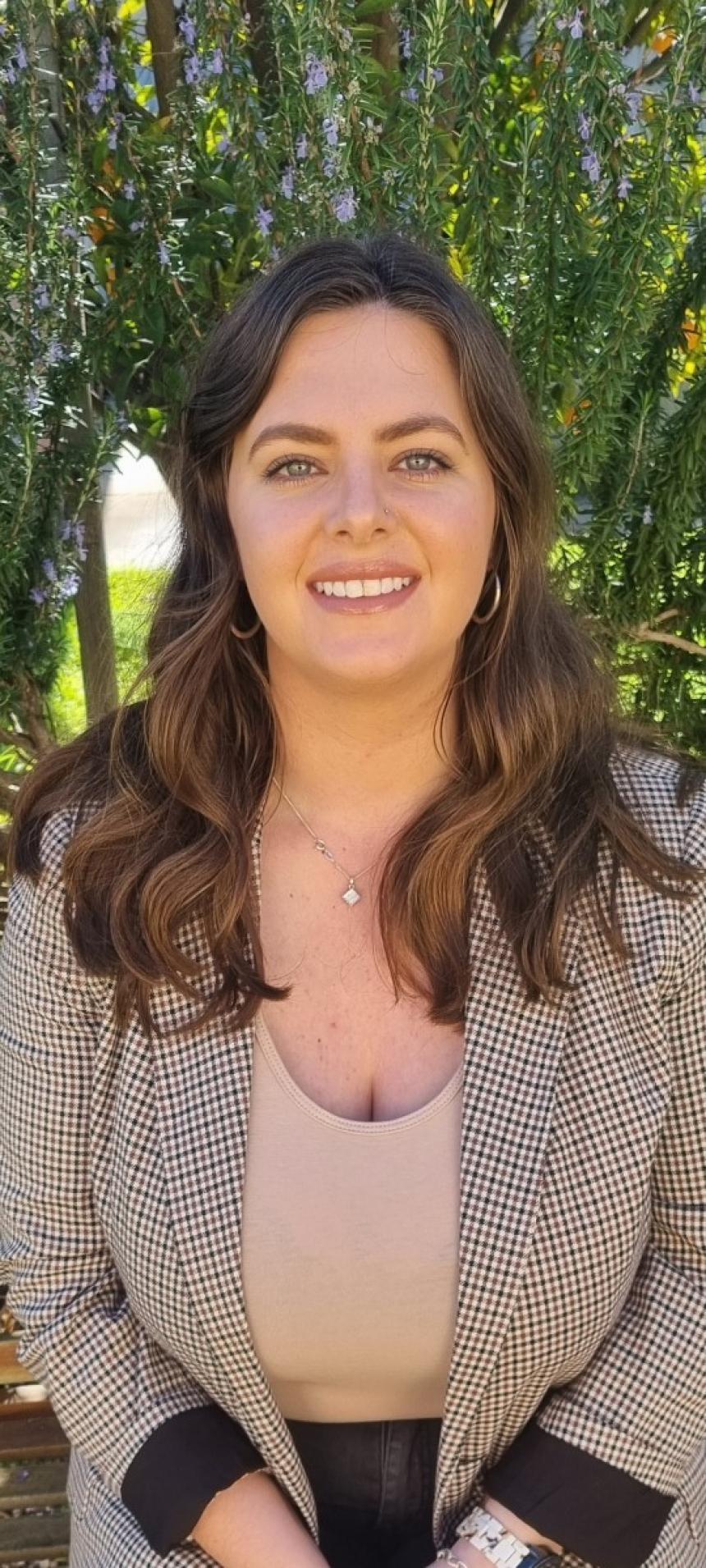
Dr Tiah Bampton
School of Physics, Chemistry and Earth Sciences
College of Science
I am a palaeontologist and researcher specialising in Australian Quaternary environments, vertebrate palaeontology and stable isotope geochemistry. My research combines traditional palaeontological approaches with geochemical techniques to investigate how Australian faunal communities, climate and vegetation have changed through time.
My research focuses particularly on fossil mammals, using stable isotopes preserved in fossilised teeth and bone to reconstruct diet, water sources, vegetation and past environmental conditions. By combining these records with modern ecological data, I aim to understand the environmental drivers of extinction, decline and change in Australian mammal communities, and how the fossil record can provide valuable baselines for contemporary conservation.
I have extensive experience working with museum and university collections, palaeontological excavation, fossil preparation and collection management, as well as geochemical and stable isotope analysis. My research has involved fossil material from across Australia, including the Naracoorte Caves World Heritage Area, and I am particularly interested in understanding long-term environmental change in southern Australia.
I am also passionate about making palaeontological research accessible beyond academia. I have extensive teaching, public outreach and science communication experience and enjoy connecting research with museums, conservation practitioners and the wider community. Ultimately, I am interested in how Australia's fossil record can help us understand past ecosystems and provide practical insights for the conservation and restoration of ecosystems today.
My Research
My research explores how Australian environments and faunal communities have changed through time, and what the fossil record can tell us about the environmental pressures shaping ecosystems today. I combine traditional palaeontological approaches with stable isotope geochemistry to investigate past changes in climate, vegetation, diet and animal ecology, with a particular focus on Australian mammals and the Quaternary fossil record.
A major focus of my research is using stable isotopes preserved in fossilised teeth and bone to reconstruct past environments. Carbon and oxygen isotope analysis can provide insights into what animals were eating, the vegetation available to them, and the water sources and climatic conditions they experienced. When combined with palaeontological records, these techniques allow us to build a much more detailed picture of past ecosystems and how they responded to environmental change.
I am particularly interested in the Australian fossil record as a long-term ecological archive. Australia has experienced substantial environmental and climatic changes throughout the Quaternary, alongside major shifts in its mammal communities and the extinction of many species. By examining fossil communities across different periods and environments, my research aims to identify the factors that contributed to faunal change, extinction and decline. This provides an important historical context for understanding the ecological changes we see in Australia today.
I am also interested in how palaeontological records can be directly applied to conservation. Modern ecological studies are often limited by the relatively short timeframe over which we have detailed environmental and biodiversity records. Fossils provide an opportunity to extend these baselines back thousands, or in some cases hundreds of thousands, of years. This longer perspective can help us understand what ecosystems looked like before major environmental and human-driven changes and identify how species and communities responded to previous periods of environmental stress.
Much of my research is centred on southern Australia, including the Naracoorte Caves World Heritage Area. This environment preserves exceptional records of past biodiversity and provide an opportunity to investigate long-term interactions between climate, vegetation and animal communities. I am particularly interested in linking fossil records with modern vegetation and ecological data to understand how these landscapes have changed and how this information can support future conservation and restoration efforts.
Alongside my research, I have a strong interest in museum and university collections as resources for understanding Australia's environmental history. Collections provide an invaluable archive of biological and geological material that can be revisited using new techniques and technologies. I am interested in improving the use and documentation of these collections, to ensure that specimens remain accessible for future research.
Ultimately, my research aims to bridge the gap between palaeontology, geology, biology and conservation. By combining evidence from the geological and fossil records with modern ecological approaches, I aim to develop a better understanding of how Australian ecosystems have changed in the past and how this knowledge can help us manage and restore them into the future.
| Date | Position | Institution name |
|---|---|---|
| 2025 - ongoing | Research Assistant | University of Adelaide |
| 2025 - ongoing | Data Collector | University of Adelaide |
| Date | Type | Title | Institution Name | Country | Amount |
|---|---|---|---|---|---|
| 2023 | Award | The Geological Society of Australia (Victoria Division) CAVEPS 2023 Student Prize for excellence in research on the geologic context of vertebrate fossils | Conference on Australasian Vertebrate Evolution, Palaeontology and Systematics | Australia | - |
| 2023 | Award | Conference on Australasian Vertebrate Evolution, Palaeontology and Systematics | The Australian Mammal Society | Australia | - |
| Date | Institution name | Country | Title |
|---|---|---|---|
| 2019 - 2025 | University of Adelaide | Australia | Doctor of Philosophy |
| 2018 - 2018 | University of Adelaide | Australia | Honours Degree of Bachelor of Science |
| 2015 - 2017 | University of Adelaide | Australia | Bachelor of Science |
| Year | Citation |
|---|---|
| 2021 | Bampton, T. (2021). Palaeoecology and isotopic geochemistry of Quaternary vertebrate faunas from Naracoorte Caves, South Australia. Helictite, 46. |
| Year | Citation |
|---|---|
| 2026 | Bampton, T., Coetsee, A., Bail, N., Klaebe, R., Hall, T., & Reed, L. (2026). Boring as bat … poo: stable isotopes of bat guano and potential applications for conservation biology. In AMS and ABS Conference Program. Shine Dome, Canberra. |
| 2025 | Bampton, T., Reed, L., Arnold, L., Demuro, M., DeSantis, L., & Bourne, S. (2025). Unravelling possible extinction drivers for Australia’s Quaternary giants: using stable isotope analysis to reconstruct community level ecology of Late Pleistocene mammals from Naracoorte, South Australia. In Society of Vertebrate Palaeontology Conference Proceedings. Birmingham. |
| 2025 | Bampton, T., Reed, L., Arnold, L., Demuro, M., DeSantis, L., & Bourne, S. (2025). Isotopic insight into the diets and ecology of a Late Pleistocene mammal community from Naracoorte, South Australia. In 19th Conference on Australasian Vertebrate Evolution, Palaeontology & Systematics: Conference Program. Flinders University. |
| 2024 | Bampton, T., Reed, L., Arnold, L., Demuro, M., DeSantis, L., & Treloar, J. -B. (2024). Stable isotope derived palaeoecology of dominant rodent species from Naracoorte Caves World Heritage site, South Australia: Potential applications for conservation biology. In 70th Annual Scientific Meeting of the Australian Mammal Society: Conference Program. Melbourne Zoo. |
| 2024 | Bampton, T., Reed, L., Arnold, L., Demuro, M., Desantis, L., & Treloar, J. -B. (2024). Insights into the palaeodiet of dominate rodents at Alexandra Cave, Naracoorte Caves World Heritage Site, South Australia. In 18th Conference on Australasian Vertebrate Evolution, Palaeontology & Systematics: Conference Program. Museums Victoria. |
| 2024 | Bampton, T., Reed, L., Arnold, L., Demuro, M., Treloar, J. B., & DeSantis, L. (2024). Initial results of the first systematic palaeontological excavation of Alexandra Cave, Naracoorte Caves World Heritage Site, South Australia. In 18th Conference on Australasian Vertebrate Evolution, Palaeontology & Systematics: Conference Program. Museums Victoria. |
| 2023 | Bampton, T., Reed, L., Arnold, L., & DeSantis, L. (2023). Stable isotope derived palaeoecology of dominant rodent species from Naracoorte Caves World Heritage Site, South Australia: potential applications for conservation biology. In 69th Annual Scientific Meeting of the Australian Mammal Society Conference Program. University of Adelaide. |
| 2023 | Bampton, T., Reed, L., Tyler, J., Demuro, M., Klaebe, R., Treloar, J. -B., & Arnold, L. (2023). Stable isotopic signatures of fossilised rodent teeth from Naracoorte Caves: Insights into late Quaternary climate change in South-eastern Australia. In International Union for Quaternary Research Conference: Conference Proceedings. Rome, Italy. |
| 2022 | Bampton, T., Reed, L., Arnold, L., & DeSantis, L. (2022). Palaeodiet of Quaternary fossil rodents from Naracoorte Caves: implications for extinction and conservation. In Australasian Quaternary Association Conference: Conference Program. University of Adelaide. |
| 2021 | Bampton, T., Reed, L., & Arnold, L. (2021). Palaeoecology study of two rodent species (genus Pseudomys) using stable isotopic analysis, Naracoorte Caves, South Australia. In Geological Society of South Australia Student Symposium: Symposium Program. University of Adelaide. |
| 2019 | Bampton, T., Tyler, J., McInerney, C., & Reed, L. (2019). Stable isotopic signatures of fossilised rodent teeth: faunal response to climate change in South-eastern Australia during the late Quaternary. In Society of Vertebrate Palaeontology Conference Proceedings. Brisbane. |
I teach undergraduate courses in geology and biology. My teaching spans palaeontology, evolutionary biology, zoology, geology and research methods, and includes lectures, practical classes, fieldwork and research mentoring.
Connect With Me

External Profiles
