
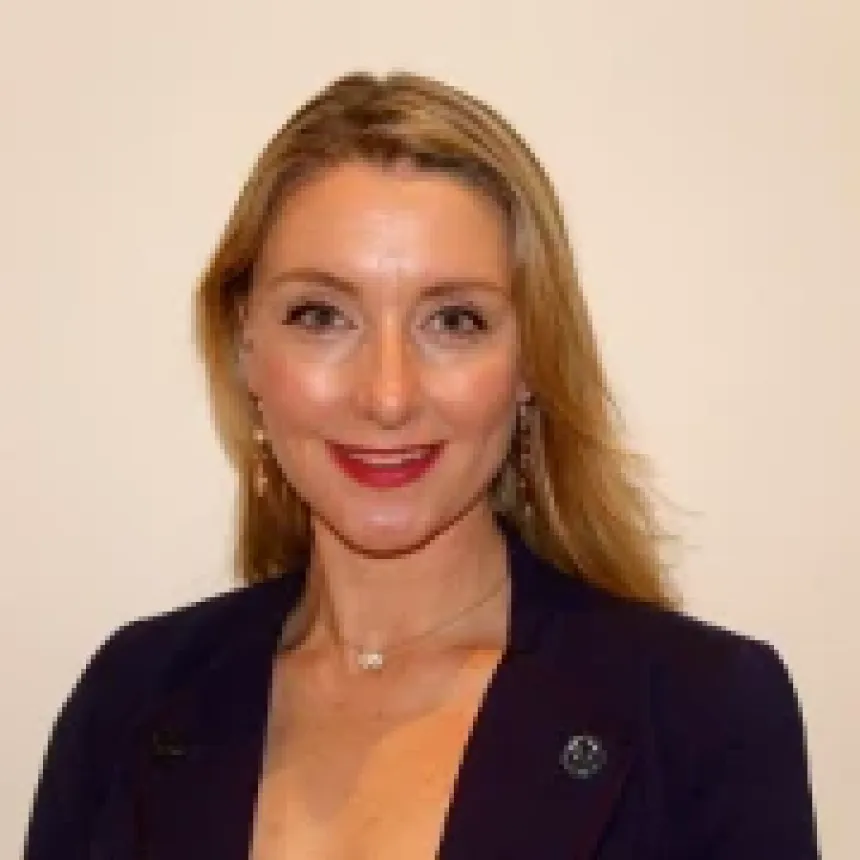
Mrs Tamra Ulpen
Senior Lecturer
AU Pathways and Participation
Academic
Tamra currently teaches as a Foundation Studies lecturer at UniSA College. She is the course coordinator of English Language Studies (LANG 46) and Critical Thinking: Media and Academia (LANG 1002). She is also one of the College’s Academic Integrity Officers.
Tamra has extensive experience in teaching English to speakers of other languages (TESOL) and has worked in English language schools in Japan and in Australia. She plays an integral role at the College in supporting students acquire academic literacy skills for university study and in teaching the values of academic integrity.
She believes in the use of critical pedagogies to motivate and engage students from various equity groups to achieve their potential. In recent years, her research has focused on student engagement and pedagogy. She has also published and presented nationally and internationally on the themes of policy and enabling programs. Future research aims include addressing the development of students’ language and literacy skills in open access study pathway programs, and investigating assessment standards and benchmarking of enabling programs across Australia.
In 2016, she created and led the implementation of the online literacy diagnostic which has been used to assess the language level of college students pre-enrolment. The diagnostic has been instrumental in advising students to enrol in the language and literacy course which best suits their learning needs.
Tamra’s interest in second language learning and teaching began when she was studying a BA in Asian Studies majoring in Japanese at Adelaide University. She felt encouraged to further explore this interest in future employment and research. In 2002, she was accepted into the JET (Japan Exchange Teacher’s) Programme. She worked in Japan for 2 years as an Assistant English Language Teacher and Coordinator for International Relations for the Isehara Board of Education in Kanagawa Prefecture. Upon her return to Australia she decided to utilize herJapanese language skills in a new field of work- Tourism and Hospitality and was employed as the Japanese Guest Liaison Officer and as a Sales and Marketing Coordinator for Royal Pines Resort, Gold Coast.
In 2006, she returned to education in a dual position as an ESL instructor and the Activities Officer for the Griffith English Language Institute at Griffith University, Gold Coast. This sparked her interest in language learning once again, and was the catalyst in commencing a Master’s Degree in Applied Linguistics (completed in 2009). In 2008, she returned to Adelaide and continued her career in (ELICOS) - English language courses for overseas students at the Centre of English Language at the University Of South Australia (CELUSA). During this time she made significant contributions to curriculum with the development of course books and was a member of the Assessment Vetting Committee.
In 2011, she was employed at UniSA College as course coordinator of English Language Studies (LANG 46) and designed a study program to support the cohort of college students from non- English speaking backgrounds. Tamra is one of the three original UniSA College teaching academics and has a strong presence in the college community.
Courses I teach
- EDUC 1116 Literacy and Numeracy for Teachers (2025)
- LANG 1069 Language and Literacy for Effective Communication (2025)
- EDUC 1116 Literacy and Numeracy for Teachers (2024)
- LANG 1069 Language and Literacy for Effective Communication (2024)
- SOCU 1010 Introduction to Academic Life (2024)
Connect With Me

External Profiles


Available For Media Comment.