
Teaching Strengths
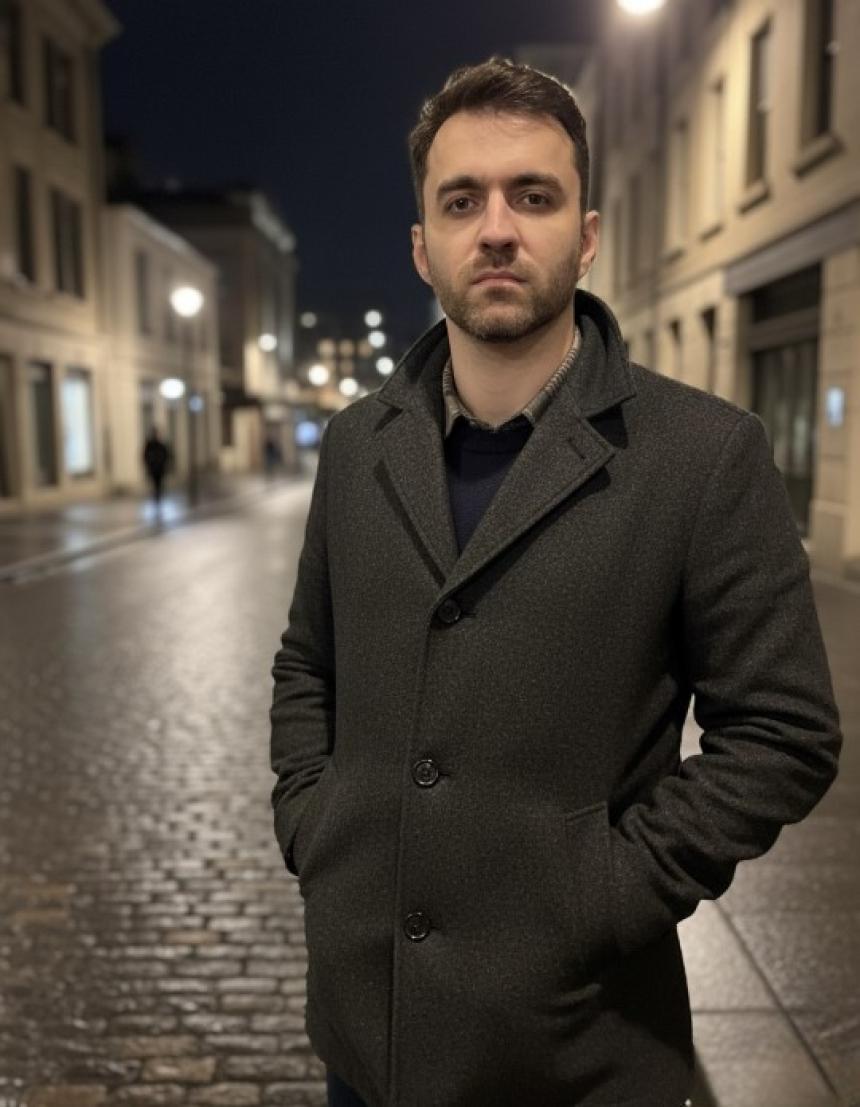
Mr Soroush Masoumzadeh
Higher Degree by Research Candidate
School of Architecture and Built Environment
College of Creative Arts, Design and Humanities
Soroush Masoumzadeh is a final-year PhD candidate in Architecture at Adelaide University. His research sits at the intersection of architectural design thinking, neuroscience, and virtual reality, with a particular focus on how designers think, create, and respond to context in immersive environments. Using a mixed-methods approach that combines EEG data with protocol analysis and design theory, his work explores new ways of measuring and interpreting creativity during architectural concept design. Soroush is also actively involved in teaching, research dissemination, and interdisciplinary collaboration, and is passionate about bridging rigorous research with creative practice.
My research examines how architects think, design, and make decisions within immersive environments. Using Virtual Reality and EEG, I explore how different levels of visual fidelity shape attention, problem–solution reasoning, and creativity during early-stage architectural design. A central focus of my work is contextualism: how designers interpret and respond to contextual cues such as form, culture, movement, and site constraints, and how these cues can be simulated with varying levels of abstraction in virtual spaces.
Complementing this empirical work is a sustained engagement with art and creative practice. I work across digital painting, illustration, and concept art, using tools such as digital drawing tablets and software-based painting workflows to explore atmosphere, light, materiality, and spatial mood. This practice-based work is integral to my research: the act of making—sketching, rendering, and visually iterating—informs how I think about representation, abstraction, and fidelity in design. I treat digital painting not merely as illustration but as a mode of inquiry, a way of testing how visual information is composed, perceived, and interpreted, which loops directly back into my questions about how environments are simulated and experienced in VR.
Alongside this, I maintain broader interests in urban design, urban planning and theory, walkability, and environmental analysis, particularly how built form and street-level conditions influence perception, behaviour, and spatial experience. Methodologically, my research contributes new approaches for integrating neural and protocol-based data to study design cognition, with the goal of advancing architectural and urban research beyond self-report and static evaluation frameworks. Across both the empirical and creative dimensions of my work, I am interested in how making and analysis can inform one another, bridging artistic practice, design cognition, and the built environment.
| Language | Competency |
|---|---|
| Arabic | Can read |
| Azerbaijani | Can read, write, speak, understand spoken and peer review |
| English | Can read, write, speak, understand spoken and peer review |
| Persian | Can read, write, speak, understand spoken and peer review |
| Turkish | Can read, write, speak, understand spoken and peer review |
| Year | Citation |
|---|---|
| 2025 | Masoumzadeh, S., Yu, R., Bornkessel Schlesewsky, I., Gu, N., Zhang, F., Cao, Z., & Sakhaei, H. (2025). Neuroscientific methodologies in urban studies: a systematic review and new directions for evidence-based urban design and planning. Cities & Health, online(2), 1-22. Scopus3 WoS3 |
| 2025 | Masoumzadeh, S., Yu, R., Gu, N., Zhang, F., Bornkessel-Schlesewsky, I., & Cao, Z. (2025). Virtual design context: a VR-driven approach to contextual architectural design; a preliminary taxonomy for developing immersive contexts. Design Science, 11, 31 pages. Scopus1 WoS1 |
| 2024 | Yu, R., Gu, N., & Masoumzadeh, S. (2024). Exploring the impact of digital technologies on team collaborative design. Buildings, 14(10, article no. 3263), 1-14. Scopus5 WoS3 |
| 2023 | Fathi Farzaneh, A., & Masoumzadeh, S. (2023). Typology of urban theories in expressing the concept of urbanization. Geojournal, 88(2), 1905-1919. Scopus2 WoS1 |
| 2023 | Masoumzadeh, S., Bosman, C., & Osborne, N. (2023). Becoming walkable: relational and contextual effects of enhanced walkability. Journal of Urbanism, 16(3), 341-357. Scopus3 |
| 2021 | Masoumzadeh, S., & Pendar, H. (2021). Walking as a medium of comprehending contextual assets of historical urban fabrics. Urban Research and Practice, 14(1), 50-72. Scopus10 |
| Year | Citation |
|---|---|
| 2026 | Masoumzadeh, S., Yu, R., Gu, N., Bornkessel-Schlesewsky, I., Zhang, F., & Cao, J. (2026). <b>An Assemblage Account of Design Thinking</b>: EEG and Protocol Data Processing & Analytical Pipeline and Scripts. DOI |
| Year | Citation |
|---|---|
| 2026 | Masoumzadeh, S., Yu, R., bornkessel-schlesewsky, I., Gu, N., Zhang, F., Cao, J., . . . Drogemuller, A. (2026). THINC: A Hybrid Methodological Framework for Human-Computer Interaction Analysis – A Case Study of Design Thinking within Virtual Reality. DOI |
| 2025 | Masoumzadeh, S., Yu, R., Gu, N., Zhang, F., Bornkessel-Schlesewsky, I., & Cao, Z. (2025). Barriers and Pathways to Sustainable Adoption of Immersive Technologies in Architecture: A Comparison of Industry and Academic Perspectives. DOI |
- Vice Chancellor and President’s Scholarship, $10000, University of South Australia (2023)
- Enterprise Research Scholarship, University of South Australia (2023)
Courses I teach
- ARCH 3028 Architecture and Ecology (2026)
- ARCH X305 Urban Regeneration (2026)
- ARCH 2004 Architectural Design Studio (Urban Landscapes) (2026)
- ARCH 3028 Architecture and Ecology (2025)
- ARCH 3054 Advanced Design Media (2025)
- ARCH 5041 Environmental Planning, Climate Change and Sustainability (2025)
- CREA 4004 Research Methods (Creative) (2025)
- ARCH 3054 Advanced Design Media (2024)
- CREA 5001 Research Practices (Creative) (2024)
- CREA 5001 Research Practices (Creative) (2023)
Connect With Me

External Profiles


Available For Media Comment.