
Teaching Strengths
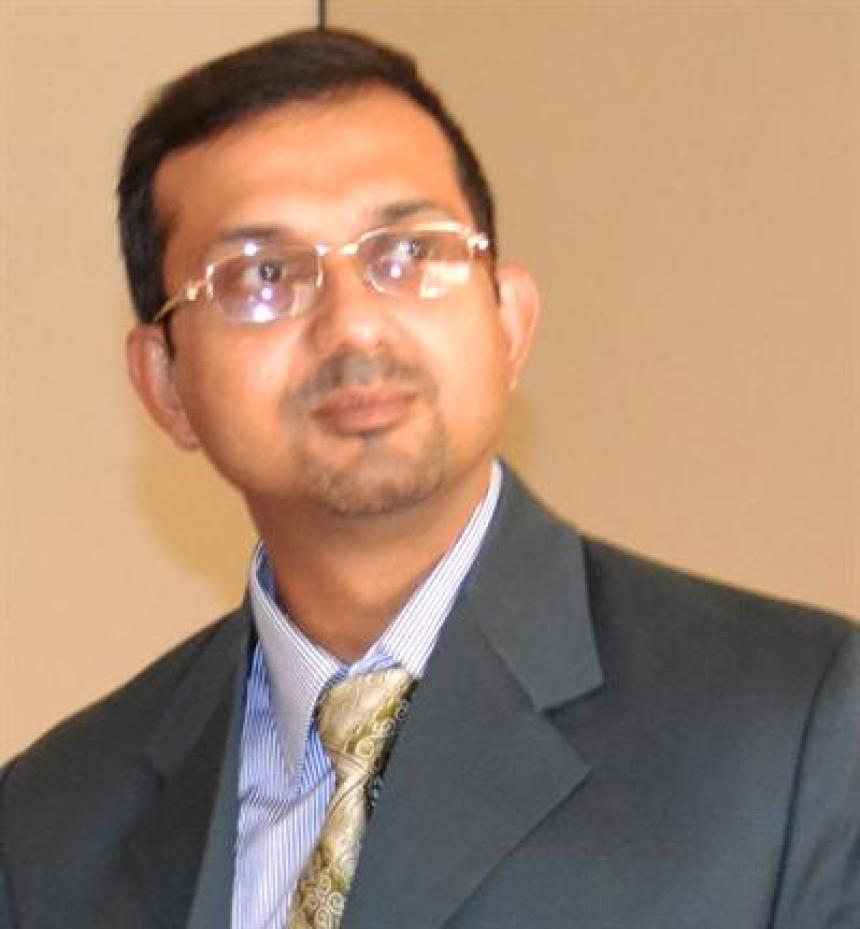
Dr Saurav Mitra
School of Architecture and Built Environment
College of Creative Arts, Design and Humanities
Saurav is a lecturer and a research scholar in architecture and urban planning with a profound interest in environmental studies and social sustainability of modern high-rise urbanism. He has extensive professional experience in building design, construction documentation, and building structure in various capacities for over 20 years in Australia. He also teaches Construction 1 and Construction 2 at the University of Adelaide.
Urbanisation is currently a global trend. Along with growing urbanisation, the urban population is also increasing rapidly. Although high-rise apartments are not the only way to accommodate this growing urban population, cities in developing countries are rapidly embracing high-rise living because of various socio-political and geographical factors examined in this study.
The sustainability of high-rise apartment buildings has been the subject of several studies. These have covered various dimensions, including energy efficiency, economic, environmental, and social sustainability. The literature review reveals that the social aspect of sustainability of high-rise apartments has been less researched compared to economic and environmental sustainability, especially in the context of the developing world.
Often, high-rise apartments have been viewed as inferior housing after they failed based on social issues in the UK and North America in the 1960s and 70s. As a result, most social sustainability studies on high-rise apartments were conducted in developed countries like- the UK, the US, Canada, Germany, Sweden, and Australia.
This research seeks to find how socially sustainable high-rise apartments are in the context of the developing world, especially in Kolkata, India.
Based on the literature review, this study postulates a definition of the Social Sustainability of high-rise apartments. It identifies the various factors or aspects of social sustainability which are vital for social sustainability in a built environment, such as social cohesion, social equity, trust, common meaning, social inclusiveness, and self-organisation.
This study applies Qualitative and Quantitative analysis to examine the social issues related to high-rise living in Kolkata. It examines the residents’ experiences of 61 low-rise (G+4 floors) and 59 high-rise (G+5 and above floors) apartments in Kolkata. It compares the experiences of the residents based on the concepts and theories related to social sustainability found in the literature review and tests these against the definition of the social sustainability of high-rise living. The apartments were selected to represent social issues related to the locality, age of the apartments and mix of personal characteristics of the residents such as income, religion and life-cycle stage. Three zones in Kolkata were selected based on the above-stated categories: North Kolkata, South Kolkata I and South Kolkata II.
The empirical findings show a significant disparity between the incomes of high-rise and low-rise residents. The analysis shows that, on average, 79.3% of residents of high-rise apartments belong to the High Income Group (HIG), and the rest, 20.7% belong to the Middle Income Group (MIG). Regarding low-rise apartments, on average, 70% of its residents belong to MIG and the rest, 30% belong to the Low Income Group (LIG).
The sense of community is higher in low-rise cooperative model apartments than in high-rise apartments, leading to higher social cohesion and trust between the residents. Findings from this study reflect that popular high-rise apartment developments in the newer suburbs of Kolkata are not socially sustainable on the grounds of unaffordability and non-inclusiveness. Low-rise cooperative model apartments are socially sustainable because they are affordable, equitable, inclusive, and socially cohesive.
The study also shows evidence that Kolkata's diversity based on religion and region does not complement social cohesion, irrespective of zones.
The conclusion of the study implies that although the construction of high-rise apartments is increasing rapidly in the eastern suburbs of Kolkata, it is not socially sustainable because it serves only 8% of Kolkata’s population. The practical outcomes of this study demonstrate that cooperative model low-rise apartments are more socially sustainable than high-rise apartments, and therefore policies and regulations could be directed towards consolidating the Cooperative Society model low-rise apartments.
| Date | Position | Institution name |
|---|---|---|
| 2024 - ongoing | Lecturer | Adelaide University |
| Language | Competency |
|---|---|
| Bengali | Can read, speak and understand spoken |
| Bhojpuri | Can read, write, speak, understand spoken and peer review |
| English | Can read, write, speak, understand spoken and peer review |
| Hindi | Can read, write, speak, understand spoken and peer review |
| Marathi | Can speak and understand spoken |
| Sanskrit | Can read and understand spoken |
| Date | Institution name | Country | Title |
|---|---|---|---|
| 2005 - 2006 | University of Adelaide, Adelaide | Australia | Graduate Diploma in Environmental Studies |
| 2003 - 2005 | University of Adelaide, Adelaide | Australia | Master of Architecture |
| 1995 - 2000 | University of Pune, Pune | India | Bachelor of Architecture |
| University of Adelaide, Adelaide | Australia | PhD in Architecture |
| Date | Title | Institution name | Country |
|---|---|---|---|
| — | Registered Architect | Council of Architecture India | India |
| — | Awarded by the Chief Minister of the Bihar state (India) | Institute of Engineers, India | - |
Construction I and Construction II
Connect With Me
