
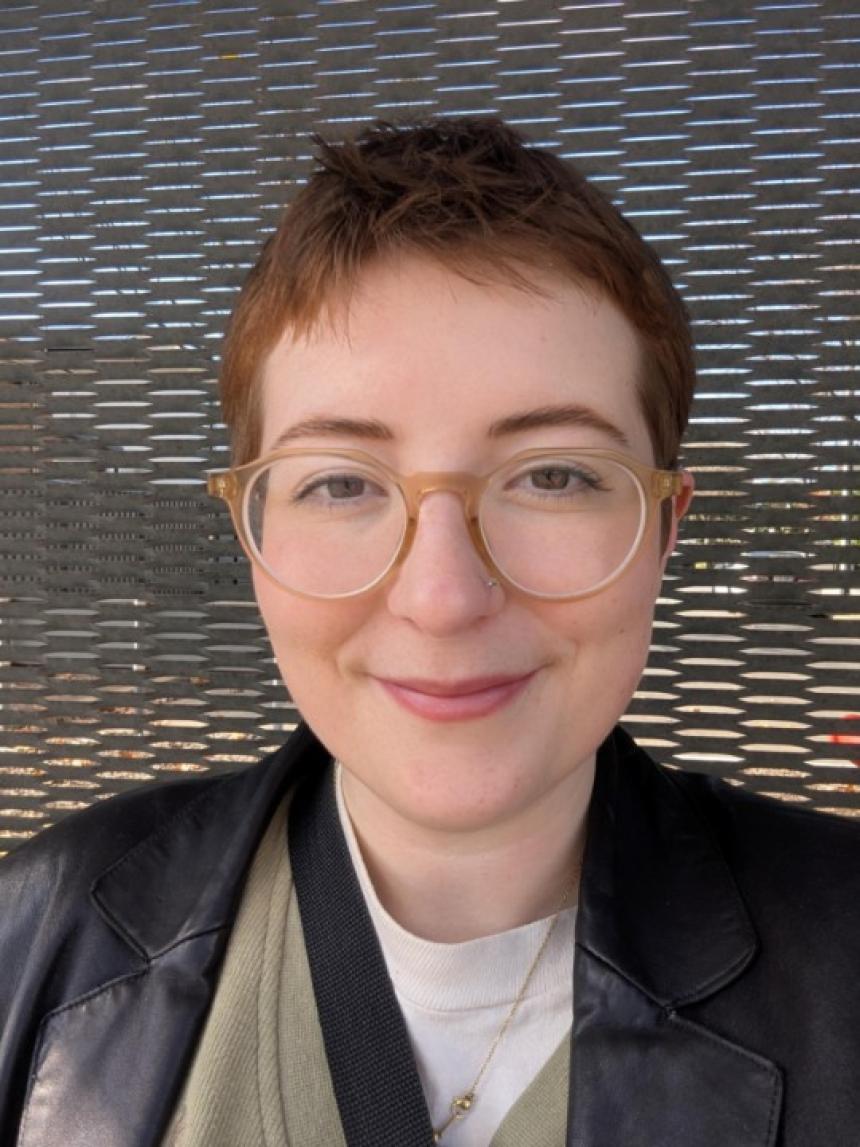
Ms Ruth Simpson
Higher Degree by Research Candidate
School of Pharmacy and Biomedical Sciences
College of Health
Ruth is a PhD student working on the application of plasma medicine in the treatment of burn wounds and harnessing the immune system to promote healing. Plasma is a highly energised gas with can be used to generate molecules called reactive oxygen and nitrogen species in the target tissue or media. These molecules can regulate a variety of key proteins involved in inflammation and healing. Using in vitro, ex vivo explant and preclinical burn models, the project will characterise the changes to underlying skin tissue and inflammation to determine whether plasma can activate the cells needed to promote healing.
Biomedical engineering and Nanomedicine (PhD) - In Progress
Developing plasma-activated dressings to stimulate healing and infection control in burn wounds
This PhD project is investigating plasma-activated hydrogels as an alternative to traditional silver-based dressings in burn wound treatment. Literature reports that reactive oxygen and nitrogen species (RONS) produced by plasma interact in a number of healing processes and have shown some efficacy against bacteria in vitro. In this project, a range of plasma-activated hydrogels will be developed to create a hydrating dressing with easy-to-deliver, consistent and quick-application doses of therapeutic RONS. Thus far, plasma-activated PVA dressings have been tested in mouse wound models, where they were found to reduce inflammatory markers in the wound. New formulations have also been tested against on common skin pathogens Staphylococcus aureus and Pseudomonas aeruginosa and antibacterial efficacy has been recorded in many of the dressings thus far. More plasma-activated dressings will be developed and characterised, and further tests performed to evaluate healing stimulation and biocompatibility
Biomedical Science (Masters by Research) - Complete
Manipulation of GPX1 in HaCaT and cancer cells and its potential use as a theranostic target for cancer
The aims of this project were to better understand the effect of GPX1 activity on cancer development and patient survival and determine the efficacy of a novel inhibitor. This work combined bioinformatics, cell culture techniques and biochemical analyses, and found that GPX1 overexpression is common across many cancer types and can increase lethality. Additionally, I found that both a novel inhibitor and selenium supplementation were able to significantly modulate GPX1 activity, in some cases altering drug resistance in cancer cells.
| Date | Position | Institution name |
|---|---|---|
| 2024 - ongoing | Moderator | University of Adelaide |
| 2022 - 2023 | Research Portfolio Officer | Versus Arthritis |
| 2021 - 2022 | Research Support Officer | University of Sheffield |
| Date | Type | Title | Institution Name | Country | Amount |
|---|---|---|---|---|---|
| 2026 | Award | AWTRS Travel Grant | Australasian Wound and Tissue Repair Society (AWTRS) | Australia | - |
| 2025 | Award | AWTRS 2025 Conference Award | Australasian Wound and Tissue Repair Society (AWTRS) | Australia | - |
| Language | Competency |
|---|---|
| English | Can read, write, speak, understand spoken and peer review |
| Date | Institution name | Country | Title |
|---|---|---|---|
| 2019 - 2022 | Lancaster University | United Kingdom | MSc by Research Biomedical Science |
| 2016 - 2019 | Lancaster University | United Kingdom | BSc Biochemistry |
PhD Project Funding
Australian Government Research Training Program Scholarship, https//doi.org/10.82133/C42F‐K220
Children's Research Foundation Research Grant Project, 23‐27613456
| Date | Role | Membership | Country |
|---|---|---|---|
| 2025 - ongoing | Member | Australasian Wound and Tissue Repair Society (AWTRS) | Australia |
| 2025 - ongoing | Member | Tissue Engineering & Regenerative Medicine International Society (TERMIS) | Australia |
Connect With Me

Available For Media Comment.