
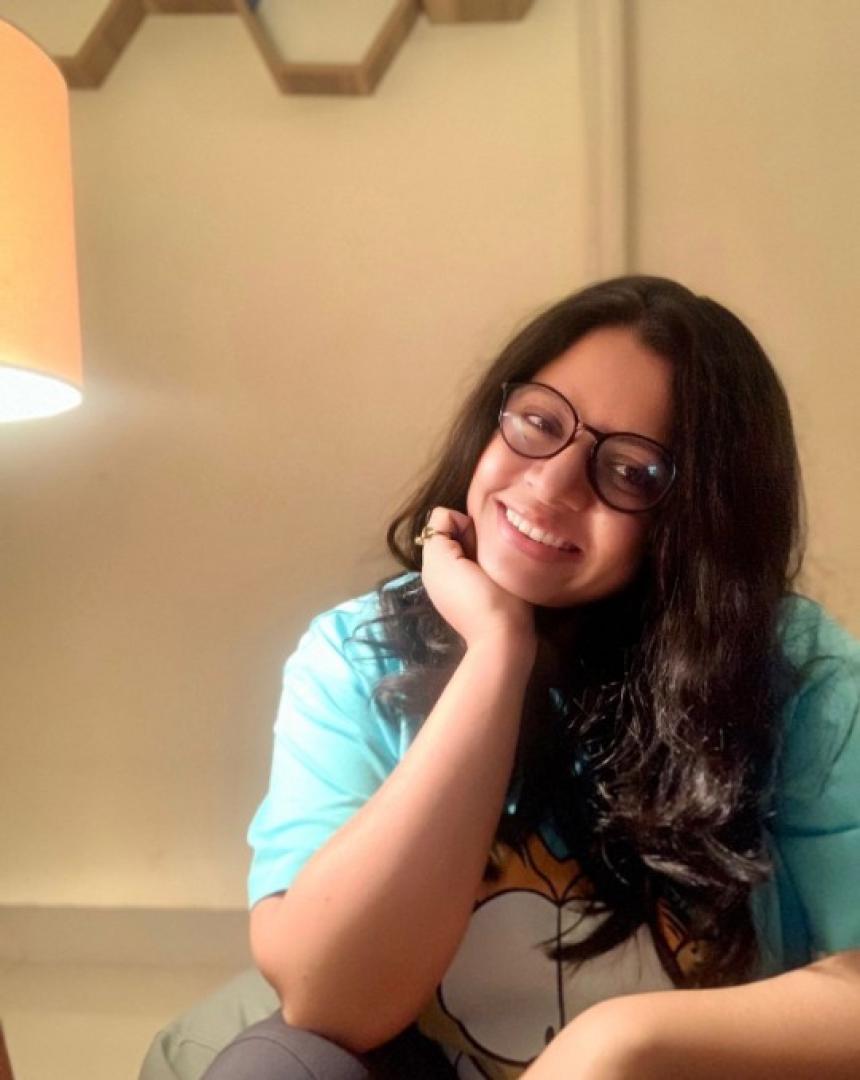
Miss Rituparna Mukherjee
Higher Degree by Research Candidate
School of Psychology
College of Education, Behavioural and Social Sciences
AI is getting incredibly good at persuading people, but almost everything we know about how it does this comes from a Western, English-speaking perspective. I am interested in building a culturally aware theory of AI persuasion. Instead of assuming one communication style works globally, I study how cultural values and different languages change how we respond to AI-generated persuasive messages. This is also fundamental to AI fairness in that if technology is going to be global, fairness means it shouldn't just force-feed translated Western defaults to the rest of the world. It needs to genuinely understand who it is talking to.
| Date | Position | Institution name |
|---|---|---|
| 2020 - 2021 | Research Associate | Indraprastha Institute of Information Technology Delhi |
| Language | Competency |
|---|---|
| Arabic | Can read, speak and understand spoken |
| Bengali | Can read, write, speak and understand spoken |
| English | Can read, write, speak, understand spoken and peer review |
| Hindi | Can read, write, speak and understand spoken |
| Date | Institution name | Country | Title |
|---|---|---|---|
| 2017 - 2019 | Cardiff University | United Kingdom | MS |
| Year | Citation |
|---|---|
| 2021 | Pramanik, S., Dimitrov, D., Mukherjee, R., Sharma, S., Akhtar, M. S., Nakov, P., & Chakraborty, T. (2021). Detecting Harmful Memes and Their Targets. In F. Xia, C. Zong, W. Li, & R. Navigli (Eds.), FINDINGS OF THE ASSOCIATION FOR COMPUTATIONAL LINGUISTICS, ACL-IJCNLP 2021 (pp. 2783-2796). ELECTR NETWORK: ASSOC COMPUTATIONAL LINGUISTICS-ACL. DOI WoS97 |
Connect With Me


External Profiles
