
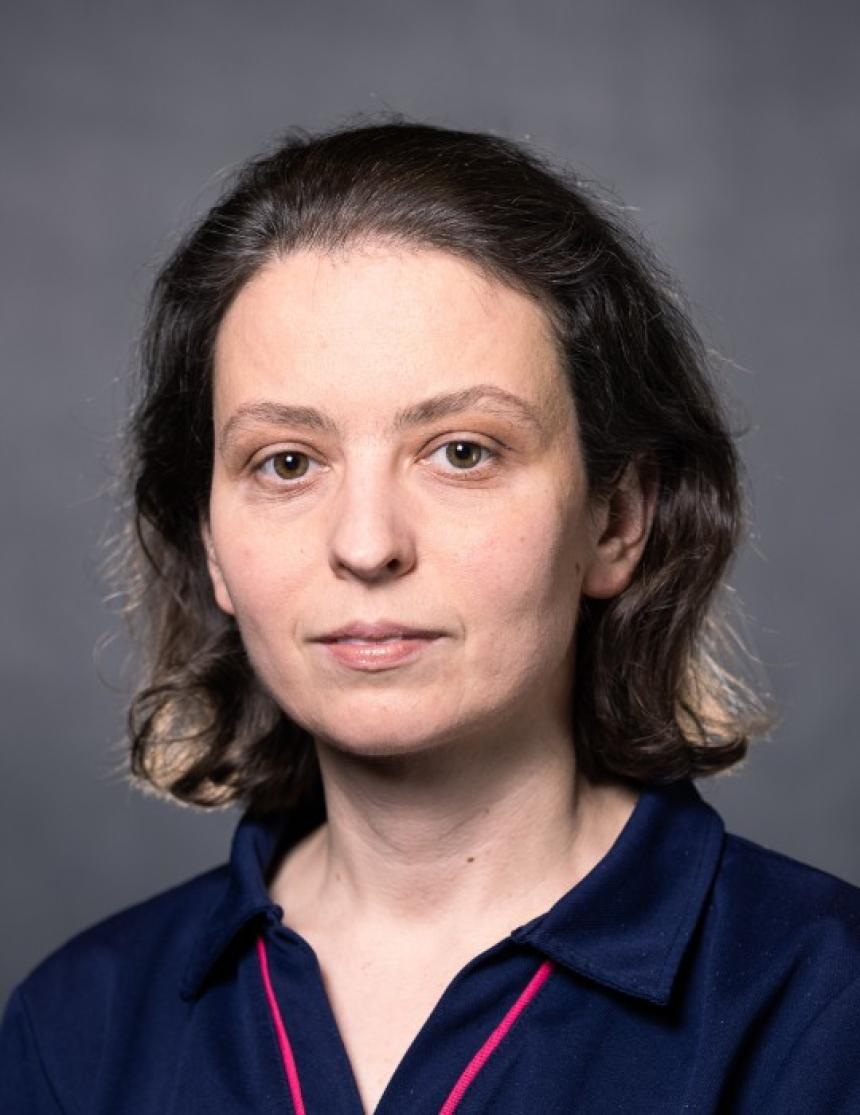
Prof Natasha Jackson-Booth
Chair Professor in Ionospheric Physics
School of Physics, Chemistry and Earth Sciences
College of Science
Eligible to supervise Masters and PhD - email supervisor to discuss availability.
Professor Natasha Jackson-Booth is the Chair Professor in Ionospheric Physics at Adelaide University. Her research lies in ionospheric physics, radio frequency propagation, and space weather, with a strong emphasis on translating fundamental physics into operational capability for defence and national security. As a recognised UK authority on the impacts of the ionosphere on communications and surveillance systems, she has worked across industry, government, and academia to develop MOD strategy.
Professor Jackson-Booth obtained her PhD from the University of Birmingham in 2008, in Neutron Star Low Mass X-ray Binaries. Following this she joined the Radio Frequency and Operating Environment Group at QinetiQ. Since then, she has led and contributed to a wide portfolio of projects spanning UK MoD, ESA, NATO, and EU frameworks. A consistent theme across her career has been the formation of multi-disciplinary collaborations — drawing together teams across academia, industry and government (both nationally and internationally) — to deliver capability that endures beyond individual projects. As Technical Lead on multiple ionospheric modelling efforts, she has designed detection models for space weather events and assessed their threat to radio systems, supporting cabinet office-led US/UK round tables on severe space weather scenarios.
Her experimental work includes serving as Principal Investigator at the Arecibo Observatory for UK RF heating experiments, where she designed and implemented novel heating waveforms to study ionospheric disturbances capable of disrupting radar operations. As Trials Manager for several UK and overseas exercises — including Formidable Shield 2019 and 2021 — she led the design and deployment of low-cost sensors for ballistic missile detection.
Beyond her primary research, she has extensive experience in HF propagation and next-generation communications, including troposcatter modelling and cognitive radio spectrum protocols as task leader on the European Framework 7 project CROWN. She has also led technical work in computers and cyber, ISR threat analysis, and command and control tools — including machine learning applications for complex data environments and real-time situational awareness products.
Professor Natasha Jackson-Booth is the Chair Professor in Ionospheric Physics at Adelaide University. Her research lies in ionospheric physics, radio frequency propagation, and space weather, with a strong emphasis on translating fundamental physics into operational capability for defence and national security. As a recognised UK authority on the impacts of the ionosphere on communications and surveillance systems, she has worked across industry, government, and academia to develop MOD strategy.
| Date | Role | Research Topic | Program | Degree Type | Student Load | Student Name |
|---|---|---|---|---|---|---|
| 2026 | Co-Supervisor | Understanding atmospheric effects upon extended baseline passive radar | Doctor of Philosophy | Doctorate | Part Time | Mr Nathan Misaghi |
Connect With Me
