
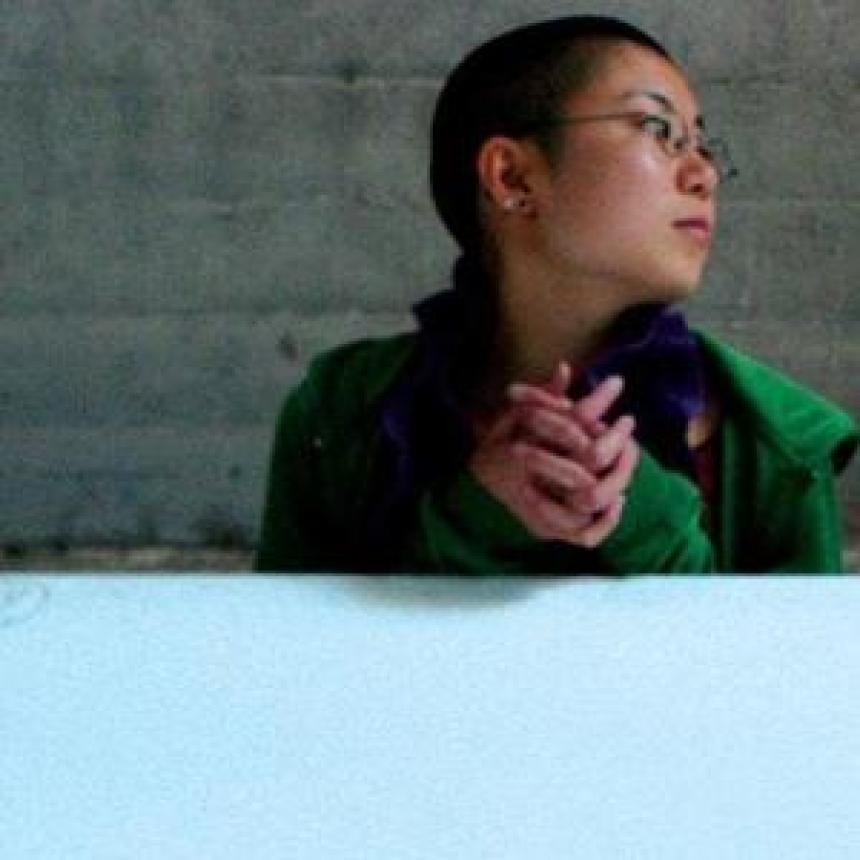
Dr Mirai Morita
Program Director
School of Architecture and Built Environment
College of Creative Arts, Design and Humanities
Eligible to supervise Masters and PhD (as Co-Supervisor) - email supervisor to discuss availability.
Mirai is a curious, determined, motivated educator and designer working with the belief that spaces will enable people that living conditions do change and shape who you are and that space makes a difference to a person. Mirai is a Japanese native who joined Adelaide University as a Lecturer in 2013. Educated in the United States, she has continued to traverse the globe working on architecture projects of various scales and distinctions, having worked at OMA and Atelier Bow-Wow designing large scale masterplans, commercial/cultural projects, residential projects and small-scale exhibitions. With her experience of working with great talents around the world, she brings a set of ideas and skills eager to put to practice towards creating beautiful and intriguing moments by in hopes that our collaborative knowledge and experience may work to improve the lives of each other.
Living Architectue: My research is centred on exploring how architecture can evolve into a more ecologically integrated and materially innovative discipline. I am particularly interested in how buildings can go beyond static, resource-intensive structures to become dynamic, living systems that interact with and contribute to their surrounding environments. This includes the development of design strategies that combine natural elements with advanced materials, bringing together biological systems and engineered components in symbiotic ways. In response to the growing environmental pressures of climate change, urban density, and resource scarcity, my work investigates how architecture can regenerate rather than deplete and support rather than isolate. I am drawn to experimental design processes that incorporate prototyping, performance testing, and interdisciplinary collaboration with fields such as ecology, engineering, and fabrication. The aim of my research is to develop architectural systems that behave more like ecosystems, capable of adapting to changing conditions, supporting biodiversity, and actively improving environmental quality. I explore materials and assemblies that merge living and synthetic elements, such as bio-receptive surfaces and modular façade systems designed for environmental responsiveness. These approaches challenge traditional boundaries between the natural and built environment, proposing a future in which architecture is not merely sustainable but also regenerative and symbiotic. Through this work, I hope to contribute to a new typology of design that embraces complexity, fosters resilience, and redefines our relationship with nature in the built environment. PhD Research project is listed here under Dr Katja Hogendoorn, Native Species and Architecture.
Space for children: My research centres on the intersection of architecture and early childhood education, with a particular focus on how the design of physical spaces can shape and enhance the developmental outcomes of young children. In contemporary architectural practice, there is growing recognition of the impact that built environments have on childhood development. I am particularly interested in exploring how specific architectural elements—such as open layouts, dynamic spatial configurations, natural materials, and the integration of natural elements—can be leveraged to foster cognitive, emotional, and social growth in children. A key component of my research is investigating how the environment influences children’s creativity, social interactions, and emotional well-being. I am particularly drawn to the idea that spaces designed with flexibility and adaptability in mind can provide opportunities for active learning and engagement. For example, open, flexible layouts allow for different types of play and interaction, while natural materials and elements such as light and greenery can promote well-being and a connection to the outside world. The primary aim of my research is to understand how architecture can support the holistic development of children by creating educational spaces that are both stimulating and nurturing. By examining the effects of design choices such as spatial organization, material selection, and the relationship with nature, I seek to identify key design principles that promote exploration, creativity, and socialization. Ultimately, my goal is to contribute to the creation of environments that enhance the learning experience and foster the overall growth of children, helping to shape a generation that thrives in well-designed, supportive spaces. PhD Research project is listed here under Assoc. Prof. Katharine Bartsch.
| Date | Position | Institution name |
|---|---|---|
| 2026 - ongoing | Program Director Bachelor of Architectural Design | Adelaide University |
| 2025 - 2025 | Program Director Bachelor of Architectural Design | University of Adelaide |
| 2016 - 2017 | Project Leader | Office for Metropolitan Architecture |
| 2013 - ongoing | lecturer | university of adelaide |
| 2013 - 2009 | Architecture staff | Atelier Bow-Wow |
| 2008 - 2009 | Architect | Asymptote Architecture |
| 2007 - 2008 | Architect | Office for Metropolitan Architecture |
| 2006 - 2006 | Design Staff | INABA Projects |
| 2005 - 2006 | Design Staff | Xefirotarch |
| 2002 - 2004 | Design Staff | Michael Sorkin Studio |
| Language | Competency |
|---|---|
| English | Can read, write, speak, understand spoken and peer review |
| Japanese | Can read, write, speak, understand spoken and peer review |
| Date | Institution name | Country | Title |
|---|---|---|---|
| 2024 | University of Adelaide | Australia | PhD |
| Southern California Institute of Architecture | United States | Masters in Architecture | |
| North Carolina State University | United States | Bachelor of Environmental Design in Architecture |
| Year | Citation |
|---|---|
| 2025 | Morita, M., & Kroll, D. (2025). Confident Empathy: collaborating and working through problems in architectural practice. CoDesign, 1-25. |
| Year | Citation |
|---|---|
| 2003 | Sorkin, M. (2003). Starting from Zero Reconstructing Downtown New York. Psychology Press. |
| Year | Citation |
|---|---|
| 2013 | Morita, M., & Lacoudre, I. (2013). Exploring Atelier Bow-Wow. In A. Segal, C. Castagnet, D. Berakha, & I. Kenigsberg (Eds.), Labor (Vol. 2, pp. 86-95). Argentina: revistalabor. |
| Year | Citation |
|---|---|
| 2019 | Morita, M. (2019). Confident Empathy. In REAL MATERIAL ETHEREAL- Proceedings of the Annual Design Research Conference 2019. Melbourne: Monash University. |
| Year | Citation |
|---|---|
| 2025 | Authors: Morita M, Vu Le N. Title: Mangosteen. Extent: 33 pages. DOI |
| 2023 | Authors: Morita M. Title: Expanding. Extent: 40 pages. DOI |
| 2022 | Authors: Morita M. Title: PANORAMA. Extent: Slides presentation 37 pages. DOI |
| 2021 | Authors: Morita M, Bartsch P, Town H, Zahidi NIM. Title: Clare Valley Theatre. Extent: Slides presentation 34 pages, and physical model photo. DOI |
| 2019 | Authors: Morita M. Title: Paper. Description: Two different types of paper hangs in space. This simple gesture of hanging paper is giving the opportunity for paper to express the subtle nature of the being.. Extent: approx. dimension: (L)6.5m x (W)2.1m x (H)2.4m. Material: Aluminium Angle, plotter paper, Shoji paper. |
| 2017 | Authors: Morita M, Chua S, Chue L, Koh B. Title: Hair Lab. Extent: Four A2 landscape panels. |
| 2016 | Authors: Morita M. Title: Sun Room Art Studio. Extent: 4000 x 6300 x 3000. |
| 2015 | Authors: Morita M. Title: Tombstone. Extent: 1740 x 1690 x 1561. |
| - | Authors: Morita M, Bartsch P, Town H, Zahidi NIM. Title: Clare Valley Theatre. Extent: N/A. DOI |
| Year | Citation |
|---|---|
| 2024 | Morita, M. (2024). Confident Empathy - Collaborating with Irresolution. (PhD Thesis, The University of Adelaide). |
2025-2026
Mawson Lakes Fellowship Program. "Exploring Urban Development Patterns: A Comparative Study of Housing Strategies and Streetscapes in Japan and Australia" with David Kroll and Keigo Kobayashi (Waseda University).
2025-2026
Sandland Bequest Fund. "Designing for Biodiversity: Integrating Architecture to Support Native Species in Urban Landscapes" with Katja Hogendoorn, Kate Delaporte, Terry Reardon, James Smith and Veronica Soebarto.
Design Studio II (BARCH): Designing with Three dimensional Surfaces
Representation II (BARCH): Composing beautiful drawings
Design Studio V (BARCH): Living Envelope
Construction III (BARCH): High-rise building documentation
Final Year Project (MARCH): Waste, Insects, Trees, Clouds, Life, Nature
| Date | Role | Research Topic | Program | Degree Type | Student Load | Student Name |
|---|---|---|---|---|---|---|
| 2025 | Co-Supervisor | Investigating an Agile Model for Sustainable Interior Design in Housing for Older People in South Australia | Doctor of Philosophy | Doctorate | Full Time | Mrs Delaram Ordoukhani |
| 2025 | Co-Supervisor | Aiming to establish an innovative and sympathetic way to undertake issues of abandonment in neglected heritage buildings. The objective is to overcome the barriers which have instigated these buildings to become dormant un-utilised and undeveloped. | Doctor of Philosophy | Doctorate | Part Time | Ms Madeline Nolan |
| 2025 | Co-Supervisor | Sustainable Automated Construction for Energy Self-Sufficiency and Cost-Effective Affordable Houses in South Australia | Doctor of Philosophy | Doctorate | Full Time | Mr Danning Zhu |
| 2025 | Co-Supervisor | Sustainable Automated Construction for Energy Self-Sufficiency and Cost-Effective Affordable Houses in South Australia | - | Doctorate | Full Time | Mr Danning Zhu |
| 2025 | Co-Supervisor | Aiming to establish an innovative and sympathetic way to undertake issues of abandonment in neglected heritage buildings. The objective is to overcome the barriers which have instigated these buildings to become dormant un-utilised and undeveloped | - | Doctorate | Part Time | Ms Madeline Nolan |
| 2025 | Co-Supervisor | Investigating an Agile Model for Sustainable Interior Design in Housing for Older People in South Australia | - | Doctorate | Full Time | Mrs Delaram Ordoukhani |
| Date | Role | Membership | Country |
|---|---|---|---|
| 2026 - ongoing | Member | Australian Institute of Architects | Australia |


