
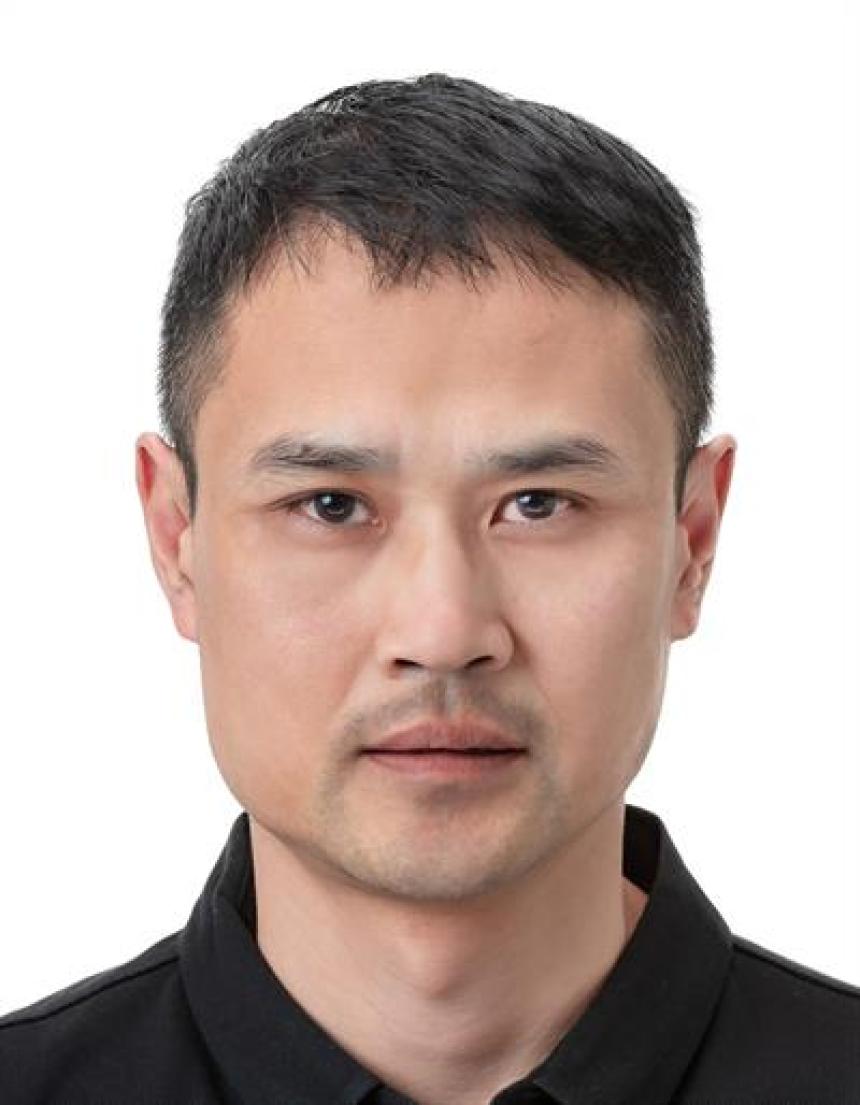
Dr Ling Chen
Grant-Funded Researcher (A)
School of Chemical Engineering
College of Engineering and Information Technology
Eligible to supervise Masters and PhD (as Co-Supervisor) - email supervisor to discuss availability.
My research centers on the computational design and discovery of efficient, low-cost catalysts for sustainable energy applications, using first-principles calculations and high-throughput screening techniques. I specialize in electrocatalysis, with complementary experience in photocatalysis, and focus on reactions central to the Water, Carbon, and Nitrogen cycles, including:
- Hydrogen Evolution (HER) and Hydrogen Oxidation (HOR)
- Oxygen Evolution (OER) and Oxygen Reduction (ORR)
- Carbon Dioxide Reduction (CO₂RR)
- Nitrogen Reduction (NRR)
Key areas of contribution:
- Carbon Cycle Catalysts: Designing transition-metal and single-atom catalysts for CO₂-to-fuel conversion via C–C coupling and multi-carbon product selectivity, inspired by biological CO₂ fixation and aided by reaction pathway analysis and descriptor engineering.
- Nitrogen Cycle Catalysts: Developing cost-effective, non-precious catalysts for sustainable ammonia synthesis through mechanistic insights into N≡N bond activation, using Density Functional Theory (DFT) and thermodynamic/kinetic modeling.
- Water Cycle Catalysts: Engineering high-performance electrocatalysts for OER/ORR in water-splitting and fuel cell systems, with a focus on activity–stability trade-offs, spin-state tuning, and support–catalyst interactions.
My computational toolbox includes VASP, CP2K, LAMMPS, and Python-based automation workflows, supporting scalable and reproducible catalyst discovery pipelines across multiple reaction environments.
| Year | Citation |
|---|---|
| 2009 | Chen, L., & Jin, Y. (2009). The Auto-reconditioning Protective Layer on Worn Metal Surface Generated by Internal Oxidation under Serpentine Action. In Proceeding of the 4th World Tribology Congress, WTC2009. kyoto Japan. |
| 2008 | Chen, L., Zhao, Y., & Jin, Y. (2008). Preliminary Applications of King's ART Technology in Industry. In Advanced Tribology: Proceedings of CIST2008 $ ITS-IFToMM2008 (pp. 473-474). Beijing. |
| 2002 | Chen, L., & Yang, X. (2002). Research on Technological Condition in Slurry Electrolysis of High-silver Galena Concentrate. In Proceedings of the First International Conference on Heavy Nonferrous Metallurgy, ICHNM'2002. Kunming, China. |
2020, CHEM ENG 7102 Computation for Material Engineering, as tutor
2021, Master of Engineering Research Project 2021s1, as co-supervisor
2021, Research Project RP210212, as co-supervisor
2022, Master of Engineering Research Project 2022s1, as co-supervisor
2022, CHEM ENG 7102 Computation for Material Engineering, as lecturer
2023, CHEM ENG 7102 Computation for Material Engineering, as lecturer
2024, MAT ENG 7102 Computation for Material Engineering, as lecturer
| Date | Role | Research Topic | Program | Degree Type | Student Load | Student Name |
|---|---|---|---|---|---|---|
| 2024 | Co-Supervisor | Data-driven Machine-learning Assisted Design of Electrocatalysts for Green C2 Chemical Production | Doctor of Philosophy | Doctorate | Full Time | Mr Zhen Tan |
| 2024 | Co-Supervisor | Data-driven Machine-learning Assisted Design of Electrocatalysts for Green C2 Chemical Production | Doctor of Philosophy | Doctorate | Full Time | Mr Zhen Tan |
| Date | Role | Membership | Country |
|---|---|---|---|
| 2009 - ongoing | Member | Engineers Australia | Australia |
Connect With Me

External Profiles

