
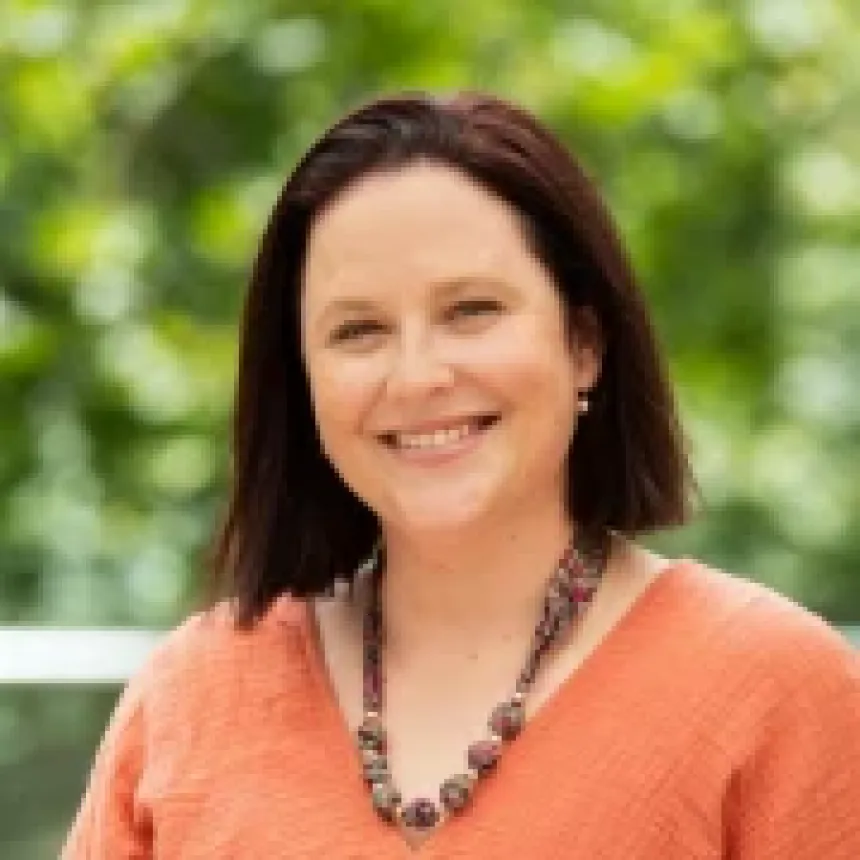
Dr Kim Gibson
Research Fellow
School of Nursing and Midwifery
College of Health
Thank you for stopping by my homepage.
I am a Registered Nurse and Research Fellow with the Rosemary Byrant AO Research Centre.
I lead the project Nurses Leading Skin Health, an initiative to train and educate primary care nurses working in regional South Australia to perform skin checks using best practice dermoscopy. To further enhance subject matter expertise, I completed formal training in dermoscopy and now practice as a Nurse Dermoscopist. I coordinate the Professional Certificate in Dermoscopy at UniSA and I am committed to help support primary care nurses to gain the knowledge and skills in the early detection of skin cancer. Nurses working in regional SA gain essential practical experience at "pop-up" skin check clinics at large community events where consumers receive a free and convenient skin check. As part of this project, we undertake research to evaluate the skin cancer risk of people living in regional areas, their sun protection behaviours, and how they experience a nurse-led model of care for skin cancer screening. Building on our project's success, our national expansion, The 600 Nurses Project, aims to train 600 nurses in dermoscopy across Australia, addressing critical workforce gaps and improving access to skin cancer screening for regional and rural Australians.
The Rosemary Bryant AO Research Centre is a partnership between the University of South Australia and the Rosemary Bryant Foundation, which aims to strengthen the nursing & midwifery workforce across the health system through the support and development of evidence-based healthcare, fostering partnerships, informing health policy and building research capacity. The RBRC has developed a comprehensive research program focused on advancing the discipline of nursing & midwifery and patient care related to population and public health, workforce reform, safety and quality, clinical practice, patient outcomes, and integration into education. Its objective is to enhance innovative partnerships for healthcare research, to inform strategies for: 1) Extending the capacity and capabilities of nurses and midwives to build a resilient, sustainable and collaborative workforce, 2) health system planning, evaluation and resourcing, 3) clinical care outcomes, and 4) translation of evidence into practice.
If you are interested in becoming one of the 600 dermoscopy nurses, considering a research collaboration, or undertaking a research degree and requiring supervision, please don't hesitate to contact me.
PhD titled; 'The incidence and risk factors for adverse events associated with umbilical vascular catheters'. Presenter, 8th World Congress on Vascular Access, Prague, Czech Republic, April 2024.
600 Nurses Project: Targeted skin checks led by primary care nurses in rural Australia
People living in rural and remote communities of Australia experience higher incidence of skin cancer and are more likely to die from this compared to people in metropolitan areas. Access to skin checks is problematic due to a critical shortage of trained health providers to meet the health needs of these communities. Nursing is the largest health workforce across the nation and often a nurse is the only clinician in primary care in rural and remote areas of Australia. Nurses are therefore well placed to provide education and health advice, perform targeted skin checks, and can provide continuity of care in their communities.
As part of a large research project, we have provided 8 free pop-up skin check clinics in regional communities, trained 36 regional nurses, screened 860 people, detected 78 lesions suspicious for melanoma, and 239 for keratinocyte cancer. Over half of the people who engage with the service have never had a skin check previously and 10-15% are classified above average risk for melanoma. Consumers overwhelmingly accept the service and GPs have been supportive of this nurse-led model.
Hearing loss and tinnitus following a COVID-19 infection, what is the lived experience?
Sudden sensorineural hearing loss (SSNHL) associated with COVID-19 infection is an emerging, global health problem with research in its infancy. The UniSA press release for our publication on SSNHL in BMJ Case Reports gained significant media attention and featured on the ABC evening news. I was contacted by many people from Australia and overseas who have shared their debilitating experiences, leading us to undertake a seminal study to describe the lived experience of SSNHL.The outcomes of this study will provide a summation of the personal impact of hearing disturbance associated with COVID-19 and make recommendations for health practitioners to enable the delivery of person-centred care.
-
SA Nurse Led Skin Screening Research: Detecting the Undetected, The Hospital Research Foundation, 01/11/2025 - 31/12/2027
-
Nurses for Skin Health 2024-2026, SA Rural Health Network Limited, 01/02/2025 - 30/06/2026
-
Outstanding Workforce Leaders (OWL) Research Program 2025 (Clinical Research Program), Barossa Hills Fleurieu Local Health Network, 19/05/2025 - 31/12/2025
-
Vital Sign & Disease Detection at a Distance, Vital Intelligence Inc, 23/04/2020 - 23/10/2020
Courses I teach
- SCCHS 90012 Clinical Dermoscopy SC (2025)
- SCCHS 90013 Professional Certificate: The Outstanding Workforce Leaders (OWL) Research Program SC (2025)
- NURS 3055 Evidence Based Nursing Practice (2024)
Programs I'm associated with
- IBNU - Bachelor of Nursing
- IBMW - Bachelor of Midwifery
Connect With Me


External Profiles


Available For Media Comment.