
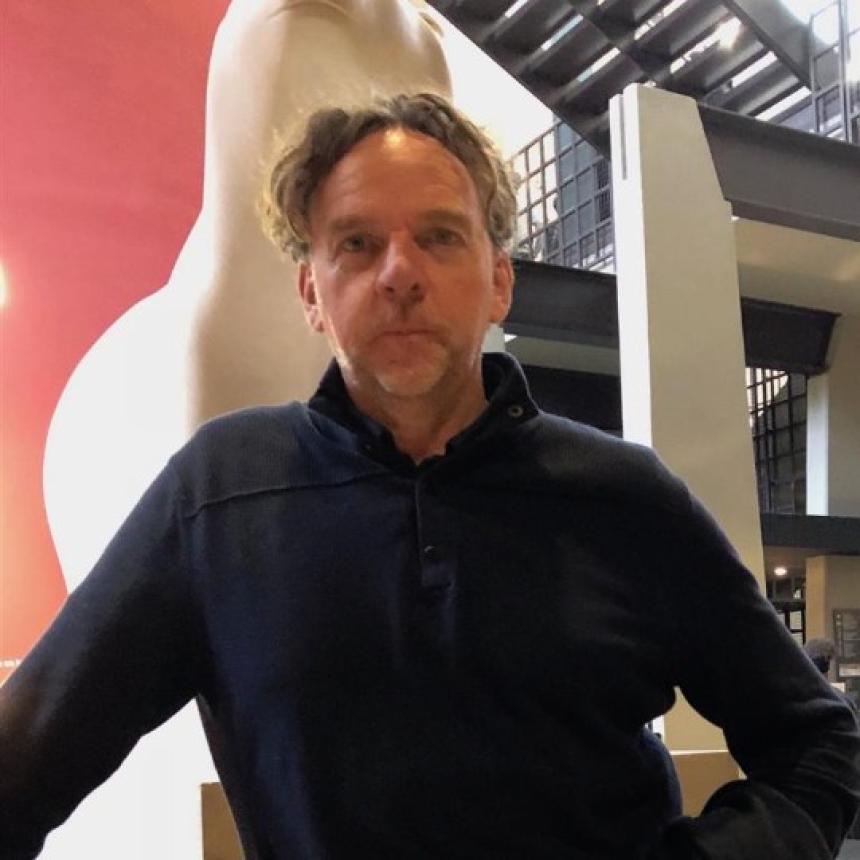
Prof Justin O'Connor
Professor of Creative Economy
School of Humanities
College of Creative Arts, Design and Humanities
Eligible to supervise Masters and PhD as Principal Supervisor - email supervisor to discuss availability.
Short biography
Justin O’Connor is Professor of Cultural Economy at the University of South Australia and Visiting Professor at the School of Cultural Management, Shanghai Jiaotong University. Between 2012-18 he was a member of the UNESCO ‘Expert Facility’, supporting the 2005 Convention on the Protection and Promotion of Cultural Diversity. Previously he helped set up Manchester’s Creative Industries Development Service (CIDS) and has advised cities in Europe, Russia, Korea, Vietnam and China. Under the UNESCO/EU Technical Assistance Programme he has worked with the Ministries of Culture in both Mauritius and Samoa.
Justin is the author After the Creative Industries: Why we need a Cultural Economy (2016, Platform Papers) and co-editor of the 2015 Routledge Companion to the Cultural Industries and of Cultural Industries in Shanghai: Policy and Planning inside a Global City, (2018, Routledge). He has published on China and East Asia, co-authoring Red Creative: Culture and Modernity in China (2020, Intellect) and co-editing Re-Imagining Creative Cities in Asia (2020, Routledge) and Different Histories, Shared Futures. Dialogues on China and Australia (2022, Palgrave). His work with the Reset Collective resulted in a large working paper Reset: Art, Culture and the Foundational Economy, translated into Dutch as Reset: Een nieuwe start voor kunst en cultuur (A Newstart for Art and Culture. Amsterdam: Starfish Books, 2023). His latest Culture is Not an Industry will come out with Manchester UNiversity Press in 2024.
Background
I am a world leader in research into the cultural and creative industries (CCI), strongly associated with the view that these are ultimately cultural policy rather than industrial-economic questions. I combine historical and conceptual research with policy development, advocacy, and evaluation. I have published 5 authored books (plus 1 forthcoming), 6 edited volumes, and over 100 refereed articles, chapters and reports. My work has been translated into Spanish, Vietnamese, Finnish, Serbian, Russian, Chinese and Dutch. As Director of Manchester Institute for Popular Culture (MIPC) I was involved in policy development and research leadership in Manchester and the UK in the 1990s, and the early 2000s in the EU and Russia. My policy development work gained a global profile subsequent to my arrival in Australia in 2008. This is evidenced by my appointment to UNESCO’s global Expert Facility (2010-18), by keynote invitations across China, Taiwan and South Korea, and by commissioned work by state and federal governments in Australia. I am recognised in the global policy community via invited keynotes (over 100), invited university fellowships (e.g. Shanghai Jiaotong, Leeds, Brabant, Turku, Warwick, Manchester, Singapore, Tours) and commissioned reports (Finland, Sweden, Russia, Germany, Samoa, Mauritius, UNESCO). My combination of research and policy development within a truly global network, make me a world leader in the field, as evidenced by the invitation to address the UN’s Senior Management Group, chaired by Secretary-General Guterres, in 2022.
An early achievement (1990-2000) was to connect an emergent CCI agenda with both urban regeneration and popular culture, via an interdisciplinary combination of postmodern sociology, cultural studies and urban geography. In this I acted neither as a policy maker nor consultant but as public policy intermediary, conducting empirical and interdisciplinary research to change the ‘imaginary’ of the policy environment, leading to real world change. As Director of MIPC I worked with previously marginalised local actors to develop a new policy for an urban creative cluster (Northern Quarter) and a creative industry development service (CIDS) focused on small and micro-enterprises.
Between 2000-07 these real-world research-informed policy outcomes were networked across the UK, via the Forum on Creative Industries (FOCI), the UK’s leading CCI regional development network which I co-founded. This work was extended by leading a EU- funded (TACIS) project (2000-04) policy exchange between Manchester and St Petersburg, establishing a new creative industries agency in the Russian city. I led an EU-funded research project bringing together creative quarters across 8 cities (1997-9), leading to a major conference in 1999, and establishing MIPC as one of the leading CCI research centres in Europe. My work was recognised by being awarded two major UK (ESRC) funded research projects on CCI and urban economic development, leading to significant publications, including a commissioned highly cited (650) review of CCI literature.
After arrival in Australia in 2008, I developed a distinctive historical-critical view of CCI’s integration into innovation policy, and sought to place them within the longer-term political changes associated with ‘neoliberalism’. In a post-GFC world, I proposed that existent CCI policy was part of the problem and needed to change. I applied this to a major historical reconceptualization of arts and creative industries commissioned by the Australia Council in 2011, and a strategic analysis of the real challenges facing the Australian cultural sector commissioned the Australian Council of Learned Academies (ACOLA) in 2014.
These research insights were then applied to specific cases. I was commissioned by the Tasmanian state government to produce an empirically informed new approach to supporting the cultural sector, leading to a major conference, Creative Island in 2017. My ARC Linkage investigated the impact of the Museum of Old and New Art (MONA) on Hobart/ Tasmania and organised an international symposium on culture and urban regeneration in collaboration with the State Government and Hobart City. My work as UNESCO expert on global cultural policy development included strategic reports to Mauritius and Samoa. My major research focus on China helped conceptualise CCI in non-western contexts and in relation to ‘globalisation’. Two ARC China-focused projects, and my visiting chair at Shanghai Jiaotong University positioned me as a recognised global leader in the field of Chinese CCI, with many articles, commissioned chapters, keynotes and a book length study of China in 2020. This work on non-western CCI informed my current ARC project on UNESCO and global cultural policy, and ongoing work with the Vietnamese Ministry of Culture’s research centre (VICAS).
Since 2020 I have developed a radically new approach to cultural policy, by founding the Adelaide-based Reset Collective (Reset 2021), which acts as a public policy intermediary to influence the broader policy conversation. We delivered 8 interdisciplinary seminars and a large conference in November 2021, and 6 seminars in 2022, 3 in Europe. The seminars, large conference, media interventions, and publications have had real impact in South Australia and at national level, where Reset’s work is regularly referenced. So far, this work has led to a commission for a public-facing book by Manchester University Press (Culture is Not an Industry), an invitation to address the UN’s Senior Management Group, and a series of high-level international seminars in Northern Europe leading up to a UNESCO’s major Mondiacult ’22 conference. I am now part of a global network promoting the addition of culture to the Sustainable Development Goals and have been asked to help develop the UN and UNESCO’s policy goal of culture as a global public good.
Preparing Bodies of Work, a collaboration between Vitalstatistix and Reset Art and Culture, 1-3rd November.
| Year | Citation |
|---|---|
| 2026 | O'Connor, J., Oakley, K., & Barnett, T. (2026). Culture as foundational. EUROPEAN JOURNAL OF CULTURAL STUDIES, 29(2 Special Issue: Culture as Foundational), 23 pages. Scopus4 WoS4 |
| 2026 | O’Connor, J., Whiting, S., & Barnet, T. (2026). Do give up your day job: basic income for artists, and other stories. Cultural Trends, 1-16. |
| 2025 | Mazzucato, M., O'Connor, J., & Bennett, T. (2025). The art of the public: cultural economy and cultural policy. Journal of Cultural Economy, 18(4), 614-627. Scopus2 WoS3 |
| 2025 | O'Connor, J. (2025). Rethinking the foundations: global cultural policy at the crossroads. European Journal Of Cultural Studies, online(2 Special Issue: Culture as Foundational), 1-19. Scopus1 |
| 2025 | O'Connor, J. (2025). Creating growth: labour's plan for the arts, culture and creative industries. Cultural Trends, 34(3), 449-458. Scopus2 WoS1 |
| 2025 | O’Connor, J. (2025). Fringe to famous. Continuum, 40(2), 7 pages. |
| 2025 | O'Connor, J. (2025). Fashion as Creative Economy. CULTURAL TRENDS, 34(4), 613-616. |
| 2023 | McCartney, G., O'Connor, J., Olma, S., Hill O'Connor, C., Harroun, L., & Morel, K. (2023). Culture as an objective for and a means of achieving a wellbeing economy. Humanities and Social Sciences Communications, 10(1), 1, article no. 718-5. Scopus11 WoS7 |
| 2022 | Lake, S., Joannes-Boyau, R., Lucas, A., McCallum, A., O'connor, J., Pelizzon, A., . . . Vodeb, O. (2022). A Brief History of Australian Universities*. SOCIAL ALTERNATIVES, 41(1), 8-16. WoS11 |
| 2022 | Vodeb, O., Joannes-Boyau, R., Lake, S., Lucas, A., McCallum, A., O'Connor, J., . . . Tregear, P. (2022). Australian Public Universities and the Destruction of the Academic Community*. SOCIAL ALTERNATIVES, 41(1), 35-43. WoS4 |
| 2022 | Tregear, P., Guthrie, J., Lake, S., Lucas, A., O'Connor, J., Pelizzon, A., & Vodeb, O. (2022). 'Enough to make you sick!' Pathological Characteristics of the Australian Academic Workplace*. SOCIAL ALTERNATIVES, 41(1), 44-51. WoS6 |
| 2022 | Whiting, S., Barnett, T., & O'Connor, J. (2022). Creative City - R.I.P.?. M/C Journal, 25(3), 1-12. |
| 2022 | O'Connor, J., Hale, R., Mallen-Cooper, M., Cooke, S. J., & Stuart, I. (2022). Developing performance standards in fish passage: Integrating ecology, engineering and socio-economics. ECOLOGICAL ENGINEERING, 182, 13 pages. WoS34 |
| 2021 | Pacella, J., Luckman, S., & O'Connor, J. (2021). Fire, pestilence and the extractive economy: cultural policy after cultural policy. Cultural Trends, 30(1), 40-51. Scopus34 WoS26 |
| 2021 | Banks, M., & O'Connor, J. (2021). 'A plague upon your howling': art and culture in the viral emergency. Cultural Trends, 30(1), 3-18. Scopus105 WoS86 |
| 2021 | O'Connor, J. (2021). Blue wedge: art, culture and the elite. Griffith Review, 73, 55-69. |
| 2021 | Gu, X., Domer, N., & O'Connor, J. (2021). The next normal: Chinese indie music in a post-COVID China. Cultural Trends, 30(1), 63-74. Scopus37 WoS30 |
| 2021 | Banks, M., & O'Connor, J. (2021). Editorial: art and culture in the viral emergency. Cultural Trends, 30(1), 1-2. WoS9 |
| 2021 | O'Connor, J. (2021). Hans Abbing: the changing social economy of art, are the arts becoming less exclusive?. JOURNAL OF CULTURAL ECONOMICS, 45(1), 153-156. |
| 2020 | O'Connor, J., Gu, X., & Kho Lim, M. (2020). Creative cities, creative classes and the global modern. City, Culture and Society, 21(100344), 1-6. Scopus22 |
| 2020 | O'Connor, J. (2020). A research agenda for creative industries / a research agenda for cultural economics / Raymond Williams cultural analyst. Cultural Trends, 29(2), 166-170. |
| 2020 | O'Connor, J. (2020). A Research Agenda for Cultural Economics. CULTURAL TRENDS, 29(2), 166-170. |
| 2020 | O'Connor, J. (2020). A Research Agenda for Creative Industries. CULTURAL TRENDS, 29(2), 166-170. |
| 2020 | O'Connor, J. (2020). Raymond Williams Cultural Analyst. CULTURAL TRENDS, 29(2), 166-170. |
| 2019 | Gu, X. M. U., & O'Connor, J. (2019). Teaching 'tacit knowledge' in cultural and creative industries to international students. Arts and Humanities in Higher Education, 18(2-3), 140-158. Scopus8 WoS8 |
| 2019 | O'Connor, J. (2019). Cultural policy in South Korea: making a new patron state: by Hye-Kyung Lee, London, Routledge, 2018, 170 pp., £115 (hardback), ISBN: 9781138831353. Cultural trends, 28(4), 340-343. |
| 2019 | Wang, J., Chang, T. C., & O'Connor, J. (2019). Subcultures as urban chic: the worlding Asian cities. City, culture and society, 20(100330), 1-4. Scopus4 |
| 2019 | O'Connor, J., Gu, X., & Vickery, J. (2019). Teaching the cultural and creative industries: an international perspective. Arts and Humanities in Higher Education, 18(2-3), 93-98. Scopus5 WoS6 |
| 2019 | Gu, X., O'Connor, J., & Ng, J. (2019). Worlding and new music cultures in Shanghai. City, Culture and Society, 19(100286), 1-6. Scopus9 |
| 2019 | Garner, B., & O'Connor, J. (2019). Rip it up and start again? The contemporary relevance of the 2005 UNESCO convention on cultural diversity'. Journal of Law, Social Justice and Global Development, (24), 8-23. |
| 2019 | Lyon, J. P., Hale, R., Kitchingman, A., O'Connor, J., Sharley, J., & Tonkin, Z. (2019). Effects of tag type, morphological location and tagger experience on tag retention rates in freshwater fishes. MARINE AND FRESHWATER RESEARCH, 70(6), 891-895. WoS1 |
| 2019 | O'Connor, J., Pickworth, A., Fanson, B., & Lovric, D. (2019). Assessment of a vertical slot fishway in south-eastern Australia designed to pass numerous species and size classes of fish. ECOLOGICAL MANAGEMENT & RESTORATION, 20(2), 151-155. WoS3 |
| 2018 | O'Connor, J. (2018). Economic development, enlightenment and creative transformation: creative industries in the New China. Ekonomiaz, (78), 108-125. |
| 2018 | Booth, K., & O'Connor, J. (2018). Planning for creative effects: the Museum of Old and New Art. Australian planner, 55(2), 65-72. Scopus6 WoS5 |
| 2018 | Wilkes, M., Baumgartner, L., Boys, C., Silva, L. G. M., O'Connor, J., Jones, M., . . . Webb, J. A. (2018). Fish-Net: Probabilistic models for fishway planning, design and monitoring to support environmentally sustainable hydropower. FISH AND FISHERIES, 19(4), 677-697. WoS18 |
| 2017 | Booth, K., O'Connor, J., Franklin, A., & Papastergiadis, N. (2017). It's a museum, but not as we know it: issues for local residents accessing the museum of old and new art. Visitor studies, 20(1), 10-32. Scopus19 WoS9 |
| 2017 | Grodach, C., O'Connor, J., & Gibson, C. (2017). Manufacturing and cultural production: towards a progressive policy agenda for the cultural economy. City, culture and society, 10, 17-25. Scopus86 |
| 2017 | Banks, M., & O'Connor, J. (2017). Inside the whale (and how to get out of there): Moving on from two decades of creative industries research. European Journal of Cultural Studies, 20(6), 637-654. Scopus72 WoS53 |
| 2016 | O'Connor, J. (2016). After the creative industries: cultural policy in crisis. Law, social justice and global development, 20(1), 1-18. |
| 2016 | Amtstaetter, F., O'Connor, J., & Pickworth, A. (2016). Environmental flow releases trigger spawning migrations by Australian grayling Prototroctes maraena, a threatened, diadromous fish. AQUATIC CONSERVATION-MARINE AND FRESHWATER ECOSYSTEMS, 26(1), 35-43. WoS27 |
| 2015 | O'Connor, J. (2015). Intermediaries and Imaginaries in the Cultural and Creative Industries. Regional studies, 49(3), 374-387. Scopus108 WoS78 |
| 2015 | O'Connor, J., Amtstaetter, F., Jones, M., & Mahoney, J. (2015). Prioritising the rehabilitation of fish passage in a regulated river system based on fish movement. ECOLOGICAL MANAGEMENT & RESTORATION, 16(1), 67-72. WoS9 |
| 2014 | O'Connor, J., & Liu, L. (2014). Shenzhen's OCT-LOFT: creative space in the city of design. City, culture and society, 5(3), 131-138. Scopus20 |
| 2014 | O'Connor, J., & Gu, X. (2014). Creative industry clusters in Shanghai: a success story?. International journal of cultural policy, 20(1), 1-20. Scopus129 WoS100 |
| 2014 | O'Connor, J. (2014). Run, David, run: The Red Queen stalks MONA. ReCollections, 9(2), 1-15. Scopus3 |
| 2014 | O'Connor, J., & Shaw, K. (2014). What next for the creative city?. City, culture and society, 5(3), 165-170. Scopus58 |
| 2014 | O'Connor, J., & Gu, X. (2014). Making creative spaces: China and Australia: an introduction. City, culture and society, 5(3), 111-114. Scopus6 |
| 2012 | O'Connor, J. (2012). Shanghai modern: replaying futures past. Culture unbound, 4(1), 15-34. |
| 2012 | O'Connor, J. (2012). Surrender to the Void Life after Creative Industries. CULTURAL STUDIES REVIEW, 18(3), 388-410. WoS5 |
| 2012 | O'Connor, J. (2012). Cultural Studies in the Future Tense. CULTURAL STUDIES REVIEW, 18(2), 330-340. |
| 2012 | O'Connor, J. (2012). What's Become of Cultural Studies. CULTURAL STUDIES REVIEW, 18(2), 330-340. |
| 2011 | O'Connor, J. (2011). The cultural and creative industries: a critical history. Ekonomiaz, (78), 24-47. |
| 2011 | Coombs, G., & O'Connor, J. (2011). Come together: forging publics in Brisbane's Gallery of Modern Art. Art & the public sphere, 1(2), 139-157. |
| 2010 | O'Connor, J., & Gu, X. (2010). Developing a creative cluster in a postindustrial city: CIDS and Manchester. Information society, 26(2), 124-136. Scopus68 WoS44 |
| 2009 | O'Connor, J. (2009). Creative China must find its own Path. Zhuangshi, (199), 1-3. |
| 2009 | O'Connor, J. (2009). Creative industries: a new direction?. International journal of cultural policy, 15(4), 387-402. Scopus103 WoS79 |
| 2009 | Banks, M., & O'Connor, J. (2009). After the creative industries. International journal of cultural policy, 15(4), 365-373. Scopus123 WoS106 |
| 2009 | O'Connor, J. (2009). The Media City: Media, Architecture and Urban Space.. MEDIA CULTURE & SOCIETY, 31(2), 336-337. |
| 2008 | Lyon, J. P., & O'Connor, J. P. (2008). Smoke on the water: Can riverine fish populations recover following a catastrophic fire-related sediment slug?. AUSTRAL ECOLOGY, 33(6), 794-806. WoS104 |
| 2006 | O'Connor, J. (2006). Art, popular culture and cultural policy: variations on a theme of John Carey. CRITICAL QUARTERLY, 48(4), 49-104. WoS5 |
| 2006 | O'Connor, J., & Xin, G. (2006). A new modernity?: The arrival of 'creative industries' in China. International Journal of Cultural Studies, 9(3), 271-283. Scopus146 |
| 2005 | O'Connor, J. (2005). Creative exports: Taking cultural industries to St Petersburg. International Journal of Cultural Policy, 11(1), 45-60. Scopus33 |
| 2000 | Brown, A., O'Connor, J., & Cohen, S. (2000). Local music policies within a global music industry: Cultural quarters in Manchester and Sheffield. Geoforum, 31(4), 437-451. Scopus195 WoS134 |
| 2000 | Banks, M., Lovatt, A., O'Connor, J., & Raffo, C. (2000). Risk and trust in the cultural industries. Geoforum, 31(4), 453-464. Scopus229 WoS190 |
| 2000 | Raffo, C., Lovatt, A., Banks, M., & O’Connor, J. (2000). Teaching and learning entrepreneurship for micro and small businesses in the cultural industries sector. Education Training, 42(6), 356-365. Scopus79 |
| 1998 | Wynne, D., & O'Connor, J. (1998). Consumption and the Postmodern City. Urban Studies, 35(5-6), 841-864. Scopus138 WoS102 |
| 1995 | Lovatt, A., & O'Connor, J. (1995). Cities and the Night-time Economy. Planning Practice Research, 10(2), 127-134. Scopus182 |
| 1991 | O’Connor, J., & Wynne, D. (1991). The uses and abuses of popular culture: Cultural policy and popular culture. Loisir Et Societe, 14(2), 465-482. Scopus4 |
| - | O'Connor, J. (2025). Rethinking the foundations: Global cultural policy at the crossroads (May, 10.1177/13675494251337934, 2025). EUROPEAN JOURNAL OF CULTURAL STUDIES, 1 page. |
| Year | Citation |
|---|---|
| 2020 | O'Connor, J. (2020). Resources of hope? Creative economy and development in the global south. In Institut für Auslandsbeziehungen IFA Input (pp. 1-12). Switzerland: UNCTAD. |
| 2018 | Key, J., Meyer, P., Herre, C., Timony, M., Filonov, D., O'Connor, J., & Sliz, P. (2018). X-ray crystallography to cryo-electron microscopy: computing infrastructure in structural biology. In ACTA CRYSTALLOGRAPHICA A-FOUNDATION AND ADVANCES Vol. 74 (pp. E411). INT UNION CRYSTALLOGRAPHY. DOI |
| 2018 | Key, J., Meyer, P. A., Herre, C., Timony, M., Filonov, D., O'Connor, J., & Sliz, P. (2018). X-ray Crystallography to Cryo-Electron Microscopy: Computing Infrastructure in Structural Biology. In ACTA CRYSTALLOGRAPHICA A-FOUNDATION AND ADVANCES Vol. 74 (pp. A224). INT UNION CRYSTALLOGRAPHY. DOI |
| 2016 | Amtstaetter, F., O'Connor, J., Pickworth, A., & Tom, M. (2016). USING ENVIRONMENTAL FLOW RELEASES TO TRIGGER AUSTRALIAN GRAYLING <i>PROTOTROCTES MARAENA</i> SPAWNING BEHAVIOUR IN THE THOMSON RIVER, SOUTH EASTERN AUSTRALIA. In 11TH INTERNATIONAL SYMPOSIUM ON ECOHYDRAULICS (pp. 3 pages). AUSTRALIA, Melbourne: UNIV MELBOURNE, MELBOURNE SCH ENGINEERING. |
-
UNESCO and the Making of Global Cultural Policy, ARC - Discovery Projects, 07/01/2019 - 12/04/2024
-
Urban cultural policy and the changing dynamics of cultural production, ARC - Discovery Projects, 07/01/2019 - 30/06/2021
| Date | Role | Research Topic | Program | Degree Type | Student Load | Student Name |
|---|---|---|---|---|---|---|
| 2026 | Principal Supervisor | Artistic Labour and Structural Precarity in Cultural Economies: A Historical-Comparative Analysis | Doctor of Philosophy | Doctorate | Full Time | Dr Simone Zarpelon leao |
| 2025 | Principal Supervisor | Local Government and the Promotion of Cultural Economy | Doctor of Philosophy | Doctorate | Part Time | Ms Tara Poole |
| 2025 | Co-Supervisor | How arts initiatives foster transformative learning for entrepreneurs | Doctor of Philosophy | Doctorate | Part Time | Mr Grant Hall |
| 2024 | Co-Supervisor | Type Speaks: An Exploratory Study of Vietnamese Typography | Doctor of Philosophy | Doctorate | Full Time | Ms Anh Do |
| 2023 | Principal Supervisor | A crisis of labour identity: an investigation into the status of theatre artists work in Australia | Doctor of Philosophy | Doctorate | Full Time | Steph Daughtry |
| 2022 | Principal Supervisor | Turn up your radio: a cultural history of popular music in Adelaide (1960 – 2010) | Doctor of Philosophy | Doctorate | Full Time | Mr Victor Marshall |
| 2021 | Principal Supervisor | The Impact of Festivalisation on the Tasmanian Cultural and Creative Ecology | Master of Research (Communication) | Master | Full Time | Mr Anthony Stuart Bonney |
| Date | Role | Research Topic | Program | Degree Type | Student Load | Student Name |
|---|---|---|---|---|---|---|
| 2021 - 2026 | Principal Supervisor | From policy makers to policy takers: impact of neoliberalism on the arts councils of Australia, Finland, and Ireland | Doctor of Philosophy | Doctorate | Full Time | Ms Satu Teppo |
| 2020 - 2025 | Co-Supervisor | Music in the Eyre: a South Australian rural music scene study | Doctor of Philosophy | Doctorate | Part Time | Mr James Boss |
| 2019 - 2025 | Principal Supervisor | Creativity comes to Asian transitional economies: UNESCO and trans-national cultural policy-making in post-socialist Mongolia and post-reform Vietnam | Doctor of Philosophy | Doctorate | Full Time | Mr Bodibaatar Jigjidsuren |
Connect With Me


External Profiles


Available For Media Comment.