
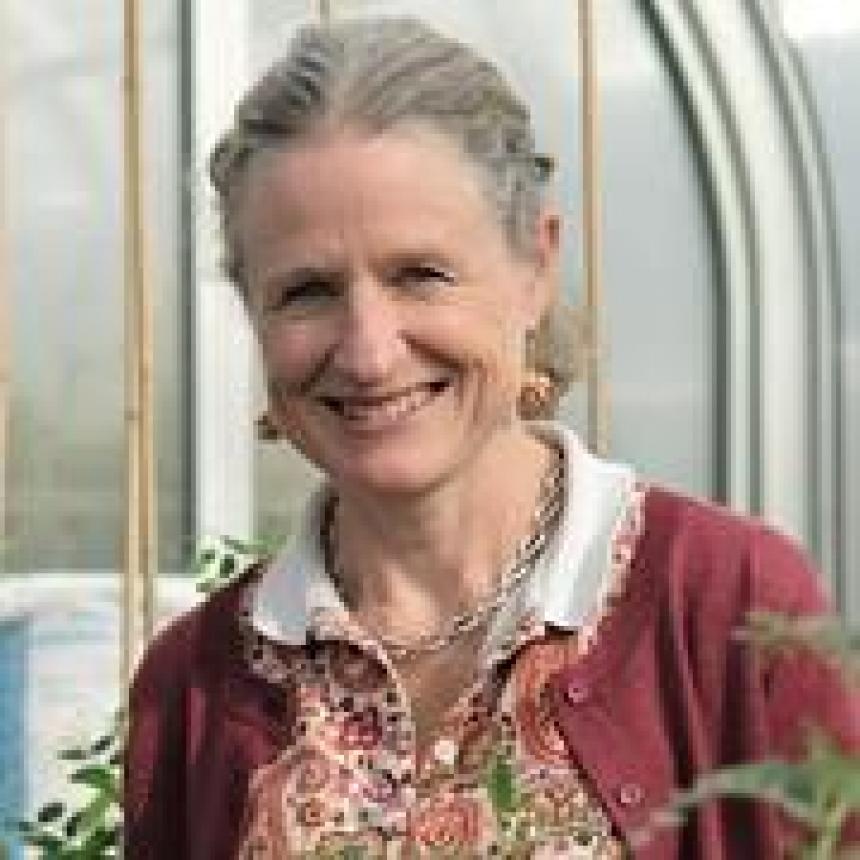
Julie Hayes

Dr Julie Hayes

Grant-Funded Postdoctoral Research Fellow

School of Agriculture, Food and Wine

College of Sciences

Eligible to supervise Masters and PhD - email supervisor to discuss availability.


Julie has a background in plant nutrition and physiology. She is especially interested in applying physiology to agricultural genetics and pre-breeding research, and in working towards genetic solutions to constraints for agricultural production.


My current position is funded by South Australian State Growth Funds, through a contract agreement with the South Australian Research and Development Institute (SARDI). I work closely with SARDI and University colleagues at the Waite Campus across a range of projects. I am primarily engaged in research around pulse protein, including physiology, genetics and pre-breeding for higher grain protein, and post-farm gate, where we are developing processing technologies for novel food ingredients derived from pulses. Pulses are an important component of the cropping rotation in Australia because of their ability to fix nitrogen and as a disease break to cereals. Increasingly, pulses themselves are a high-value commodity for grain producers, including in domestic markets. It will be important to continue to grow the pulse production industry as the health and environmental benefits of plant-based proteins for human consumption are realised. 

Date Position Institution name
2017 - ongoing Postdoctoral Fellow University of Adelaide, Adelaide
2004 - 2016 Postdoctoral Fellow Australian Centre for Plant Functional Genomics, Adelaide
2001 - 2004 ARC Research Associate University of Adelaide, Adelaide
2000 - 2001 JSPS-funded Postdoctoral Fellow Kagawa University, Takamatsu

Date Institution name Country Title
Australian National University Australia PhD
University of Melbourne Australia Bachelor of Agricultural Science

Year Citation
2025 Gimenez, R., Lake, L., Cossani, M. C., Ortega Martinez, R., Hayes, J. E., Dreccer, M. F., . . . Sadras, V. O. (2025). Linking phenology, harvest index and genetics to improve chickpea grain yield.. Journal of experimental botany, 76(9), 1658-1677.
DOI Scopus2 WoS2 Europe PMC2
2025 Lau, D., Donnellan, L., Harris, J. C., Hayes, J. E., Croser, J., & Hoffmann, P. (2025). Proteomic and lipidomic analyses reveal novel molecular insights into oat (Avena sativa L.) lipid regulation and crosstalk with starch synthesis during grain development.. International Journal of Biological Macromolecules, 306(Part 1), 141305-1-141305-11.
DOI
2025 Lau, W. C. D., Donnellan, L., Harris, J. C., Seidel, J., Hayes, J. E., Croser, J., & Hoffmann, P. (2025). Coupling proteomics and lipidomics for insights into regulation of oat (Avena sativa) grain lipid synthesis. Food Chemistry, 478(143644), 143644-1-143644-12.
DOI Scopus6 WoS5 Europe PMC3
2025 Genc, Y., Baumann, U., Cheong, J., Taylor, J., Atieno, J., Walter, J., . . . Sutton, T. (2025). Loss of HKT1;5D via a spontaneous terminal deletion elevates leaf sodium in bread wheat, but is independent of yield or salinity tolerance.. J Exp Bot, 76(16), 4627-4639.
DOI
2024 Amalraj, A., Baumann, U., Hayes, J. E., & Sutton, T. (2024). Using RNA sequencing to unravel molecular changes underlying the defense response in chickpea induced by Phytophthora medicaginis.. Physiol Plant, 176(4), e14412.
DOI Scopus1 WoS1 Europe PMC1
2024 Lau, W. C. D., Donnellan, L., Briggs, M., Rupasinghe, T., Harris, J. C., Hayes, J. E., & Hoffmann, P. (2024). Sodium doping and trapped ion mobility spectrometry improve lipid detection for novel MALDI-MSI analysis of oats. Food Chemistry, 433(137275), 1-10.
DOI Scopus14 WoS14 Europe PMC9
2024 Lake, L., Hayes, J. E., Ortega Martinez, R., Weller, J. L., Javid, M., Butler, J. B., . . . Sadras, V. O. (2024). Genetics of phenological development and implications for seed yield in lentil.. Journal of experimental botany, 75(16), 4772-4783.
DOI Scopus5 WoS4 Europe PMC1
2022 Nguyen, D. T., Hayes, J. E., Atieno, J., Li, Y., Baumann, U., Pattison, A., . . . Sutton, T. (2022). The genetics of vigour-related traits in chickpea (Cicer arietinum L.): insights from genomic data. Theoretical and Applied Genetics, 135(1), 107-124.
DOI Scopus12 WoS11 Europe PMC8
2022 Nguyen, D. T., Hayes, J. E., Harris, J., & Sutton, T. (2022). Fine Mapping of a Vigor QTL in Chickpea (Cicer arietinum L.) Reveals a Potential Role for Ca4_TIFY4B in Regulating Leaf and Seed Size. Frontiers in Plant Science, 13, 829566-1-829566-14.
DOI Scopus13 WoS11 Europe PMC7
2021 Khoo, K. H. P., Sheedy, J. G., Taylor, J. D., Croser, J. S., Hayes, J. E., Sutton, T., . . . Mather, D. E. (2021). A QTL on the Ca7 chromosome of chickpea affects resistance to the root-lesion nematode Pratylenchus thornei. Molecular Breeding, 41(12), 78-1-78-13.
DOI Scopus9 WoS8 Europe PMC6
2021 Croser, J., Mao, D., Dron, N., Michelmore, S., McMurray, L., Preston, C., . . . Hobson, K. (2021). Evidence for the Application of Emerging Technologies to Accelerate Crop Improvement – A Collaborative Pipeline to Introgress Herbicide Tolerance Into Chickpea. Frontiers in Plant Science, 12, 779122-1-779122-13.
DOI Scopus18 WoS10 Europe PMC6
2021 Atieno, J., Colmer, T. D., Taylor, J., Li, Y., Quealy, J., Kotula, L., . . . Sutton, T. (2021). Novel salinity tolerance loci in chickpea identified in glasshouse and field environments. Frontiers in Plant Science, 12, 1-19.
DOI Scopus40 WoS30 Europe PMC24
2016 Nagarajan, Y., Rongala, J., Luang, S., Singh, A., Shadiac, N., Hayes, J., . . . Hrmova, M. (2016). A barley efflux transporter operates in a Na⁺-dependent manner, as revealed by a multidisciplinary platform. The Plant Cell, 28(1), 202-218.
DOI Scopus24 WoS23 Europe PMC17
2015 Hayes, J., Pallotta, M., Garcia, M., Öz, M., Rongala, J., & Sutton, T. (2015). Diversity in boron toxicity tolerance of Australian barley (Hordeum vulgare L.) genotypes. BMC Plant Biology, 15(1), 231-1-231-14.
DOI Scopus12 WoS13 Europe PMC6
2014 Pallotta, M., Schnurbusch, T., Hayes, J., Hay, A., Baumann, U., Paull, J., . . . Sutton, T. (2014). Molecular basis of adaptation to high soil boron in wheat landraces and elite cultivars. Nature, 514(7520), 88-91.
DOI Scopus98 WoS87 Europe PMC58
2014 Tiong, J., McDonald, G., Genc, Y., Pedas, P., Hayes, J., Toubia, J., . . . Huang, C. (2014). HvZIP7 mediates zinc accumulation in barley (Hordeum vulgare) at moderately high zinc supply. New Phytologist, 201(1), 131-143.
DOI Scopus119 WoS100 Europe PMC71
2013 Hayes, J., Pallotta, M., Baumann, U., Berger, B., Langridge, P., & Sutton, T. (2013). Germanium as a tool to dissect boron toxicity effects in barley and wheat. Functional Plant Biology, 40(6), 618-627.
DOI Scopus25 WoS19 Europe PMC2
2013 Shavrukov, Y., Bovill, J., Afzal, I., Hayes, J., Roy, S., Tester, M., & Collins, N. (2013). HVP10 encoding V-PPase is a prime candidate for the barley HvNax3 sodium exclusion gene: evidence from fine mapping and expression analysis. Planta, 237(4), 1111-1122.
DOI Scopus43 WoS36 Europe PMC30
2013 Hayes, J. E., Pallotta, M., Baumann, U., Berger, B., Langridge, P., & Sutton, T. (2013). Germanium as a tool to dissect boron toxicity effects in barley and wheat.. Functional plant biology : FPB, 40(6), 618-627.
DOI Europe PMC11
2010 Schnurbusch, T., Hayes, J., & Sutton, T. (2010). Boron toxicity tolerance in wheat and barley: Australian perspectives. Breeding Science, 60(4), 297-304.
DOI Scopus58 WoS44
2010 Schnurbusch, T., Hayes, J., Hrmova, M., Baumann, U., Ramesh, S., Tyerman, S., . . . Sutton, T. (2010). Boron toxicity tolerance in barley through reduced expression of the multifunctional aquaporin HvNIP2;1. Plant Physiology, 153(4), 1706-1715.
DOI Scopus162 WoS142 Europe PMC100
2007 Sutton, T., Baumann, U., Hayes, J., Collins, N., Shi, B., Schnurbusch, T., . . . Langridge, P. (2007). Boron toxicity tolerance in barley arising from efflux transporter amplification. Science, 318(5855), 1446-1449.
DOI Scopus387 WoS343 Europe PMC253
2004 Hayes, J., & Reid, R. (2004). Boron tolerance in barley is mediated by efflux of boron from the roots. Plant Physiology, 136(2), 3376-3382.
DOI Scopus150 WoS136 Europe PMC84
2004 Reid, R., Hayes, J., Post, S., Stangoulis, J., & Graham, R. (2004). A critical analysis of the causes of boron toxicity in plants. Plant Cell and Environment, 27(11), 1405-1414.
DOI Scopus349 WoS309
2004 Hayes, J., Zhu, Y., Mimura, T., & Reid, R. (2004). An assessment of the usefulness of solution culture in screening for phosphorus efficiency in wheat. Plant and Soil, 261(1-2), 91-97.
DOI Scopus27 WoS25
2003 Hayes, J., & Ma, J. (2003). Al-induced efflux of organic acid anions is poorly associated with internal organic acid metabolism in triticale roots. Journal of Experimental Botany, 54(388), 1753-1759.
DOI Scopus58 WoS52 Europe PMC28
2001 Richardson, A., Hadobas, P., Hayes, J., O'Hara, C., & Simpson, R. (2001). Utilization of phosphorus by pasture plants supplied with myo-inositol hexaphosphate is enhanced by the presence of soil micro-organisms. Plant and Soil, 229(1), 47-56.
DOI Scopus184 WoS151
2001 Richardson, A., Hadobas, P., & Hayes, J. (2001). Extracellular secretion of Aspergillus phytase from Arabidopsis roots enables plants to obtain phosphorus from phytate. Plant Journal, 25(6), 641-649.
DOI Scopus324 WoS270 Europe PMC146
2000 Hayes, J. E., Simpson, R. J., & Richardson, A. E. (2000). The growth and phosphorus utilisation of plants in sterile media when supplied with inositol hexaphosphate, glucose 1-phosphate or inorganic phosphate. Plant and Soil, 220(1-2), 165-174.
DOI Scopus137 WoS117
2000 Hayes, J. E., Richardson, A. E., & Simpson, R. J. (2000). Components of organic phosphorus in soil extracts that are hydrolysed by phytase and acid phosphatase. Biology and Fertility of Soils, 32(4), 279-286.
DOI Scopus195 WoS179 Europe PMC66
2000 Richardson, A. E., Hadobas, P. A., & Hayes, J. E. (2000). Acid phosphomonoesterase and phytase activities of wheat (Triticum aestivum L.) roots and utilization of organic phosphorus substrates by seedlings grown in sterile culture. Plant Cell and Environment, 23(4), 397-405.
DOI Scopus236 WoS240
1999 Kelman, W. M., Oram, R. N., & Hayes, J. E. (1999). Characterization, establishment and persistence under grazing of nitrous oxide-induced octoploid Phalaris aquatica L.. Grass and Forage Science, 54(1), 62-68.
DOI Scopus5 WoS4
1999 Hayes, J. E., Richardson, A. E., & Simpson, R. J. (1999). Phytase and acid phosphatase activities in extracts from roots of temperate pasture grass and legume seedlings. Australian Journal of Plant Physiology, 26(8), 801-809.
DOI Scopus146 WoS130
1999 Kelman, W. M., Oram, R. N., & Hayes, J. E. (1999). Characterization, establishment and persistence under grazing of nitrous oxide-induced octoploid Phalaris aquatica L. Grass and forage science., 54(1), 62-68.
DOI Europe PMC1

Year Citation
2010 Baumann, U. (2010). US 20100281583 A1, Boron transporter. USA.
2001 Richardson, A., Hayes, J., & Simpson, R. (2001). Expression of phytase in plants as a method of modifying plant productivity.

Year Citation
- Hayes, J. (n.d.). APPF TPA phenotyping dataset: UA (Hayes) - Chickpea (pilot).
DOI

Year Citation
2026 Sadras, V., Welsh, M., Sznajder, B., Hayes, J., Reynolds, M., & Taylor, J. (2026). Rethinking yield stability through phenotypic plasticity and its link to modern statistical methods.
DOI
2024 Gimenez, R., Lake, L., Cossani, M. C., Ortega Martinez, R., Hayes, J. E., Dreccer, M. F., . . . Sadras, V. O. (2024). Linking phenology, harvest index and genetics to improve chickpea grain yield.
DOI Europe PMC1
2023 LAU, W. C. D., DONNELLAN, L., BRIGGS, M., RUPASINGHE, T., HARRIS, J. C., HAYES, J. E., & HOFFMANN, P. (2023). Sodium Doping and Trapped Ion Mobility Spectrometry Improves Lipid Detection for Novel Maldi-Msi Analysis of Oats.
DOI

Date Role Research Topic Program Degree Type Student Load Student Name
2023 Principal Supervisor Improving doubled haploid production in Brassica napus L. by better understanding chromosomal doubling and embryo initiation. Doctor of Philosophy Doctorate Part Time Miss Kaat Lut K Devriendt

Date Role Research Topic Program Degree Type Student Load Student Name
2023 - 2023 Co-Supervisor Using targeted phenomics and environmental proxies to understand Phytophthora medicaginis and Phytophthora root rot resistance in Australian chickpea Doctor of Philosophy Doctorate Full Time Miss Nicole Marie Dron
2016 - 2021 Co-Supervisor Understanding Nitrogen Uptake, Partitioning and Remobilization to Improve Grain Protein Content in Wheat Doctor of Philosophy Doctorate Full Time Mrs Margaret Wambui Kirika
2012 - 2019 Co-Supervisor Confirmation of the barley vacuolar pyrophosphatase HvHVP10 as a candidate gene for salinity tolerance Doctor of Philosophy Doctorate Full Time Mrs Jessica Hilary Bovill

Date Role Research Topic Location Program Supervision Type Student Load Student Name
2017 - 2021 External Supervisor Application of modern trait mapping methods to explore the genetic control of plant vigour in chickpea (Cicer arietinum L.) University of Western Australia - Doctorate Full Time Duong Nguyen

Connect With Me

External Profiles

Other Links