

Research Interests
Aboriginal and Torres Strait Islander Environmental Knowledge Animal Reproduction Applied Ethics Community Ecology Design Innovation Ecology Ecosystem Function Environmental Science and Management Invasive Species Ecology Landscape Ecology Mycology Wildlife and Habitat Management ZoologyDr Jasmin Packer
Externally-Funded Research Fellow
School of Biological Sciences
College of Science
Eligible to supervise Masters and PhD - email supervisor to discuss availability.
People. Kin. Planet.
I am the Founder and Lead of the Univeristy of Adelaide's Community Ecology Research Group, known in the conservation community as the Bandi Bunch. I am also the Vice-President of Australia's not-for-profit dedicated to the protection of native fungi, Fungimap Inc.
Our Community Ecology Research Group is passionate about protecting our planet's threatened communities and species. Working together with First Nations communities, we advocate for kin and other indigenous governance principles to guide biodiversity conservation. Together we partner with communities and industry to co-design innovative solutions linking world-leading conservation science with on-ground management to better protect threatened communities and species as they cope with global change. We work with communities and industry partners across the kingdoms of fauna, flora, and funga.
Our transdisciplinary research focuses on understanding how ecosystems respond to differing disturbance and other global changes - and what we can do to enhance their capacity to cope with the negative impacts. Our transdisciplinary approach bridges basic and applied research, and co-designs field surveys with industry partners to ensure their findings are put into action to make a difference for conservation. We use design thinking to draw on deep understanding of the needs of partners and stakeholders, and bring together global (biogeography and invasion science) and local (community ecology, population ecology and citizen science) approaches, to build long term partnerships that benefit biodiversity conservation.
|
|

|
|
 |
 |
 |
 |
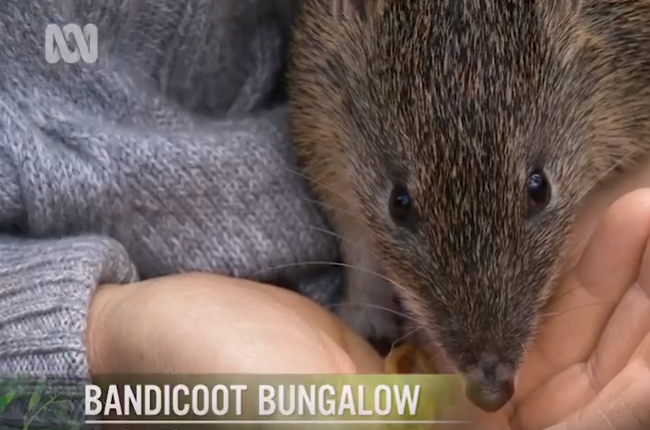
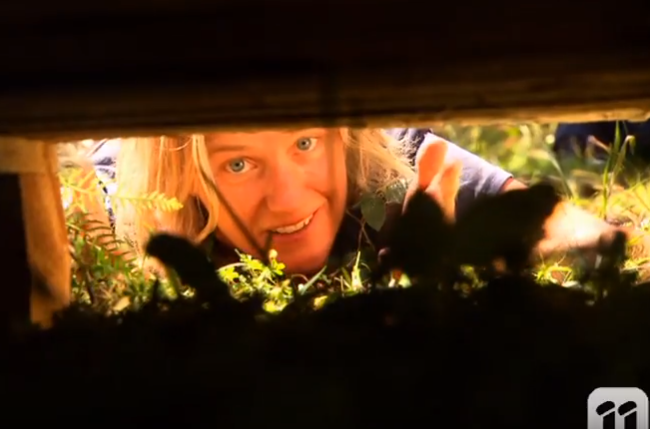
Our University of Adelaide Bandi Bunch is passionate about discovering connections for mammal conservation. Our beloved, but endangered, southern brown bandicoot is our mascot.
Bandi Bunch builds on long-term conservation and research for threatened species, and evolved in 2019 to respond to requests for bandicoot conservation and research. We co-design projects with state government and other land manager partners to discover better ways to improve the conservation status of native mammals across Greater Adelaide and the Mount Lofty Ranges. All our projects start with understanding shared priorities, identifying management outcomes we need to achieve, and then targeting our ‘think global – act local’ research to achieve these.
Our Bandi Bunch team members, and their native mammal projects, include:
|
Natalie Brown – 2018+; Honours researcher; microbats of the Mount Lofty Ranges Hayley Jose – 2019+; PhD researcher, small mammal communities and the ecological role of southern brown bandicoot (see Hayley’s summary below). Jasmin Packer – 2006+; Wildlife Ecologist and Research Fellow, population structure and persistence of mammal communities in the Mount Lofty Ranges, particularly endangered southern brown bandicoot. Rakali and re-establishment potential of platypus along River Torrens and other Adelaide and mainland South Australian waterways. Citizen science for transformational change (attached). Eilish Thomas - 2021+; PhD researcher; population ecology of rakali in Greater Adelaide and Mount Lofty Ranges. Insights into potential platypus habitat. Wendy Warren – 2019+; iBandi Co-ordinator - citizen science for native mammal conservation. |
|

| Date | Position | Institution name |
|---|---|---|
| 2016 - 2019 | Research Fellow | The University of Adelaide |
| Date | Institution name | Country | Title |
|---|---|---|---|
| The University of Adelaide | Australia | PhD |
| Year | Citation |
|---|---|
| 2026 | Lieurance, D., Schwindt, E., Rodriguez-Cabal, M. A., Packer, J., & Meyerson, L. A. (2026). Introducing the new collection “Management Innovations and Insights” in Biological Invasions. Biological Invasions, 28(3), 4 pages. |
| 2026 | Bruce, S., Cummings, S., & Packer, J. (2026). Fifty Years Deadly: How Ecological Management & Restoration Deepened Recognition of Indigenous Sovereign Rights to Care for Country. Ecological Management and Restoration, 27(3), 6 pages. |
| 2025 | Meyerson, L. A., Cronin, J. T., Packer, J., Pyšek, P., & Saltonstall, K. (2025). Ecology, Evolution, and North American Invasion of One of the World's Most Successful Plant Species. Annual Review of Ecology Evolution and Systematics, 56(1), 73-98. Scopus5 WoS4 |
| 2024 | Meyerson, L. A., Cronin, J. T., Lučanová, M., Lambertini, C., Brix, H., Packer, J. G., . . . Pyšek, P. (2024). Some like it hot: small genomes may be more prevalent under climate extremes. Biological Invasions, 26(5), 1425-1436. Scopus8 WoS7 |
| 2024 | Gallagher, R., Roger, E., Packer, J., Slatyer, C., Rowley, J., Cornwell, W., . . . Mesaglio, T. (2024). Incorporating citizen science into IUCN Red List assessments. Conservation Biology, 39(2), e14329. Scopus24 WoS23 Europe PMC4 |
| 2024 | Kuhne, J. G., O'Connor, P. J., Packer, J. G., & Prowse, T. A. A. (2024). Quantifying environmental drivers of vegetation condition in a temperate ecosystem can improve detection of management impacts. Ecological Indicators, 168, 13 pages. Scopus1 WoS1 |
| 2024 | Packer, J., Kohler, M., Dawson, D., Asad, N., von der Borch, R., & Chur‐Hansen, A. (2024). Why do people walk their dog <i>where the wild things are</i>? A qualitative content analysis from an urban nature reserve. People and Nature, 7(1), 15-31. Scopus5 WoS5 |
| 2022 | Maciunas, E. C., Watling, J. R., Facelli, J. M., & Packer, J. G. (2022). Seed traits and fate support probable primary dispersal of a native hemi-parasitic vine Cassytha pubescens (Lauraceae) by Isoodon obesulus, an endangered marsupial, in southern Australia. TRANSACTIONS OF THE ROYAL SOCIETY OF SOUTH AUSTRALIA, 146(2), 249-261. Scopus2 WoS2 |
| 2021 | Packer, J. G., Ganf, G., Kueffer, C., Facelli, J. M., & Pyšek, P. (2021). Endemic macrophyte is more plastic than two cosmopolitan species in fluctuating water levels and nutrient-enriched conditions. Transactions of the Royal Society of South Australia, 145(1), 25-44. Scopus1 WoS1 |
| 2020 | Novoa, A., Richardson, D. M., Pysek, P., Meyerson, L. A., Bacher, S., Canavan, S., . . . Wilson, J. R. U. (2020). Invasion syndromes: a systematic approach for predicting biological invasions and facilitating effective management. Biological Invasions, 22(5), 1801-1820. Scopus147 WoS141 |
| 2020 | Blyth, C., Christmas, M. J., Bickerton, D. C., Faast, R., Packer, J. G., Lowe, A. J., & Breed, M. F. (2020). Increased genetic diversity via gene flow provides hope for Acacia whibleyana, an endangered wattle facing extinction. Diversity, 12(8), 1-18. Scopus18 WoS14 |
| 2020 | Lewis, S., & Packer, J. G. (2020). Decadal changes in phragmites australis performance in lake eyre supergroup spring communities following stock exclusion. Proceedings of the Royal Society of Queensland, 126, 193-212. Scopus6 |
| 2019 | Canavan, S., Meyerson, L., Packer, J., Pyšek, P., Maurel, N., Lozano, V., . . . Wilson, J. (2019). Tall-statured grasses: a useful functional group for invasion science. Biological Invasions, 21(1), 37-58. Scopus51 WoS48 Europe PMC6 |
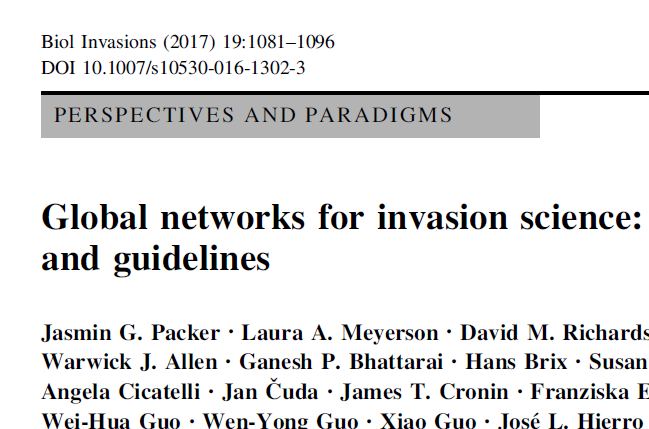
| 2017 | Packer, J., Meyerson, L., Richardson, D., Brundu, G., Allen, W., Bhattarai, G., . . . Pyšek, P. (2017). Global networks for invasion science: benefits, challenges and guidelines. Biological Invasions, 19(4), 1081-1096. Scopus59 WoS51 Europe PMC16 |
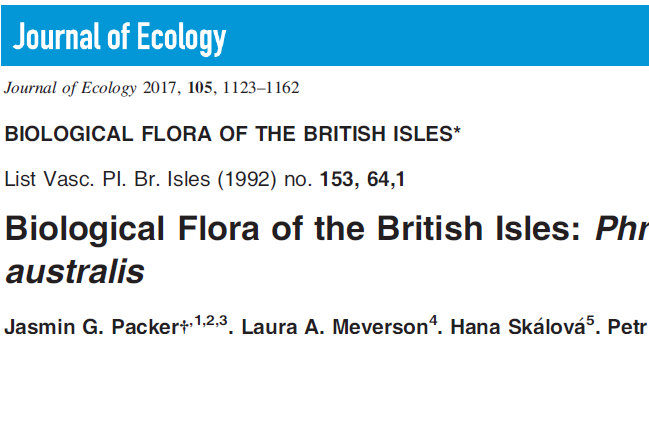
| 2017 | Packer, J., Meyerson, L., Skálová, H., Pyšek, P., & Kueffer, C. (2017). Biological flora of the British Isles: Phragmites australis. Journal of Ecology, 105(4), 1123-1162. Scopus152 WoS137 Europe PMC33 |
| 2016 | Packer, J., Delean, S., Kueffer, C., Prider, J., Abley, K., Facelli, J., & Carthew, S. (2016). Native faunal communities depend on habitat from non-native plants in novel but not in natural ecosystems. Biodiversity and Conservation, 25(3), 503-523. Scopus29 WoS27 Europe PMC10 |
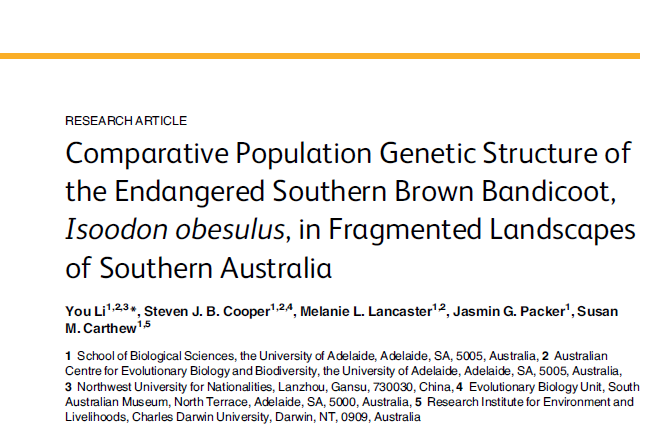
| 2016 | Li, Y., Cooper, S., Lancaster, M., Packer, J., & Carthew, S. (2016). Comparative population genetic structure of the endangered southern brown bandicoot, Isoodon obesulus, in fragmented landscapes of Southern Australia. PLoS ONE, 11(4), 0152850-1-0152850-20. Scopus11 WoS14 Europe PMC3 |
| 2014 | Li, Y., Lancaster, M., Carthew, S., Packer, J., & Cooper, S. (2014). Delineation of conservation units in an endangered marsupial, the southern brown bandicoot (Isoodon obesulus obesulus), in South Australia/western Victoria, Australia. Australian Journal of Zoology, 62(5), 345-359. Scopus9 WoS9 |
| 2014 | Pouliot, A., May, T. W., McMullan-Fisher, S., Buchanan, P., Allison, L., & Packer, J. (2014). It's time for a global strategy for plant and fungus conservation. Australasian Plant Conservation: journal of the Australian Network for Plant Conservation, 22(4), 22-23. |
| 2013 | Li, Y., Lancaster, M., Cooper, S., Packer, J., & Carthew, S. (2013). Characterization of nine microsatellite loci from the endangered southern brown bandicoot (Isoodon obesulus) using 454 pyrosequencing. Conservation Genetics Resources, 5(1), 105-107. Scopus6 WoS6 |
| 2002 | Packer, J., Spence, R., & Beare, E. (2002). Building community partnerships: An Australian case study of sustainable community-based rural programmes. Community Development Journal, 37(4), 316-326. Scopus13 |
| Year | Citation |
|---|---|
| 2022 | Berris, K., Ruykys, L., Goldingay, R., Morrant, D., Packer, J. G., Descovich, K., . . . Taggart, D. A. (2022). Wombats, bandicoots, bilbies, possums and gliders. In B. Smith, H. Waudby, C. Alberthsen, & J. Hampton (Eds.), Wildlife Research in Australia: Practical and Applied Methods (1st ed., pp. 401-411). CSIRO. WoS2 |
| 2022 | Meyerson, L., Pauchard, A., Brundu, G., Carlton, J. T., Hierro, J. L., Kueffer, C., . . . Packer, J. (2022). Moving Toward Global Strategies for Managing Invasive Alien Species. In D. R. Clements, M. J. Upadhyaya, S. Joshi, & A. Shrestha (Eds.), Global Plant Invasions (pp. 331-360). Switzerland: Springer. DOI Scopus27 |
| 2006 | Beer, A., Delfabbro, P., Natalier, K., Oakley, S., Packer, J., & Verity, F. (2006). Homelessness amongst young people in rural regions in Australia. In P. Milbourne, & P. Cloke (Eds.), International Perspectives on Rural Homelessness (pp. 231-246). 2 Park Square, Milton Park, Abingdon, Oxon OX14 4RN: Routledge. DOI |
| Year | Citation |
|---|---|
| 2024 | Packer, J., & Chur-Hansen, A. (2024). Fully fenced dog parks alongside nature reserves could help protect wildlife. The Conversation. |
| Date | Role | Research Topic | Program | Degree Type | Student Load | Student Name |
|---|---|---|---|---|---|---|
| 2025 | Principal Supervisor | The ecology of the threatened southern brown bandicoot on Kangaroo Island post 2019-20 fires. | Doctor of Philosophy | Doctorate | Full Time | Miss Charlotte Ebony Drake |
| 2020 | Co-Supervisor | Optimising fire and herbivore management for biodiversity conservation in temperate woodlands | Doctor of Philosophy | Doctorate | Part Time | Ms Johanna Grace Kuhne |
| Date | Role | Committee | Institution | Country |
|---|---|---|---|---|
| 2019 - ongoing | Member | Management Committee | Australian Citizen Science Association - SA | Australia |
| 2018 - ongoing | Vice-President | National Committee | Fungimap Inc. | Australia |
| 2018 - ongoing | Member | Management Committee | Adelaide Hills Science Hub | Australia |
Connect With Me

External Profiles


