
Teaching Strengths
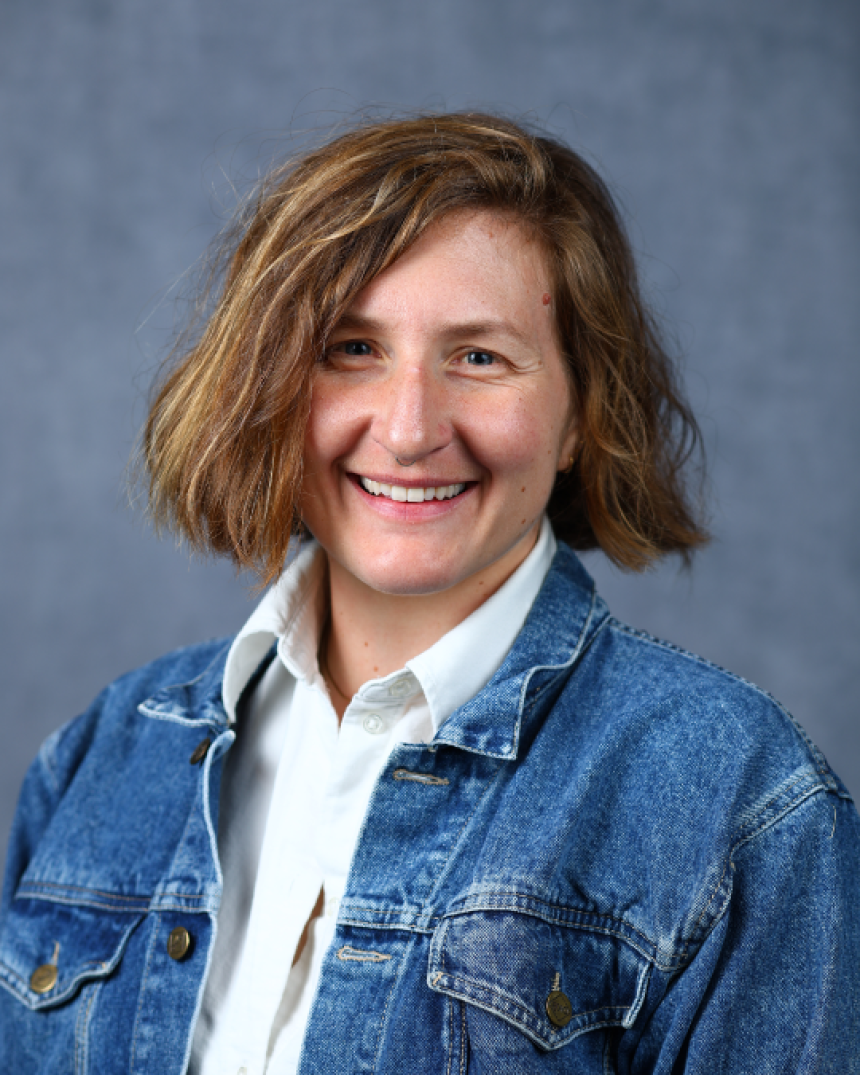
Dr Georgina Falster
ARC Grant-Funded Research Fellow
School of Physics, Chemistry and Earth Sciences
College of Science
Eligible to supervise Masters and PhD as Co-Supervisor only - email supervisor to discuss availability.
I am a DECRA Fellow in Climate Science. I take a holistic approach to understanding Earth's climate and how it is changing - combining information from weather observations, climate model simulations, and natural archives of long-term climate variability (like tree rings and ice cores).I am mainly interested in the water cycle, on spatial scales from local to global, and time scales from monthly to multi-centennial. Within that, I have particular focus on: Australian droughts and how they are changing, tropical Pacific variability, and using water isotopes to track dynamical variability in the water cycle.
Historical weather observations only capture a small snapshot of the full possible range of climate variability. This means that the future could hold extreme climate events outside the range of anything in the past ~120 years even before we account for human-caused climate change. For example, it is very likely that natural climate variability in Australia could produce 'megadroughts' lasting 20 or more years - it is just luck that we have not experienced one of these in the past century. But these are the sort of events that we need to be prepared for.
On top of that, Earth's climate is changing, due to anthropogenic greenhouse gas emissions. Only by understanding both the full range of natural variability and how that is changing because of climate change can we properly quantify future climate risk.
My research addresses both of these, with a particular focus on both the water cycle and the tropical Pacific. These are particularly tricky things to study, as climate models tend to have pretty strong biases in both - the result of which being that the 'natural variability' part is often neglected. Hence, we (I) must seek information elsewhere to validate whatever it is climate models tell us about likely future changes. I use information both from historical observations, and from natural archives of hydroclimate variability over past centuries - things like ice cores, tree rings, coral carbonates, lake sediments, and more. We call these 'palaeoclimate proxies'.
My current research into Australian droughts is funded by a Discovery Early Career Researcher Award from the Australian Research Council (DE250100071), a L’Oréal-UNESCO For Women In Science fellowship, and the National Computational Infrastructure Merit Allocation Scheme. With the generous support of these schemes, I am:
- running idealised climate model simulations to assess the influence of Indian and Pacific Ocean sea surface temperature variability on global droughts
- producing and interpreting new tree-ring based records of hydroclimate change in the Australian Alps
- producing and interpreting new precipitation stable isotope data from Hobart
- developing novel numerical methods to combine this (and much more!) data for a holistic understanding of Australian climate and how it is changing
I also co-lead the major international collaboration 'Hydroclimate2k' - a PAGES 2k project that seeks to understand global water cycle variability over the Common Era (the past ~2000 years) and how that is changing with climate change.
| Date | Position | Institution name |
|---|---|---|
| 2021 - 2025 | ARC Centre of Excellence for Climate Science Postdoctoral Fellow | Australian National University |
| 2019 - 2021 | Postdoctoral Researcher | Washington University in St. Louis |
| Date | Type | Title | Institution Name | Country | Amount |
|---|---|---|---|---|---|
| 2025 | Award | STA Superstar of STEM | Science and Technology Australia | Australia | - |
| 2024 | Teaching Award | K. S. W. Campbell Award in Earth Science | Australian National University | Australia | - |
| 2023 | Award | ARC Centre of Excellence for Climate Extremes prize for best paper published by a postdoctoral researcher | Australian Research Council Centre of Excellence for Climate Extremes | Australia | - |
| 2019 | Award | Dean's Commendation for Doctoral Thesis Excellence | The University of Adelaide | Australia | - |
| 2016 | Award | AUGU RC Heddle Award | Adelaide University Graduates Union | Australia | - |
| 2015 | Research Award | AINSE Postgraduate Research Award | - | Australia | - |
| 2014 | Scholarship | CRC LEME Scholarship for outstanding research in the field of regolith science | The University of Adelaide | Australia | - |
| 2010 | Award | James Barrans Scholarship | The University of Adelaide | - | - |
| 2009 | Award | Glenn Scotford Memorial Prize | The University of Adelaide | - | - |
| Date | Institution name | Country | Title |
|---|---|---|---|
| 2015 - 2019 | University of Adelaide | Australia | PhD in Earth Sciences |
| 2008 - 2011 | University of Adelaide | Australia | Bachelor of Science (First Class Honours) in Geology |
| Year | Citation |
|---|---|
| 2025 | Falster, G. (2025). Spatially continuous monthly precipitation stable isotope estimates across the Australian continent at 0.25° resolution from 1962–2023. DOI |
| 2024 | Falster, G. (2024). Output from Linear Inverse Models (LIMs) emulating the observed spatiotemporal statistics of Australian precipitation and global sea surface temperatures. DOI |
| 2023 | Falster, G. (2023). Forced changes in the Pacific Walker circulation over the past millennium. DOI |
| 2019 | Falster, G., Grant, K., Tyler, J., Tibby, J., Turney, C., Lohr, S., . . . Kershaw, A. P. (2019). Falster_et_al_2018_Lake_Surprise.xlsx. DOI |
| Year | Citation |
|---|---|
| 2025 | Falster, G., & Coats, S. (2025). How unusual was Australia's 2017-2019 Tinderbox Drought?. DOI |
| 2025 | Falster, G., Abramowitz, G., Hobeichi, S., Hughes, C., Treble, P., Abram, N. J., . . . Tadros, C. (2025). Supplementary material to "High resolution monthly precipitation isotope estimates across Australia from machine learning". DOI |
| 2025 | Falster, G., Konecky, B., Coats, S., & Stevenson, S. (2025). New insights into the Pacific Walker Circulation from an 800-year-long water isotope-based reconstruction ensemble . DOI |
| 2023 | Falster, G., Sayani, H., Orsi, A., McGregor, H., Kaushal, N., Jonkers, L., . . . Atwood, A. (2023). Phase 4 of PAGES 2k: Hydroclimate of the Common Era. DOI |
| 2022 | Henley, B., Eggleston, S., Kaushal, N., Atwood, A., Bothe, O., Falster, G., . . . Sayani, H. (2022). Announcing Phase 4 of PAGES 2k: Hydroclimate of the Common Era. DOI |
| 2021 | Falster, G., Konecky, B., Coats, S., Stevenson, S., & Madhavan, M. (2021). Pacific Walker circulation variability during the last millennium reconstructed from a network of water isotope proxy records. DOI |
| Year | Citation |
|---|---|
| 2025 | Falster, G., Abramowitz, G., Hobeichi, S., Hughes, C., Treble, P., Abram, N. J., . . . Tadros, C. (2025). High resolution monthly precipitation isotope estimates across Australia from machine learning. DOI |
| 2022 | Falster, G., Konecky, B., Madhavan, M., Stevenson, S., & Coats, S. (2022). Imprint of the Pacific Walker Circulation in global precipitation δ18O. DOI |
Major extramural funding
- 2025–2028: Australian Research Council Discovery Early Career Researcher Award (DECRA) DE250100071 "Quantifying Australia’s long-term risk of rainfall extremes". Sole investigator. AU$438,335
- 2025: L’Oréal-UNESCO For Women In Science Fellowship. Sole investigator. AU$25,000.
Other grants
- 2026: Past Global Changes (PAGES) and Adelaide University Global Partnerships Engagement Fund grants to run the workshop "Hydroclimate2k: a new tool to quantfy global hydroclimate variability through the Common Era". Lead investigator. AU$31,000
- 2025: University of Adelaide Research Equipment Support Scheme. Sole investigator. $AU12,000
- 2025 : University of Adelaide Environment Institute Research Funding Scheme "A tree ring analytical facility to constrain decadal-scale risk in Australia’s rainfall extremes". AU$28,130
- 2025–2028: National Computational Infrastructure (NCI) Merit Allocation Scheme "The role of Indo-Pacific SST variability in global drought occurrence". Chief investigator. 1750 kSU on Gadi supercomputer, equivalent to AU$70,000 at official NCI rate
Current
- University of Adelaide GEOLOGY3505 – Earth Systems History (core teaching staff).
- Third-year undergraduate course focusing on interactions between the atmosphere, biosphere, and geosphere.
- University of Adelaide GEOLOGY2505 – Geochemistry (core teaching staff).
- Second-year undergraduate course focusing on the chemistry of the natural world, including practical and theoretical geochemistry.
Past
- Australian National University EMSC1006 – The Blue Planet (core teaching staff).
- First-year undergraduate course providing a broad introduction to Earth system science, with typical enrolment ~160-180 students.
- Australian National University EMSC3019 – Coral Reef Field Studies (core teaching staff).
- Third-year intensive field course providing students with advanced knowledge of coral reef environments.
- Australian National University ARCH8032 – Introduction to Archaeological Science (guest).
- Masters course introducing students to archaeological methods. I taught oxygen isotope methods for constraining climate variability (in an archaeological context).
- Australian National University EMSC4122 – Analytical Methods (guest).
- Postgraduate course in laboratory methods for physical geography. I taught advanced water isotope systematics, analysis of water isotopes, and use of water isotopes for understanding water cycle processes.
- ARC Centre of Excellent for Climate Extremes Winter School (guest).
- Intensive course for Australian climate science graduate students (~70 attendees). I co-taught one day of the winter school, focussed on long-term climate dynamics (lectures and two practical activities).
- Washington University in St. Louis EPSc486 – Paleoclimatology (guest).
- Advanced paleoclimatology course for postgraduate students & fourth-year undergraduate students. I prepared and delivered course material covering the last deglaciation.
| Date | Role | Research Topic | Program | Degree Type | Student Load | Student Name |
|---|---|---|---|---|---|---|
| 2025 | Co-Supervisor | Climate change on Kangaroo Island | Doctor of Philosophy | Doctorate | Full Time | Miss Abigail Matthias |
| Date | Role | Committee | Institution | Country |
|---|---|---|---|---|
| 2025 - ongoing | Co-Chair | Hydroclimate2k | Past Global Changes (PAGES) 2k Network | Switzerland |
| 2025 - ongoing | Member | Faculty of Science, Engineering and Technology Early to Mid Career Researcher Committee | The University of Adelaide | Australia |
| 2023 - 2024 | Co-Chair | Research School of Earth Sciences Seminar Committee | Australian National University | Australia |
| 2023 - 2024 | Co-Chair | ARC Centre of Excellence for Climate Extremes Early Career Researcher Committee | Australian Research Council Centre of Excellence for Climate Extremes | Australia |
| 2021 - 2024 | Co-Chair | Past Global Changes (PAGES) Early Career Network Steering Committee | Past Global Changes (PAGES) | Switzerland |
| 2021 - ongoing | Co-Chair | Past Global Changes (PAGES) 2k Network | Past Global Changes - a Future Earth initiative | Switzerland |
| 2017 - 2019 | Treasurer | Australasian Quaternary Association | Australasian Quaternary Association | Australia |
Connect With Me

External Profiles


Available For Media Comment.