
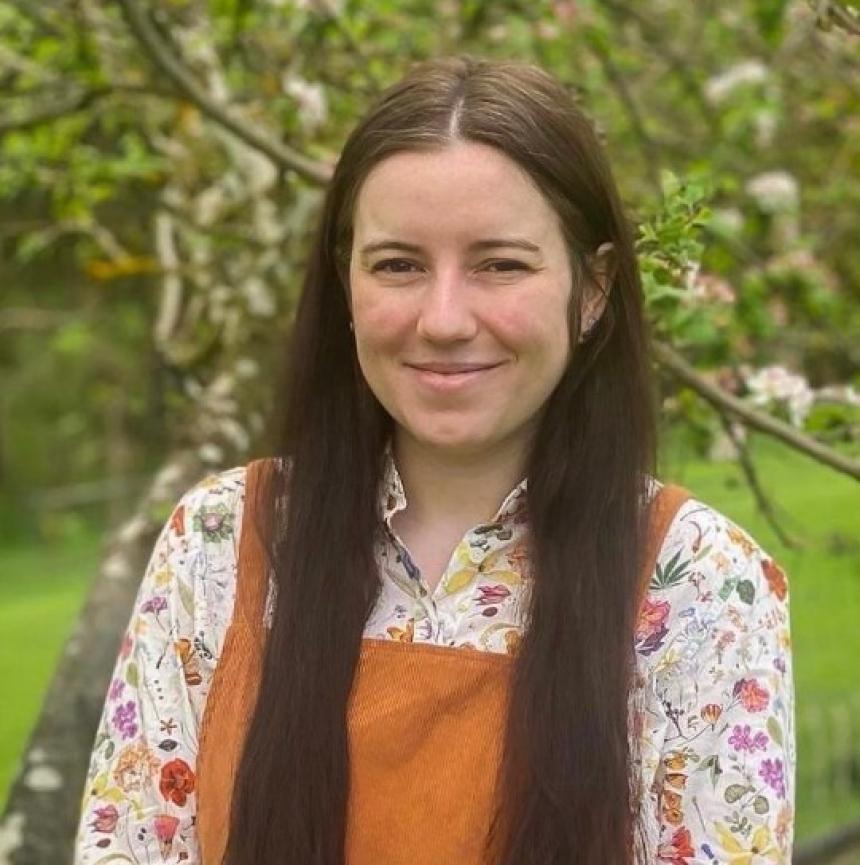
Dr Freyja Watters
ARC Grant-Funded Researcher A
School of Biological Sciences
College of Science
Eligible to supervise Masters and PhD as Co-Supervisor only - email supervisor to discuss availability.
Current research
I am an ARC grant-funded postdoctoral researcher with the Wildlife Crime Research Hub. My current work focuses on the national–international interface of wildlife trade governance, and the conservation and biosecurity risks posed by both legal anf illicit domestic trade. I have particular interests in examining the online wildlife trade, in reducing the opacity of trade regulation through clearer rules and more complete documentation of what is traded, and in improving the quality and openness of trade data so that it can be readily accessed and analysed. Alongside this, I currently contribute to a range of collaborative projects and data acquisition efforts that aim to build the evidence base needed for effective enforcement and policy.
PhD research
My PhD examined the effectiveness and equity of CITES (the Convention on International Trade in Endangered Species) across its first 50 years. Through four studies, the thesis uncovered several critical insights: shifting taxonomic trends in Appendix I and II listing proposals alongside inconsistent uptake of advice from the Secretariat, IUCN and FAO; the underused potential of Appendix III as a tool for gathering trade data and securing national protections; persistent inequalities in participation at CITES Conferences of the Parties (CoPs) that amplify the influence of larger, better-resourced delegations; and highlighting that non-CITES wildlife trade, particularly in the United States, is larger and more diverse than the regulated trade, exposing significant regulatory gaps. Together, this work identifies where CITES could be strengthened to better protect endangered species worldwide.
| Date | Position | Institution name |
|---|---|---|
| 2025 - ongoing | ARC Grant-Funded Researcher (A) | Adelaide University |
| Year | Citation |
|---|---|
| 2026 | Broadbridge, J., Watters, F., & Cassey, P. (2026). Unruffling the global feather trade: a comparative analysis of CITES and LEMIS records of feathers and bird skins. Wildlife Biology, 2026(1), e01553-1-e01553-12. Scopus1 WoS1 |
| 2026 | Watters, F., & Cassey, P. (2026). Fifty years of CITES listings: evolving criteria, trends, and listing outcomes. Biodiversity and Conservation, 35(1), 35-1-35-25. Scopus1 WoS1 |
| 2026 | Watters, F., & Cassey, P. (2026). CITES Appendix III: An underused tool for international wildlife trade regulation. Conservation Science and Practice, 1-11. |
| 2026 | Watters, F., & Cassey, P. (2026). Disparities in delegation size and their implications for equitable participation at CITES CoP meetings. Conservation Science and Practice, 1-17. |
| 2026 | Huffer, D., Watters, F., Swearingen, T., Toole, K., & Cassey, P. (2026). Closing the border on Australia's domestic elephant ivory trade. Biological Conservation, 323, 10 pages. |
| 2025 | Michael Marshall, B., Alamshah, A. L., Cardoso, P., Cassey, P., Chekunov, S., Eskew, E. A., . . . Hughes, A. C. (2025). The magnitude of legal wildlife trade and implications for species survival.. Proc Natl Acad Sci U S A, 122(2), e2410774121. Scopus27 WoS28 Europe PMC7 |
| 2025 | Toomes, A., Stringham, O. C., Moncayo, S., Hill, K. G. W., Maher, J., Watters, F., . . . Cassey, P. (2025). The pet trade of native species outside of their natural distributions within Australia is a biosecurity risk. Conservation Science and Practice, 7(1), e13298-1-e13298-14. Scopus2 WoS2 |
| 2025 | Marshall, B. M., Strine, C. T., Gore, M. L., Eskew, E. A., Stringham, O. C., Cardoso, P., . . . Hughes, A. C. (2025). Mapping the global dimensions of US wildlife imports. Current Biology, 35(16), S0960-9822(25)00878-4. Scopus4 WoS5 Europe PMC2 |
| 2023 | Stringham, O. C., Maher, J., Lassaline, C. R., Wood, L., Moncayo, S., Toomes, A., . . . Cassey, P. (2023). The dark web trades wildlife, but mostly for use as drugs. People and Nature, 5(3), 999-1009. Scopus18 WoS17 |
| 2023 | Li, Y., Blackburn, T. M., Luo, Z., Song, T., Watters, F., Li, W., . . . Wang, S. (2023). Quantifying global colonization pressures of alien vertebrates from wildlife trade. Nature Communications, 14(1), 12 pages. Scopus14 WoS13 Europe PMC3 |
| 2022 | Stringham, O., Maher, J., Lassaline, C., Wood, L., Moncayo, S., Toomes, A., . . . Hill, K. (2022). The dark web trades wildlife, but mostly for use as drugs. |
| 2022 | Watters, F., Stringham, O., Shepherd, C. R., & Cassey, P. (2022). The U.S. market for imported wildlife not listed in the CITES multilateral treaty. Conservation Biology, 36(6), 1-14. Scopus28 WoS29 Europe PMC11 |
| 2021 | Ramsey, D. S. L., Watters, F., Forsyth, D. M., Wood, M., Todd, C. R., Molsher, R., & Cassey, P. (2021). Long-term fertility control reduces overabundant koala populations and mitigates their impacts on food trees. Biological Conservation, 253, 1-11. Scopus7 WoS5 |
| 2021 | Watters, F., Ramsey, D., Molsher, R., & Cassey, P. (2021). Breeding dynamics of overabundant koala (Phascolarctos cinereus) populations subject to fertility-control management. Wildlife Research, 48(7), 663-672. Scopus4 WoS4 |
| Year | Citation |
|---|---|
| 2026 | Huffer, D., Watters, F., Swearingen, T., Toole, K., & Cassey, P. (2026). Closing the border on Australia’s domestic elephant ivory trade. DOI |
| 2025 | Watters, F., & Cassey, P. (2025). Strengthening Global Trade Regulation Through Targeted Listings on CITES Appendix III. DOI |
| 2022 | Watters, F., Stringham, O., Shepherd, C., & Cassey, P. (2022). The demand for wildlife not protected by the CITES multilateral treaty. DOI |
| Date | Role | Research Topic | Program | Degree Type | Student Load | Student Name |
|---|---|---|---|---|---|---|
| 2026 | Co-Supervisor | The trade of live coral and other marine organisms across Australia for the ornamental aquarium industry | Doctor of Philosophy | Doctorate | Full Time | Miss Jasmin Taylor Broadbridge |
Connect With Me

External Profiles


