
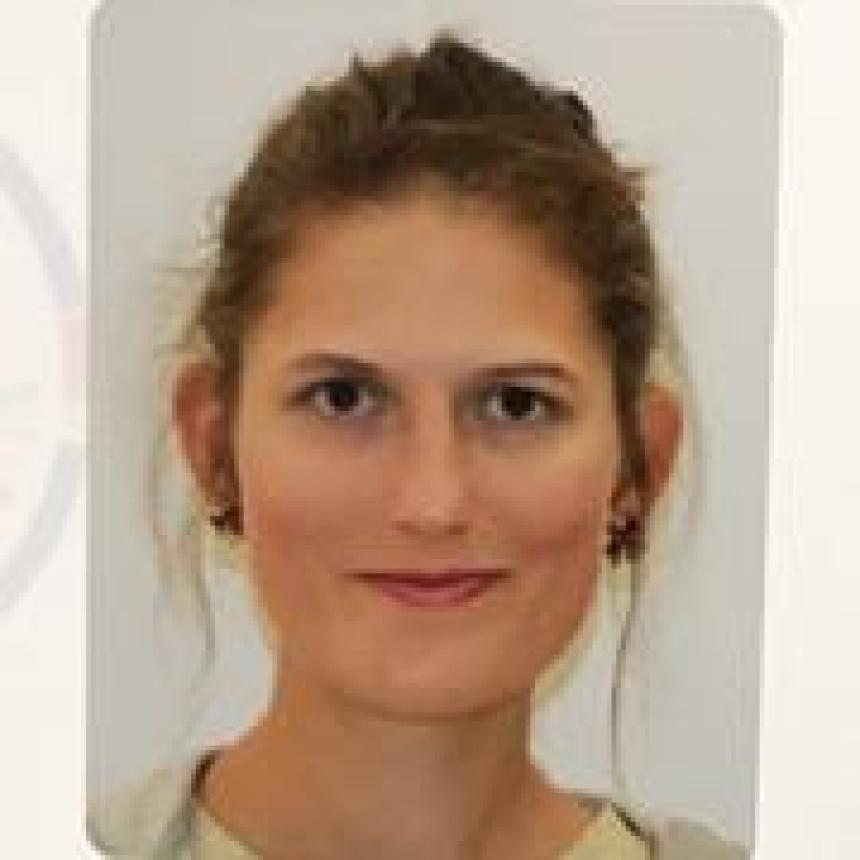
Dr Eva-Maria Schmid
Lecturer
School of Agriculture, Food and Wine
College of Sciences
I am a Food Scientist with a robust academic background in biological-chemical and engineering perspectives from Technical University of Munich (TUM, Germany) and RMIT University (Australia).
I specialised in biopolymer science at TUM, with a particular focus on dairy proteins and membrane filtration technologies, and further extended my expertise at the Fraunhofer Institute through work on enzyme-assisted extraction (EAE) for protein recovery from algae.
During my Ph.D. candidature, I worked extensively on extrusion technology for meat analogue development, which ignited a strong interest in sustainable, plant-based proteins derived from legumes and pulses.
Beyond research, I am deeply committed to mentoring and tutoring students.
As an Associate Lecturer at the University of Adelaide, I am dedicated to fostering high-quality learning outcomes and inspiring the next generation of food scientists.
Sustainable technologies for green protein extractionEvi's research focuses on the development and optimisation of green extraction methodologies to recover high-quality proteins with minimal environmental impact. By utilising advanced technologies such as ultrasound-assisted extraction (UAE), enzyme-assisted extraction (EAE), and innovative Deep Eutectic Solvents (DES), this work aims to balance high protein yields with structural integrity. A central theme of this research is enhancing the sustainability of food systems by reducing the reliance on harsh chemicals and high-energy processes compared to traditional extraction techniques. |
 |
Protein functionality and food matrix integrationCentral to Evi's work is the investigation of how the physicochemical properties of proteins dictate their performance within complex food systems. This research explores the relationship between the molecular characteristics of raw materials and their functional behaviour—such as solubility, emulsification, and gelation—during processing. By understanding these mechanisms, Evi seeks to optimise how novel proteins are integrated into food matrices to ensure superior texture, stability, and nutritional delivery. |
 |
Valorisation of agricultural by-products and waste streamsEvi is actively engaged in the valorisation of food industry side-streams, particularly brewers’ spent grain (BSG) and grape pomace. This research focuses on the recovery of high-value functional components, including proteins, pectins, and polyphenols, from underutilised waste. The objective is to transform these by-products into functional ingredients that can be reincorporated into food products, supporting a circular bioeconomy and improving the resource efficiency of the agricultural sector. |
 |
| Date | Position | Institution name |
|---|---|---|
| 2024 - 2025 | Postdoctorial Research Associate | RMIT University |
| 2020 - 2024 | PhD student | RMIT University |
| 2017 - 2018 | Student Assistant | Fraunhofer Institute for Process Engineering and Packaging |
| Language | Competency |
|---|---|
| English | Can read, write, speak, understand spoken and peer review |
| German | Can read, write, speak, understand spoken and peer review |
| Spanish; Castilian | Can read, write, speak and understand spoken |
| Date | Institution name | Country | Title |
|---|---|---|---|
| 2020 - 2024 | RMIT University | Australia | PhD |
| 2017 - 2019 | Technical University of Munich | Germany | Master of Science |
| Year | Citation |
|---|---|
| 2024 | Schmid, E. M., Farahnaky, A., Adhikari, B., Savadkoohi, S., & Torley, P. J. (2024). Investigation into the physiochemical properties of soy protein isolate and concentrate powders from different manufacturers. International Journal of Food Science and Technology, 59(3), 1679-1693. Scopus22 WoS23 |
| 2022 | Schmid, E. M., Farahnaky, A., Adhikari, B., & Torley, P. J. (2022). High moisture extrusion cooking of meat analogs: A review of mechanisms of protein texturization. Comprehensive Reviews in Food Science and Food Safety, 21(6), 4573-4609. Scopus170 WoS157 Europe PMC59 |
| 2020 | Hartinger, M., Napiwotzki, J., Schmid, E. M., Hoffmann, D., Kurz, F., & Kulozik, U. (2020). Influence of spacer design and module geometry on the filtration performance during skim milk microfiltration with flat sheet and spiral-wound membranes. Membranes, 10(4), 57. Scopus14 WoS14 Europe PMC5 |
| 2020 | Hartinger, M., Napiwotzki, J., Schmid, E. M., Kurz, F., & Kulozik, U. (2020). Semi-quantitative, spatially resolved analysis of protein deposit layers on membrane surfaces. Methodsx, 7, 100780. Scopus4 WoS4 Europe PMC2 |
| SCIE 0040 | Research Methods & Data Analysis | Semester 1 & 2 |
| FOOD 1000 | Introduction to Food Science & Technology | Semester 2 |
| FOOD 3011 | Food Product Development III | Semester 2 |
| CHEM X200 | Food Chemistry | Semester 1 |
Connect With Me


External Profiles


