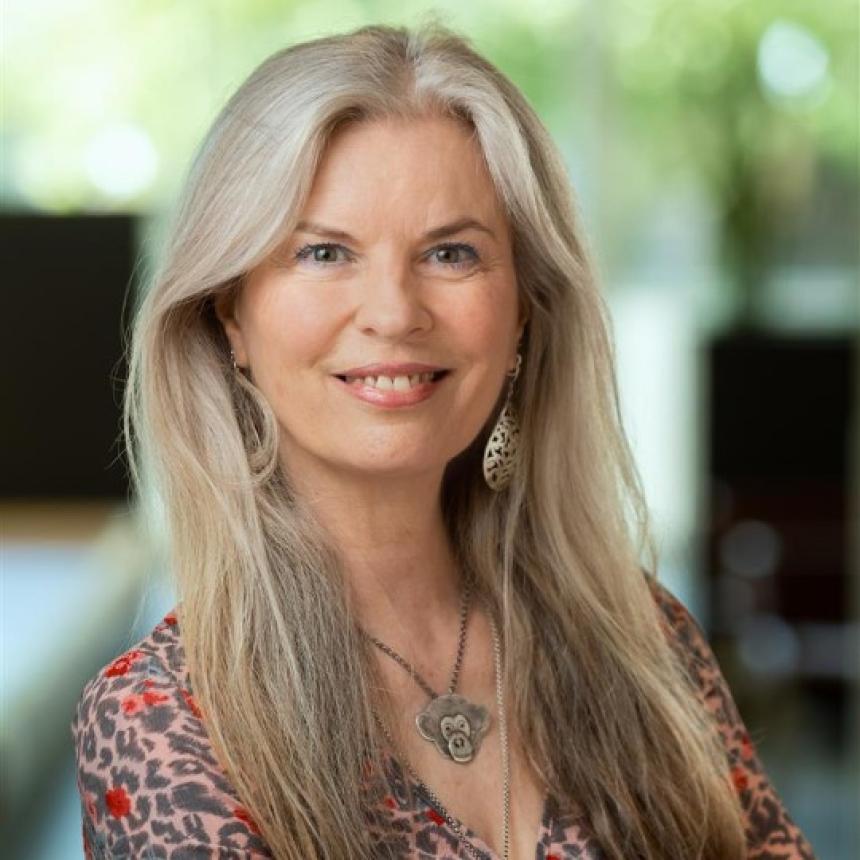
Carla Litchfield

APrf Carla Litchfield

Associate Professor of Psychology

School of Psychology

College of Education, Behavioural and Social Sciences

Eligible to supervise Masters and PhD - email supervisor to discuss availability.

Available For Media Comment.


I am the Leader of the Conservation Psychology and Applied Animal Behaviour Research Group. My passion is animal behaviour! I am involved in research and community work with organisations that promote animal psychological and physical wellbeing (in captivity and natural environments), and conservation. I am particularly involved in primate research and conservation (Great Apes) but have also worked with and for marine mammals, canids, felids, birds and other animals. See my 11 articles for The Conversation. Just working with wildlife is not enough to save species from extinction---since without changing human behaviour to become more sustainable (reduce consumption patterns and waste, minimise conflict with wildlife) it is almost impossible to save wildlife and natural habitats. I am applying principles of psychology to issues such as illegal trade in wildlife (e.g. rhino horn, exotic pet trade) and promoting use of behaviour-change principles to global and local conservation issues (e.g. mobile phone recycling, palm oil consumption, water conservation) in a way that moves beyond traditional economic and ecological modelling, and encourages listening to other experts (e.g. children, local communities). My work in the area of conservation psychology promotes living in harmony with nature, communicating honestly about animals and the environment, and compassionate conservation (welfare of animals in captivity & real-world/wild; and recognising human issues in developing countries). Since 2005, I have been giving presentations about Conservation Psychology at conferences, community conservation group events, Science Week events, and to University students, high school and primary school students.
I have collaborated with Dr Philip Roetman and the Discovery Circle team in the Cat Tracker Citizen Science project, culminating in the largest sample of pet cat personality results ever collected and analysed (>3,000) and published as "The Feline Five". One issue I promote is to keep your distance from wildlife (to avoid disease transmission and stress to animals), and that means not having photos taken up-close with wildlife. As part of my Ph.D. in Animal Behaviour (Psychology, University of Adelaide), I conducted behavioural enrichment research projects at Adelaide Zoo with chimpanzees and caracals. The chimpanzees were given the opportunity to explore, play and manipulate a number of novel objects and food puzzles. The caracals were able to 'hunt' artificial prey moving along a flying fox above them. In 1994 I spent a year observing a community of 'wild' chimpanzees in Uganda- the start of an ongoing committment to the Great apes of Uganda. I have served as a scientific expert at Population and Habitat Viability Assessments for chimpanzees and mountain gorillas in Uganda run by the Conservation Breeding Specialist Group (CBSG). The International Gorilla Conservation Programme consulted me for their review of Gorilla Tourism Guidelines. I have been closely involved with responsible tourism programmes in Uganda and written a book for tourists visiting the African Great Apes (published by the Travellers’ Medical and Vaccination Centre in Adelaide). The Australian Science Communicators awarded me the “Unsung Hero of Australian Science” in 2000 for my work with African Great Apes. I was the President of the Royal Zoological Society of South Australia in 2013, and served there as Vice President for six years, being an elected board member from 1999-2013. I am also on the Board of the United Nation's "Great Ape Survival Project" or GRASP (Australasia). I am the current President of the Australasian Primate Society.
I have developed and teach a Conservation Psychology course at UniSA and have co-authored articles about this exciting area and how it may contribute to changing unsustainable human behaviour in order to help conserve our planet's precious wildlife and natural environments. I have written science books for children about animals ('The Chimpanzee Book: Apes Like Us'; 'The Gorilla Book: Born to be Wild'; 'Saving Pandas'; 'Saving Tigers'; 'Saving Orangutans') and conservation for Walker Books- with part proceeds going to conservation projects in habitat countries. These books encourage children to connect with nature and understand that we can all do something to change our human unsustainable behaviour patterns. My Saving Tigers book was featured in an article in "The Advertiser". I have led tours as a scientific expert for ZoosSA and Peregrine travel to Uganda, ,Rwanda and Democratic Republic of Congo (chimps and gorillas), Tanzania (including chimps at Dr Jane Goodall's site at Gombe), Kenya (savannah species), Borneo (orangutans) and India (tigers and Asiatic lions in wild; sloth bears and elephants in a sanctuary) to visit responsible tourism projects and research/conservation sites with proceeds going to the conservation projects we visit. To find out more about me and my research interests, watch my TEDx Adelaide presentation.

Conservation Psychology- (1) applying principles of Psychology to change non-sustainable human behaviour; and (2) to enhance welfare of animals in captive and ‘wild’ environments. Animal behaviour, cognition and conservation (wild & captive environments). Responsible wildlife tourism and human-animal interactions.

Year Citation
2025 Taylor, J., Litchfield, C., & Le Busque, B. (2025). Australians' perceptions of species diversity of, and threats to, the Great Barrier Reef. Marine And Freshwater Research, 76(2), 1-6.
DOI Scopus1
2024 McHugh, T., Litchfield, C., Pearson, E., & Le Busque, B. (2024). The relationship between parental knowledge, attitudes, and behaviour: Australian primary school -aged children and nature experiences. Journal of Adventure Education and Outdoor Learning, 24(4), 735-752.
DOI
2024 Mellish, S., Ryan, J. C., & Litchfield, C. A. (2024). Short-term psychological outcomes of Australia's 2019/20 bushfire season. Psychological Trauma: Theory, Research, Practice, and Policy, 16(2), 292-302.
DOI Europe PMC2
2024 Le Busque, B., Litchfield, C., & Shaw, C. L. (2024). Exploring the Indoor Plant–People Relationship Through Qualitative Responses. Plant-Environment Interactions, 5(6), 1-6.
DOI
2023 Le Busque, B., & Litchfield, C. (2023). Sharks, spiders, snakes, oh my: a review of creature feature films. Journal of Environmental Media, 4(1), 49-75.
DOI
2023 Skinner, E. A., Le Busque, B., Dorrian, J., & Litchfield, C. A. (2023). #sustainablefashion on Instagram: A content and network analysis of user-generated posts. Journal of Consumer Behaviour, 22(5), 1096-1111.
DOI
2022 Natoli, E., Litchfield, C., & Pontier, D. (2022). Coexistence between humans and 'misunderstood' domestic cats in the Anthropocene: exploring behavioural plasticity as a gatekeeper of evolution. Animals, 12(13, article no. 1717), 1-20.
DOI Europe PMC4
2022 Le Busque, B., Mingoia, J., & Litchfield, C. (2022). Slow tourism on Instagram: an image content and geotag analysis. Tourism Recreation Research, 47(5-6), 623-630.
DOI
2022 Le Busque, B., & Litchfield, C. (2022). Sharks on film: an analysis of how shark-human interactions are portrayed in films. Human Dimensions of Wildlife, 27(2), 193-199.
DOI
2022 Ryan, J. C., Alchin, C., Anastasiou, K., Hendrie, G., Mellish, S., & Litchfield, C. (2022). Exploring the Intersection Between Diet and Self-Identity: A Cross-Sectional Study With Australian Adults. Journal of Nutrition Education and Behavior, 54(1), 20-27.
DOI Scopus10 WoS9 Europe PMC4
2021 Le Busque, B., Roetman, P., Dorrian, J., & Litchfield, C. (2021). Investigating attitudes toward sharks in Australia. Anthrozoos, online(2), 1-12.
DOI Scopus1
2021 Skinner, E. A., Litchfield, C. A., & Le Busque, B. (2021). Barriers, brands and consumer knowledge: slow fashion in an Australian context. Clothing Cultures, 8(1), 75-99.
DOI
2021 Le Busque, B., Dorrian, J., & Litchfield, C. (2021). The impact of news media portrayals of sharks on public perception of risk and support for shark conservation. Marine Policy, 124(104341), 1-8.
DOI Scopus28
2021 Le Busque, B., Roetman, P., Dorrian, J., & Litchfield, C. (2021). People's fear of sharks: a qualitative analysis. Journal of Environmental Studies and Sciences, 11(2), 258-265.
DOI Scopus9
2020 Ryan, J., Mellish, S., Dorrian, J., Winefield, T., & Litchfield, C. (2020). Effectiveness of biodiversity-conservation marketing. Conservation biology, 34(2), 354-367.
DOI Scopus16 WoS13 Europe PMC6
2019 Le Busque, B., Roetman, P., Dorrian, J., & Litchfield, C. (2019). An analysis of Australian news and current affair program coverage of sharks on Facebook. Conservation science and practice, 1(11, article no. e111), 1-14.
DOI
2019 Ryan, J. C., Mellish, S., Le Busque, B. R., & Litchfield, C. A. (2019). Enhancing the impact of conservation marketing using psychology: a research agenda. Journal of Environmental Studies and Sciences, 9(4), 442-448.
DOI Scopus7
2018 Litchfield, C. A., Lowry, R., & Dorrian, J. (2018). Recycling 115,369 mobile phones for gorilla conservation over a six-year period (2009-2014) at Zoos Victoria: A case study of 'points of influence' and mobile phone donations.. PloS one, 13(12), e0206890.
DOI Europe PMC3
2018 Roetman, P., Tindle, H., & Litchfield, C. (2018). Management of pet cats: the impact of the cat tracker citizen science project in South Australia. Animals, 8(11, article no. 190), 1-14.
DOI Europe PMC10
2017 Litchfield, C. A., Quinton, G., Tindle, H., Chiera, B., Kikillus, K. H., & Roetman, P. (2017). The 'Feline Five': An exploration of personality in pet cats (Felis catus). PLoS One, 12(8, article no. e0183455), 1-17.
DOI Europe PMC22
2017 Mellish, S., Sanders, B., Litchfield, C. A., & Pearson, E. L. (2017). An investigation of the impact of Melbourne Zoo's 'Seal-the-Loop' donate call-to-action on visitor satisfaction and behavior. Zoo biology, 36(3), 237-242.
DOI Scopus11 Europe PMC2
2016 Pearson, E., Tindle, H., Ferguson, M., Ryan, J., & Litchfield, C. (2016). Can we tweet, post, and share our way to a more sustainable society? A review of the current contributions and future potential #socialmediaforsustainability. Annual review of environment and resources, 41(1), 363-397.
DOI Scopus48
2016 Mellish, S., Pearson, E. L., Sanders, B., & Litchfield, C. A. (2016). Marine wildlife entanglement and the Seal the Loop initiative: a comparison of two free-choice learning approaches on visitor knowledge, attitudes and conservation behaviour. International zoo yearbook, 50(1), 129-154.
DOI Scopus25
2015 Litchfield, C. A. (2015). For the love of jungle trees. Journal of threatened Taxa, 7(12), 7958-7960.
DOI
2014 Litchfield, C. A. (2014). Curtailing chimpanzee exploitation. Science, 343(6173), 838-839.
DOI Scopus1
2014 Pearson, E. L., Lowry, R., Dorrian, J., & Litchfield, C. (2014). Evaluating the conservation impact of an innovative zoo-based educational campaign: 'Don't Palm Us Off' for orang-utan conservation. Zoo biology, 184(3), 33-196.
DOI Scopus75 Europe PMC13
2014 Litchfield, C. A. (2014). Tiger Fire: how bright is the future for tigers in India?. Journal of threatened taxa, 6(14), 6737-6738.
DOI
2014 Pearson, E., Mellish, S., Sanders, B., & Litchfield, C. (2014). Marine wildlife entanglement: assessing knowledge, attitudes, and relevant behaviour in the Australian community. Marine pollution bulletin, 89(1-2), 136-148.
DOI Scopus31 Europe PMC12
2013 Pearson, E. L., Dorrian, J., & Litchfield, C. A. (2013). Measuring zoo visitor learning and understanding about orangutans: evaluation to enhance learning outcomes and to foster conservation action. Environmental education research, 19(6), 823-843.
DOI Scopus39
2013 Clayton, S., Litchfield, C., & Geller, E. S. (2013). Psychological science, conservation, and environmental sustainability. Frontiers in Ecology and the Environment, 11(7), 377-382.
DOI Scopus72
2013 Smith, B. P., & Litchfield, C. A. (2013). Looking back at 'looking back': Operationalising referential gaze for dingoes in an unsolvable task. Animal Cognition, 16(6), 961-971.
DOI Scopus33 Europe PMC20
2013 Litchfield, C. A. (2013). Rhino poaching: Apply conservation psychology. Science, 340(6137), 1168.
DOI Scopus11 Europe PMC5
2013 Szokalski, M. S., Foster, W. K., & Litchfield, C. A. (2013). Behavioral monitoring of big cats involved in 'behind-the-scenes' zoo visitor tours. International journal of comparative psychology, 26(1), 83-104.
2012 Smith, B. P., Appleby, R. G., & Litchfield, C. A. (2012). Spontaneous tool-use: an observation of a dingo (Canis dingo) using a table to access an out-of-reach food reward. Behavioural processes, 89(3), 219-224.
DOI Scopus13 Europe PMC6
2012 Szokalski, M. S., Litchfield, C. A., & Foster, W. K. (2012). What can zookeepers tell us about interacting with big cats in captivity?. Zoo biology, 32(2), 142-151.
DOI Scopus18 WoS16 Europe PMC11
2012 Szokalski, M. S., Litchfield, C. A., & Foster, W. K. (2012). Enrichment for captive tigers (Panthera tigris): current knowledge and future directions. Applied animal behaviour science, 139(1-2), 1-9.
DOI Scopus53 WoS52
2011 Pearson, E. L., Dorrian, J., & Litchfield, C. A. (2011). Harnessing visual media in environmental education: increasing knowledge of orangutan conservation issues and facilitating sustainable behaviour through video presentations. Environmental education research, 17(6), 751-767.
DOI Scopus42
2011 Litchfield, C., Dorrian, J., Davis, J., Lushington, K., & Dawson, D. (2011). Lessons in primate heat tolerance: a commentary based on the "human zoo" experience. Journal of applied animal welfare science, 14(2), 162-169.
DOI Scopus7 Europe PMC3
2010 Pearson, E. L., Davis, J. M., & Litchfield, C. A. (2010). A case study of orangutan and siamang behavior within a mixed-species zoo exhibit. Journal of applied animal welfare science, 13(4), 330-346.
DOI Scopus11 Europe PMC6
2010 Smith, B. P., & Litchfield, C. A. (2010). An empirical case study examining effectiveness of environmental enrichment in two captive Australian sea lions (Neophoca cinerea). Journal of applied animal welfare science, 13(2), 103-122.
DOI Scopus27 Europe PMC12
2010 Smith, B. P., & Litchfield, C. A. (2010). How well do dingoes, Canis dingo, perform on the detour task?. Animal behaviour, 80(1), 155-162.
DOI Scopus53
2010 Smith, B. P., & Litchfield, C. A. (2010). Dingoes (Canis dingo) can use human social cues to locate hidden food. Animal Cognition, 13(2), 367-376.
DOI Scopus47 Europe PMC20
2009 Smith, B. P., & Litchfield, C. A. (2009). A review of the relationship between Indigenous Australians, dingoes (Canis dingo) and domestic dogs (Canis familiaris). Anthrozoos, 22(2), 111-128.
DOI Scopus117
2004 Boyd, C. M., Fotheringham, B., Litchfield, C., McBryde, I., Metzer, J. C., Scanlon, P., . . . Winefield, A. H. (2004). Fear of dogs in a community sample: Effects of age, gender and prior experience of canine aggression. Anthrozoos, 17(2), 146-166.
DOI Scopus19 WoS16
2004 Whiten, A., Horner, V., Litchfield, C. A., & Marshall-Pescini, S. (2004). How do apes ape?. Learning and Behavior, 32(1), 36-52.
DOI Scopus295 Europe PMC136
2004 Boyd, C. M., Fotheringham, B., Litchfield, C. A., McBryde, I., Metzer, J., Scanlon, P., . . . Winefield, A. H. (2004). Fear of dogs in a community sample. Anthrozoos.

Year Citation
2018 Ferguson, M., & Litchfield, C. (2018). Interactive zoo visitor experiences: A review of human and animal perspectives.. In N. Carr, & J. Young (Eds.), Source details - Title: Wild animals and leisure: Rights and welfare (pp. 39-59). US: Routledge.
2018 Ferguson, M., & Litchfield, C. (2018). Human-wildlife leisure experiences: the good, the bad, the ugly. In N. Carr, & J. Young (Eds.), Source details - Title: Wild animals and leisure: Rights and welfare (pp. 12-38). US: Routledge.
2013 Litchfield, C., Lushington, K., Bigwood, S., & Foster, W. (2013). Living in harmony with wildlife: Considering the animal’s ‘point of view’ in planning and design. In Designing for Zero Waste Consumption Technologies and the Built Environment (Vol. 9780203146057, pp. 181-205).
DOI Scopus2
2013 Chapman, J., Skinner, N., & Searle, S. (2013). Working towards sustainability: Exploring the workplace as a site for pro-environmental behaviour change. In R. Crocker, & S. Lehmann (Eds.), Motivating Change Sustainable Design and Behaviour in the Built Environment (pp. 56-70). Routledge.
DOI Scopus6
2013 Litchfield, C. (2013). Telling the truth about animals and environments: media and pro-environmental behaviour. In R. Crocker, & S. Lehmann (Eds.), Source details - Title: Motivating change: sustainable design and behaviour in the built environment (pp. 153-177). US: Routledge.
DOI Scopus7
2012 Chileshe, N., Zuo, J., Pullen, S., & Zillante, G. (2012). Construction management and a state of zero waste. In S. Lehmann, & R. Crocker (Eds.), Designing for Zero Waste: Consumption, Technologies and the Built Environment (Vol. -, 1 ed., pp. 284-306). Oxon, UK: Earthscan.
DOI Scopus4
2012 Litchfield, C. A., Lushington, K., Bigwood, S., & Foster, W. (2012). Living in harmony with wildlife: considering the animal's 'point of view' in planning and design. In S. Lehmann, & R. Crocker (Eds.), Source details - Title: Designing for zero waste: consumption, technologies and the built environment (pp. 181-205). Oxon, England: Earthscan.
DOI
2008 Litchfield, C. A. (2008). Responsible tourism : a conservation tool or conservation threat?. In Source details - Title: Conservation in the 21st century : gorillas as a case study (pp. 107-127). UK: Springer.
DOI
2006 Bryan, J., Litchfield, C. A., & Howells, K. (2006). Cognitive perspective: Frameworks. In P. Whetham, A. Day, & L. Whetham (Eds.), Source details - Title: International Baccalaureate Psychology. Victoria Australia: IBID Press.
2006 Bryan, J., Litchfield, C. A., & Howells, K. (2006). Cognitive perspective: Application. In P. Whetham, A. Day, & L. Whetham (Eds.), Source details - Title: International Baccalaureate Psychology. Victoria Australia: IBID Press.
2003 Litchfield, C. A. (2003). Learning: Methods of investigation. In P. Whetham, & A. Day (Eds.), Source details - Title: Psychology Key Ideas SACE Stage 2 (pp. 126-139). South Australia: Greg Eather with Adelaide Tuition Centre.
2003 Litchfield, C. A. (2003). Learning: Ethical Issues. In P. Whetham, & A. Day (Eds.), Source details - Title: Psychology Key Ideas SACE Stage 2 (pp. 139-152). South Australia: Greg Eather with Adelaide Tuition Centre.

Year Citation
- Litchfield, C., Quinton, G., Tindle, H., Chiera, B., Kikillus, H., & Roetman, P. (n.d.). Domestic Cat Personality Dataset.
DOI

Courses I teach

  • BEHL 2012 Biological and Learning Psychology (2025)
  • BEHL 3022 Conservation Psychology (2025)
  • BEHL 2012 Biological and Learning Psychology (2024)
  • BEHL 3022 Conservation Psychology (2024)

Date Role Research Topic Program Degree Type Student Load Student Name
2025 Co-Supervisor - Doctor of Philosophy Doctorate Full Time Miss Ollie Pearl Sharp
2024 Principal Supervisor - Doctor of Philosophy Doctorate Full Time Juliana Marie Gleaves
2022 Co-Supervisor - Doctor of Philosophy Doctorate Full Time Ms Iris Lockyer

Connect With Me

External Profiles

Other Links