
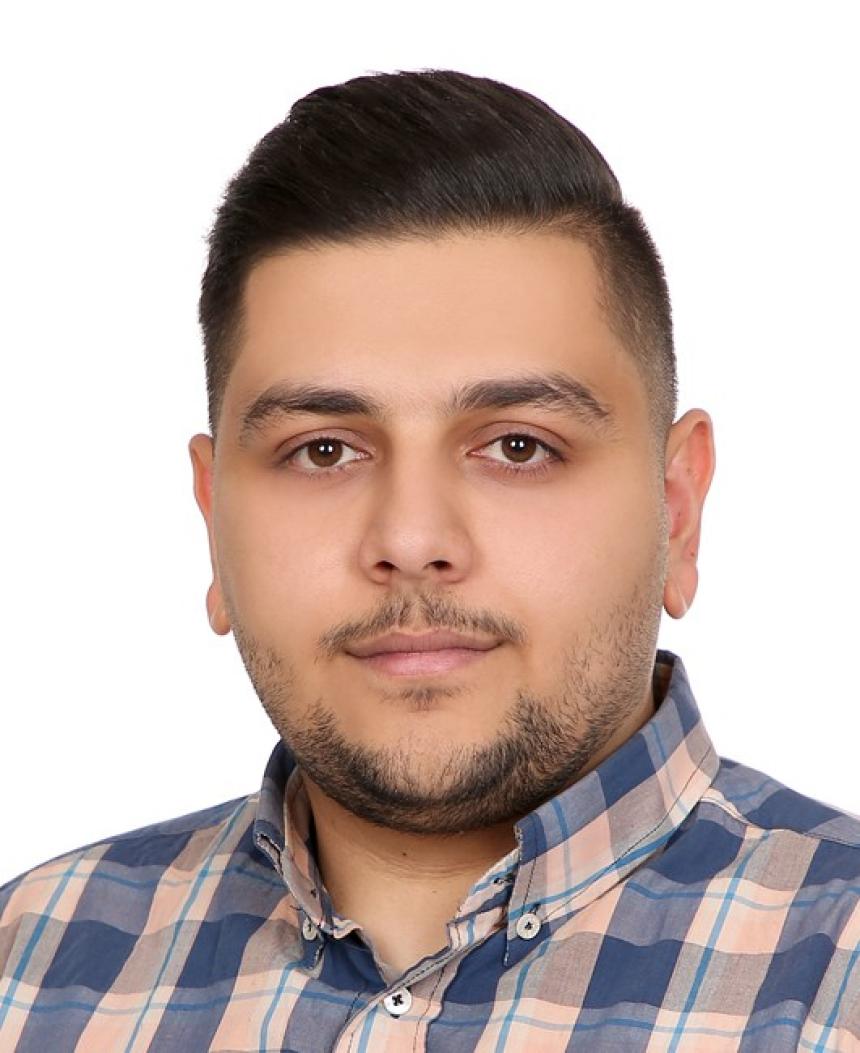
Mr Ali Mirkhalafi
Higher Degree by Research Candidate
School of Biological Sciences
College of Science
Ali is a PhD researcher specialising in sustainable drinking water treatment, membrane fabrication, and advanced electrochemical and adsorption-based technologies for water and wastewater treatment. His research focuses on the removal of emerging contaminants, particularly pharmaceuticals and per- and polyfluoroalkyl substances (PFAS), from aquatic environments.
He holds a Bachelor’s degree in Civil Engineering from Esfahan, Iran, and two Master’s degrees in Civil and Environmental Engineering from institutions in Iran and the United Kingdom, including Liverpool. Since 2020, Ali has collaborated with leading researchers across Iran, the United Kingdom, Canada, and Australia, contributing to internationally recognised research and publishing in reputable peer-reviewed journals.
Ali's research aims to advance sustainable, scalable treatment technologies to address critical global water quality challenges. By integrating chemistry and materials engineering with process optimisation, Ali seeks to develop innovative solutions for contaminant removal and resource-efficient water treatment systems. His work contributes to the broader goal of improving water security and environmental sustainability by translating cutting-edge research into practical treatment applications.
Ali's Research Interests:
- Sustainable drinking water and wastewater treatment
- Development of low-carbon and sustainable treatment technologies
- Removal of emerging contaminants, including pharmaceuticals and PFAS
- Process optimisation for energy- and resource-efficient water treatment systems
- Membrane fabrication and membrane-based separation processes
- Electrochemical water and wastewater treatment technologies
- Adsorption processes and advanced sorbent development
- Advanced hybrid treatment systems
| Date | Position | Institution name |
|---|---|---|
| 2021 - 2022 | Teaching Assistant | Qom University of Technology |
| 2021 - 2022 | Research Assistant | Qom University of Technology |
| Language | Competency |
|---|---|
| English | Can read, write, speak, understand spoken and peer review |
| Persian | Can read, write, speak, understand spoken and peer review |
| Date | Institution name | Country | Title |
|---|---|---|---|
| 2026 - 2030 | University of Adelaide | Australia | Doctor of Philosophy |
| 2024 - 2025 | Liverpool John Moores University | United Kingdom | Master of Science |
| 2020 - 2022 | Qom University of Technology | Iran | Master of Science |
| 2014 - 2018 | Esfahan Azad University | Iran | Bachelor of Science |
| Year | Citation |
|---|---|
| 2026 | Mirkhalafi, S., Mohammadnezhad, B., Mousazadehgavan, M., Altaee, A., Kiehbadroudinezhad, M., Hosseinzadeh-Bandbafha, H., . . . Mohammadi, M. (2026). Ni-NaY zeolite-modified polyethersulfone membranes for sustainable water treatment: Enhanced flux, contaminant rejection, and life cycle assessment. Microporous and Mesoporous Materials, 401, 14 pages. Scopus2 WoS1 |
| 2026 | Mirkhalafi, S., Kiehbadroudinezhad, M., Hosseinzadeh-Bandbafha, H., Mousazadehgavan, M., & Hashim, K. S. (2026). Sustainable electrocoagulation treatment of tetracycline contaminated water: coupling response surface methodology with life cycle assessment. International Journal of Environmental Science and Technology, 23(9), 18 pages. |
| 2025 | Anwer, M., Shaikh, M. A. N., Khan, S. U., Mirkhalafi, S., Mahtab, M. S., Farooqi, I. H., . . . Dehghani, M. H. (2025). Response surface modelling of Fenton pre-treatment of slaughterhouse sludge for enhanced anaerobic digestion. Scientific Reports, 15(1), 14 pages. Scopus2 WoS2 |
| 2025 | Mirkhalafi, S., Mohammadnezhad, B., Mousazadehgavan, M., Kiehbadroudinezhad, M., Altaee, A., Hosseinzadeh-Bandbafha, H., & Hashim, K. (2025). Technical and Environmental Sustainability of Pharmaceutical Wastewater Treatment Using Ce-NaY Zeolite-Modified Polyethersulfone (PES) Membranes: A Life Cycle Assessment Approach. ACS Es and T Water, 5(7), 3818-3830. Scopus9 WoS7 |
| 2025 | Mousazadehgavan, M., Hajalifard, Z., Basirifard, M., Afsharghoochani, S., Mirkhalafi, S., Kabdaşlı, I., . . . Nakouti, I. (2025). The Critical Role of Artificial Intelligence in Optimizing Electrochemical Processes for Water and Wastewater Remediation: A State-of-the-Art Review. ACS Es and T Water, 5(6), 2793-2811. Scopus21 WoS17 |
| 2024 | Mirkhalafi, S., Hashim, K. S., Al-Hashimi, O., & Majdi, A. (2024). Hybrid Electrocoagulation–Adsorption Process for Montelukast Sodium Removal from Water. Clean Technologies, 6(4), 1537-1564. Scopus6 WoS6 |
| 2024 | Sheikh, S., Naghizadeh-Dehno, O., Mirkhalafi, S., & Ghashang, M. (2024). Magnetic heterogenization of supramolecular carbohydrates for the efficient adsorption of heavy metals removal from wastewater. Inorganic Chemistry Communications, 168, 12 pages. Scopus11 WoS11 |
| 2024 | Bhagawati, P. B., H S., K. K., Lokeshappa, B., Malekdar, F., Sapate, S., Adeogun, A. I., . . . Sillanpää, M. (2024). Prediction of electrocoagulation treatment of tannery wastewater using multiple linear regression based ANN: Comparative study on plane and punched electrodes. Desalination and Water Treatment, 319, 13 pages. Scopus23 WoS20 |
| - | Fire Risk Potential Checking in Forests using Fire Risk Model (2017). International Journal of Constructive Research in Civil Engineering, 3(4). |
Water Research Australia Dennis Mulcahy Memorial Award ($6,000), Australia - 2026
Adelaide University Graduate Research Scholarship (AUGRS), Adelaide. Australia - 2026
Liverpool John Moores University Postgraduate Scholarship (£3,000), Liverpool, UK - 2024
Qom University of Technology M.Sc. Tuition Fee Waiver, Qom, Iran - 2020
-
Environmental Engineering Qom University of Technology – 1st semester 2021
-
Bachelor’s Research Project Qom University of Technology – Full year 2021
-
Advanced Hydrology Qom University of Technology – 1st semester 2021
-
Advanced Water and Wastewater Qom University of Technology– 1st semester 2021
-
Groundwater Esfahan Azad University – 1st Semester 2018
-
Civil Engineering Software Esfahan Azad University – 2nd Semester 2018
Connect With Me


External Profiles


