
Teaching Strengths
APrf Barbara Drigo
Enterprise Fellow
School of Agriculture, Food and Wine
College of Science
Eligible to supervise Masters and PhD - email supervisor to discuss availability.
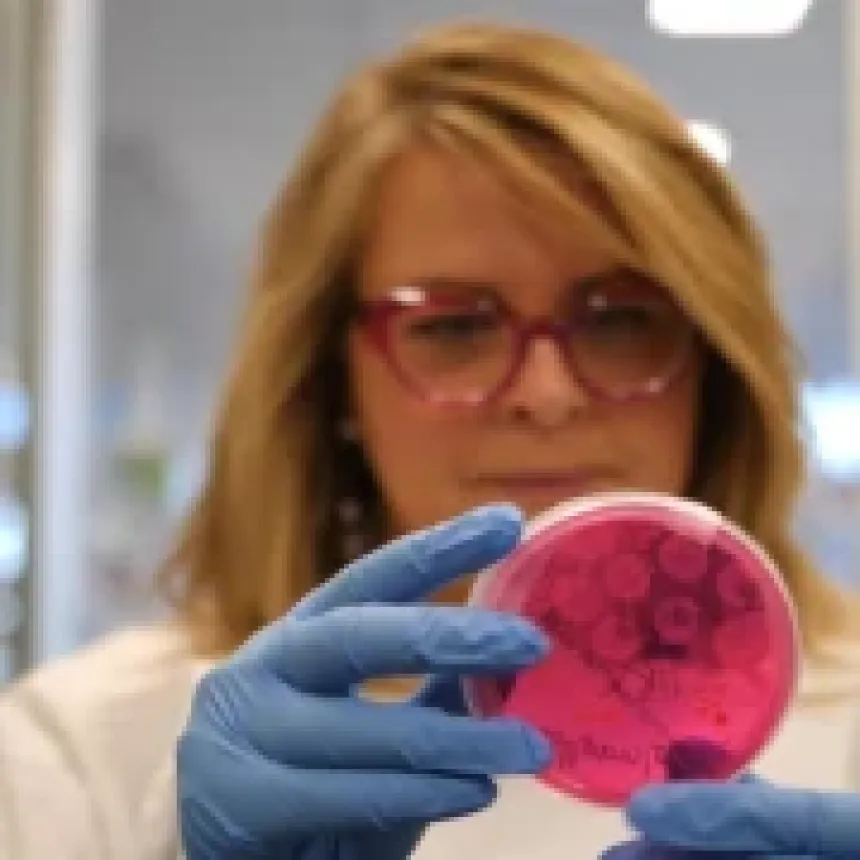
A/Prof Barbara Drigo is a Microbial Ecologist at the University of South Australia (UniSA), as well as a member of the editorial boards for several esteemed academic journals. Her passion for applied research is evident in her commitment to advancing microbiological practices, resulting in significant global contributions. A/Prof Drigo leads the molecular microbial components of various projects with a combined funding of $17M and was recently recognized as a 2023 Women in Innovation SA finalist in the science category. Dedicated to addressing antimicrobial resistance (AMR) on a global scale, she has collaborated with the World Health Organization, the World Organisation for Animal Health, and the Food and Agriculture Organisation of the United Nations to enhance laboratory capacities in low- and middle-income countries. A/Prof Drigo holds several notable positions, including Chair of the Joint Academic Microbiology Seminar (Adelaide branch), Chair of 500 Women Scientists Australia and New Zealand, and, Senior Researcher and Ambassador for eXXpedition. Since 2023, A/Prof Drigo has collaborated with colleagues from the Future Industries Institute (FII), STEM, the College of Health Sciences, and experts from the University of Adelaide to shape a cohesive educational vision for Adelaide University. Their initiatives aim to:
1. Address critical epidemiological challenges.
2. Co-design a comprehensive research strategy for Food, Agriculture, and Wine in South Australia.
3. Develop a multidisciplinary microbial ecology course encompassing environmental science, geospatial studies, food science, and soil science.
Career Highlights: A/Prof Drigo completed her Master’s at Wageningen University & Research Centre (2002-2004) and earned her PhD from Leiden University in 2009, following doctoral studies at the Netherlands Institute of Ecology. She was a visiting PhD Student at the UK Centre for Ecology & Hydrology, Oxford University (2004-2008). She began her career as a project manager at Plant Research International before relocating to Australia for a fellowship at Western Sydney University, where she established molecular microbial facilities. From 2010 to 2011, she helped create the world-class molecular microbial ecology facility at the Hawkesbury Institute for the Environment (HIE), launched in 2012. During her tenure at HIE, A/Prof Drigo led projects focused on climate change and microbial interactions, co-supervising three Master’s and three PhD students. A/Prof Drigo has held visiting research fellowships at the James Hutton Institute in the UK and the Chinese Academy of Sciences and has trained scientists globally in stable isotope probing techniques and multivariate statistical analysis. In 2016, she joined UniSA’s FII as a Research Fellow and Senior Lecturer, where she led research on food, soil, and water safety and security related to antimicrobial resistance, contributing to a total funding of $17 million. In 2016 and 2017, A/Prof Barbara Drigo's collaborative research on the impact of human activities on ecosystem functioning garnered attention from prominent organizations, including the White House Office of Science and Technology (during the Obama administration), the Royal Geographical Society, and the Theo Murphy Australian Frontiers of Science Symposium, as well as various media outlets. In 2017, she was a visiting research fellow at the Faculty of Biotechnology at the Catholic University of Portugal. A/Prof Drigo has authored and co-authored numerous peer-reviewed journal articles and invited reviews with leading global experts in plant-soil-microbial interactions, microbial ecology, and antimicrobial resistance (AMR). Many of these publications rank among the top ten most cited in their respective fields. Throughout her career, A/Prof Drigo and her PhD students and postdoctoral researchers have presented at 30 national and 39 international conferences. She has delivered several keynote speeches, chaired sessions, and participated as an invited panelist in workshops organized by the Department of Foreign Affairs and Trade, the World Health Organization, and the Food and Agriculture Organization of the United Nations. In 2020, A/Prof Drigo became the primary lecturer and tutor for the UniSA Microbial Ecology course; in 2021, she took on the role of its primary coordinator. In January 2023, she was awarded a competitive tenure position, becoming an Associate Professor at UniSA STEM in 2024.
Areas of Expertise: Microbial ecology, antimicrobial resistance, wastewater-based epidemiology, plant-soil-microbial interactions, climate change.
Courses: Primary Coordinator, lecturer, and tutor for the Microbial Ecology course (ENVT 2015/169532).
Mentorship: Supervising 9 PhD students, 2 Master’s students, and 1 Honours student, providing expert guidance in their academic journeys.
Research Funding: Leadership in high-profile microbial ecology projects funded by major organizations such as the Australian Centre for International Agricultural Research (ACIAR), the Department of Foreign Affairs and Trade (DFAT), Water Research Australia (WaterRA), Climate-Smart Agriculture Program, Australian Research Council (ARC), Horticulture Innovation Australia (HIA), Seafood Business for Ocean Stewardship (SeaBOS), the South Australian Environmental Protection Agency (SA EPA) and the Cooperative Research Centre for Solving Antimicrobial Resistance in Agribusiness, Food, and Environments (CRC SAAFE). The total budget of projects as Principal Investigator (PI) or Co-Investigator (CI) is $17M.
Focus Areas:
- Risk assessment and management of antimicrobial resistance and human opportunistic pathogens.
- Protecting and restoring ecosystems while building climate resilience.
- Solving Antimicrobial Resistance in Agribusiness, Food, and Environments (CRC SAAFE)
- Environmental Dimensions of AMR Conference 2026
Capacity Building: Overseeing molecular microbiology laboratory development for 14 fellows across the Pacific Islands, Europe, and Asia to enhance global research capabilities.
Leadership in Non-Profit Organizations: Dr. Drigo serves as chair of two award-winning non-profits: Joint Academic Microbiology Seminars (JAMS) in Adelaide and the 500 Women Scientists pods in Australia and New Zealand, supporting early to mid-career researchers in STEM.
Global Networking: As a member of STEM Women and the Australian Academy of Science, she fosters diversity and inclusion in STEM. Additionally, she contributes to a global network of multidisciplinary women through her role as an eXXpedition ambassador.
Institutional Representation: From 2017 to 2023, Dr. Drigo represented the Future Industries Institute on the Institutional Biosafety Committee and in the Office of the Gene Technology Regulator. Microbial Ecology institutional lab coordinator (X2-34) at FII, UniSA.
For the full list of career and research outputs refer to ORCID DR BARBARA DRIGO
-
Bayesian Network Models for Effective AMR Management in Water Systems through to various customer uses, CRC SAAFE Limited, 04/11/2024 - 04/11/2028
-
Applying quantitative microbial risk assessment, epidemiological modelling, and Bayesian Network models to facilitate AMR management in wastewater services, water reuse and biosolids/composts usage, CRC SAAFE Limited, 01/07/2024 - 06/07/2028
-
Rejuvenating agricultural soils to enhance productivity, resilience and carbon sequestration using enhanced rock weathering, Natural Heritage Trust, 16/05/2025 - 31/03/2028
-
Field-Based Diagnostic Kickstart: Exploration of potential use cases for a Rapid Electrochemical Diagnostic Tool for Detecting Triazole Resistance, CRC SAAFE Limited, 01/11/2025 - 01/11/2026
-
Selecting a Rapid Point-of-Care Diagnostic Tool for Detecting Listeria monocytogenes in Environmental Reservoirs for Risk Management, CRC SAAFE Limited, 10/10/2025 - 10/10/2026
-
Risk assessment of antimicrobial resistance in the vegetable industry, CRC SAAFE Limited, 04/02/2025 - 01/08/2026
-
How safe is roof-harvested rainwater? An investigation of pathogenic and resistant bacteria, National Health and Medical Research Council (NHMRC), 06/06/2025 - 30/06/2026
-
The health of tank-stored rainwater in South Australian houses, Royal Society of South Australia - Small Research Grant, 23/09/2024 - 23/09/2025
-
SeaBOS AMR Keystone project, CRC SAAFE Limited, 01/09/2024 - 01/09/2025
-
Pesticide effects on soil microbial functions in contrasting SA soils, SA Grain Industry Trust, 01/07/2023 - 30/06/2025
-
Improving safety of vegetable produce through on‐farm sanitation, using Electrolysed Oxidising (EO) Water - VG15068, Hort Innovation, 01/06/2017 - 31/05/2020
Courses I teach
- ENVT 2015 Microbial Ecology (2025)
- ENVT 2015 Microbial Ecology (2024)
| Date | Role | Research Topic | Program | Degree Type | Student Load | Student Name |
|---|---|---|---|---|---|---|
| 2022 | Co-Supervisor | - | Doctor of Philosophy | Doctorate | Full Time | Miss Han Min Lau |
| 2020 | Co-Supervisor | - | - | Master | Full Time | Mr Thanusshan Packiyarajah |
| 2019 | Principal Supervisor | - | Doctor of Philosophy | Doctorate | Full Time | Miss Alice Dunbar Dunbar |
Connect With Me


External Profiles


Available For Media Comment.