
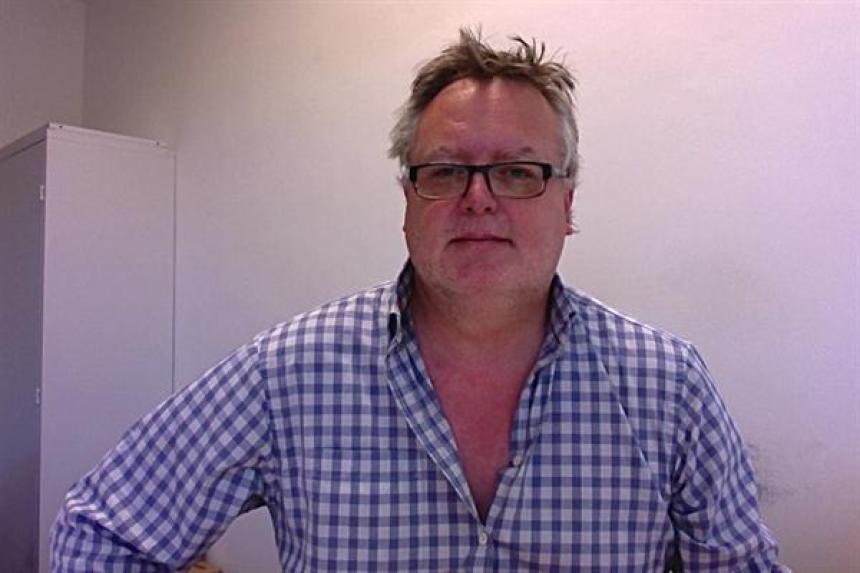
Prof Andrew Skuse
Program Director
School of Society and Culture
College of Education, Behavioural and Social Sciences
Eligible to supervise Masters and PhD as Principal Supervisor - email supervisor to discuss availability.
Professor Andrew Skuse's work focuses on how the poor interact with information resources and how these resources affect areas such as livelihoods, health, education, peace-building and social equity. Skuse has consulted widely on the role of C4D and ICTs in the developing world for numerous international development agencies, including ADB, AusAID, DFID, EU, GTZ and WHO. Skuse previously worked as a Social Development Adviser for the UK Department for International Development. (DFID) where he was responsible for the area of communications for development. His publications span both applied and academic fields and he has worked in many countries, including: Afghanistan, China, Malawi, Nepal, Pakistan, Pacific Region, Philippines, Rwanda, South Africa and Sri Lanka.
Recent Publications
Skuse A. et al. (2020) Solving ‘wicked problems’ in the app co-design process. Convergence: The International Journal of Research into New Media Technologies.
Skuse, A. (2020) Claiming the State: the political economy of social welfare access in rural South Africa. In Governance and Societal Adaptation in Fragile States. Editors: Ware H, Lahai JI . 189-209. Palgrave MacMillan, Cham, Switzerland.
Skuse, A. (2019) Wikis and Knowledge Management in Complex Emergencies: a Rapid Guide, Government of Australia/Australian Civil-Military Centre - use of wikis and other collaborative knowledge sharing/generation tools have become commonplace during emergencies and enhance the situational awareness of emergency personnel and reduce duplication in terms of knowledge generation.
Skuse, A. (2019) Short Messaging in Complex Emergencies: A Rapid Guide, Government of Australia/Australian Civil-Military Centre - the wide availability of mobile phones makes SMS and ‘apps’ important channels for sending alerts about impending emergencies or of key risks associated with the post-emergency period. Users closely observe mobile phones during periods of crisis, though ensuring reliability of infrastructure during emergencies is paramount. Emergency ‘apps’ are also widely used know to enhance disaster preparedness and response.
Skuse, A. (2019) Social Media in Complex Emergencies: a Rapid Guide, Government of Australia/Australian Civil-Military Centre - social media has become a mainstay of emergency responses and crisis situations in recent years. Social media are useful for dispelling rumours, providing up-to-the-minute information on an evolving crisis and for gathering data resulting from engaging in a dialogue with affected communities. Moderation of social media is critical and poor moderation can lead to misinformation reaching the public.
Skuse, A. (2019) Crowdsourcing and Crisis-Mapping in Complex Emergencies: a Rapid Guide, Government of Australia/Australian Civil-Military Centre - information drawn from disaster affected communities, or ‘the crowd’, can enhance the humanitarian response and increase situational awareness. Data may be received from volunteers utilizing ‘apps’ in disaster-affected areas or directly from those affected through SMS messaging or social media. Crowdsourced data is often used to create crisis maps, which provide real-time mapping of emergencies as they evolve and which, help to focus the emergency response.
Skuse, A. (2019) Complex Emergencies in a Digital World: a Rapid Guide, Government of Australia/Australian Civil-Military Centre - this paper collates material on wikis and knowledge management, SMS, social media and crowdsourcing/crisis mapping into a usable guide designed to inform humanitarian organisations and practitioners.
Research Interests
My principal research contribution focuses on the roles that communication and access to information play in supporting processes of development, poverty reduction, empowerment, humanitarianism and social change. Much of this work has involved revealing how poor people use information communication technologies in developing country contexts, often in the face of acute emergencies. My research to date has made a number of specific contributions to this field that include:
- Communication and complex emergencies: my work on the role of communication and complex emergencies has helped to inform both academic and practitioner audiences. I have undertaken a systematic review (2012) for AusAID that looked at the factors that contribute to successful communication interventions in fragile states. This work involved a partnership between InterMedia, ABC International Development and Joanna Briggs Institute and has been disseminated to the influential International Lessons Leaned community, which explores the interface between military and civil actors working in conflict-affected countries. Recent work with the Australian Civil-Military Centre providing has examined the impact of social media and networking in recent conflicts/emergencies. This has resulted in the publication of three papers, an extensive annotated bibliography, an issues paper on social media, social networking and complex emergencies, as well as a comprehensive resource guide for communication practitioners. These publications can be viewed at: https://www.acmc.gov.au/publications/communication-and-complex-emergencies-project/
- Entertainment-Education, mass media and development: my work on entertainment-education has been influential in developing both an ethnographic analysis on audience impact, while also analysing the intriguing politics of drama production. The Sage Publications volume Drama for Development (2011), for which I was lead editor and a significant contributor, represents a key output in this area and reflects a close partnership between the University of Adelaide, The Open University, SOAS and University of Amsterdam. This book was a major output of the ‘Tuning-in: Research Diasporas at the BBC World Service’ project of the Diasporas Migration and Identities Research Program, United Kingdom Arts and Humanities Research Council. Details may be viewed at: https://us.sagepub.com/en-us/cam/drama-for-development/book236788.
- ICTs, poverty and empowerment: my work on information and communication technologies, poverty and empowerment has helped to advance our understanding of contemporary poverty issues. This body of work examines how poor people integrate themselves into networks (either technological or social) and are able to make use of critical information flows that impact upon the sustainability of their livelihoods. Work on ARC Linkage projects with partners such as UNESCO, UNDP and Equal Access, has yielded influential analyses of poverty, ICTs and digital exclusion in South Asia that has been used up by a number of development organisations, as well as analysis of the complexity of information and communication networks at the local level. See: http://betterevaluation.org/sites/default/files/EA_PM%26E_toolkit_front_pages%26introduction_for_publication.pdf
- Media sector strengthening: My work in the field of media sector strengthening has supported initiatives such as the AusAID-funded ABC International Development Pacific Media Assistance Scheme (PACMAS). Such work, in partnership with local media organisations, especially state media, aims to improve their practice and professionalism. Such improvements, especially around news reporting, supports better governance by increasing accountability and transparency. In this respect, my work has had a clear focus on media sector assessment and has informed discussion of sectoral benchmarking (for media freedoms and diversity), monitoring and evaluation processes, and gender mainstreaming. An example of my work around media strengthening for increased accountability work can be found http://www.pacmas.org/wp-content/uploads/2011/10/MDI-SANA-final.pdf
- Social and behavioural change: much the work that I have engaged in throughout my career has concerned aspects of social and behavioural change. My work has helped to advance our understanding of how normative culture can constrain behaviour change at individual and community levels and block social change. I have worked in the areas of heath, media strengthening, risk reduction, conflict reduction and human trafficking with organisations such as the ABC International Development, Philippines National TB Control Program, Government of Tonga, MTV EXIT and WHO. Most recently I have developed an extensive toolkit for UNICEF (New York) that enables UNICEF staff and other communication practitioners to rapidly develop communication strategies for use during emergencies. UNICEF is currently formatting the Communication for Humanitarian Action Toolkit for publication. My work with MTV on the End Trafficking and Exploitation Program (EXIT) yielded a number of outputs including a comprehensive Phase IV Project Document and review. See: http://dfat.gov.au/about-us/publications/Documents/mtv-exit-iii-review-report.pdf
- Methodological tools and program evaluation: my work has advanced the development of a range of methodological tools that have supported the ability of C4D practitioners to collect and analyse data. My work on ARC Linkage grants concerned both academic and methodological dimensions, and especially how methods can give poor people an opportunity to participate, as well as to capture aspects of social change. Notably, my work has helped to extend initial work on the Ethnographic Action Research methodology through the addition of a much stronger focus on participatory methods and tools. This methodology provides a dedicated ICT-focused set of tools that help to inform program development and evaluation principally at the community level. Details of some of this work can be found at: http://ear.findingavoice.org
| Date | Position | Institution name |
|---|---|---|
| 2002 - ongoing | Head of Department | University of Adelaide |
| 1999 - 2002 | Social Development Advisor | UK Department for International Development |
| Date | Institution name | Country | Title |
|---|---|---|---|
| University College London | United Kingdom | PhD |
| Year | Citation |
|---|---|
| 2013 | Rodger, D. L., Dalton, J., Wilmore, M., Humphreys, A., Clifton, V., & Skuse, A. (2013). Google’s my mate: information seeking habits of pregnant women in South Australia. Poster session presented at the meeting of Abstracts of the 17th Annual Congress of the Perinatal Society of Australia and New Zealand (PSANZ 2013), as published in Journal of Paediatrics and Child Health. Adelaide, South Australia: Wiley. DOI |
| 2013 | Rodger, D., Skuse, A., Wilmore, M., Humphreys, A., Clifton, V., & Dalton, J. (2013). Google’s My Mate: Information Seeking Habits of Pregnant Women in South Australia. Poster session presented at the meeting of No.. Adelaide, Australia.. |
| 2013 | Dalton, J., Clifton, V., Rodger, D., Skuse, A., Wilmore, M., Humphreys, A., & Flabouris, M. (2013). Who’s Afraid of ICTs? The Attitudes of Midwives in the Use of Information and Communication Technologies (ICTs) to Deliver Pregnancy-Related Health Information in South Australia. Poster session presented at the meeting of No.. Gold Coast, Australia.. |
| 2012 | Rodger, D., & Skuse, A. (2012). Smart Phone ‘Apps’ and their Role in Supporting Improved Health Outcomes. Poster session presented at the meeting of No.. Adelaide, Australia.. |
| Year | Citation |
|---|---|
| 2016 | Skuse, A. J. (2016). Emergency Communication Resources Online. |
| 2007 | Skuse, A. J., Tacchi, J., Fildes, J., & Baulch, E. (2007). Ethnographic Action Research Training Handbook. Queensland University of Technology & University of Adelaide. |
| Year | Citation |
|---|---|
| 2015 | Skuse, A. J., Clifton, V., Wilmore, M., Rodger, D., Dalton, J., & Humphreys, S. (2015). Health-e Baby App [Computer Software]. https://www.adelaide.edu.au/accru/projects/healthebaby/. |
Research Grants
- University of Adelaide Interdisciplinary Research Grant 2015 (Skuse co-investigator). Maximizing the potential of online behaviour change interventions: Determining the antecedents of user engagement. Collaboration between Medicine, Psychology, Social Sciences and Adelaide Business School. Research Team: C. Short, A. Skuse, P. Quester and M. Dry. Value A$20,000;
- Australian Civil-Military Centre 2013-14 (Skuse lead investigator). Communication and Complex Emergencies. Collaboration between ACMC and University of Adelaide. Research Team: A. Skuse, T. Brimacombe & R. Rodger. Value A$123,000;
- Australian Research Council Linkage 2011-13 (Skuse lead investigator). E-health communication strategy and design. Collaboration between University of Adelaide, the Lyell McEwin Hospital, and Health SA. Research Team: A. Skuse, V. Clifton, M. Wilmore, S. Humphreys & D. Bruton. Value A$ 300,000;
- AusAID Systematic Review 2011-2012 (Skuse lead investigator). Communication for Development Interventions in Fragile States: a Systematic Review. Collaboration between the University of Adelaide, ABC International Developement, InterMedia Europe and WanSmal Bag (Vanuatu). Research Team: A. Skuse, G. Power, D. Friguglietti, & M. Taurakoto. Value A$87,000;
- UK Arts and Humanities Research Council (AHRC) 2007-2010 (Skuse co-investigator). Tuning In: Diasporic Contact Zones at the BBC World Service. Collaboration between the University of Adelaide, Open University, School of Oriental and African Studies and University of Amsterdam. Research Team: M. Gillespie, A. Skuse, M. Srebreny, J. Toynbee, K. Woodward & G. Bauman. Value UK£496,000
- Australian Research Council Linkage 2007-2010 (Skuse co-investigator). Assessing Communication for Social Change. Collaboration between Queensland University of Technology, University of Adelaide and Equal Access (Nepal). Research Team: J. Tacchi, A. Skuse & M. Wilmore.Value A$393,000;
- Australian Research Council Linkage 2005-2007 (Skuse co-investigator). Finding a Voice: Making Technological Change Socially Effective and Culturally Empowering. Collaboration between the University of Adelaide, Queensland University of Technology, UNESCO (New Delhi) and UNDP (Jakarta). Research Team: J. Tacchi, A. Skuse, S. Cunningham & H. Pillay. Value A$590,000;
- UK Department for International Development 2003-2005 (Skuse lead investigator). Social Sciences Research Grant. Information Society a comparative study of ICTs, poverty and development. Collaboration between University of Adelaide, Queensland University of Technology, University College London and London School of Economics. Research Team: A. Skuse, J. Tacchi, D. Miller & D. Slater.Value UK£250,000.
I currently teach the following undergraduate courses and more detail can be found by following the attached links:
DEVT 2100 - Poverty and Social Development
Among the biggest challenges facing the global community today are the eradication of poverty and inequality, and the needs of social development. This course introduces students to the history of the concept of poverty, the culture of poverty, the causes of poverty and its effects. Intersections between poverty and health, human rights and education will be explored in a variety of international contexts. Policies designed to reduce poverty will be analysed at both the global or international level and from community perspectives. Case studies of poverty assessments and poverty reduction projects will be a major feature of course content. The course also introduces social development, with emphasis on understanding and planning for socially sensitive development. Global attention to social development, such as the World Bank's plan and the World Summit on social development will be explored
DEVT 2200 - International Development Practice II
This course addresses social development practice from the perspective of bilateral donors such as Australian Aid or UK Department for International Development (DFID). It does this by exposing students to the process of project cycle management; the process development specialists go through in designing a development program. Using actual development organisation documents, such as program designs students will examine the multidisciplinary work that goes into program design, including: (i) undertaking formative social, political and economic analysis; (ii) setting objectives; (iii) defining, monitoring activities; (iv) considering gender; (v) thinking about sustainability and the environment; (vi) how to capture the impacts associated with development programs. The course is heavily geared towards small group discovery, with small groups undertaking practical exercises geared towards building real-world international development skills.
DEVT 3200 - International Development Practice III
This capstone course for the Bachelor of International Development builds on the Year 2 core course International Development Practice II and enables students to immerse themselves in a program design exercise utilising real-world publicly available documents such as program design terms of reference (TORs), project reports and primary data. Using a resource pack of contextual data that focuses on the development problem of ending child marriage in Ethiopia and a program design template students will engage in intensive formative small group discovery experience work over the course of the semester. These small groups will replicate a number of roles within a development program design team, i.e. social assessment specialist, monitoring and evaluation specialist, team leader, and so on. This helps recreate the dynamics of the interdisciplinary nature of development practice. Over the course of the semester groups will work up a number of short presentations that focus on key program elements, such as logframes and monitoring and evaluation. This work is designed to allow students to grasp key international development program concepts and skills. In turn this process contributes to student's individual program design submissions.
| Date | Role | Research Topic | Program | Degree Type | Student Load | Student Name |
|---|---|---|---|---|---|---|
| 2025 | Principal Supervisor | Riding Through Growth: Bodaboda and East Africa's Changing Cityscapes | Doctor of Philosophy | Doctorate | Full Time | Mr Samuel Lachlan Kettler |
| 2025 | Principal Supervisor | Household Behaviour, Market Development & Policy Coordination | Master of Philosophy | Master | Full Time | Mr Zac Horbelt |
| 2025 | Principal Supervisor | Remaking the City: An Ethnography of Informal Mobility and Infrastructure in Transition | Doctor of Philosophy | Doctorate | Full Time | Mr Samuel Lachlan Kettler |
| 2025 | Co-Supervisor | Blue Carbon Communities: Integrating local perceptions and input into Blue Carbon Development Projects within Indonesia. | Doctor of Philosophy | Doctorate | Full Time | Mr Mathew O'Brien |
| 2023 | Principal Supervisor | Will living standards improve if donor agencies prioritise TVET demand driven programs in developing countries over other education sector investments? | Doctor of Philosophy | Doctorate | Full Time | Mr Simon John Fraser |
| 2021 | Principal Supervisor | Fostering social acceptance of future fuels in Australia | Doctor of Philosophy | Doctorate | Full Time | Mr Lachlan James Dorrian |
| Date | Role | Research Topic | Program | Degree Type | Student Load | Student Name |
|---|---|---|---|---|---|---|
| 2021 - 2022 | Co-Supervisor | The Role of Gender in Post-Disaster Recovery and Disaster Risk Governance in Nepal: Examining Links Between Women, Institutions and Capacity-Building | Master of Philosophy | Master | Full Time | Miss Natasha Jane Mackintosh |
| 2018 - 2023 | Principal Supervisor | ‘Band-aids in a battlefield’: The anthropology of refugee and asylum seeker support in Australia | Doctor of Philosophy | Doctorate | Full Time | Mrs Alison Kim Reid |
| 2017 - 2021 | Co-Supervisor | Neoliberalism, Rights, and the Vernacularisation of Social Policy in Nepal | Doctor of Philosophy | Doctorate | Full Time | Mrs Alexia Jane Adhikari |
| 2017 - 2023 | Principal Supervisor | Theatre of the 4th Dimension: Making Meaning in a Digital Space | Doctor of Philosophy | Doctorate | Full Time | Mr Michael James Allen |
| 2016 - 2019 | Co-Supervisor | People, Platforms, Practice: The Social Mediation of Electronic Music Production | Doctor of Philosophy | Doctorate | Full Time | Dr Paul Henry Chambers |
| 2015 - 2020 | Principal Supervisor | Out of South Africa and Into Australia: The Afrikaners' Quest for Belonging in a Post-apartheid World | Doctor of Philosophy | Doctorate | Full Time | Dr Hanna Jagtenberg |
| 2014 - 2020 | Principal Supervisor | Art and Crisis on the Streets of Athens | Doctor of Philosophy | Doctorate | Part Time | Johnny Damien Karanicolas |
| 2014 - 2018 | Principal Supervisor | 'Troubled Lives': Vulnerability, Livelihoods and Capabilities of Homeless Women Living in a Train Station in Dhaka, Bangladesh | Doctor of Philosophy | Doctorate | Full Time | Shoshannah Kiriam |
| 2011 - 2013 | Co-Supervisor | Human Agency, Power, and Discourse: Accomplishing Farm Work through Short Messaging Service (SMS) in the Philippines | Doctor of Philosophy | Doctorate | Full Time | Mr Ronan Zagado |
| 2011 - 2015 | Principal Supervisor | Cosplay in Australia: (Re)creation and Creativity | Doctor of Philosophy | Doctorate | Full Time | Miss Claire Langsford |
| 2011 - 2016 | Principal Supervisor | A Recipe for Identity: Food and Culture in Oaxaca, Mexico. | Doctor of Philosophy | Doctorate | Full Time | Miss Emma Thrussell |
| 2011 - 2020 | Co-Supervisor | To Make Their Journey Back to Nature: Zoo Captivity and Post / Humanism | Doctor of Philosophy | Doctorate | Part Time | Gail Yvonne Wright |
| 2007 - 2013 | Principal Supervisor | Yuba: Making Modern Youth, Making New Nepal | Doctor of Philosophy | Doctorate | Part Time | Dr Natalie Handley |
| 2005 - 2009 | Principal Supervisor | "We Will Do it Our Own Ways": A Perspective of Southern Sudanese Refugees Resettlement Experiences in Australian Society | Doctor of Philosophy | Doctorate | Full Time | Mr James Lino Lejukole |
| 2005 - 2018 | Co-Supervisor | 'There's Always Bits of me in the Art' An Exploration of the Artist as Cultural and Creative Worker, Social Facilitator and Meaning Maker |
Doctor of Philosophy | Doctorate | Part Time | Ms Sandra Howe-Piening |
| 2004 - 2009 | Principal Supervisor | Park, Hill Migration and Changes in Household Livelihood Systems of Rana Tharus in Far-Western Nepal | Doctor of Philosophy | Doctorate | Full Time | Dr Lai Ming Lam |
| 2003 - 2008 | Co-Supervisor | Coca Communications: Tales from the Bolivian Coca Field | Doctor of Philosophy | Doctorate | Part Time | Ms Nadia Butler |
| 2002 - 2008 | Co-Supervisor | Negotiating Existence: Asylum Seekers in East Anglia, UK | Doctor of Philosophy | Doctorate | Full Time | Dr Sophie Corfield |


