

APrf Zoe Doubleday
Associate Professor
School of Biological Sciences
College of Science
Eligible to supervise Masters and PhD as Principal Supervisor - email supervisor to discuss availability.
I am a research scientist and I lead the MARIS lab at Adelaide University (www.marislab.org). My research spans marine ecology, fisheries, and animal biology with outcomes that support conservation, sustainable seafood production, and food security.
Everything I do is underpinned by my mission to ensure science is not hidden behind closed doors but is communicated to the community. I am passionate about science communication and storytelling and I work regularly with radio, TV, and print media in Australia and overseas. I strive to increase the readability and readership of what scientists write through research and education. I write for The Conversation, and I am a keynote speaker at events ranging from arts festivals, public lecture series, academic fora, and career development workshops.
Sponsoring and empowering the next generation of STEM professionals, particularly women and other underrepresented groups, is also core to my work.
I have received 19 awards including the 2022 Agrifood Award from the Australian Academy of Technological Sciences and Engineering for my innovative research and outstanding contribution to the fisheries sector. In 2021, I became Superstar of STEM, a title awarded to 60 Australian women every two years by Science & Technology Australia. Superstars are high-profile, visible role models in STEM. In 2026, I was appointed to the ARC College of Experts. College members evaluate ARC grants, moderate assessments, and recommend projects for funding.
If you would like to know more about what I do, or have an opportunity to work together, please get in touch (zoe.doubleday@adelaide.edu.au) or check out my work-based social media profiles on LinkedIn and Instagram.
My lab group (www.marislab.org) is focused on science that is relevant and responsive to today’s environmental challenges. Our research is built around four core themes and spans marine ecology, fisheries, and animal biology with outcomes that conservation and sustainable seafood production.
Towards the better management and conservation of cephalopods
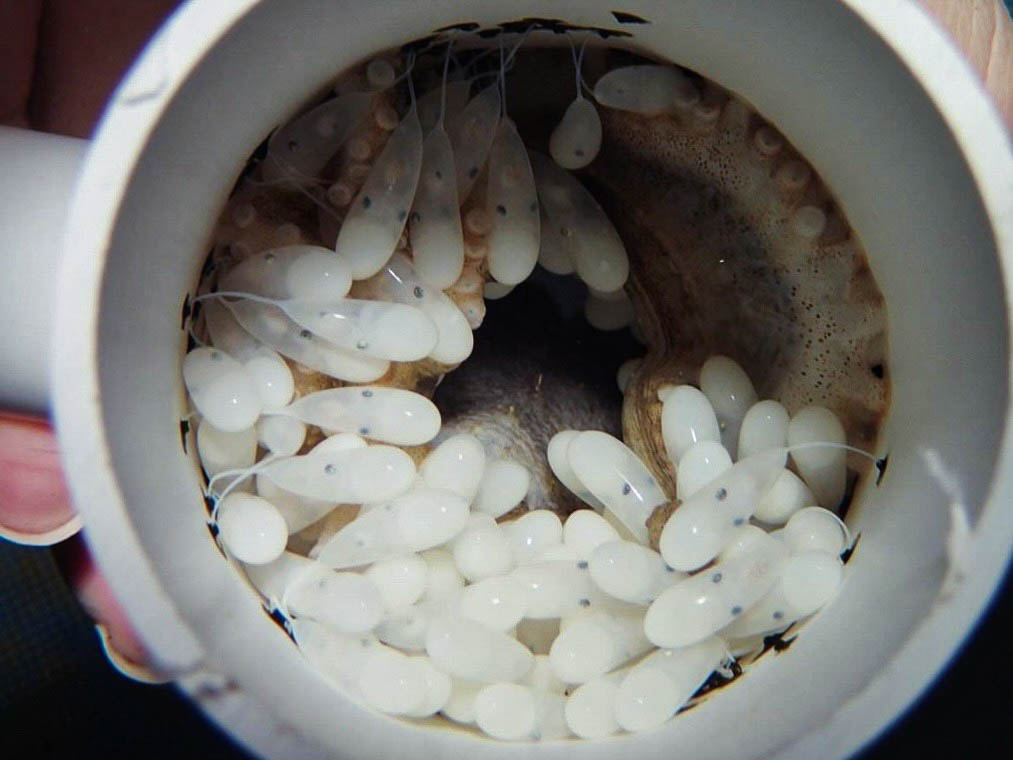
Cephalopods have long fascinated people around the world, but we know surprisingly little about 100s of species relative to their vertebrate cousins. I have over 20 years experience working on cephalopods and cephalopod fisheries and I talk regularly to the media and public about these captivating animals that support livelihoods around the world, as well as represent critical components of the marine ecosystem. We always have some sort of the cephalopod project underway that supports both their sustainable management and conservation. Image: Erica Durante (c)
Sustainable fisheries and bluefoods
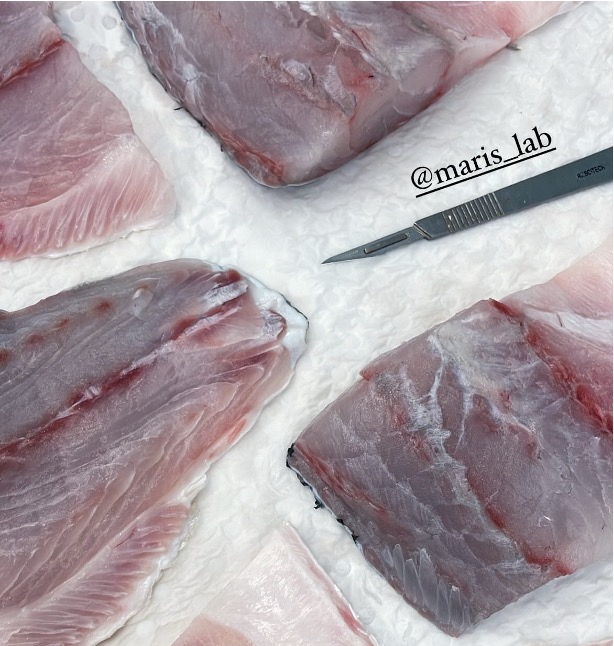
Bluefoods (or seafoods) are nutritious and in demand - and are a key component to our future food and nutrition security. My group are working on a range of projects that support the sustainable production of bluefoods, such as developing better methods to determine the provenance and authenticity of bluefoods, understanding the enablers of food fraud and illegal fishing, reconstructing the environmental or life histories of commercially harvested species, and developing valuable products from marine or fish waste.
Environmental and life history reconstruction
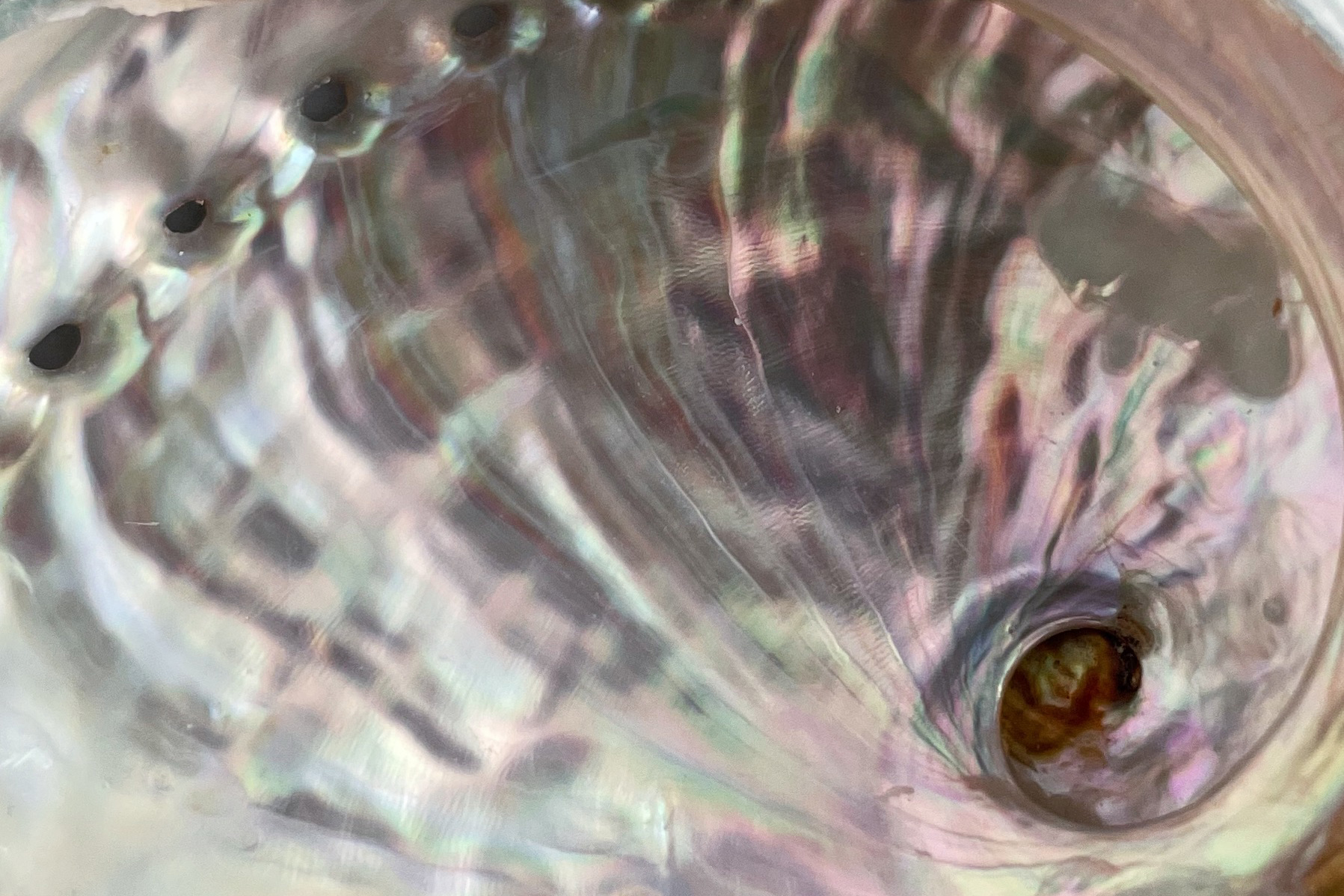
My group analyses chemical and physical variations in the hard tissues of marine animals (e.g. shells and bones) to reconstruct past environments and the life histories of animals. This field of research is call sclerochronology and can help answer a range of questions in ecology, climate science, and food science. Currently, we have a major project focused on developing advanced isotopic markers to track the movement of diverse marine animals, from snarks to sea snails.
Reimagining science communication for a brighter future
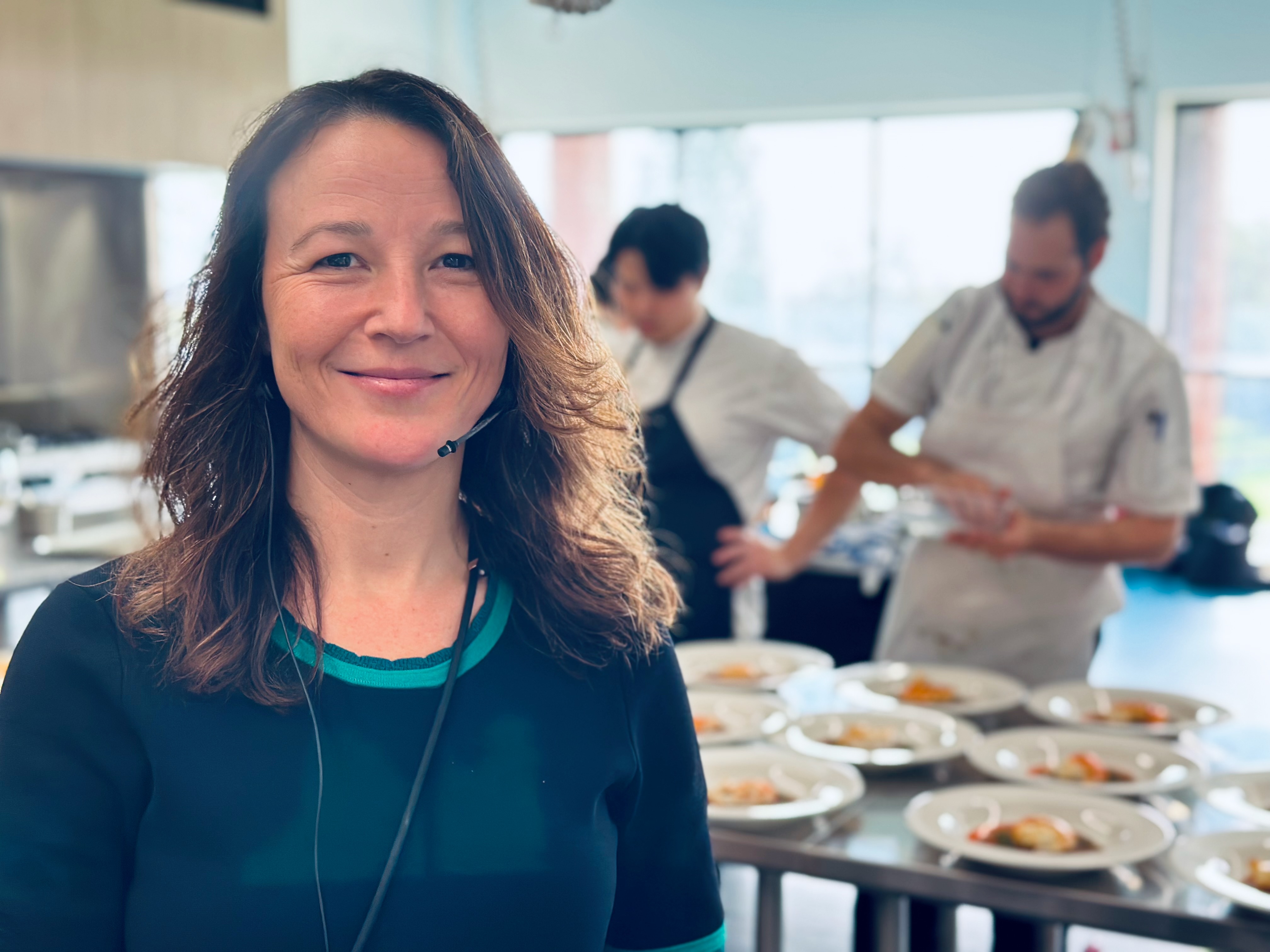
Underpinning all of this research, is our mission is to ensure science is not hidden behind closed doors but rather communicated to the media and public. We not only undertake research on how to communicate science better, but we also do it in practice through a creative and proactive focus on science communication. Image: Zoe is combining decadence (seafood degustation), education (zoology lecture), and thought-provoking debate (the algal bloom) at a sold-out AU Tasting Australia event in 2026.
| Date | Type | Title | Institution Name | Country | Amount |
|---|---|---|---|---|---|
| 2022 | Award | ICM Agrifood Award | Australian Academy of Technological Sciences and Engineering | Australia | - |
| 2021 | Achievement | Superstar of STEM | Science and Technology Australia | Australia | - |
| Date | Institution name | Country | Title |
|---|---|---|---|
| Institute for Marine and Antarctic Studies, University of Tasmania | Australia | PhD | |
| University of Tasmania | Australia | Bachelor of Antarctic Studies (Honours) | |
| University of Tasmania | Australia | Bachelor of Science |
| Year | Citation |
|---|---|
| 2020 | Martino, J., & Doubleday, Z. (2020). Understanding the abundance, diversity and biology of octopus in South Australian waters to support a new fishery opportunity. Australia: University of South Australia. DOI |
| 2016 | Gillanders, B. M., Ward, T. M., Bailleul, F., Cassey, P., Deveney, M. R., Doubleday, Z. A., . . . Wiltshire, K. H. (2016). Spencer Gulf Ecosystem and Development Initiative. Developing knowledge and tools to inform integrated management of Spencer Gulf: Case study on shipping and ports.. Adelaide. |
| 2013 | M.G., B., Doubleday, Z., Cassey, P., Clarke, S., Connell, S. D., Deveney, M., . . . Young, M. (2013). Spencer Gulf Ecosystem & Development Initiative: Report on Scenario Development, Stakeholder Workshops, Existing Knowledge & Information Gaps: Report for Spencer Gulf Ecosystem and Development Initiatve. |
| 2009 | Pecl, G., Ward, T. M., Doubleday, Z., Clarke, S., Day, J., Dixon, C., . . . Stocklosa, R. (2009). Risk assessment of impacts of climate change for key marine species in south eastern Australia (2009/070). |
| 2009 | Pecl, G., Ward, T., Doubleday, Z., Clarke, S., Day, J., Dixon, C., . . . Stoklosa, R. (2009). Risk assessment of impacts of climate change for key marine species in South Eastern Australia part 2: species profiles. Australia: University of Tasmania. |
| 2009 | Pecl, G., Ward, T., Doubleday, Z., Clarke, S., Day, J., Dixon, C., . . . Stoklosa, R. (2009). Risk assessment of impacts of climate change for key marine species in South Eastern Australia part 1: fisheries and aquaculture risk assessment. Australia: University of Tasmania. |
| Year | Citation |
|---|---|
| 2023 | Hua, Q. H. Q., Nande, M., Doubleday, Z., & Gillanders, B. (2023). Innate response to first feeding in Octopus berrima hatchlings despite embryonic food imprinting - Dataset and R Script. DOI |
| 2018 | Jones, A., Doubleday, Z., Prowse, T., Wiltshire, K. H., Deveney, M. R., Ward, T., . . . Gillanders, B. (2018). Spencer Gulf cumulative impact assessment spatial layers. DOI |
| 2018 | Jones, A., Doubleday, Z., Prowse, T., Wiltshire, K. H., Deveney, M. R., Ward, T., . . . Gillanders, B. (2018). Spencer Gulf threat activity spatial layers. DOI |
| 2018 | Jones, A., Doubleday, Z., Prowse, T., Wiltshire, K. H., Deveney, M. R., Ward, T., . . . Gillanders, B. (2018). Spencer gulf marine ecosystem map layers. DOI |
| Year | Citation |
|---|---|
| 2023 | Hua, Q. H. Q., Nande, M., Doubleday, Z., & Gillanders, B. (n.d.). Innate response to first feeding in Octopus berrima hatchlings despite embryonic food imprinting - Behavioural Videos. DOI |
Courses I teach
- BIOL 3059 - Research Methods: ecology, marine, and wildlife (curriculum development)
- BIOL 2004 - Zoology 2 (course coordinator, teacher - invertebrate zoology, curriculum development)
- SCIE 1001 - Science of People, Society and the Future Planet (teacher - ecology, research ethics, science communication)
| Date | Role | Research Topic | Program | Degree Type | Student Load | Student Name |
|---|---|---|---|---|---|---|
| 2026 | Principal Supervisor | Using novel chemical markers to better understand the movement, migration, and ecology of marine animals | Doctor of Philosophy | Doctorate | Full Time | Mr Thomas Mitchell Willis |
| 2025 | Principal Supervisor | Bridging data gaps: chemical sclerochronology for e4nhanced shark conservation and management | Doctor of Philosophy | Doctorate | Full Time | Miss Louise Clara Rose Hosking |
| 2025 | Principal Supervisor | Developing new approaches to enable sustainable transboundary fishing along the Australia-Indonesia Border: a case study on Social and Behaviour Change Communication | Doctor of Philosophy | Doctorate | Full Time | Mr Didik Agus Suwarsono |
| 2025 | Co-Supervisor | From Policy to Plate: Optimizing Agrifood Supply Chains for Sustainability and Inclusive Development | Doctor of Philosophy | Doctorate | Full Time | Ms Xiaoni Wu |
| 2022 | Co-Supervisor | Going South: establishment of invasive, tropical pearl oysters in the (temperate) gulfs of South Australia | Doctor of Philosophy | Doctorate | Full Time | Miss Neve Skinner |
| 2022 | Principal Supervisor | Developing universal isotope technology to track origins of seafood | Doctor of Philosophy | Doctorate | Full Time | Miss Arieli Tristao Rezio |
| Date | Role | Research Topic | Program | Degree Type | Student Load | Student Name |
|---|---|---|---|---|---|---|
| 2021 - 2024 | Principal Supervisor | The hardest part of being a cephalopod: unravelling ecological and environmental histories of southern Australian cephalopods | Doctor of Philosophy | Doctorate | Full Time | Mrs Erica Durante |
| 2019 - 2023 | External Supervisor | Using Omics and Behavioural Approaches to Understand Human Impacts on Octopods | Doctor of Philosophy | Doctorate | Full Time | Miss Qian Hui Qiaz Hua |
| 2015 - 2019 | Co-Supervisor | Linking Chemistry and Sclerochronology to Physiological Processes in Fish | Doctor of Philosophy | Doctorate | Full Time | Miss Jasmin Carmel Amina Martino |
| 2013 - 2019 | Co-Supervisor | Tracking Trends in Hypoxia: A Freshwater Perspective | Doctor of Philosophy | Doctorate | Full Time | Kayla Louise Gilmore |
| 2012 - 2015 | Co-Supervisor | The physiological responses of King George whiting to environmental parameters | Doctor of Philosophy | Doctorate | Full Time | Dr Nastaran Mazloumi |
| Date | Role | Board name | Institution name | Country |
|---|---|---|---|---|
| 2025 - ongoing | Co-Founder | Board of Directors | Southern Ocean Discovery Centre | Australia |
| 2021 - 2027 | Board Member | Aquaculture Tenure Allocation Board | Government of South Australia | Australia |
| 2017 - 2019 | Director | Board of Directors | Science and Technology Australia | Australia |
| Date | Role | Committee | Institution | Country |
|---|---|---|---|---|
| 2026 - ongoing | Member | College of Experts | Australian Research Council | Australia |
| 2024 - 2025 | Member | Research Advisory Committee | Fisheries Research and Development Corporation | Australia |
| 2020 - 2024 | Member | National Committee for Ecology, Evolution and Conservation | Australian Academy of Science | Australia |
| Date | Role | Editorial Board Name | Institution | Country |
|---|---|---|---|---|
| 2026 - ongoing | Editor | ICES Journal of Marine Science | International Council for the Exploration of the Sea | Denmark |


Available For Media Comment.