

Dr Rebecca Sharp
Senior Lecturer, Nursing
School of Nursing and Midwifery
College of Health
Eligible to supervise Masters and PhD - email supervisor to discuss availability.
Dr Rebecca Sharp is a Senior Lecturer in Nursing with a balanced teaching and research position. Dr Sharp’s research focusses on improving the safety and experience of health care for people with health conditions such as cancer. Dr Sharp has more than 10 years’ experience in mixed methods research, including qualitative research into the health consumer experience of care with both adults and children and quantitative research to identify predictors of adverse events in healthcare. This has included funded research that interrogated data from 4 hospitals in Australia and New Zealand to quantify minimum vein sizes to reduce vascular access device thrombosis.
Dr Sharp regularly collaborates with clinicians in hospital and home-based settings to produce research that has informed international vascular access device clinical guidelines, including the World Health Organisation (WHO) ‘Guidelines for the prevention of bloodstream infections’ and the Infusion Nurses Society (USA) ‘Infusion Therapy Standards of Practice’ which are translated into eight languages and used to guide practice globally. Dr Sharp has led co-design projects in collaboration with health consumers and clinicians to improve vascular access device education and supports for people living at home with a vascular access device.
Dr Sharp is the past president of the national association for vascular access clinicians (Australian Vascular Access Society) and has recently joined an international task force to develop the International Home-Based Nursing Scope of Practice and Standards, a collaboration between the American Nurses Association (ANA) and the International Home Care Nurses Organisation (IHCNO).
Dr Sharp is an experienced Course Coordinator leading large cohorts of staff and students across multiple campuses. She embeds contemporary research into learning activities, including writing the vascular access device management guidelines for the School of Nursing and Midwifery’s simulated hospital to ensure they reflected the latest evidence. Recently, Dr Sharp collaborated with simulation leads to develop learning materials that integrate evidence-based clinical information with stories from people living with vascular access devices, drawn from qualitative research she led at the Royal Adelaide Hospital to foster nurse student understanding.
If you are interested in research collaboration or undertaking a research degree, please feel free to contact me.
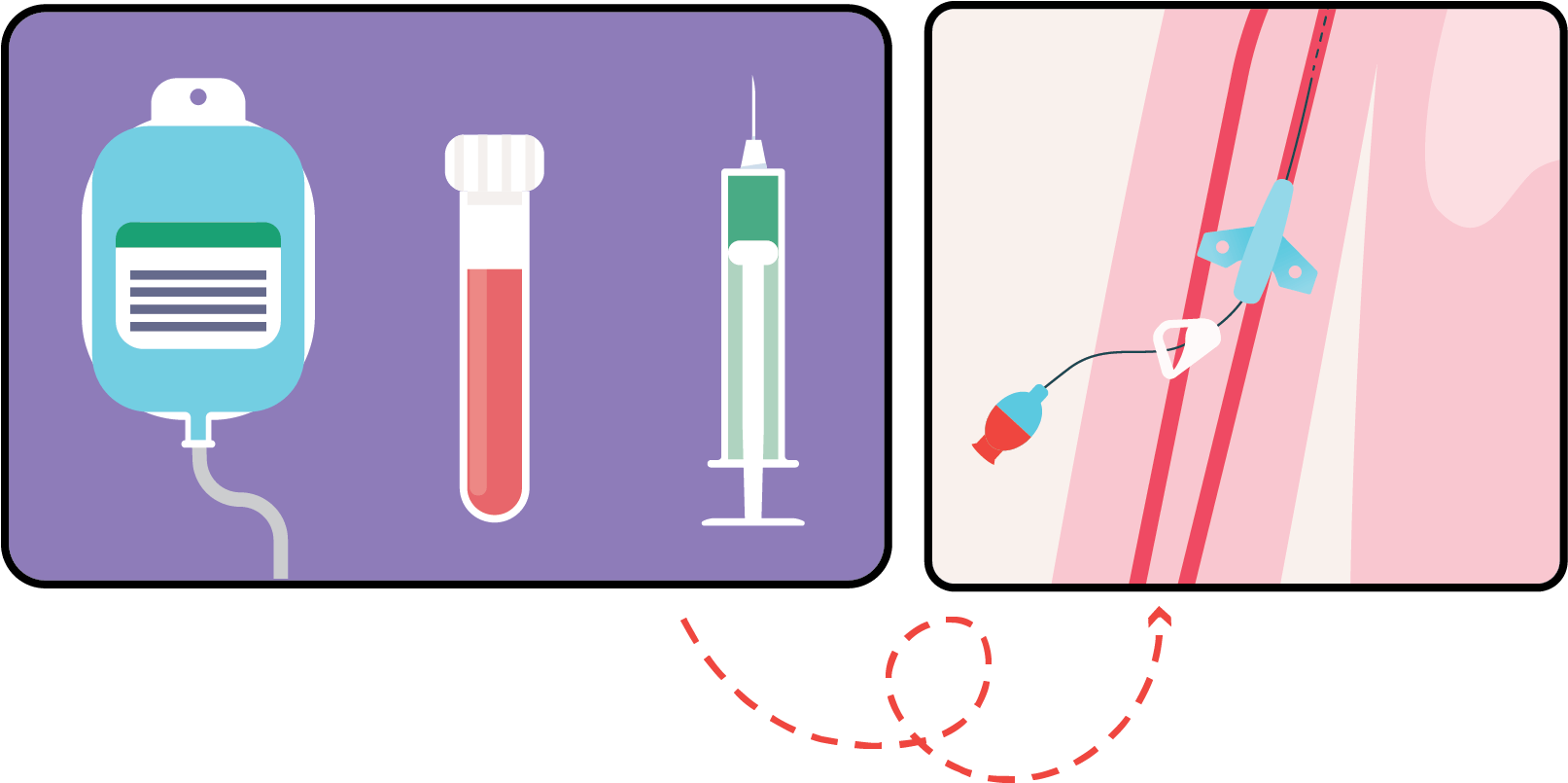
Living Well with a PICC at Home
Empowering Patients at Home: Co-Designing a PICC Booklet Blog post, Alliance for Vascular Access Teaching and Research group (AVATAR).
Nurse led Home Blood Transfusion
The joint study with the Royal District Nursing Service and SA Health, investigated 1790 blood transfusions involving 533 patients in South Australian homes and aged care facilities over a 15-year period. Press release about the project
Reducing the risk of PICC thrombosis - clinical education
Animated video co-designed with advanced-practice nurses and a sonographer to provide clinical education to support clinicians to implement research findings into practice.
| Year | Citation |
|---|---|
| 2015 | Sharp, R., Cummings, M., & Esterman, A. (2015). SIZE MATTERS: PERIPHERALLY INSERTED CENTRAL CATHETER (PICC) DIAMETER AND RISK OF UPPER-EXTREMITY THROMBUS IN CANCER PATIENTS - A PILOT STUDY. In Asia-Pacific Journal of Clinical Oncology Vol. 11 (pp. 130). WILEY-BLACKWELL. |
2025 Adverse events associated with umbilical vascular catheters: external validation of a risk prediction model. Clinical and Health Sciences, University of South Australia, $5,000.
2024 Sharp, R., Ireland, C., & Esterman, A. Adverse events and patient experience of the PICCsox. FloMedical, $5000.
2021-2023 Sharp, R., Corsini, N., Xu, A., Turner, L., Altschwager, J., Ortmann, A., Elliott, L., Pumpa, R., Jin, L., Cummings, M., Ullman, A., & Esterman, A., Improving support for people living with a peripherally Inserted Central Catheter (PICC). Nurses Memorial Foundation of South Australia, $23,557.
2017-2020 Sharp, R., Carr, P., Childs, J., Scullion, A., Young, M., Flynn, T., Kirker, C., Jackson, G., & Esterman, A., Catheter to vein ratio and risk of peripherally inserted central catheter (PICC) associated thrombosis according to diagnostic group. School of Nursing and Midwifery, University of South Australia, $20,674.
2015-2019 Sharp, R., Cummings, M., & Esterman, A. Accuracy of the Delta electrocardiogram (ECG) system to verify correct peripherally inserted central catheter (PICC) tip location. FloMedical, $13,000.
Courses I teach
- NURS 1022: Nursing in Complex Settings
- NURS 2005: Health Assessments Diagnostics and Pharmacotherapeutics
| Date | Role | Research Topic | Program | Degree Type | Student Load | Student Name |
|---|---|---|---|---|---|---|
| 2025 | Co-Supervisor | Empowering neurodivergent undergraduate learners for academic success in pre-registration Nursing and Midwifery programs through inclusive educational practices: A sequential mixed methods study | - | Doctorate | Part Time | Mrs Smitha Raj Sarala Rajan |
| 2024 | Co-Supervisor | Exploring the barriers impacting on consumer engagement in biopsychosocial pain management | - | Doctorate | Part Time | Mr Mark Jones |
| 2024 | Co-Supervisor | Responding to children's pain: an examination of validation and invalidation in acute pain contexts. | - | Doctorate | Full Time | Ms Debra Thompson |
| 2022 | Co-Supervisor | Formal programs for the employment of registered undergraduate nursing students | - | Doctorate | Part Time | Mrs Seung A Park |
Connect With Me


External Profiles


Available For Media Comment.